
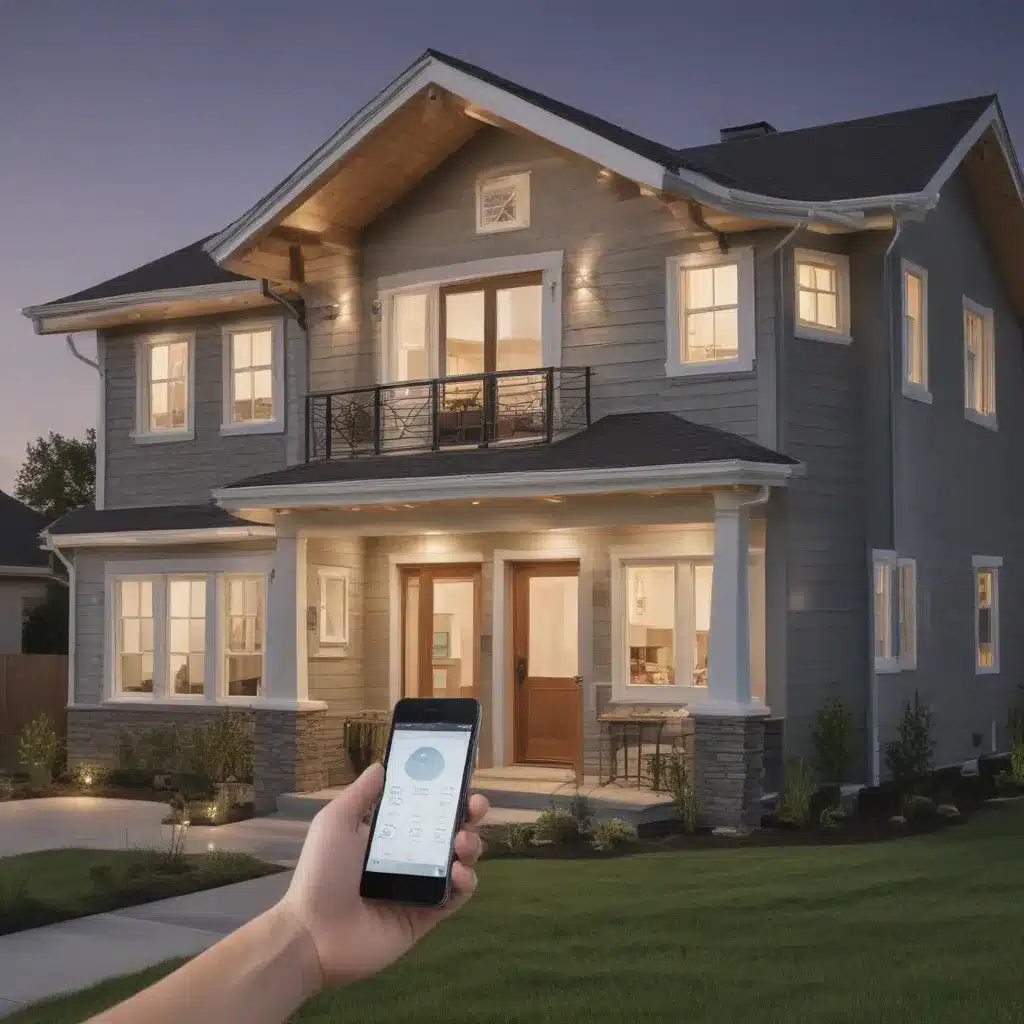
The Rise of the Smart Home: A Revolution in the Making
As the world around us grows increasingly connected, the concept of the “smart home” has captured the imagination of homeowners and builders alike. In the cozy suburbs of Aberdeen, UK, where I’ve been plying my trade as a building and renovation specialist for the better part of a decade, I’ve witnessed firsthand the surge of interest in incorporating smart home technology into the very foundations of new constructions and renovations.
It all started with the humble thermostat. Remember those clunky, analog devices that we used to fiddle with, trying to find the perfect temperature setting? Those relics of the past have been replaced by sleek, WiFi-enabled thermostats that can learn our preferences, adjust automatically, and even be controlled remotely from the comfort of our smartphones. And that’s just the tip of the iceberg.
Today, the smart home ecosystem has evolved into a veritable technological wonderland, where the once-mundane tasks of our daily lives are streamlined, automated, and in some cases, downright delightful. From voice-activated lighting and security systems to smart appliances that can be monitored and controlled with a tap of a finger, the possibilities are endless.
But as with any revolutionary technological advancement, the smart home trend also comes with its fair share of questions and concerns. How do we ensure the privacy and security of our homes in this new, interconnected world? What are the long-term energy and cost-saving benefits of embracing smart home tech? And perhaps most importantly, how can homeowners and builders work together to seamlessly integrate these cutting-edge solutions from the very start of a project?
Navigating the Smart Home Landscape: Balancing Innovation and Practicality
As a building and renovation specialist, I’ve had the privilege of guiding numerous clients through the process of incorporating smart home technology into their dream homes. And let me tell you, it’s been a fascinating journey, filled with both challenges and triumphs.
One of the most common concerns I hear from my clients is the fear of becoming overwhelmed by the sheer breadth of options available. Smart home devices and systems come in all shapes, sizes, and price points, and it can be daunting to sift through the endless array of choices. Add to that the concern of future-proofing – after all, who wants to invest in a smart home system only to have it become obsolete in a few years?
To tackle this issue, I’ve found that taking a holistic, step-by-step approach is crucial. Rather than diving headfirst into the latest and greatest smart home gadgets, I encourage my clients to first consider their specific needs and lifestyle preferences. Do they prioritize energy efficiency and cost savings? Are they looking to enhance their home’s security and peace of mind? Or perhaps they’re simply drawn to the convenience and cool factor of voice-controlled everything?
Once we’ve established a clear vision, the next step is to research and evaluate the various smart home solutions on the market. This is where my role as a trusted advisor becomes particularly valuable. Drawing on my extensive experience and industry knowledge, I’m able to guide my clients towards the most reliable, user-friendly, and future-proof technologies – all while keeping an eye on their budgetary constraints.
Seamless Integration: Designing Smart Homes from the Ground Up
One of the key advantages of working with a building and renovation company that specializes in smart home integration is the ability to incorporate these technologies from the very start of a project. Rather than treating smart home features as an afterthought or a last-minute addition, we can weave them seamlessly into the design and construction process.
This holistic approach not only ensures a more cohesive and aesthetically pleasing final product, but it also unlocks a host of practical benefits. By planning for smart home infrastructure – think pre-wired ethernet, fiber optic cabling, and strategic device placement – from the get-go, we can avoid unsightly and potentially disruptive retrofitting down the line. Furthermore, this proactive integration allows us to optimize the functionality and energy efficiency of the smart home system, ensuring that it operates at peak performance.
But the benefits of this collaborative, ground-up approach extend far beyond the practical. By involving my clients in the smart home planning process from the very beginning, I’m able to foster a genuine sense of excitement and ownership over the final product. Rather than feeling like passive recipients of technology, they become active participants in shaping their dream home – a home that not only meets their needs but also reflects their unique personalities and lifestyles.
Embracing the Future: Smart Home Technologies for Today and Tomorrow
As I work with my clients to incorporate smart home technology into their new constructions and renovations, I’m constantly in awe of the rapid pace of innovation in this field. It seems like every time I turn around, there’s a new gadget, app, or system that promises to revolutionize the way we interact with our living spaces.
Take, for example, the advent of voice-controlled assistants. Who would have thought that one day, we’d be able to simply utter a few words and have our lights dimmed, our music queued up, or our shopping lists compiled? And the applications of this technology go far beyond mere convenience – for elderly or differently-abled homeowners, voice-controlled smart home features can be truly life-changing, granting them a newfound sense of independence and autonomy.
But the smart home revolution isn’t just about making our lives easier – it’s also about enhancing our homes’ energy efficiency and environmental sustainability. Smart thermostats, for instance, can intelligently regulate temperature based on occupancy and weather patterns, resulting in significant reductions in energy consumption and utility bills. And the rise of solar power and home energy storage solutions are further empowering homeowners to take control of their energy usage and decrease their carbon footprints.
As I look to the future, I can’t help but feel a sense of excitement and wonder about the possibilities that lay ahead. Will our homes one day be able to anticipate our needs and preferences, automatically adjusting to our moods and schedules? Will smart home technology revolutionize the way we approach healthcare, allowing us to monitor our well-being and even receive remote medical assistance from the comfort of our own living rooms?
The truth is, the smart home revolution is still in its infancy, and the full extent of its impact on our lives is yet to be realized. But one thing is certain: for those of us in the building and renovation industry, embracing this technological shift and working alongside our clients to create truly innovative, future-proof homes is an absolute must.
Navigating the Smart Home Security and Privacy Landscape
As exciting as the prospect of a fully integrated, voice-controlled smart home may be, it’s crucial that we address the very real concerns around privacy and security. After all, the more our homes become connected to the digital world, the more vulnerable they become to cyber threats and data breaches.
This is a topic that I take incredibly seriously, both as a building and renovation specialist and as a homeowner myself. I’ve seen firsthand the anxiety that can arise when clients start to grapple with the implications of opening up their most intimate spaces to the internet of things. How can they be sure that their personal information, their family’s activities, and the very sanctity of their home will be protected?
To address these concerns, I work closely with my clients to implement robust security measures and ensure that privacy is at the forefront of the smart home design process. This might involve incorporating state-of-the-art encryption protocols, biometric authentication systems, and even regular security audits to identify and address any potential vulnerabilities.
But the responsibility for smart home security doesn’t fall solely on the shoulders of the building and renovation professionals. Homeowners themselves must also be proactive in educating themselves and adopting best practices. This might include regularly updating their devices’ software, using strong passwords, and being cautious about the data they choose to share with their smart home systems.
By approaching the smart home revolution with a balanced perspective – one that prioritizes both innovation and security – we can unlock the incredible benefits of this technology while safeguarding the sanctity and privacy of our most cherished spaces. It’s a delicate balance, to be sure, but one that is absolutely essential as we continue to redefine the very concept of “home” in the digital age.
The Business Case for Smart Home Integration
As a building and renovation specialist, I’m always on the lookout for ways to provide added value to my clients while also positioning my company for long-term success. And when it comes to the smart home revolution, I’ve come to the realization that embracing this technological shift is not only a strategic imperative but also a savvy business move.
Think about it – in today’s increasingly tech-savvy real estate market, homebuyers are actively seeking out properties that come equipped with the latest smart home features. They want the convenience of voice-controlled lighting, the peace of mind of a robust security system, and the cost-savings of energy-efficient appliances. By offering these cutting-edge solutions as an integral part of our building and renovation services, we can differentiate ourselves from the competition and appeal to a growing pool of discerning customers.
But the benefits of smart home integration extend far beyond simple market positioning. By incorporating these technologies into the very fabric of our projects, we can also reap significant operational and financial advantages. Streamlined energy management, reduced maintenance costs, and improved client satisfaction are just a few of the ways in which smart home tech can bolster our bottom line.
And let’s not forget the potential for long-term revenue streams. As the smart home ecosystem continues to evolve, there will be an increasing demand for ongoing support, software updates, and even hardware upgrades. By positioning ourselves as trusted partners and experts in this domain, we can establish a recurring revenue model that will help sustain our business for years to come.
Of course, embracing the smart home revolution isn’t without its challenges. Staying up-to-date with the latest technologies, training our staff, and ensuring seamless integration with our existing processes – these are all hurdles that we must overcome. But as I look to the future, I’m confident that the rewards will far outweigh the risks.
Partnering for Success: Collaborating with Clients on Smart Home Integration
At the heart of the smart home revolution lies a fundamental shift in the relationship between building and renovation professionals and their clients. No longer are we simply contractors tasked with executing a predetermined vision; instead, we’ve become collaborative partners, working hand-in-hand with homeowners to bring their technological dreams to life.
This collaborative approach is particularly crucial when it comes to smart home integration. After all, these cutting-edge solutions are not one-size-fits-all – they must be tailored to the unique needs, preferences, and lifestyles of each individual client. And that’s where my role as a trusted advisor and guide truly shines.
From the very first consultation, I make it a point to engage my clients in an open and honest dialogue about their smart home aspirations. What features are they most excited about? What concerns or hesitations do they have? By fostering this collaborative spirit from the outset, I’m able to build a foundation of trust and ensure that the final product aligns perfectly with their vision.
But the partnership doesn’t end there. As we progress through the design and construction phases, I make it a point to regularly check in with my clients, soliciting their feedback and involving them in key decision-making processes. This not only keeps them engaged and invested in the project but also helps us course-correct and fine-tune the smart home integration as needed.
Ultimately, the true mark of a successful smart home project is not just the seamless functionality of the technology itself, but the sense of pride and ownership that the homeowner feels. And by embracing a collaborative, client-centric approach, I’m able to deliver an end result that exceeds their expectations and leaves them feeling empowered and in control of their living space.
Conclusion: The Future of Smart Home Integration is Bright
As I reflect on my journey as a building and renovation specialist in the age of the smart home, I can’t help but feel a profound sense of excitement and optimism about the future. The technological advances we’ve witnessed over the past decade have been nothing short of revolutionary, and the pace of innovation shows no signs of slowing down.
But beyond the sheer cool factor of voice-controlled everything and self-regulating appliances, I’m truly inspired by the way in which smart home technology has the power to enhance our lives in truly meaningful ways. From empowering the elderly and differently-abled to fostering greater energy efficiency and environmental sustainability, these cutting-edge solutions have the potential to transform the very fabric of our homes and communities.
And as a building and renovation professional, I’m eager to be at the forefront of this technological revolution. By embracing a collaborative, client-centric approach and staying ahead of the curve when it comes to the latest smart home innovations, I’m confident that I can continue to deliver exceptional value to my customers while also positioning my business for long-term success.
So, if you’re a homeowner in Aberdeen, UK, who’s been dreaming of a tech-savvy, future-proof living space, I encourage you to reach out to ABC Home and let’s start the conversation. Together, we can embark on an exciting journey of smart home integration, unlocking the full potential of your living space and ushering in a new era of convenience, efficiency, and technological wonder.


