
Harnessing the Power of Natural Light at Home
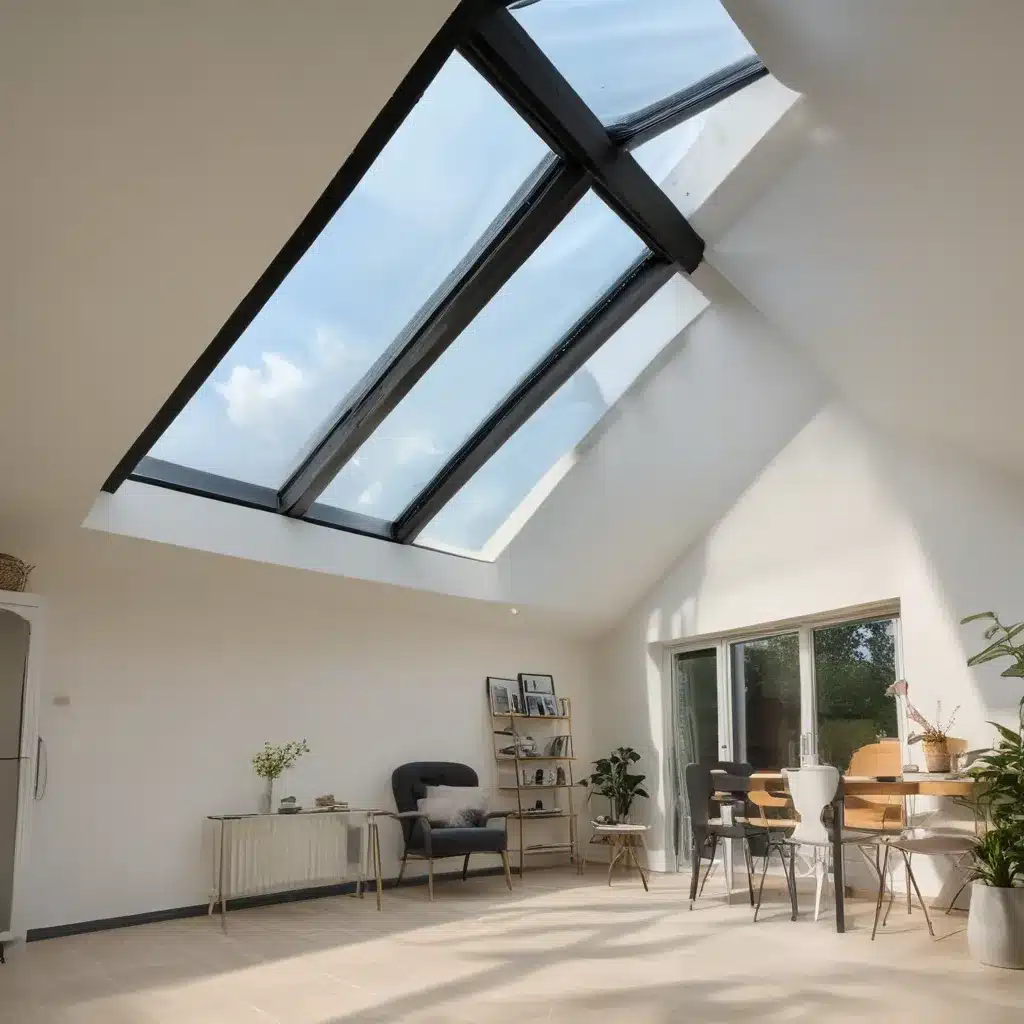
Interior design inspiration for the modern home – The power of natural light can be seen as it floods a plywood dining nook from two roof windows in the Vault House by Bradley Van Der Straeten Architects. I was recently approached by Pinterest to host my own show on Pinterest TV. Um, yes! Yes, I would! And then it became a whole series. It took me all of a micro-second to work out what topic I wanted to share in my series. Biophilic design, of course, as it is something I am so passionate about.
In the first episode, I presented an overview of what biophilic design actually is, what the main principles of it are, and what the benefits are for our mental and physical health and wellbeing. In the second episode, I explored how we can harness the power of natural light in our homes.
Natural light floods a plywood dining nook and kitchen from two roof windows in the Vault House by Bradley Van Der Straeten Architects. Lighting is such an integral part of our interiors, and it is not easy to get right. In the past few centuries, humans have become predominantly urban dwellers. This shift from the countryside to the city environment has caused a persistent disconnect from nature. It is projected that by 2050, 68% of the developed world will be urbanized, and increasingly distanced from nature and natural systems. There is also a direct correlation between the increasing urbanization of our society and rising stress rates. In fact, stress has been called the “health epidemic of the 21st century” by the World Health Organization.
The Importance of Natural Light
Studies have shown that in North America and Europe, we are now spending 90% of our time indoors. For me, as a 40-year-old, that means I have spent 36 years of my life indoors. That is mind-blowing and probably scarily accurate. Even more crazy is that some species of whales spend more time at the surface than humans spend outdoors.
Spending 90% of our time indoors is a lot of time in artificial lighting, which really isn’t good for our health. Artificial light has a very disruptive effect on our circadian rhythms. We need to spend time outside in natural light so that our bodies can function as they were intended to. The power of natural light helps to regulate our circadian rhythms and coordinate our mental and physical systems.
If our circadian rhythms are disrupted by too much exposure to artificial light, particularly at night time, it can lead to dysregulated nervous systems and health issues such as increased stress, emotional distress, mood disorders, depression, memory problems, general poor performance, disrupted sleep patterns, and even critical illnesses such as obesity, heart problems, and breast cancer.
However, when it comes to lighting our homes, if we take our cue from nature, we can’t go far wrong. As the naturalist John Muir once said, “Study nature, love nature, stay close to nature. It will never fail you.”
Maximizing Natural Light Through Design
Lighting is an integral element of biophilic design, and there are a number of ways that we can harness the power of natural light. The most obvious way to bring nature indoors when it comes to lighting is to bring more natural light into your home. This is much easier said than done unless you are building your own home from scratch and you can design the home to really maximize the amount of natural light that comes in.
If you are designing your home from scratch, you can make sure you harness the power of natural light by planning in many more windows and doors. Flooding the space with natural light allows our bodies to work according to the natural rhythms of the day and night cycle. Making windows and doors as large as possible and placing them strategically to ensure that light can enter the home at all times of day will bring maximum benefits. Having dual-aspect rooms with windows on adjacent walls that provide views in more than one direction are better than having windows in just one wall.
It can also help to change out any solid internal doors for ones that are glazed instead. This will allow light to pass from one room to another. If privacy is a concern, for example, bedroom and bathroom doors, you can get doors that have reeded or fluted glass.
Bringing in Natural Light Through Renovations
If you are building from scratch, adding glazed external walls is a great way to ensure that natural light can enter your home more easily. But this can also apply to home renovations. If you are planning an extension to your home, using glazed walls to create a glass box effect will allow the natural light to stream in unimpeded.
You can also harness the power of natural light and help it to move through your home more easily by replacing internal walls with glass partitions. You will still get the same sense of zoning your home and breaking up the space, but you won’t prevent the light from moving through the space.
Small internal windows can also help the natural light pass from one room to another and can help to illuminate any particularly dark rooms or spaces. The internal window in the home office allows natural light to move through this North London terraced house by Cairn Architects.
Rooflights for Natural Light
Roof lights are another great way to get extra daylight into your home. Whether you use them instead of adding extra doors and windows or as well as, you can really make the most of how much light is entering your home.
You can add roof lights if you have a pitched roof, but you can also add them to flat roofs. When looking for a supplier of roof lights, bear in mind that you don’t have to just go for standard sizes. Some companies, like Hi-Sky, offer bespoke sizes so you can make them work in your home no matter what restrictions you are dealing with.
Velux also do terrace windows and cabrio windows which allow you to create a small balcony on your roof. I discovered these while thinking about how I would like to convert my loft and maximize the natural light in the space.
Sun tunnels are another great solution for pitched or flat roofs as they allow you to experience the changing light of the seasons and times of day. They can be used to bring extra light into any room in the house as long as the ceiling of that room is not too far from the roof. It’s not just sunlight that can be brought in with a sun tunnel either. They allow you to experience changes in weather, passing clouds, and even moonlight.
Reflecting Natural Light
If natural light isn’t abundant in your home, one thing you can do to multiply it is to add mirrors. Mirrors help to reflect the light that is coming in and bounce it around the room, creating the illusion of more natural light. Place mirrors opposite and adjacent to any windows for maximum benefit.
If you can’t add more windows to your home, adding mirrors that look like windows is a good alternative, particularly if they can reflect views of the outdoors.
The principle of biophilic design that refers to lighting is all about dynamic and diffuse light. This means that it is important to incorporate varying intensities of light and shadow that change over time and mimic the lighting conditions that we might experience out in nature.
A space that has good dynamic and diffuse light conditions allows us to experience the time and movement through the light. Think of the dappled light under a canopy of trees or the reflections of rippling water on a wall. These patterns are what we call fractals, and our brain is programmed to look for these fractals, so incorporating them into our homes is beneficial.
Diffuse light is when light has been dispersed and scattered evenly across a surface and has been softened slightly to reduce glare. This effect can be seen in nature when sunlight is refracted by cloud cover, fog, or a forest. We can achieve this in our homes by using soft, flowy curtains or drapes to soften any harsh sunlight that comes into our homes. This is particularly useful if you do have large expanses of glazing that may cause strong direct light to enter your home.
Biomimicry and Lighting
If you cannot create dynamic and diffuse light conditions naturally, you can always experiment with biomimicry and use lighting products that are modeled on this biological process. Lights that create shadows that look like a tree canopy or light reflected off water, for example, can add a sense of movement to the space which holds our attention and intrigues us.
Window film is a great way to create more shadows in your home and to mimic the effect of dappled light. When sunlight comes pouring in through the windows, doors, or glazed walls, a window film can help to turn this light into something that more resembles the light and shadows that we might experience outside.
Opt for window films that depict nature for maximum effect. The shadows that the window film casts should move and change throughout the day as the sun moves through the sky and enters your home from different angles.
Throughout the day, the color of sunlight changes, and our bodies respond to this. Light is yellow in the morning, blue at midday, and red in the afternoon and evening. Blue light causes our bodies to release serotonin, which gives us more energy and helps us to feel alert. As blue light fades into the evening and we see more red light, our body produces melatonin instead, which helps us to feel calmer and prepare for sleep.
If we are spending a lot of time indoors, it helps if we can mimic the changing color of the light throughout the day. There are lamps and lights that you can buy that work on this principle, such as wake-up light alarm clocks.
The final way that you can harness the power of natural light in your home is less about the lighting system itself and more about the decorative appearance of the light fittings. Choosing lights that feature organic shapes and materials that can be found in nature has many benefits.
Look for lights and lamps that either incorporate foliage or are symbolic representations of life and make us think of living things. Choose products that are contoured, patterned, textured, or feature the numerical arrangements that we can find in nature.
Whether you are building a new home from scratch or renovating an existing one, incorporating strategies to increase natural light can have a profound impact on your health and wellbeing. From rooflights and skylights to mirrors and window films, there are many ways to harness the power of natural light and bring the outdoors in. By taking inspiration from nature and biophilic design principles, you can create a home that is not only beautiful but also nurturing for the body and mind.
If you are planning a home renovation or building project and want to maximize natural light, be sure to explore the range of products and services offered by ABC Home, a leading building and renovation company in Aberdeen, UK. Their team of experts can help you design and implement the perfect lighting solutions to transform your space and elevate your living experience.


