
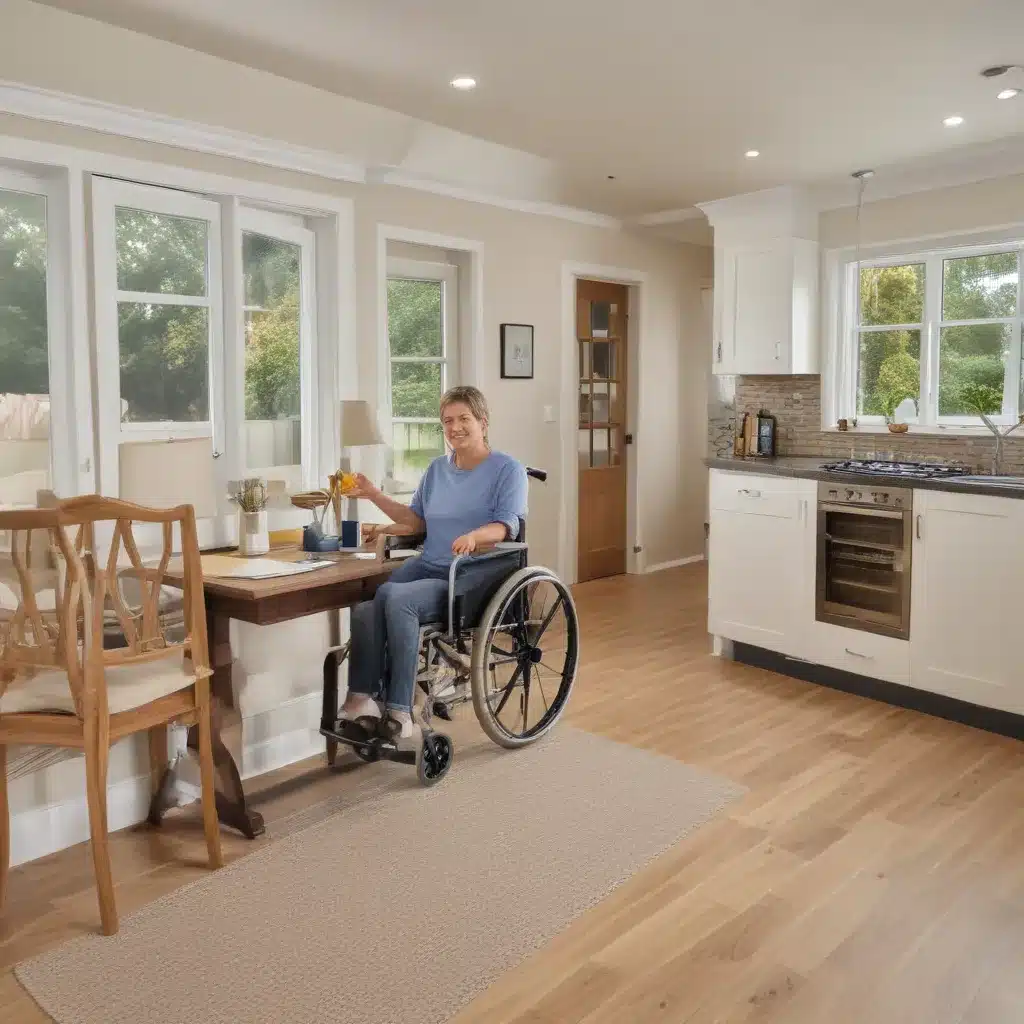
Unlocking the Door to Inclusive Living
As a homeowner, I’ve always been passionate about crafting spaces that cater to everyone’s needs. After all, a home should be a sanctuary – a place where we can truly be ourselves, free from the constraints of the outside world. But what happens when those constraints creep into our private domains? That’s where the concept of accessibility comes into play – the idea that our living environments should be designed to accommodate individuals of all abilities, empowering them to navigate their surroundings with ease and comfort.
In my line of work, I’ve had the privilege of working with a diverse array of clients, each with their own unique needs and aspirations. From families with young children to elderly residents, and everything in between, I’ve seen firsthand the transformative power of an accessible home. It’s not just about installing grab bars and ramps – it’s about crafting a seamless, user-friendly experience that caters to the unique needs of every occupant.
Assessing Your Home’s Accessibility
So, where do we begin? The first step in creating an accessible home is to take a critical look at your current living space. What areas of your home pose the greatest challenges? Is it the narrow doorways that make it difficult for a wheelchair to maneuver? The steep staircase that leaves your elderly parent feeling uneasy? Or perhaps it’s the lack of clear, well-lit pathways throughout the house?
To get a better understanding of your home’s accessibility, I recommend conducting a thorough walkthrough, taking note of any potential pain points. Enlist the help of an occupational therapist or accessibility consultant if you’re unsure where to start. They can provide valuable insights and recommendations tailored to your specific needs.
Prioritizing Accessibility in Home Renovations
Once you’ve identified the areas that need the most attention, it’s time to start planning your home renovation project. This is where the fun really begins! As a building and renovation specialist, I’ve had the opportunity to work on countless projects, each one unique in its own way.
One of the key principles I always keep in mind is the concept of “universal design” – the idea that a space should be accessible and usable by all people, regardless of their age, size, or ability. This means incorporating features like wide doorways, level thresholds, and adjustable countertops that cater to a diverse range of users.
Designing for Sensory Needs
But accessibility isn’t just about physical mobility – it’s also about catering to the various sensory needs of our occupants. For individuals with visual impairments, proper lighting and high-contrast surfaces can make a world of difference. For those with hearing challenges, strategic sound-dampening materials and visual cues can enhance their overall experience.
I’ve worked on projects where we’ve installed specialized lighting systems that automatically adjust to the user’s needs, or integrated smart home technologies that provide voice-activated controls for everything from the thermostat to the kitchen appliances. The goal is to create an environment that empowers individuals, rather than limiting them.
Fostering a Sense of Independence
Ultimately, the true measure of an accessible home is the extent to which it fosters a sense of independence and self-determination for its occupants. When a person with disabilities can navigate their living space with ease, perform daily tasks without assistance, and fully engage in their hobbies and interests, that’s when we know we’ve succeeded.
I’ll never forget the time I worked with a client who had recently suffered a spinal cord injury. The initial consultation was filled with uncertainty and apprehension, but as we progressed through the renovation process, I witnessed a remarkable transformation. By the time the project was complete, the client was beaming with pride, reveling in their newfound freedom and ability to live life on their own terms.
Balancing Accessibility and Aesthetics
Of course, the challenge in creating an accessible home lies in striking the delicate balance between function and form. It’s not enough to simply install the necessary mobility aids and assistive features – we also need to ensure that the overall aesthetic of the space remains cohesive and visually appealing.
This is where my role as a building and renovation specialist truly shines. I’ve learned to carefully integrate accessibility solutions into the design, seamlessly blending them with the existing architecture and decor. Whether it’s a sleek, minimalist bathroom or a cozy, rustic living room, the goal is to create an environment that feels both comfortable and stylish.
Engaging with the Local Community
One of the most rewarding aspects of my work in the building and renovation industry has been the opportunity to collaborate with local organizations and advocacy groups. By partnering with these entities, I’ve been able to gain a deeper understanding of the unique accessibility challenges faced by individuals within our community.
Through workshops, panel discussions, and hands-on demonstrations, I’ve had the chance to educate homeowners on the latest accessibility trends and technologies. It’s been truly inspiring to see the sense of empowerment and community that these initiatives foster, as people come together to share their stories and learn from one another.
Embracing the Future of Accessible Design
As we look to the future, I’m excited to see the continued evolution of accessible design. With advancements in technology, materials, and construction techniques, the possibilities for creating truly inclusive living spaces are endless. From voice-controlled smart home systems to adaptive furnishings and automation, the potential to enhance the lives of our clients is greater than ever before.
In the end, the key to creating an accessible home environment lies in our ability to listen, empathize, and prioritize the needs of all individuals. By approaching each project with a spirit of innovation, creativity, and genuine care, we can build spaces that not only meet the practical requirements of our clients, but also nurture their sense of belonging, independence, and overall well-being.
If you’re interested in learning more about how we can transform your living space into an accessible, inclusive oasis, I encourage you to visit our website at https://abc-home.co.uk/. There, you’ll find a wealth of information, case studies, and resources to help you on your journey towards creating a truly remarkable home.


