
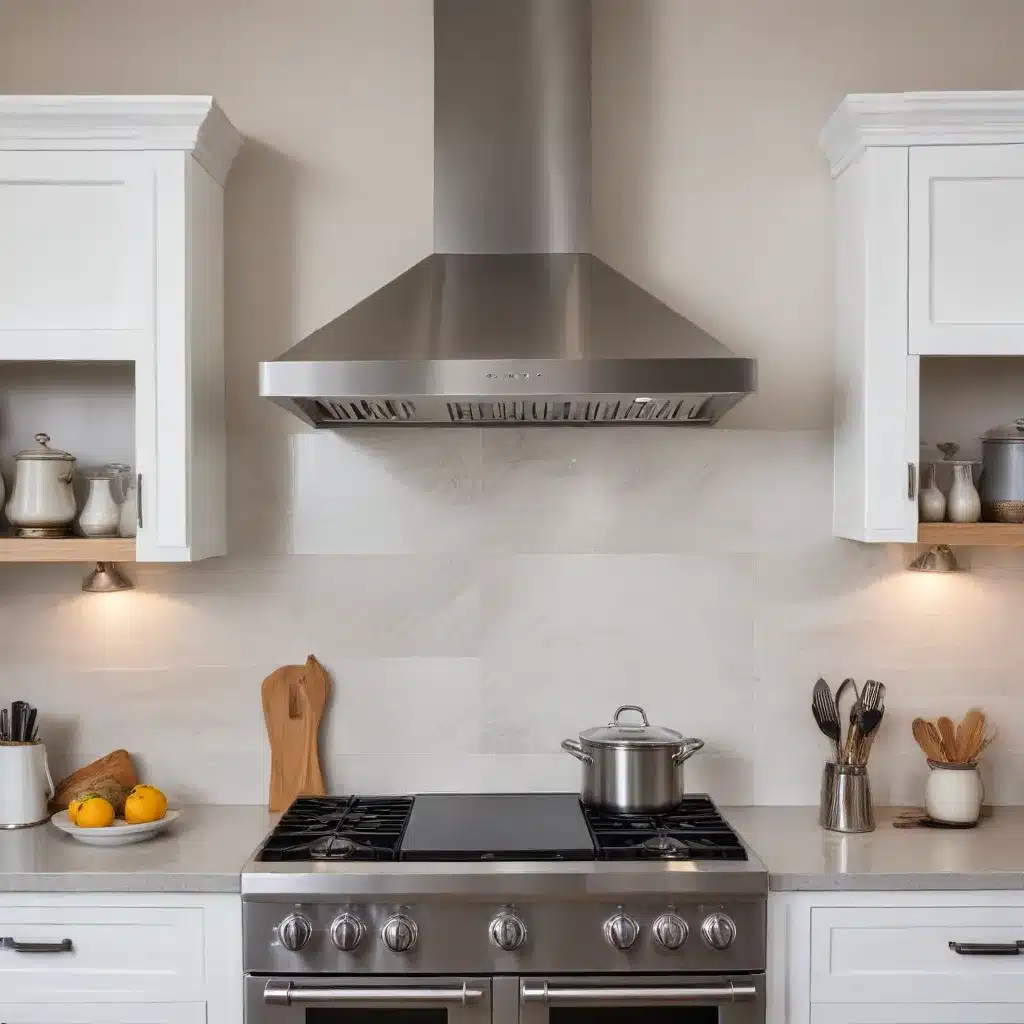
Understanding the Importance of Proper Ventilation
As a seasoned home construction specialist, I’ve seen firsthand how a well-chosen range hood can transform a kitchen. It’s not just about removing cooking odours; it’s about creating a healthier, more comfortable cooking environment. Over the years, I’ve guided countless homeowners through the process of selecting the right range hood for their needs, and I’ve learned that it’s a decision that shouldn’t be taken lightly.
When you’re planning a kitchen renovation, it’s easy to get caught up in the excitement of choosing new countertops or fancy appliances. But let me tell you, the range hood is the unsung hero of the kitchen. It’s working tirelessly to keep your air clean and your surfaces grease-free. I remember one client who initially balked at investing in a quality range hood. After living with a subpar model for a few months, they called me back, desperate for an upgrade. The difference in air quality and overall kitchen cleanliness was night and day.
So, why is proper ventilation so crucial? Well, it’s not just about comfort. It’s about safety and longevity of your kitchen. Cooking produces a lot of airborne contaminants – grease, smoke, steam, and even carbon monoxide if you’re using gas appliances. Without adequate ventilation, these pollutants can settle on your surfaces, leading to a buildup of grime and potential health hazards. Trust me, you don’t want to be breathing in those cooking fumes day after day. A good range hood whisks all of that away, keeping your kitchen fresh and your lungs happy.
Ducted vs. Ductless: Which Ventilation System Is Right for You?
When it comes to range hoods, one of the first decisions you’ll need to make is whether to go with a ducted or ductless system. This choice can have a significant impact on the efficiency of your ventilation and the overall air quality in your kitchen. Let me break it down for you based on my experiences installing both types.
Ducted systems are generally considered the gold standard in kitchen ventilation. These systems use ductwork to channel air directly outside your home. In my professional opinion, if you have the option to install a ducted system, it’s usually the way to go. I’ve seen ducted hoods remove smoke and odours much more effectively than their ductless counterparts. They’re particularly beneficial if you do a lot of high-heat cooking or frying, as they can handle larger volumes of smoke and grease.
However, ducted systems aren’t always feasible. If your kitchen isn’t located on an exterior wall, or if you live in an apartment where structural changes aren’t allowed, a ductless system might be your only option. Ductless hoods work by filtering the air and recirculating it back into the kitchen. While they’re not as effective as ducted systems, modern ductless hoods have come a long way in terms of filtration technology.
Here’s a quick comparison table to help you weigh your options:
| Feature | Ducted | Ductless |
|---|---|---|
| Efficiency | High | Moderate |
| Installation Complexity | Higher | Lower |
| Maintenance | Less frequent | More frequent |
| Flexibility in Placement | Limited | High |
| Noise Level | Varies | Generally quieter |
Remember, the best choice for you will depend on your specific kitchen layout, cooking habits, and local building codes. I always recommend consulting with a professional before making your final decision.
Choosing the Right Mounting Style for Your Kitchen Layout
The mounting style of your range hood isn’t just about aesthetics – it’s about functionality and efficiency too. Over the years, I’ve installed range hoods in all sorts of kitchens, from compact galley layouts to sprawling open-plan spaces. Each kitchen presents its own unique challenges and opportunities when it comes to ventilation.
Under-cabinet hoods are a popular choice for many kitchens. They’re discreet and don’t take up any additional space, making them ideal for smaller kitchens or those with overhead cabinets. I’ve found that under-cabinet hoods work particularly well in galley kitchens or L-shaped layouts where space is at a premium. However, it’s crucial to ensure that the hood extends fully over your cooktop for maximum effectiveness.
Wall-mounted hoods, on the other hand, make a real statement in the kitchen. They’re perfect for kitchens without overhead cabinets or for those who want their range hood to be a focal point. I recently installed a sleek, stainless steel wall-mounted hood in a client’s modern kitchen renovation, and it completely transformed the space. Not only did it provide excellent ventilation, but it also added a professional, chef’s kitchen vibe to the room.
For those lucky enough to have a kitchen island with a cooktop, island hoods are the way to go. These hoods hang from the ceiling and can be quite striking visually. However, they do require careful planning. I always remind my clients that island hoods need to be slightly larger than the cooktop to account for the lack of walls to help funnel the smoke and steam.
Lastly, we have downdraft hoods. These are a bit of a special case. They’re built into the cooktop and rise up when in use. While they can be a good solution for kitchens where overhead ventilation isn’t possible, in my experience, they’re not as effective as other types of hoods. I generally only recommend them as a last resort.
When choosing your mounting style, consider not just the look, but also the practicality. Think about your cooking habits, the layout of your kitchen, and how the hood will interact with other elements in the space. A well-chosen hood should seamlessly blend function and form.
The Power Behind the Hood: Understanding CFM and Fan Strength
When it comes to range hoods, power matters. But it’s not just about getting the most powerful hood on the market. It’s about finding the right balance for your specific needs. The power of a range hood is measured in CFM, or Cubic Feet per Minute. This tells you how much air the hood can move in a minute.
In my years of experience, I’ve found that many homeowners tend to overestimate how much CFM they need. While it’s true that a more powerful hood will clear smoke and odours faster, an overpowered hood can create its own set of problems. It can be noisy, energy-inefficient, and in some cases, even create negative air pressure in your home, which can interfere with other ventilation systems.
So, how do you determine the right CFM for your kitchen? A good rule of thumb is to aim for 100 CFM for every 12 inches of stovetop width for an electric range, or 100 CFM for every 10,000 BTUs for a gas range. For example, if you have a 36-inch electric cooktop, you’d want a hood with at least 300 CFM. However, this is just a starting point. You’ll also need to consider factors like the size of your kitchen, how often you cook, and what types of foods you typically prepare.
I remember working with a client who loved to stir-fry and do high-heat cooking. We ended up installing a hood with a higher CFM than the basic calculation suggested, and it made a world of difference in keeping their kitchen smoke-free. On the other hand, I’ve had clients who rarely cook and were perfectly happy with a lower CFM hood that was quieter and more energy-efficient.
It’s also worth noting that some local building codes have restrictions on maximum CFM, particularly for larger hoods. This is to prevent issues with backdrafting in homes with combustion appliances like gas water heaters. Always check your local regulations before making a final decision.
Remember, the goal is to find a hood that’s powerful enough to keep your kitchen clean and fresh, but not so powerful that it becomes a nuisance or safety hazard. Don’t hesitate to consult with a professional who can help you calculate the ideal CFM for your specific kitchen and cooking habits.
Size Matters: Selecting the Right Dimensions for Your Range Hood
When it comes to range hoods, size isn’t just about aesthetics – it’s about functionality. I’ve seen many kitchens where an undersized hood struggles to keep up with cooking smoke and odours, and oversized hoods that dominate the space unnecessarily. Getting the dimensions right is crucial for both performance and visual balance in your kitchen.
As a general rule, your range hood should be at least as wide as your cooktop. However, I usually recommend going a bit wider. In my experience, a hood that extends 3 to 6 inches beyond each side of the cooktop performs noticeably better at capturing smoke and steam. This is especially important for island cooktops, where there are no walls to help contain the cooking vapours.
Height is another critical factor. The distance between your cooktop and the bottom of the range hood affects its ability to capture smoke and steam effectively. Most manufacturers recommend installing the hood 24 to 30 inches above an electric cooktop, or 28 to 36 inches above a gas cooktop. However, always check the specific recommendations for the model you’re considering, as some high-powered hoods may have different requirements.
I once worked on a kitchen renovation where the client insisted on installing the hood higher than recommended for aesthetic reasons. The result was a beautiful but ineffective ventilation system that left the kitchen smoky whenever they cooked. We ended up having to lower the hood to improve its performance, which was a costly and time-consuming process. It’s a lesson in why following manufacturer guidelines is so important.
For those with high ceilings, you might need to consider a hood with an adjustable chimney. These allow you to customise the height of the hood to fit your specific kitchen dimensions. I’ve found these particularly useful in open-plan kitchens with vaulted ceilings.
Remember, while a larger hood might seem like it would always perform better, that’s not necessarily the case. An oversized hood can look out of place and may even be less efficient if it’s not matched with an appropriately powered blower. The key is to find the right balance between size, power, and your kitchen’s dimensions.
Filtration Systems: The Key to Clean Air and Easy Maintenance
The filtration system is the heart of your range hood, responsible for trapping grease, smoke, and other airborne particles. Over the years, I’ve seen significant advancements in filter technology, and choosing the right type can make a big difference in both air quality and ease of maintenance.
There are three main types of filters you’ll encounter in modern range hoods: baffle filters, mesh filters, and charcoal filters. Each has its own strengths and is suited to different cooking styles and hood types.
Baffle filters are my personal favourite for most kitchens. They’re made of interlocking, slanted metal panels that force grease and steam to change direction multiple times, causing the grease to condense and drip into traps. In my experience, baffle filters are highly effective, especially for kitchens where a lot of high-heat or greasy cooking takes place. They’re also durable and easy to clean – most can simply be popped in the dishwasher.
Mesh filters, on the other hand, consist of layers of aluminium mesh that trap grease particles as air passes through. They’re generally less expensive than baffle filters but can be a bit more challenging to clean thoroughly. I’ve found that mesh filters work well for light to moderate cooking but can become clogged more quickly with heavy use.
Charcoal filters are primarily used in ductless range hoods. They work by absorbing odours and some smoke particles. While they’re effective at reducing cooking smells, they don’t trap grease and need to be replaced regularly – usually every 3-6 months depending on usage. I always make sure my clients understand the ongoing maintenance requirements when opting for a ductless hood with charcoal filters.
Here’s a quick comparison table of the different filter types:
| Filter Type | Effectiveness | Durability | Ease of Cleaning | Best For |
|---|---|---|---|---|
| Baffle | High | High | Easy | Heavy cooking, high-heat |
| Mesh | Moderate | Moderate | Moderate | Light to moderate cooking |
| Charcoal | Good for odours | Low (disposable) | Replace, don’t clean | Ductless systems, odour control |
Remember, the best filter for you will depend on your cooking habits, the type of hood you choose, and how much maintenance you’re willing to do. I always recommend checking the manufacturer’s guidelines for cleaning and replacement schedules to keep your hood operating at peak efficiency.
Noise Levels: Finding the Right Balance Between Power and Peace
One aspect of range hoods that often gets overlooked until it’s too late is the noise level. I’ve had clients who were thrilled with their powerful new hood, only to find they couldn’t have a conversation in the kitchen when it was running. On the flip side, I’ve seen quiet hoods that simply couldn’t keep up with the demands of a busy kitchen. Finding the right balance is key to a pleasant cooking experience.
Noise levels in range hoods are typically measured in sones. One sone is roughly equivalent to the sound of a quiet refrigerator. Most range hoods operate between 1 and 8 sones, with higher-end models often offering multiple speed settings to give you more control over the noise level.
In my experience, a hood that operates at around 1 sone on its lowest setting is ideal for everyday use. This allows for background ventilation without disturbing conversation or other kitchen activities. For higher settings, used during intense cooking sessions, a noise level of 3-6 sones is generally acceptable.
I always encourage my clients to listen to the hood in operation before making a purchase if possible. What sounds acceptable in a showroom might be too loud in your own kitchen. If you can’t test the hood in person, look for models with sound ratings provided by the manufacturer, and read user reviews for real-world experiences.
Some features that can help reduce noise include:
- Larger duct size: A wider duct allows air to move more freely, reducing noise.
- Variable speed motor: This allows you to use only as much power as you need, keeping noise levels down during light cooking.
- Sound-absorbing materials: Some high-end hoods use special materials to dampen noise.
- Remote blower: Placing the blower away from the hood itself can significantly reduce noise in the kitchen.
Remember, a quieter hood isn’t necessarily less powerful. Many modern hoods use advanced motor technology to deliver strong performance without excessive noise. It’s about finding the right balance for your needs and preferences.
Additional Features: Enhancing Functionality and Convenience
While the primary function of a range hood is ventilation, many modern models come with additional features that can enhance your cooking experience and make maintenance easier. In my years of installing and using various range hoods, I’ve found that some of these extras can be genuinely useful, while others are more gimmicky. Let’s explore some of the most common additional features you might encounter.
Lighting: Good lighting is crucial in a kitchen, and many range hoods now come with built-in lights. LED lights are becoming increasingly common due to their energy efficiency and long lifespan. Some models offer adjustable brightness or even different colour temperatures, allowing you to switch between task lighting for cooking and ambient lighting for dining. I’ve found that hoods with wide-angle lights provide the best coverage of the cooking area.
Auto-sensing technology: Some high-end hoods come with heat and smoke sensors that automatically adjust the fan speed based on cooking conditions. While this can be convenient, I’ve found that many experienced cooks prefer manual control. However, for those who tend to forget to turn on the hood, this feature can be a real boon.
Delayed shut-off: This feature allows the hood to continue running for a set period after you’ve finished cooking, ensuring that all lingering odours and steam are removed. I often recommend this for clients who do a lot of high-heat or aromatic cooking.
Filter cleaning indicators: These remind you when it’s time to clean or replace your filters. Given how easy it is to forget about filter maintenance, I find this feature particularly useful for ensuring consistent performance.
Remote control: While not essential, a remote control can be convenient, especially for island hoods that might be harder to reach. Some modern hoods even offer smartphone app control.
Heat lamps: These are less common but can be useful for keeping food warm. However, I generally find that they’re not necessary for most home kitchens.
Backsplash panels: Some manufacturers offer matching backsplash panels that can create a seamless look between the hood and the wall. These can be particularly attractive in contemporary kitchens.
When considering these additional features, think about your cooking habits and kitchen layout. Features that seem exciting in the showroom might go unused in real life, while others could significantly improve your daily cooking experience. Don’t be swayed by bells and whistles you don’t need – focus on the features that will truly enhance your time in the kitchen.
Installation Considerations: Ensuring Safety and Efficiency
Proper installation is crucial for the safety and efficiency of your range hood. Over the years, I’ve seen many issues arise from poorly installed hoods, from inadequate ventilation to potential fire hazards. While some handy homeowners might be tempted to tackle installation themselves, I generally recommend professional installation, especially for ducted systems.
One of the most critical aspects of installation is proper ducting. The duct should be as short and straight as possible, with minimal bends. Each bend reduces the efficiency of the hood, so a direct route to the exterior is ideal. I always use rigid metal ducting rather than flexible ducts, as they’re more efficient and easier to clean.
The size of the duct is also important. A duct that’s too small can restrict airflow, reducing the hood’s effectiveness and potentially causing excessive noise. As a rule of thumb, I recommend a 6-inch duct for hoods up to 600 CFM, and a larger duct for more powerful models.
Height and positioning are crucial for both safety and performance. Most manufacturers provide specific guidelines for the distance between the cooktop and the bottom of the hood. This distance is typically 24 to 30 inches for electric cooktops and 28 to 36 inches for gas ranges. Installing the hood too high reduces its effectiveness, while installing it too low could create a fire hazard.
For island installations, additional support may be needed in the ceiling. I’ve had to reinforce ceilings more than once to ensure the hood is securely mounted. This is especially important for heavier, high-powered models.
Electrical considerations are also important. Most range hoods require a dedicated circuit, and the electrical connection should always be done by a qualified electrician. Some high-powered hoods may require a 240-volt connection, so it’s important to check the specifications before installation.
Finally, don’t forget about make-up air. In well-insulated modern homes, powerful range hoods can create negative air pressure, potentially causing backdrafting of other appliances like water heaters or fireplaces. In some cases, a make-up air system may be necessary to ensure safe operation.
Remember, a properly installed range hood not only performs better but is also safer and more energy-efficient. If you’re not confident in your ability to handle all these considerations, it’s well worth the investment to hire a professional installer.
Maintenance Tips: Keeping Your Range Hood in Top Condition
A well-maintained range hood not only performs better but also lasts longer. Over the years, I’ve seen many range hoods fail prematurely due to lack of proper maintenance. Here are some tips I always share with my clients to keep their range hoods in top condition:
-
Regular filter cleaning: This is the most important maintenance task. For mesh and baffle filters, I recommend cleaning them at least once a month, or more frequently if you do a lot of cooking. Most can be washed in the dishwasher, but check the manufacturer’s instructions first. For stubborn grease, soaking in hot, soapy water before dishwashing can help.
-
Replace charcoal filters: If you have a ductless hood with charcoal filters, these need to be replaced regularly. The frequency depends on your cooking habits, but generally every 3-6 months is a good rule of thumb.
-
Clean the hood exterior: Wipe down the exterior of the hood regularly with a soft cloth and mild detergent. For stainless steel hoods, use a stainless steel cleaner to maintain the finish and prevent fingerprints.
-
Check and clean the ductwork: For ducted systems, it’s a good idea to have the ductwork professionally cleaned every few years. This prevents grease build-up which can be a fire hazard.
-
Inspect the fan: Once a year, take a look at the fan blades. If they’re dirty or showing signs of wear, clean them or consider replacement.
-
Test the controls: Regularly test all speed settings and any additional features to ensure everything is working correctly.
-
Check the exhaust vent: The exterior vent can sometimes become blocked by debris or even small animals. A quick visual inspection every few months can prevent issues.
-
Lubricate moving parts: Some hood models have motor bearings that need occasional lubrication. Check your user manual for specific instructions.
-
Replace light bulbs: If your hood has replaceable bulbs, keep spares on hand and replace them promptly when they burn out.
-
Professional inspection: Consider having your range hood professionally inspected and serviced every few years, especially for high-end or complex systems.
Remember, a clean and well-maintained range hood not only works better but also contributes to a healthier kitchen environment. Make hood maintenance a regular part of your kitchen cleaning routine, and you’ll enjoy better performance and longevity from your appliance.
For more expert advice on kitchen renovations and appliance maintenance, feel free to visit our kitchen fitting services page. We’re always here to help you create and maintain the kitchen of your dreams.


