
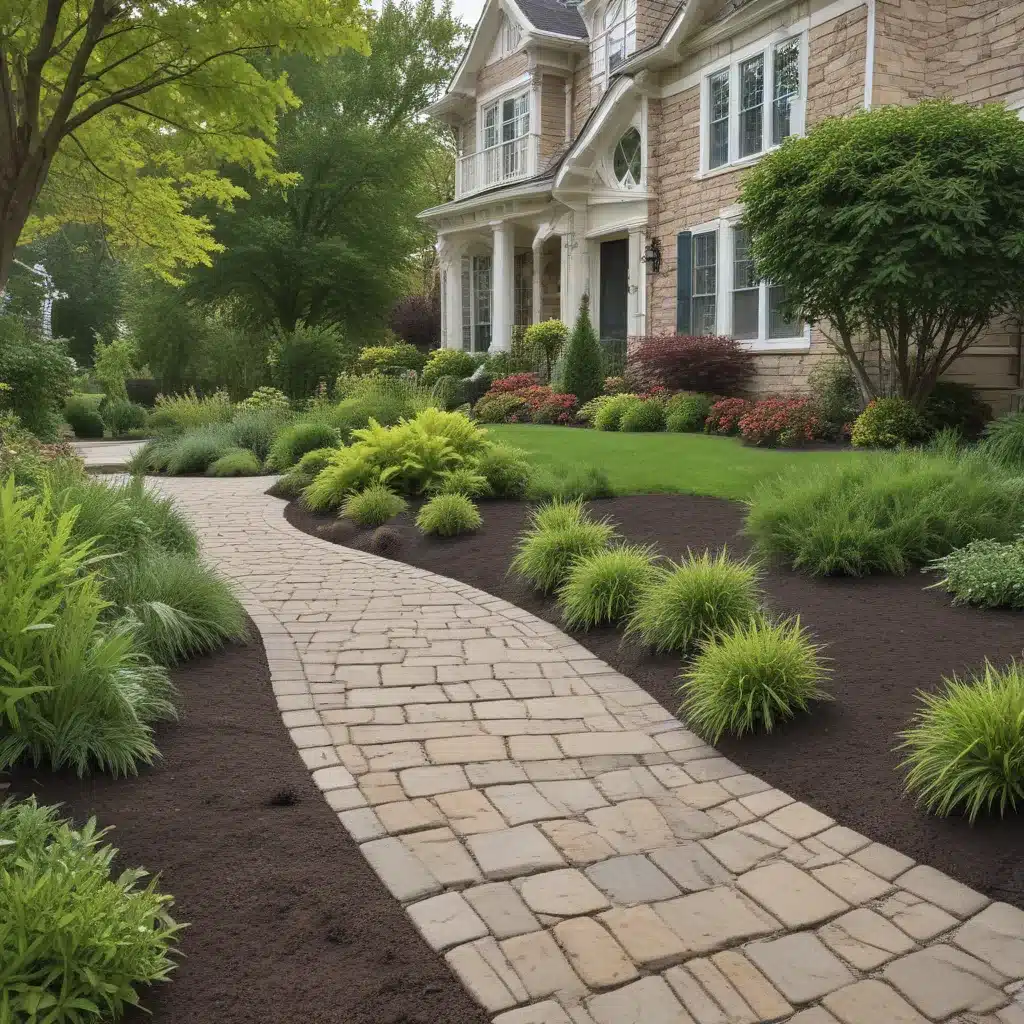
The Power of Landscaping: Transforming Your Home’s First Impression
As the owner of a building and renovation company in Aberdeen, UK, I’ve seen firsthand the incredible impact that thoughtful landscaping can have on a home’s curb appeal. It’s like a well-tailored suit for your property – it takes an ordinary exterior and elevates it to something truly extraordinary. And the best part? You don’t even need to remodel the entire house to achieve a stunning transformation.
You see, I believe that landscaping is the unsung hero of home improvement. While everyone gets excited about shiny new kitchen countertops or a fresh coat of paint, the true magic often happens in the great outdoors. It’s where you can unleash your creativity, play with textures and colors, and create a welcoming atmosphere that draws people in like a moth to a porch light.
But I get it – not everyone is a natural-born gardener. Some of us (myself included) can barely keep a houseplant alive, let alone cultivate an entire outdoor oasis. That’s why I’m here to share with you some of the most effective landscape design techniques that can boost your curb appeal without breaking the bank or requiring a degree in horticulture.
Mastering the Art of Curb Appeal: Practical Landscaping Tips
1. The Power of Edging: Defining Boundaries and Creating Contrast
One of the simplest yet most impactful landscape design techniques is edging. This involves creating clean, defined borders around your garden beds, pathways, and lawn. It’s like putting a frame around a masterpiece – it instantly makes everything look more polished and intentional.
But edging is not just about aesthetics; it also serves a practical purpose. By separating different elements of your landscape, you create visual contrast and guide the eye towards the areas you want to highlight. Imagine a lush, vibrant flower bed framed by neatly trimmed hedges or a meandering stone path that winds its way through a sea of green. It’s a subtle yet powerful way to add depth and structure to your outdoor space.
The great thing about edging is that it’s a relatively inexpensive and easy-to-implement project. You can use a variety of materials, from classic brick or stone to more contemporary options like metal or recycled materials. And the best part? Once it’s done, it requires minimal maintenance, leaving you more time to enjoy the fruits of your labor.
2. Embrace the Power of Texture: Adding Visual Interest and Depth
Landscaping is not just about selecting the right plants and flowers; it’s also about creating a dynamic, visually engaging outdoor space. And one of the best ways to do that is by incorporating a variety of textures into your design.
Think about it – a garden that’s filled with nothing but smooth, lush greenery can start to feel a bit one-dimensional. But when you mix in elements with different shapes, sizes, and surface qualities, it adds a whole new level of depth and intrigue.
For example, try combining the soft, feathery fronds of ornamental grasses with the bold, spiky leaves of succulents. Or juxtapose the rough, weathered bark of a mature tree with the smooth, shiny petals of a flowering shrub. The possibilities are endless!
And it’s not just about the plants themselves – you can also use hardscaping materials like stone, brick, or wood to create visual interest. Imagine a path made of irregular flagstones that wind their way through a garden, or a retaining wall constructed from rough-hewn boulders. These elements add a sense of texture and tactility that can transform a ho-hum outdoor space into a true work of art.
3. Color Me Impressed: Harnessing the Power of Vibrant Hues
If there’s one thing that can instantly brighten up a dull landscape, it’s the strategic use of color. And I’m not just talking about flowers – though they certainly play a starring role. No, the true magic happens when you start to layer different hues and tones throughout your entire outdoor space.
Imagine a garden bed bursting with a riot of reds, oranges, and yellows, creating a vibrant focal point that draws the eye. Or a lush, verdant lawn that serves as the perfect backdrop for a few strategically placed pops of purple or pink. Even your hardscaping elements can get in on the action, with brightly colored pavers or a vibrant garden sculpture adding a touch of whimsy to the overall design.
But don’t just take my word for it – there’s actual science behind the power of color in landscaping. Studies have shown that certain hues can evoke specific emotions and feelings, from the calming influence of blues and greens to the energizing effect of warm tones. And when you combine these elements in a thoughtful way, you can create a truly immersive and uplifting outdoor experience.
Of course, the key is to strike the right balance. You don’t want your landscape to look like a rainbow exploded all over it. Instead, aim for a harmonious blend of colors that complement each other and work in harmony with the overall design. Trust me, the results will be nothing short of jaw-dropping.
Creating a Cohesive Landscape: Putting it All Together
Now, I know what you’re thinking – “Okay, this all sounds great, but how do I actually put it all together?” It’s a valid question, and one that I’m more than happy to tackle.
You see, the secret to a truly impressive landscape design isn’t just about implementing individual techniques; it’s about creating a cohesive, unified vision that ties everything together. It’s about crafting an outdoor space that tells a story, that draws the eye from one captivating element to the next, and that leaves a lasting impression on everyone who lays eyes on it.
And the best part? You don’t have to be a professional landscaper to achieve this level of design excellence. All it takes is a little bit of planning, a dash of creativity, and a willingness to think outside the box.
So, where do you start? Well, the first step is to really get to know your outdoor space. Take some time to walk around, observe the existing features, and identify the areas that need the most attention. Are there any eyesores or awkward spaces that could use a little TLC? Are there particular views or focal points that you want to highlight?
Once you’ve got a solid understanding of your landscape, it’s time to start brainstorming. Grab a sketchpad and start scribbling down ideas – everything from plant selections to hardscaping elements to lighting schemes. Don’t be afraid to get a little crazy and think outside the box. After all, this is your chance to create a truly one-of-a-kind outdoor oasis.
And remember, the key to a cohesive landscape design isn’t just about what you add; it’s also about what you take away. Sometimes, the most impactful changes come from simplifying and streamlining your outdoor space, removing cluttered elements, and creating a sense of calm and balance.
Real-Life Inspiration: Transforming Curb Appeal with Landscaping
Of course, no article on landscape design would be complete without a few real-life examples to inspire you. And let me tell you, I’ve seen some truly remarkable transformations over the years.
Take, for instance, the case of the Smiths, a young couple who had just purchased a fixer-upper in the heart of Aberdeen. When they first moved in, the exterior of their home was a bit of a mess – overgrown shrubs, cracked pavement, and a general sense of neglect that made it look more like a haunted house than a cozy family abode.
But the Smiths weren’t deterred. They knew that with the right landscape design techniques, they could turn this eyesore into a showstopper. So, they got to work, starting with a thorough clean-up and some strategic edging to define the boundaries of their property.
Next, they got creative with texture, incorporating a mix of lush, low-maintenance plants like hostas and ferns, along with a few eye-catching specimen trees and shrubs. And to really make the space pop, they added a vibrant splash of color with a carefully curated selection of annuals and perennials.
The result? A true transformation that left the entire neighborhood in awe. The Smiths’ once-neglected home now boasted a beautifully manicured, inviting exterior that practically begged passersby to take a closer look. And the best part? They accomplished all of this without having to remodel a single inch of the actual house.
And the Smiths’ story is just one example of the power of landscaping in action. I’ve seen it time and time again, where a simple tweak to the outdoor space can completely revitalize a property and make it a true showstopper on the block.
Bringing it All Together: Your Path to Landscaping Perfection
So, there you have it – a deep dive into the world of landscape design techniques that can boost your curb appeal without the need for a full-scale remodel. From the power of edging to the magic of texture and color, I’ve shared with you some of the most effective strategies that can transform your outdoor space into a true work of art.
But of course, the real secret to success isn’t just about implementing these individual techniques; it’s about creating a cohesive, unified vision that ties everything together. It’s about thinking holistically, about understanding your space, and about having the courage to get a little bit creative.
And trust me, the payoff is more than worth it. When you invest in your landscape, you’re not just enhancing the curb appeal of your home – you’re also creating a beautiful, inviting outdoor oasis that you and your family can enjoy for years to come.
So, what are you waiting for? Grab your gardening gloves, unleash your inner designer, and get ready to transform your home’s exterior into something truly extraordinary. And if you need a little extra help along the way, don’t hesitate to reach out to our team of building and renovation experts at ABC Home. We’re always here to lend a hand and help you bring your landscape design dreams to life.


