
Navigating the Labyrinth of Loft Conversion Flooring
As I sit here, staring at the jumble of notes and research I’ve amassed on loft conversion flooring, I can’t help but feel a little overwhelmed. It’s like trying to untangle a ball of yarn that’s been through the washing machine – tangled, knotted, and seemingly impossible to make sense of. But, hey, that’s the nature of the beast when it comes to home renovations, isn’t it?
When my husband and I decided to take the plunge and convert our loft, I knew that the flooring was going to be a crucial element. After all, it’s not just about making sure it looks good (although, let’s be real, that’s a big part of it), but it’s also about ensuring it meets all the necessary building regulations and safety standards. And let me tell you, navigating those regulations can feel like trying to decipher ancient hieroglyphics at times.
Uncovering the Building Regulations Maze
As I delved into the world of loft conversion flooring, one thing became abundantly clear: the building regulations in the UK are a force to be reckoned with. I mean, who would have thought that the depth of your joists could be the make-or-break factor in whether your loft conversion gets the green light?
According to one forum post, the historic experience of a local building control professional was that a new structural loft floor with 125/150mm joists plus a plywood floor deck would typically pass muster. But then, in 2020, things took a turn. Suddenly, the building control team was questioning the joist depth, insisting that anything less than 195mm wouldn’t comply, unless the homeowner could provide test data to prove it would meet the 30-minute fire resistance requirement.
It’s enough to make your head spin, isn’t it? I mean, who keeps track of these arbitrary joist depth requirements? And why do they seem to change at the whim of the local building control team? As one Redditor pointed out, it seems like the aftermath of the Grenfell Tower tragedy has made building control departments across the UK extra cautious when it comes to fire safety.
Finding a Solution Amidst the Confusion
As I sifted through the various forum discussions and blog posts, I started to feel like I was getting a handle on the situation. It became clear that the key to navigating the loft conversion flooring maze was to be proactive and persistent.
One Screwfix community member shared their experience of working with a private building control company, rather than the local authority. They found the private firm to be much more helpful and willing to consider alternative solutions that met the fire resistance requirements, even if they fell outside the “standard” joist depth.
And that’s exactly what I ended up doing. After hitting a brick wall with my local building control team, I reached out to a private company, and they were more than happy to work with me to find a solution that ticked all the boxes. They confirmed that any structurally justified joist, coupled with the appropriate fire-resistant lining and insulation, would be acceptable, regardless of the depth.
Designing a Flooring Solution That Checks All the Boxes
With the building regulations hurdle cleared, I could finally start to focus on the fun part – designing the actual flooring for our loft conversion. And let me tell you, there were a lot of factors to consider.
First and foremost, I knew that the flooring needed to be both aesthetically pleasing and highly functional. After all, this was going to be our new master suite, and I wanted it to feel like a luxurious oasis, not a hastily thrown-together afterthought.
As one blogger recounted, there’s a common tendency for homeowners to make decisions based on what they think potential future buyers might like, rather than what works best for them in the here and now. But I wasn’t having any of that. This loft conversion was all about creating a space that we would love and cherish, not some generic, cookie-cutter design that might appeal to the masses.
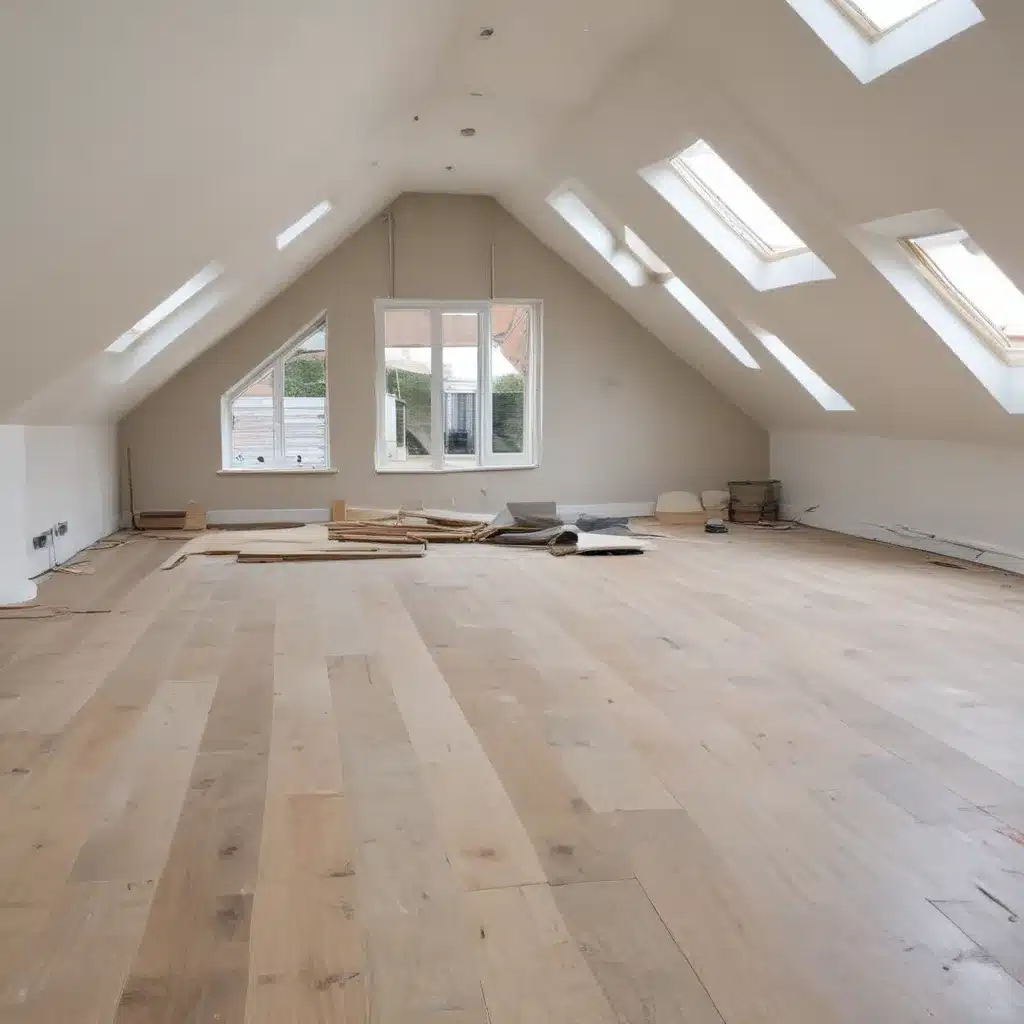
After much deliberation and research, I settled on a plywood floor with a sleek, modern finish. Not only did it tick the fire resistance boxes, but it also had a lovely warmth and character that I just couldn’t get with a standard laminate or vinyl option.
Navigating the Flooring Maze with Creativity and Persistence
Of course, the journey didn’t come without its fair share of challenges. There were moments when I thought I’d never find a flooring solution that met all the necessary requirements, and I’ll admit, I may have shed a tear or two along the way.
But, as with any good home renovation story, persistence and a little bit of creativity won the day. By working closely with the private building control company and doing my own thorough research, I was able to come up with a flooring plan that not only looked amazing but also ticked all the boxes when it came to safety and compliance.
And let me tell you, the end result was worth every single headache and frustration. As I stand in our new loft, looking out over the treetops, I can’t help but feel a sense of pride and accomplishment. Sure, the journey was a bit of a rollercoaster, but that’s all part of the charm, isn’t it?
So, if you’re embarking on your own loft conversion journey, my advice to you is this: don’t be afraid to think outside the box, be prepared to advocate for your vision, and never, ever underestimate the power of a good cup of tea (or a stiff gin and tonic) when the going gets tough. Trust me, you’ve got this – and ABC Home is here to help every step of the way.


