
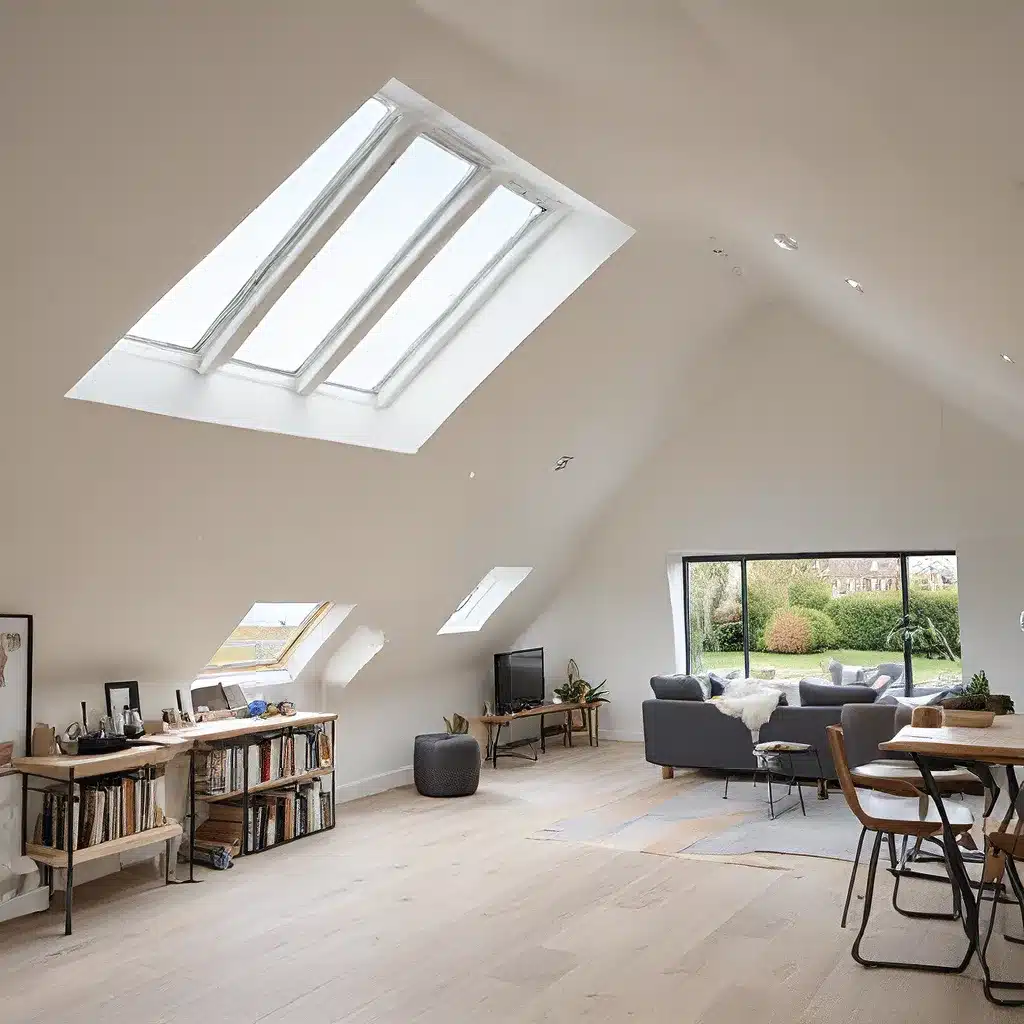
Ah, the timeless allure of the loft conversion – where the once-forgotten nooks and crannies of our homes are transformed into captivating sanctuaries. As someone who’s been down this road myself, I can attest to the delicate dance between practicality and aesthetics that lies at the heart of any successful loft project.
The Untapped Potential of Your Attic
Let’s be honest, how many of us actually make full use of our attics? For the majority of us, those dusty corners are little more than glorified storage spaces, visited only twice a year to hoard or purge our belongings. But what if I told you that those often-overlooked spaces hold the key to unlocking a whole new world of possibility?
You see, the dormers that grace the roofs of many century-old homes weren’t just there for looks. Back in the day, these architectural features served a far more practical purpose – they allowed for the conversion of previously unusable attic spaces into functional living areas. By providing natural light and headroom, dormers opened up a whole new realm of possibility for homeowners.
The Art of Balancing Function and Form
Now, I know what you’re thinking – “But won’t converting my loft just be a hassle?” And hey, I don’t blame you. The idea of tackling a home renovation project can be enough to make even the most adventurous of us quiver in our boots. But fear not, my friend, because with the right approach, you can strike the perfect balance between practicality and aesthetics.
One of the key factors to consider is the structural integrity of your home. After all, you don’t want to end up with a loft that’s more “oops” than “ooh!” That’s why it’s absolutely crucial to work with a reputable structural engineer from the get-go. These unsung heroes can not only ensure that your project is safe and compliant but also help you maximize the potential of your space, all while avoiding costly mistakes.
Uncovering the Hidden Gems
As I delved deeper into the world of loft conversions, I couldn’t help but be fascinated by the sheer potential that lies within these often-overlooked spaces. Take, for instance, the case of the My Tiny Estate team, who stumbled upon a veritable treasure trove in their own hayloft.
“We weren’t confident we were going to be able to join the two haylofts together as the join between the two sits under a really quirky roof detail,” they shared. “However, we did some digging or well Dean did some drawings and we found a way to get through and thus creating the library area instead.”
But the surprises didn’t stop there. The team also discovered a box of treasures hidden away, filled with all sorts of intriguing artifacts from the estate’s past. “We found numerous flip knives, a common thing for many to carry in the 18th-19th century. We found an old dice and domino and toy car from the younger inhabitants of the estate, a thimble, a bottle cap – all pretty useless items, but when we put them all together in a glass box, it became interesting, a little keepsake box of treasures.”
The Power of Reclaimed and Repurposed Materials
As I listened to their story, I couldn’t help but be inspired by the way they embraced the history and character of the building, rather than trying to erase it. Instead of going for a pristine, cookie-cutter look, they opted to celebrate the estate’s quirks and imperfections, like the pebbledash that had left its mark on the bricks.
“We tried EVERYTHING – chipping by hand, sanding, sand/ice/water and soda blasting. Nothing got the last bits off, and some of the above were too abrasive and just made things worse. In the end, we accepted the brick as it was, as it’s the evolution of the building. The bricks could breathe again, even though they weren’t perfectly finished.”
This same reclaimed and repurposed approach extended to their use of materials, like the old window they found in the stables and the sack cushions made from the original grain sacks. By incorporating these unique elements, they were able to create a space that felt authentically tied to the history of the estate, rather than a generic, cookie-cutter renovation.
Striking the Perfect Balance
As I delved deeper into the world of loft conversions, I couldn’t help but be struck by the delicate balance that must be struck between practicality and aesthetics. On one hand, you’ve got the need to create a functional, livable space that meets your everyday needs. But on the other, there’s the irresistible allure of crafting a visually stunning retreat that captures the essence of your home’s rich history.
“The juggle with practicality and aesthetics is tricky,” the My Tiny Estate team admitted, “but so important.” And they’re right – it’s a dance that requires a careful, thoughtful approach, one that considers the structural integrity of the building, the flow of the space, and the unique character of the property.
The Power of Personalization
But perhaps the most rewarding aspect of a loft conversion is the opportunity to truly make it your own. Whether it’s through the careful selection of color schemes and furnishings, or the incorporation of custom-built elements like the library area in the My Tiny Estate project, the possibilities are truly endless.
“We use faded colours that add warmth to the space,” the team shared, “and we also try to stick with colours that would have been used in the past – a nod to a traditional decor, but with a slightly modern twist.” By embracing this personalized approach, you can create a space that not only meets your practical needs but also truly reflects your unique style and personality.
The Thrill of the Unexpected
And let’s not forget the sheer joy that can come from the unexpected discoveries and challenges that arise during a loft conversion project. As the My Tiny Estate team discovered, sometimes the most mundane tasks, like cutting glass, can become sources of genuine triumph when you finally master them.
“Cutting glass has been the pain of my years renovating,” they admitted. “I am just not good at it. I watched hours of video tutorials, followed tons of instructions, tried to cut the glass, and SNAP – I broke it. You can imagine the genuine thrill that I feel when I manage to get a cut done properly!”
It’s moments like these that remind us that the true magic of a loft conversion lies not just in the final product, but in the journey itself. By embracing the challenges, the surprises, and the unexpected delights, we can transform what might have been a daunting task into a deeply rewarding and fulfilling experience.
The Endless Possibilities
So, if you’re sitting there staring at your dusty attic, wondering if a loft conversion is really worth the effort, let me tell you – the answer is a resounding yes. With the right approach, the guidance of experienced professionals, and a healthy dose of creativity and enthusiasm, you can unlock a whole new world of possibilities right within your own home.
Who knows, you might even uncover a few unexpected treasures of your own along the way. After all, as the My Tiny Estate team discovered, the true joy of a loft conversion lies not just in the final product, but in the journey itself. So, what are you waiting for? It’s time to unleash the hidden potential of your home and create a space that’s tailored to your every need and desire.


