
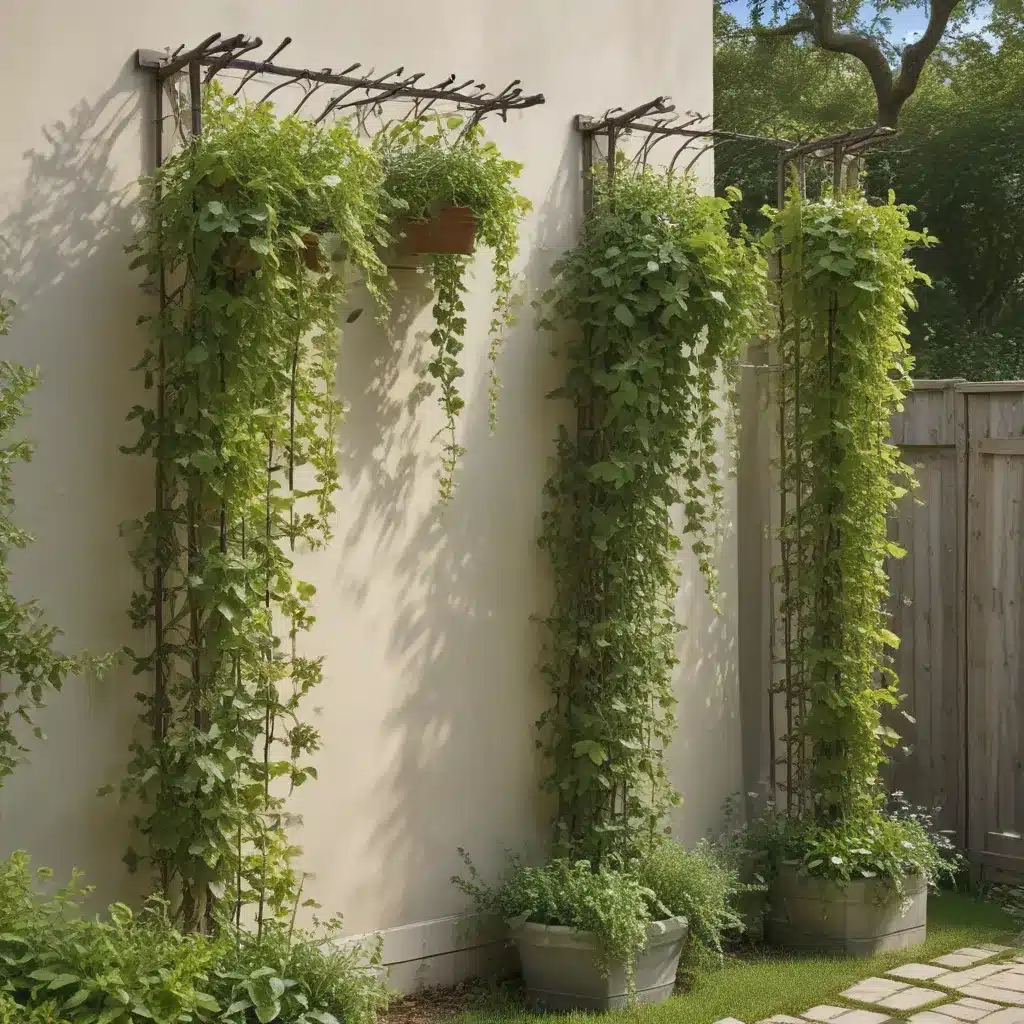
Vertical Gardening: The Gardener’s Secret Weapon
As a passionate gardener, I’ve always been on the hunt for ways to maximize my growing space. After all, who doesn’t dream of having a lush, productive garden bursting with fresh fruits and veggies? Well, my friends, I’m here to let you in on a little secret that’s about to change the game – vertical gardening!
Arched trellises have completely transformed my garden, turning it into a true oasis of abundance. These incredible structures don’t just look gorgeous, they also allow me to grow a surprising variety of crops in a fraction of the space. Cucumbers, melons, squash, and even tomatoes – you name it, they thrive when given the chance to climb towards the sky.
The Beauty of Vertical Gardening
Now, I know what you’re thinking – how on earth do I set up one of these magical trellises? Well, let me tell you, it’s easier than you might think. All you need are a few simple materials like cattle panels and t-posts, and you’re well on your way to creating a stunning, productive vertical garden.
But the benefits of going vertical don’t stop at saving space. Oh no, my friends. These trellises also make gardening so much easier on the body. No more bending and stooping to harvest your crops – everything is right at eye level, ready for the picking. And let’s not forget the sheer beauty of it all. Imagine walking through your garden, surrounded by a lush, verdant canopy of vines and leaves. It’s like something out of a fairytale!
Trellising Melons and Squash
One of my favorite things to grow on these vertical structures are watermelons and squash. Watermelons, in particular, are incredibly well-suited to trellising. With their long, trailing vines and heavy fruit, they can be a bit of a challenge to grow on the ground. But when you give them the support they need to climb, they absolutely thrive!
The key is to choose the right variety – something like ‘Blacktail Mountain’ that’s been bred for trellising. And don’t forget to give them plenty of room to spread out. I usually allot about 4 square feet per plant, with two plants per side of the trellis. This way, they can grow up and over the structure, producing an impressive bounty without taking up too much precious garden real estate.
Mastering the Art of Trellising
Of course, successfully growing vining crops on a trellis takes a bit of finesse. Butternut squash, for example, require some extra attention. Their massive root systems and heavy fruit need sturdy support, so I’ve found that using a livestock panel trellis is the way to go. And when it comes to training the vines, it’s all about being gentle but persistent. I gently guide the tendrils through the openings, tying them in place if needed.
But the effort is so worth it when I see those luscious melons and squash hanging from the vines, basking in the sun. It’s a sight that never fails to fill me with a sense of pride and accomplishment. And the best part? I get to enjoy a bountiful harvest without sacrificing precious garden space. It’s a win-win in my book!
Expanding Your Vertical Garden
Of course, melons and squash aren’t the only crops that thrive when grown vertically. Cucumbers, beans, peas, and even tomatoes can all benefit from the support of a trellis. The key is to choose the right plants and give them the space they need to climb.
And let’s not forget the aesthetic benefits of vertical gardening. These trellises don’t just provide functional support – they also add a touch of whimsy and charm to any garden. Imagine walking beneath a lush, verdant arch, surrounded by the sweet fragrance of blooming vines. It’s the stuff dreams are made of!
So, what are you waiting for? Head to your local hardware store, grab some supplies, and get to work on your very own vertical garden oasis. Trust me, your future self (and your back) will thank you. Happy gardening, my friends!


