
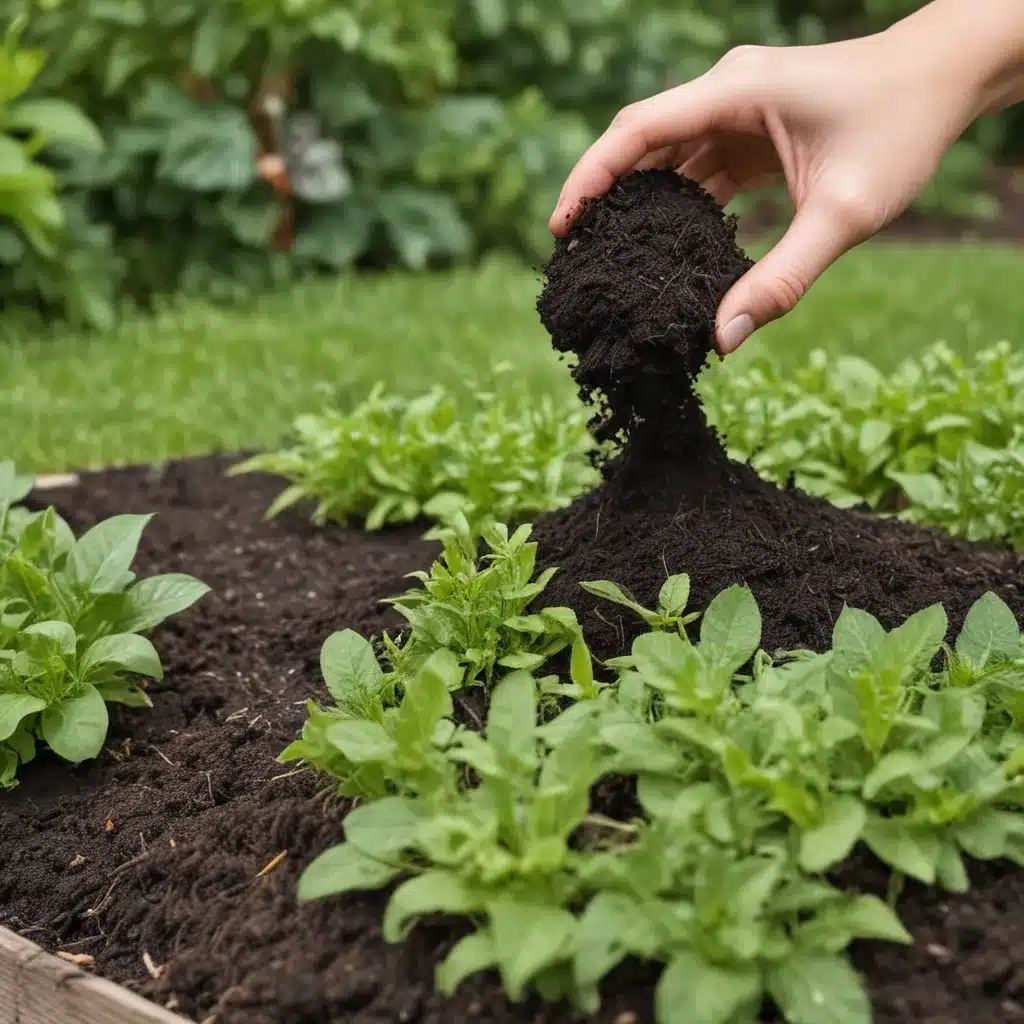
The Magic Elixir for Lush, Vibrant Greenery
Have you ever looked at your potted plants or garden beds and wondered, “Why do they look so dull and lifeless?” Well, my friend, the answer might be simpler than you think – it’s all about the soil. And the secret to reviving your plants? Compost tea, the liquid gold of the gardening world.
You see, I used to be in the same boat as you. I’d water my plants dutifully, feed them the occasional store-bought fertilizer, and yet they just couldn’t seem to thrive. That is, until I discovered the power of homemade compost tea. It was like a lightbulb went off in my head – if I could brew up a batch of this magical elixir, I could give my plants the nourishment they craved, straight from the roots up.
The Benefits of Compost Tea: A Gardener’s Dream Come True
So, what exactly is compost tea, and why is it the key to unlocking your plants’ full potential? Compost tea is a liquid that’s brewed from high-quality compost, packed with all the essential nutrients and beneficial microorganisms your plants need to thrive. It’s like a nutrient-dense smoothie for your garden – think of it as a multivitamin for your leafy friends.
When you apply compost tea to your plants, it does wonders for their overall health and vitality. The microbes in the tea help break down organic matter in the soil, making it easier for your plants to absorb the essential nutrients they need. This, in turn, leads to stronger root systems, lush foliage, and an abundance of vibrant blooms.
But the benefits of compost tea don’t stop there. It can also help suppress plant diseases, improve soil structure, and even attract beneficial insects like ladybugs and lacewings – nature’s very own pest control squad. It’s like having a team of green-thumbed superheroes working around the clock to keep your plants happy and healthy.
Brewing the Perfect Batch of Compost Tea
Now, I know what you’re thinking – “Compost tea sounds amazing, but how do I actually make it?” Fear not, my gardening compatriot, I’m about to let you in on the secrets of compost tea-making.
The process is surprisingly simple, and the best part is that you can customize it to suit your specific needs. Here’s a step-by-step guide to brewing your own batch of compost tea:
-
Gather Your Supplies: You’ll need a large container or bucket, a piece of burlap or cheesecloth, a stirring stick, and, of course, high-quality compost. I prefer to use my own homemade compost, but you can also use store-bought varieties if you don’t have the time or space to make your own.
-
Fill the Container: Start by filling your container about a third of the way with the compost. Then, add water until the container is nearly full, leaving a bit of space at the top for aeration.
-
Steep and Stir: Cover the container with the burlap or cheesecloth, and let the mixture steep for 24-48 hours, stirring it occasionally. This allows the beneficial microbes in the compost to infuse the water, creating a nutrient-rich tea.
-
Strain and Store: Once the steeping time is up, it’s time to strain the compost tea. Use the burlap or cheesecloth to filter out any solid particles, leaving you with a dark, earthy-smelling liquid. Store the tea in a cool, dark place until you’re ready to use it.
And voila! You’ve just brewed your very own batch of compost tea, ready to work its magic on your plants. But the fun doesn’t stop there – let’s talk about how to actually use this liquid gold.
Applying Compost Tea: A Transformative Experience for Your Plants
Okay, so you’ve got your freshly brewed compost tea – now what? The beauty of this stuff is that it’s incredibly versatile, and you can use it in a variety of ways to give your plants the boost they need.
One of the most common methods is to simply pour the tea directly onto the soil around your plants. This allows the microbes and nutrients to seep directly into the root zone, where they can be easily absorbed. I like to do this every couple of weeks during the growing season, just as a little pick-me-up for my greens.
But the fun doesn’t stop there. You can also use compost tea as a foliar spray, misting it directly onto the leaves and stems of your plants. This helps to protect against pests and diseases, while also providing a quick nutrient boost. Just be sure to apply it in the early morning or evening, when the sun is less intense, to avoid any leaf burn.
And let’s not forget about the houseplants! If you’ve got a collection of indoor greenery, compost tea is the perfect way to keep them looking lush and vibrant. Simply water your plants with the tea, or use it as a foliar spray to keep those leaves shiny and happy.
But the real magic happens when you combine compost tea with other natural garden boosters, like worm castings or kelp extracts. It’s like a supercharged nutrient cocktail for your plants, and the results are simply stunning. I’ve seen my vegetables grow to impressive sizes, my flowers bloom with unparalleled vibrancy, and my houseplants transform from drab to downright dazzling.
Troubleshooting Your Compost Tea: A Gardener’s Guide
Of course, as with any gardening endeavor, there’s always the potential for a few hiccups along the way. But fear not, my green-thumbed friends, I’ve got your back.
One common issue that can arise is that the compost tea can develop an unpleasant, sour smell. This is usually a sign that the tea has become anaerobic, meaning it’s lacking in oxygen. To fix this, simply give the tea a good stir or add a bit more water to introduce more air into the mixture.
Another potential problem is that the tea can become too concentrated, leading to leaf burn or other issues for your plants. If you notice this happening, simply dilute the tea with some water before applying it. I like to use a ratio of about 1 part compost tea to 4 parts water.
And let’s not forget about the ever-present threat of pests and diseases. While compost tea can help to ward off these unwanted invaders, sometimes you might still need to take additional measures. I like to keep a close eye on my plants and apply the tea as part of a comprehensive integrated pest management (IPM) strategy.
But the most important thing to remember is that every garden is unique, and what works for one plant might not work for another. It’s all about experimenting, observing, and constantly learning. And hey, even if you do encounter a few hiccups along the way, just remember – that’s all part of the adventure of being a gardener!
Unleash the Power of Compost Tea: Transform Your Garden Today
So there you have it, my fellow plant-loving enthusiasts – the secrets to brewing and using compost tea to create a lush, thriving garden that would make even the most seasoned green thumb green with envy.
Believe me, once you start incorporating this magical elixir into your gardening routine, you’ll never look back. Your plants will be healthier, more vibrant, and practically begging for you to come out and admire them. And let’s not forget about the added bonus of reduced pest and disease issues, and a healthier, more nutrient-rich soil.
So what are you waiting for? It’s time to unleash the power of compost tea and watch your garden transform into a verdant oasis of natural beauty. Grab your bucket, your compost, and get ready to brew up a batch of liquid gold. Your plants are counting on you!
And if you’re in the Aberdeen area and need a little extra help with your home renovation or landscaping projects, be sure to check out ABC Home – they’ve got the skills and expertise to turn your garden dreams into reality. Happy gardening, my friends!


