
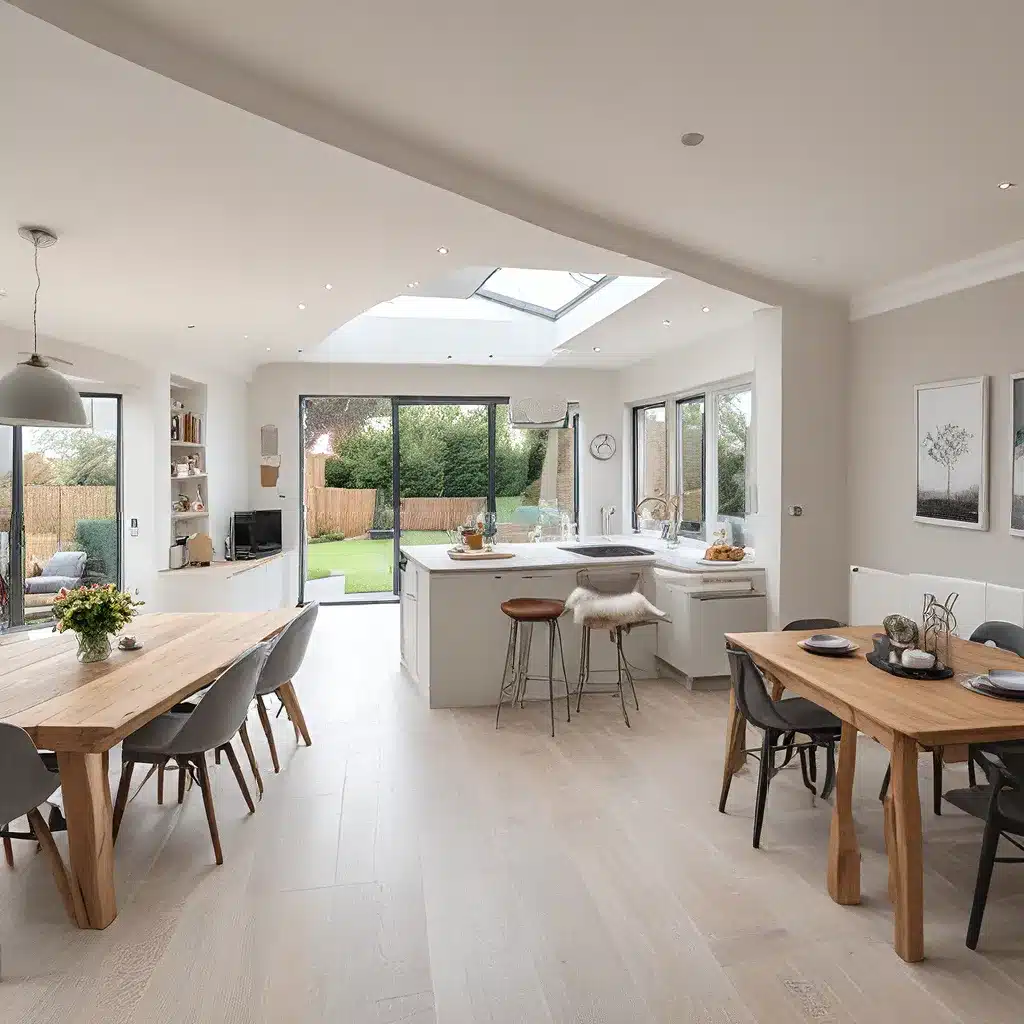
Embracing the Open Concept: Pros and Cons
I’ll admit it – when it comes to home design, I’ve always been a sucker for that sleek, modern open concept look. There’s just something so inviting and airy about a space that flows seamlessly from one area to the next, without obtrusive walls breaking up the space. And let’s be honest, who doesn’t love the idea of being able to cook a delicious meal while simultaneously keeping an eye on the kids in the living room or chatting with guests?
But as I’ve gotten older and my renovation dreams have started to become a reality, I’ve come to realize that the open concept life isn’t always as picture-perfect as the design magazines make it seem. In fact, there are a number of considerations to weigh when deciding whether an open floor plan or a more traditional closed-off layout is the right choice for your home extension.
As one Redditor pointed out, the lack of walls in an open concept home can lead to some serious noise and privacy issues. When the kitchen, living room, and dining area are all merged into one giant space, the sounds of sizzling pans, clanking dishes, and blaring TVs can quickly become overwhelming. And forget about trying to have a quiet phone call or curl up with a good book while someone else is noisily going about their business just a few feet away.
Of course, there are ways to mitigate these acoustic challenges – strategic furniture placement, sound-absorbing materials, and maybe even a few well-placed rugs and curtains can help create some separation. But the reality is, in an open floor plan, you’re always going to have some level of background noise and distraction, whether you like it or not.
And then there’s the matter of keeping prying eyes at bay. As one Houzz user pointed out, having bedrooms that open directly onto the main living area can seriously compromise your family’s privacy. Forget about being able to sneak off for a quiet moment – with an open concept layout, the comings and goings of your kids (and let’s be honest, probably your nosy guests too) are always on display.
The Appeal of Defined Spaces
Now, I know what you’re thinking – “But Liz, if I close off my kitchen and living room, won’t that just make my house feel smaller and more cramped?” And you know what, you’d be absolutely right. One of the main draws of an open floor plan is the way it can make even a relatively modest-sized space feel airy, light, and expansive.
As one Houzz user pointed out, traditional layouts with defined, closed-off rooms can sometimes feel like a series of small, disconnected boxes. And let’s be honest, in today’s fast-paced world, who really wants to feel trapped in a maze of tiny, claustrophobic spaces?
But here’s the thing – just because you opt for a more traditional, closed-off floor plan doesn’t mean you have to sacrifice that open, flowing feel entirely. With clever design tricks like wide doorways, strategically placed windows, and thoughtful furniture arrangement, you can still create a sense of openness and connectivity, without sacrificing the noise control and privacy that comes with defined, separate spaces.
Plus, let’s not forget the practical benefits of having those distinct, closed-off rooms. As one Redditor noted, a more traditional layout can make it a lot easier to contain things like cooking smells, spills, and general messiness that inevitably come with daily life. And let’s be honest, sometimes it’s just nice to be able to retreat to a quiet, cozy nook without the constant hum of activity surrounding you.
Finding the Right Balance
So, if you’re like me and you’re trying to decide between an open concept layout or a more closed-off floorplan for your home extension, what’s the answer? Well, the truth is, there’s no one-size-fits-all solution. It really comes down to carefully weighing the pros and cons of each approach and finding the right balance for your unique needs and lifestyle.
For some families, the benefits of an open concept – the sense of flow, the ability to keep an eye on the kids, the opportunities for hosting and entertaining – might outweigh the drawbacks of increased noise and lack of privacy. As one Houzz user shared, having bedrooms that open directly onto the main living area can actually be a plus, allowing young children to feel included and connected even as they drift off to sleep.
But for others, like myself, the appeal of defined, separated spaces might be the way to go. As that Redditor pointed out, a closed-off kitchen can be a real lifesaver when it comes to containing cooking messes and odors, while also providing a much-needed sense of solitude and calm.
Ultimately, the choice between open concept and closed-off layout comes down to your personal preferences, your family’s needs, and your vision for how you want to use your home. But the good news is, with a little creativity and smart design, you can find a solution that gives you the best of both worlds. As one Mumsnet user shared, even in an open plan home, thoughtful use of sliding doors, divider walls, and zoned furniture arrangement can help create a sense of separation and privacy when you need it.
And who knows, maybe your perfect solution lies somewhere in the middle – a partially open concept layout, with a few strategically placed walls or dividers to create those quiet, cozy nooks. Or perhaps you’ll embrace the trend of the “broken plan” home, with interconnected but distinct zones that offer the best of both worlds.
At the end of the day, the most important thing is finding a floor plan that truly reflects your family’s unique needs and lifestyle. Because when it comes to your home, there’s no one-size-fits-all solution – it’s all about finding that perfect balance between form and function. And with a little creativity and a whole lot of trial and error, I’m confident you can do just that.
Embracing the Unexpected: Flexible Living in Your Extension
Of course, as I mentioned earlier, my own renovation journey has been a bit of a winding road. When my husband and I first started dreaming up plans for our home extension, we were dead-set on that sleek, modern open concept look. But as we dove deeper into the planning process, we quickly realized that a completely open floor plan might not actually be the best solution for our family’s needs.
Like that Redditor, we found ourselves torn between the desire for that airy, connected feel and the practical benefits of a more traditional, closed-off layout. And after countless hours of research, floor plan sketches, and heated discussions, we finally landed on a compromise that we’re really excited about.
Our solution? A “broken plan” layout that offers the best of both worlds. By strategically placing a few key divider walls and sliding doors, we’re able to create distinct zones for cooking, dining, and relaxing, while still maintaining an overall sense of openness and flow. And the best part? These flexible design elements mean we can easily adapt the space to suit our ever-changing needs.
As one Mumsnet user pointed out, the key to making an open plan layout work is finding ways to create defined areas without completely closing them off. And that’s exactly what we’ve tried to do with our extension – mixing and matching open concept and closed-off elements to strike the perfect balance.
For example, in the kitchen, we’ve opted for a partially enclosed design, with a large, L-shaped island serving as a natural divider between the cooking and dining spaces. This allows us to contain messy cooking prep and clean-up while still maintaining an open, airy feel. And when it’s time to entertain, we can simply slide open the pocket doors to seamlessly connect the kitchen to the adjacent living room.
In the living area, we’ve created a cozy, intimate seating arrangement by positioning the furniture around a central fireplace. But we’ve also left the space largely open on one side, with just a partial wall divider to delineate the transition to the dining room. This way, we get the best of both worlds – the coziness and noise control of a closed-off space, with the openness and flow that we love.
And when it comes to the bedrooms, we’ve taken a similar approach. Rather than having them open directly onto the main living area, we’ve tucked them away down a short hallway, giving our family that all-important sense of privacy and separation. But we’ve also included some clever design elements, like partial walls and strategically placed windows, to maintain that open, airy feel throughout the entire home.
As that Houzz user noted, having bedrooms that open directly onto the main living space can be a real double-edged sword. On one hand, it can give young kids a sense of inclusion and connectedness. But on the other, it can seriously compromise your family’s privacy and quiet moments. Our compromise? A hallway that offers the best of both worlds – the privacy and calm of a defined space, with just enough visual connection to the main living area to keep little ones feeling involved.
In the end, our goal with this extension project has been to create a home that’s not only beautiful and functional, but also truly tailored to our family’s unique needs and lifestyle. And by embracing a flexible, “broken plan” approach, we’ve been able to do just that. Sure, it’s taken a lot of careful planning and compromise to get here. But the end result is a space that we know we’ll be able to enjoy for years to come – no matter how our family’s needs and preferences may evolve over time.
So if you’re struggling to decide between open concept and closed-off layouts for your own home extension, I encourage you to think outside the box. Don’t be afraid to mix and match design elements, to experiment with partial walls and strategic dividers, and to really get creative in finding a solution that works for you. Because at the end of the day, the most important thing is creating a home that truly reflects your unique vision and priorities. And with a little bit of ingenuity and a lot of trial and error, I’m confident you can do just that.
After all, that’s what the team at ABC Home Renovations is here to help with – guiding you through the design process, offering expert advice, and turning your renovation dreams into a stunning reality. So why not give them a call and start exploring the endless possibilities for your own home extension today?


