
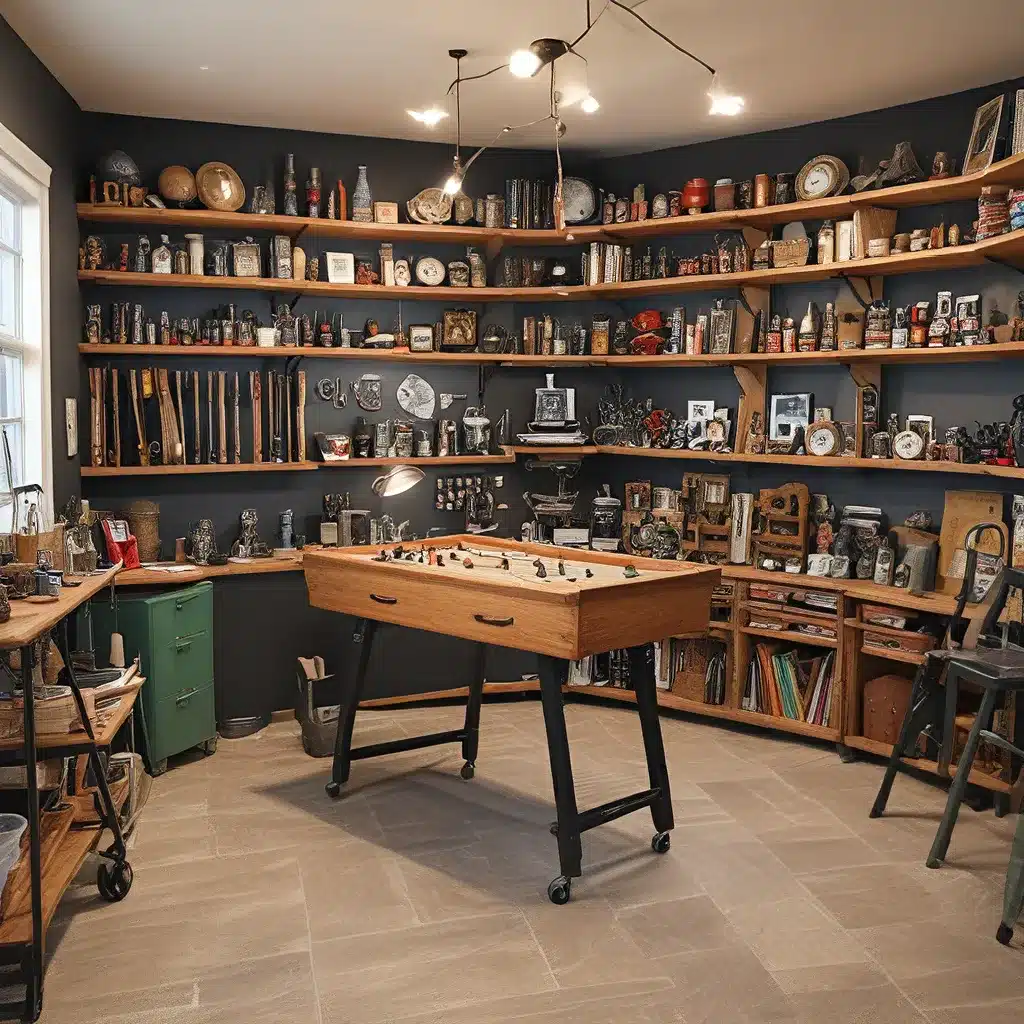
Turning a Small Space into a Productivity Powerhouse
As a lifelong maker and tinkerer, I’ve always dreamed of having the ultimate personalized hobby space. A place where my creativity can run wild, my tools are within reach, and my passion projects can thrive unencumbered. But for many of us, the reality is that our homes simply don’t have the square footage to dedicate an entire room to our hobbies.
That was certainly the case for me. For years, I squeezed my woodworking, electronics, and other projects into the corner of a shared garage. It was cramped, cluttered, and far from optimal. But then I stumbled upon an ingenious solution – a small-space renovation that transformed my modest garage into a highly efficient, meticulously organized, and incredibly versatile hobby oasis. With a few strategic renovations, I was able to pack an impressive array of tools, materials, and workstations into a tight 21 x 9 footprint.
The key, I found, was to approach the project with the same computational thinking and systems-level optimization that I apply to my other endeavors. By rigorously analyzing the workflow, carefully selecting the right equipment and storage solutions, and leveraging clever space-saving techniques, I created a hobby room that is an absolute marvel of productivity and efficiency.
Mastering the Art of Small-Space Organization
When I first started planning my hobby room renovation, I knew I needed to think beyond just cramming as much stuff as possible into the available square footage. The goal was to create a space that was not only highly functional, but also a joy to work in. To achieve this, I drew inspiration from an unlikely source – the workshop of a fellow hobbyist and mechanical engineer, Chris Harpster.
Chris’ approach to organizing his small shop was nothing short of brilliant. He had meticulously planned out every square inch, ensuring that each tool, material, and workstation was strategically positioned for maximum efficiency. The centerpiece of his setup was a large 40 x 96 inch assembly table, with all the critical machines – table saw, planer, jointer, and more – integrated seamlessly around the perimeter.
This modular, workflow-centric design immediately resonated with me. I realized that by placing the most frequently used tools and workstations within easy reach, and creating a smooth, uninterrupted flow of movement, I could turn my cramped garage into a veritable productivity powerhouse. The key would be to resist the temptation to simply cram everything in and instead focus on intentional, optimized organization.
Optimizing Every Square Inch
With Chris’ inspiring example in mind, I set out to meticulously plan and execute my hobby room renovation. The first step was to map out the essential tools, materials, and workstations I needed, and then strategically position them for maximum efficiency.
The centerpiece of my setup, much like Chris’, is a large workbench that serves as the hub of activity. Measuring 40 x 96 inches, this expansive surface provides ample room for projects, with all the critical machines – table saw, planer, jointer, and more – integrated seamlessly around the perimeter. The key innovation here is that the bench is on wheels, allowing me to easily rearrange the layout as needed or even wheel it outside for larger projects.
Surrounding the workbench, I’ve carefully positioned a series of mobile storage solutions, each tailored to a specific need. There’s a rolling tool cabinet stocked with my most frequently used hand tools, a lumber cart for neatly organizing and transporting boards, and a tool wall that keeps my power tools, clamps, and other essential accessories within easy reach.
But the true genius of my hobby room lies in the details. Take, for example, the way I’ve integrated my planer and jointer. Instead of relegating them to separate stations, I’ve cleverly mounted them on sliding drawers that can be easily accessed and used right at the workbench. This not only saves valuable floor space, but also streamlines the workflow, allowing me to move seamlessly between different milling operations.
Another innovative touch is the way I’ve designed the dust collection system. Rather than a single, centralized setup, I’ve opted for strategically placed ports that can be easily connected to each machine as needed. This not only keeps the workspace cleaner, but also ensures that I’m not dragging heavy hoses around, further enhancing the room’s efficiency.
Harnessing the Power of Mobility
One of the key principles that guided my hobby room renovation was the idea of maximizing mobility. After all, the more I can move and rearrange my tools and workstations, the more adaptable and responsive my space becomes.
This philosophy is evident in the design of my workbench, which as I mentioned, is mounted on wheels. But it doesn’t stop there. My tool wall and storage cabinets are also fully mobile, making it a breeze to reconfigure the layout as needed. Even my air compressor and other larger equipment are mounted on casters, allowing me to position them wherever they’re needed.
The benefits of this mobile approach are manifold. For one, it allows me to quickly switch between different tasks and workflows, seamlessly transitioning from woodworking to metalworking or even electronics projects. And when it’s time to deep clean or perform maintenance, I can simply wheel everything out of the way, making the entire process a breeze.
But the true genius of my mobile hobby room lies in its ability to adapt to changing needs and circumstances. As my projects and interests evolve, I can easily rearrange the layout to accommodate new tools and equipment. And when it’s time to move to a new home, I can simply wheel everything out and set it up in the new space with minimal disruption.
Harnessing the Power of Verticality
In addition to maximizing mobility, another key strategy in my hobby room renovation was to take full advantage of the available vertical space. After all, when your square footage is limited, you have to get creative with how you utilize every inch.
One of the ways I’ve done this is by incorporating a series of wall-mounted storage solutions. My tool wall, for example, not only keeps my most frequently used power tools and accessories within easy reach, but it also frees up valuable floor space. And by designing the tool wall to be modular and easily disassembled, I can even take it with me when I move to a new location.
But the real showstopper in my hobby room is the custom-built lumber cart. Measuring just 6 feet long, this mobile storage unit allows me to neatly organize and transport full-sized sheets of plywood, boards, and other materials, all without sacrificing precious floor space. The secret lies in the clever stacking and tiered design, which maximizes vertical storage capacity while keeping everything within easy reach.
And speaking of vertical storage, I can’t forget to mention the ingenious way I’ve integrated my planer and jointer into the workbench setup. By mounting these bulky machines on sliding drawers, I’ve been able to tuck them neatly underneath the bench, freeing up valuable surface area while still keeping them readily accessible.
Crafting a Personalized Oasis
As impressive as the technical and organizational aspects of my hobby room renovation may be, the true magic lies in the way I’ve infused it with my own personal touch. After all, this space is not just a workshop – it’s a sanctuary for my passions, a place where I can truly let my creativity shine.
One of the ways I’ve done this is by carefully curating the tools and equipment that fill the space. Rather than just buying the cheapest or most convenient options, I’ve invested in high-quality, professional-grade tools that not only perform exceptionally well but also bring me joy to use. From the vintage handplanes adorning the tool wall to the custom-built workbench, every element of my hobby room has been carefully selected to reflect my personal style and sensibilities.
But the real personalization comes in the form of the little touches and custom projects I’ve incorporated throughout the space. Take, for example, the hand-crafted clamp racks and chisel holders that adorn the tool wall, or the mobile air compressor cart that I designed and built myself. These bespoke additions not only serve a practical purpose but also imbue the space with a sense of character and ownership.
And of course, no hobby room would be complete without the occasional whimsical flourish. That’s why I’ve added little personal touches like a backlit Spikey logo on the computer tower, or a collection of algorithm-generated ringtones that serve as my phone’s notification sounds. These playful elements not only reflect my nerdy sensibilities but also help to create a truly unique and engaging environment.
A Sanctuary for Creativity and Productivity
As I step back and survey my newly renovated hobby room, I can’t help but feel a deep sense of pride and accomplishment. What was once a cramped and cluttered corner of the garage has been transformed into a veritable oasis of creativity and productivity – a space that not only serves my practical needs but also nourishes my soul.
Every time I step through the door, I’m greeted by a sense of calm and focus. The meticulously organized tools and materials, the smooth workflow, the personal touches – it all comes together to create an environment that is both highly efficient and deeply inspiring. And when I’m working on a project, whether it’s a new woodworking piece or an electronics experiment, the sheer joy and satisfaction I feel is palpable.
Of course, the journey to creating this oasis wasn’t without its challenges. There were countless hours of planning, experimenting, and fine-tuning to get everything just right. But for me, that process was half the fun. It was an opportunity to apply my analytical skills, my passion for optimization, and my deep love of tinkering to a project that truly resonates with me.
And now, as I look to the future, I can’t wait to see how my hobby room will continue to evolve. There are always new tools to acquire, new storage solutions to experiment with, and new ways to refine the workflow. But no matter what changes may come, one thing is certain: this space will always be a sanctuary, a place where I can indulge my passions, hone my skills, and unleash my creativity, all within the confines of a perfectly optimized small-space wonderland.


