
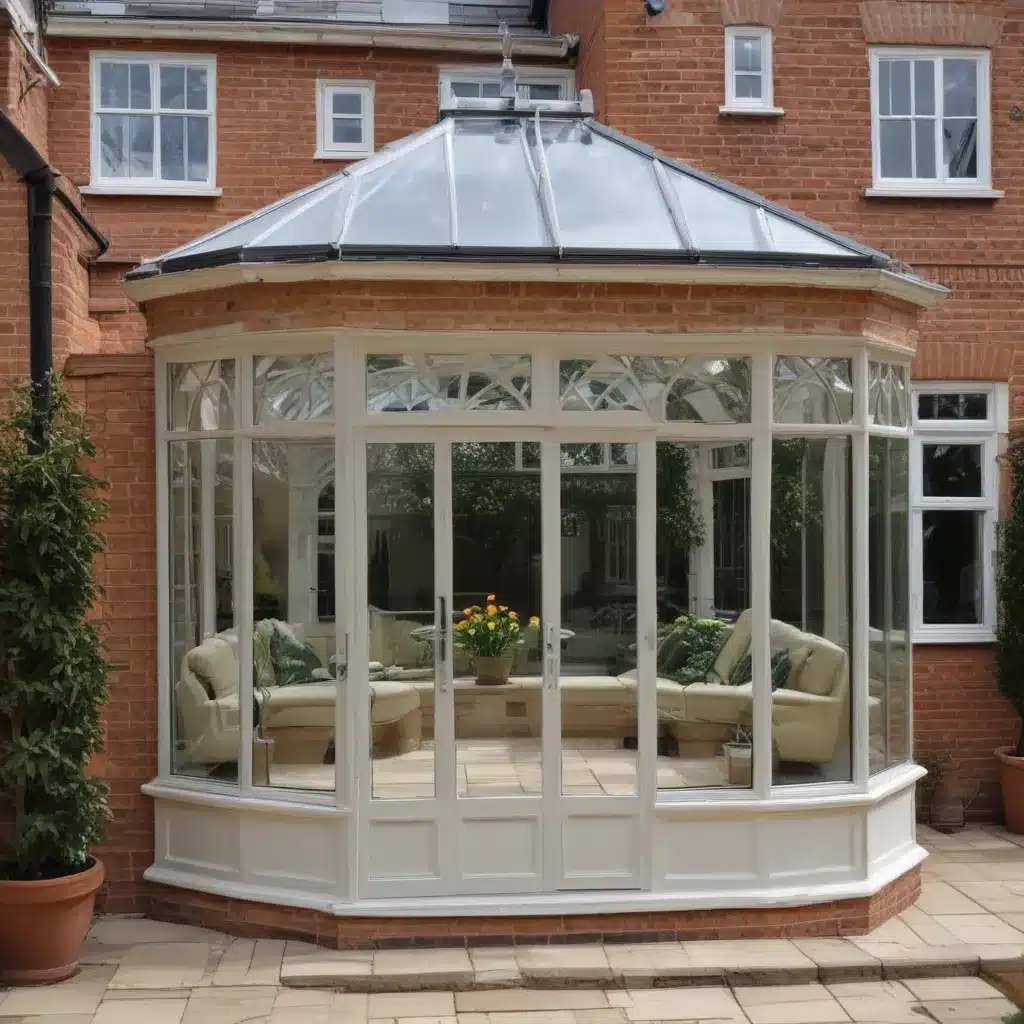
Conservatories: The Classics
Let’s take a trip down memory lane, shall we? When you think of a classic home extension, the first thing that likely comes to mind is a good old-fashioned conservatory. These beloved structures were all the rage back in the 80s, with their fully glazed walls and roofs sitting atop a sturdy brick foundation.
Homeowners were enamored with the idea of easily adding extra living space to their abodes, creating bright and airy rooms that offered unparalleled views of their gardens. Ah, the joys of sipping your morning coffee while surrounded by nature! What’s not to love?
Well, as it turns out, a lot. You see, while conservatories excelled at letting the sunshine in, they had a bit of a reputation for being uncomfortably hot in the summer and downright frigid in the winter. That cozy, connected-to-nature feeling could quickly turn into a sauna or an icebox, depending on the weather. And let’s not forget the dreaded uPVC material, which had a tendency to yellow and date the entire structure over time.
As the team at Westbury Garden Rooms explains, “traditional conservatories earned a reputation for feeling hot and stuffy in the summer and cold in the winter. The uPVC also had a tendency to date and turn yellow; not exactly a desirable look.”
Ouch, that’s a bit of a bummer. But fear not, my friends, for there is a solution on the horizon. Enter the orangery, the more sophisticated and practical cousin of the classic conservatory.
The Rise of the Orangery
Ah, the orangery – a true symbol of luxury and elegance. These magnificent structures were first built in the 17th century, when the European elite (read: the super-wealthy) became obsessed with growing citrus trees indoors. You see, these delicate plants required a carefully controlled environment to thrive, and what better way to achieve that than with a dedicated glass-roofed room?
As Ultraframe explains, “Traditionally, orangeries were grand, ostentatious buildings used to grow orange trees in large period homes. The solidity of the pillars sheltered the oranges, but large expanses of glass ensured the sun’s warmth cultivated the plants.”
These stunning spaces weren’t just functional, though – they were also a symbol of wealth and prestige. The aristocracy loved their orangeries, seeing them as a way to add a touch of opulence and grandeur to their already impressive estates. I mean, can you imagine sipping your Earl Grey while surrounded by the fragrance of blooming citrus? Talk about living the high life!
Of course, as the years passed, the popularity of orangeries waned a bit, and the humble conservatory took center stage. But just as we were starting to write off these elegant structures, a remarkable thing happened – they made a comeback!
According to the experts at Westbury Garden Rooms, “The conservatory’s decline in popularity in recent years has led to a huge rise in homeowners opting for contemporary orangeries instead. Combining balanced design with flawless functionality, a garden room or orangery extension is still the height of luxury and carries an air of sumptuous elegance.”
Orangeries vs. Conservatories: The Showdown
So, what exactly sets an orangery apart from a conservatory? Well, my friends, it all comes down to the details.
First and foremost, there’s the roof. While a conservatory is typically adorned with a fully glazed roof, an orangery boasts a more solid structure, with a glass parapet (that’s a fancy way of saying “low wall”) surrounding a central lantern or skylight. This design choice not only adds a touch of architectural flair, but it also helps to improve the overall insulation of the space.
As Ultraframe explains, “An orangery typically has a solid roof – that helps to insulate the space – with a glazed parapet, while a conservatory has a fully glazed roof. In addition, an orangery will often feature a dwarf wall or columns that provide insulation, where as a conservatory has less insulation and more glazing.”
This means that orangeries are generally warmer in the winter and cooler in the summer, making them a more practical choice for year-round use. Plus, the solid roof and insulated walls help to dampen any unwanted noise from the great outdoors, creating a more serene and tranquil atmosphere.
But the differences don’t stop there. Orangeries also tend to feature a higher proportion of brick or stone in their construction, compared to the predominantly glazed walls of a conservatory. This gives them a more substantial, architecturally-integrated feel, blending seamlessly with the existing structure of the home.
As the team at Framemaster puts it, “Orangeries are seen on smaller homes and are glazed structures more like conservatories. They tend to have more solidity in the roof with the use of a lantern and flat roof or an internal pelmet around the perimeter of the ceiling and usually have pillars made from brick or super-insulated aluminium columns, which add an element of grandeur.”
In other words, while conservatories are all about maximizing that connection to the great outdoors, orangeries strive for a more balanced, harmonious integration between the interior and exterior spaces. They’re the perfect compromise between a traditional extension and a fully-glazed sunroom.
The Best of Both Worlds: Garden Rooms
But wait, there’s more! If you’re really looking to blur the lines between indoor and outdoor living, you might want to consider a garden room. These stunning spaces take the best of both orangeries and conservatories and combine them into a truly exceptional home addition.
According to Westbury Garden Rooms, “A garden room is similar to an orangery with semi-glazed walls, but with a roof made entirely from tiles instead of a roof lantern. A garden room is more likely to look like a part of the building it’s adjoined to rather than an additional add-on, with matching tiles, brickwork and other details.”
These stunning spaces feature a high-pitched roof, often with a dramatic glazed gable that floods the room with natural light. And the best part? The tile roof means you get all the insulation and noise-dampening benefits of an orangery, with the added architectural charm of a more traditional extension.
As Everest explains, “An orangery bridges the gap between a conservatory and a fully loaded single-storey extension. That’s the best way to think of it and is the main difference between an orangery and a conservatory. By being the middle ground between conservatories and extensions, orangeries offer the best of both worlds while being a cost-effective home improvement.”
So, whether you’re drawn to the classic elegance of an orangery or the bright, airy vibe of a conservatory, there’s a home extension option out there that’s sure to suit your style and budget. And who knows, you might even end up with a stunning garden room that seamlessly blends the indoors and outdoors, creating a truly one-of-a-kind oasis right in the heart of your ABC Home in Aberdeen.
Choosing the Right Option for Your Home
Now, I know what you’re thinking – with all these different options, how the heck am I supposed to choose the right one for my home? Well, fear not, my friends, because I’ve got some expert advice to help you navigate the world of home extensions.
First and foremost, it’s important to consider the size and style of your existing property. As Ultraframe points out, “Orangeries, due to their rectangular shape, work better with smaller homes. However, covering too much surface area with an oversized orangery could ruin the visual appeal of your home.”
On the other hand, if you’ve got a bit more square footage to play with, a conservatory or even a bespoke, custom-designed option might be the way to go. As Ultraframe explains, “If you live in a bigger house, you can have conservatories designed bespoke to fit your available space. This is another difference between conservatories and orangeries.”
Another important factor to consider is the overall aesthetic of your home. As Ultraframe notes, “Orangeries will more naturally suit older homes. Our installers should be able to match the brickwork of your home to your orangery, which can help maintain its period charm. Although conservatories can be tailored to suit older properties, an orangery will blend more effortlessly.”
So, if you’ve got a charming, historic home, an orangery might be the way to go. But if you’re working with a more modern abode, a sleek, contemporary conservatory could be the perfect fit.
Of course, at the end of the day, the most important thing is that you choose an option that truly speaks to your personal style and brings you joy. Whether that’s a classic conservatory, a grand orangery, or a stunning garden room, the team at ABC Home is here to help you make it happen.
So, what are you waiting for? It’s time to start dreaming up your ultimate home extension and bring a little bit of the great outdoors into your cozy, comfortable indoor oasis. Who knows, you might even end up with your very own citrus grove – just like the aristocrats of old!


