
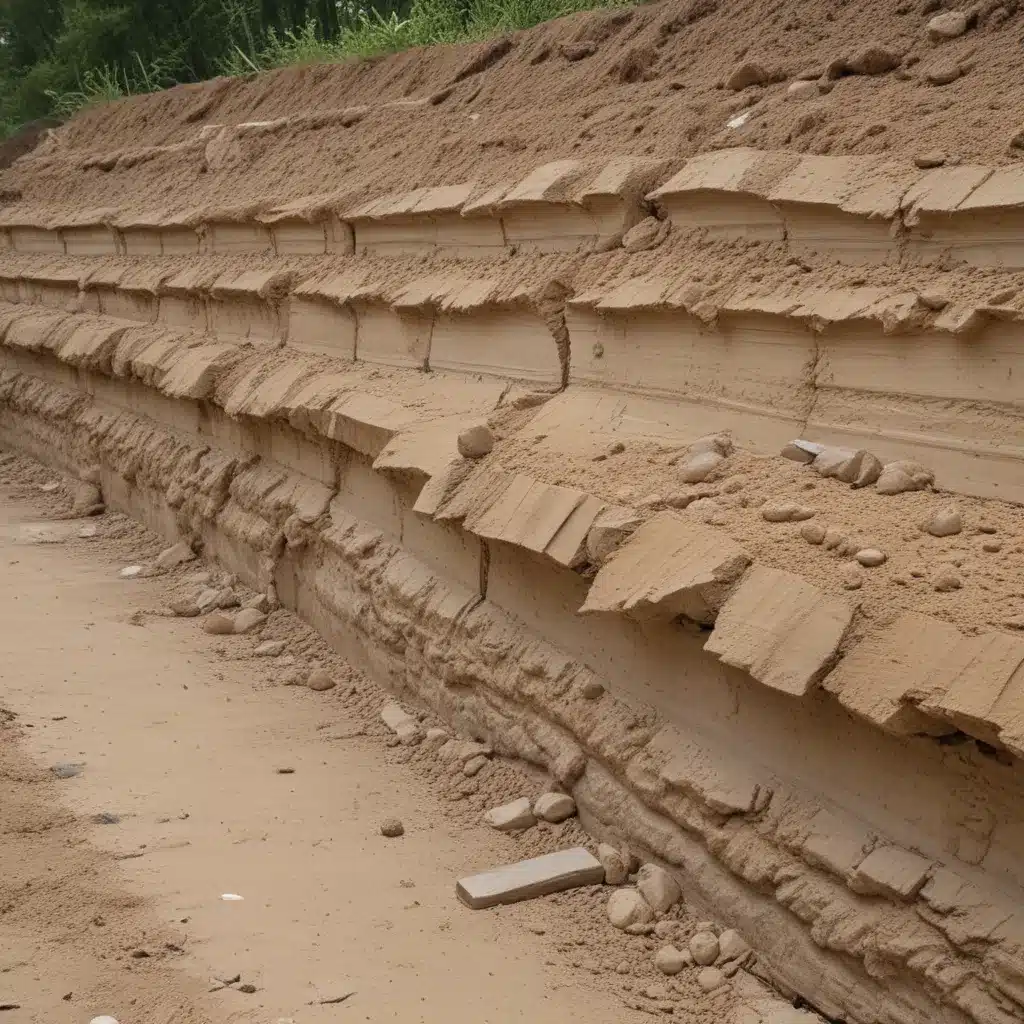
The Unseen Nemesis: Soil Erosion and Your Home’s Foundation
As a homeowner in Aberdeen, UK, I know all too well the importance of maintaining a sturdy foundation. After all, it’s the very backbone of our beloved abodes, supporting the structure and keeping our homes standing tall. But did you know that one of the biggest threats to your foundation’s integrity is something as seemingly innocuous as soil erosion?
It’s true! This unassuming natural process can wreak havoc on your home if left unchecked. And let me tell you, I’ve seen the devastating consequences firsthand. Just last year, my neighbor Angus discovered a gaping chasm had opened up right beside his house, all because the soil had been slowly washing away over time. Talk about a rude awakening!
Soil erosion can be hazardous to your home and a building’s foundation, even if you don’t live in a particularly rainy area. You see, the soil surrounding your home’s foundation acts as a crucial support system, anchoring it in place. But when that soil gets stripped away, the weight of the house becomes concentrated on a smaller area, leaving the foundation exposed and vulnerable to further erosion.
The Perils of Pooling and Runoff
Now, you might be thinking, “But my house is nowhere near a river or the sea – how could soil erosion possibly be an issue?” Well, my friend, it’s all about the way water moves around your property. Have you ever noticed a specific path that water takes after a rainfall? Perhaps it rushes down the sides of your home rather than into the gutters, or maybe it forms unsightly pools in certain areas of your landscaping.
These are all telltale signs that your drainage system isn’t quite up to par, and that rainwater is finding its own way to flow – often right around the foundation. Over time, this constant flow of water can gradually wear away the soil, leaving your home’s support system high and dry.
The Cracks and Crumbles
And the consequences of this erosion can be quite severe. As the soil gets washed away, the weight of the house becomes particularly concentrated on a small area, which can lead to cracks, settling, and even structural failures. Suddenly, that sturdy foundation you once took for granted starts to look a little worse for wear, with cracks snaking up the walls and uneven floors that make you feel a bit seasick.
Trust me, I’ve seen it happen. My cousin Angus thought his house was built like a fortress, but after a few heavy rainstorms, the soil around his foundation started to erode, and before he knew it, his once-level floors were as wavy as the North Sea. It was a real wake-up call, let me tell you.
Preventing the Inevitable
But fear not, my fellow homeowners! There are plenty of ways to keep that pesky soil erosion at bay and protect your foundation from the ravages of Mother Nature. The key is to be proactive and implement some strategic landscaping and drainage solutions before the damage is done.
One of the best ways to start is by taking a good, hard look at your home’s surroundings. Pay attention to how rainwater moves around your property – does it flow neatly into the gutters and downspouts, or does it seem to have a mind of its own? If it’s the latter, it’s time to take action.
Landscaping to the Rescue
One of the most effective ways to combat soil erosion is through strategic landscaping. Planting grass, flowers, and other greenery around your home’s foundation can help hold the soil in place and prevent it from being washed away. The roots of these plants act as a natural anchor, keeping the earth firmly in place even during heavy downpours.
Just be sure to steer clear of planting trees too close to your foundation, as their roots can actually cause more harm than good, slowly pushing and cracking the concrete over time. Trust me, you don’t want to end up like my neighbor Angus, whose towering oak tree practically swallowed his house whole!
Drainage Drainage Drainage
But landscaping is only half the battle. Ensuring your home has a proper drainage system is also crucial in the fight against soil erosion. Things like gutters, downspouts, and French drains can all play a vital role in redirecting water away from your foundation and minimizing the risk of erosion.
Now, I know what you’re thinking – “But I already have gutters and downspouts, so I’m golden, right?” Well, not necessarily. It’s important to keep a close eye on these systems and make sure they’re in tip-top shape. After all, a clogged gutter or a downspout that’s not properly positioned can send water cascading right back down towards your foundation, undoing all your hard work.
Slope and Swale
And speaking of water redirection, another key factor in preventing soil erosion is the slope of the ground around your home. Experts recommend a 3% to 5% slope for the first 10 feet around your foundation to ensure water flows away from the house instead of pooling up against it.
If your property doesn’t naturally have this kind of slope, fear not – you can always create a moisture barrier or a slanting swale to help guide the water in the right direction. It may take a bit of elbow grease, but trust me, your foundation will thank you in the long run.
A Foundation of Knowledge
Now, I know all of this might sound a bit daunting, but trust me, the team at ABC Home & Renovation in Aberdeen has got your back. They’ve seen it all when it comes to foundation issues, and they know exactly how to keep those pesky soil erosion problems at bay.
So, don’t wait until it’s too late – take action now to protect your home’s foundation from the ravages of erosion. With a little bit of strategic planning and some good old-fashioned elbow grease, you can keep your house standing tall and proud for years to come. And who knows, maybe one day you’ll even be the one giving advice to your neighbor Angus on how to keep his foundation in tip-top shape!


