
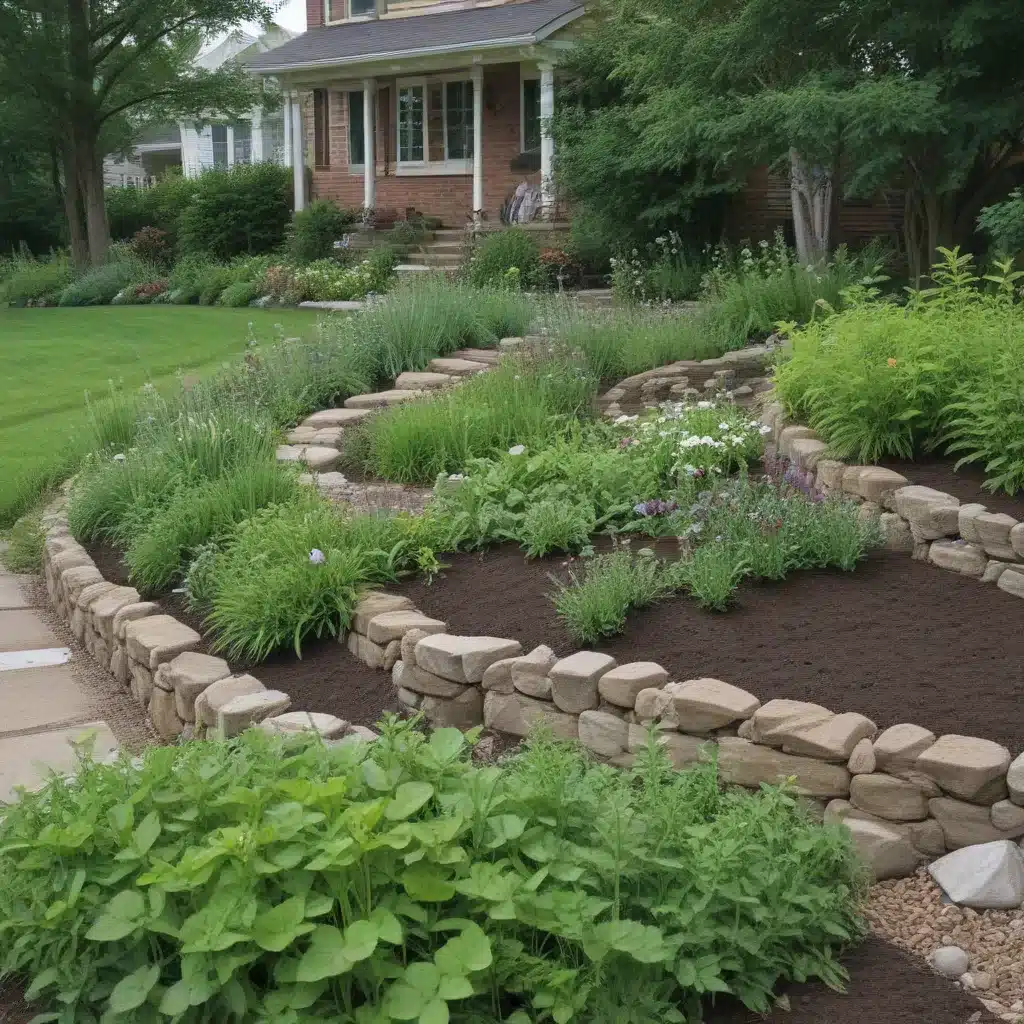
The Secret Superheroes of Stormwater Management
I’ll admit, when I first heard about rain gardens, I thought they were just another one of those high-maintenance, fussy landscaping trends. You know, the kind that look pretty for a month or two before turning into an overgrown mess. Boy, was I wrong.
As it turns out, rain gardens are the unsung heroes of stormwater management – quietly working behind the scenes to protect our waterways and add a touch of natural beauty to our urban landscapes. And the best part? They’re actually pretty easy to maintain, even for a perpetually distracted gardener like myself.
Let me take you on a journey through the fascinating world of rain gardens, and show you how these little oases can make a big difference in your community.
Understanding the Rain Garden Phenomenon
So, what exactly is a rain garden, and how does it work its magic? In simple terms, a rain garden is a shallow, bowl-shaped depression in the landscape that’s designed to collect and filter runoff from impervious surfaces like roofs, driveways, and sidewalks.
According to Ohio State University, rain gardens are a form of “green infrastructure” that help slow down and soak in stormwater, reducing the amount of pollutants that end up in our waterways. By planting them with native, water-loving plants, rain gardens can capture up to 30% more water than a traditional lawn, and filter out contaminants like fertilizers, pesticides, and motor oil along the way.
And the best part? They’re not just functional – they’re downright beautiful. The folks at Cedar Grove Composting explain that rain gardens are typically filled with lush, flowering perennials and grasses that not only beautify the landscape, but also provide food and shelter for pollinators and other wildlife.
The Environmental Benefits of Rain Gardens
Now, I know what you’re thinking – “That’s great and all, but how does a rain garden really make a difference?” Well, my friend, let me tell you, the impact of these little gardens is anything but small.
According to the Wisconsin Department of Natural Resources, rain gardens can capture and filter up to 30% more water than a standard lawn. That’s a significant amount of runoff that would otherwise be carrying all sorts of nasty pollutants straight into our lakes, rivers, and streams.
And it’s not just about keeping our waterways clean – rain gardens also help to recharge groundwater supplies and reduce the risk of flooding. By slowing down the flow of stormwater and allowing it to soak into the soil, rain gardens help to prevent the kind of sudden, intense runoff that can lead to flash floods and erosion.
But the benefits don’t stop there. The EPA notes that rain gardens also serve as valuable green infrastructure, helping to reduce the urban heat island effect and providing habitats for all sorts of beneficial critters, from butterflies to songbirds.
It’s a win-win-win situation, if you ask me. And the best part is, anyone can get in on the action and start their own rain garden project.
Building Your Own Rain Garden Oasis
Now, I know what you’re thinking – “That all sounds great, but how do I actually go about creating a rain garden of my own?” Well, fear not, my friend, because the process is actually quite straightforward.
The first step is to choose the right location. According to Cedar Grove Composting, you’ll want to find a spot that’s relatively flat and positioned to collect runoff from your roof, driveway, or other impervious surfaces. Avoid areas with steep slopes or underground utilities, and make sure the soil is well-draining.
Once you’ve got your spot picked out, it’s time to start digging. The rain garden should be shallow, with gently sloping sides, and just deep enough to hold the runoff from a typical storm event. The EPA recommends a depth of 4-8 inches, depending on the size of your garden.
Next up, it’s time to get planting! Richland SWCD suggests choosing a mix of native perennials, grasses, and even some shrubs that are well-suited to your local climate and soil conditions. These plants will not only help to filter the runoff, but also add a touch of natural beauty to your landscape.
And don’t worry, maintaining a rain garden is actually pretty low-key. According to Cedar Grove Composting, all you really need to do is give your plants a little TLC, remove any pesky weeds, and replenish the mulch as needed. Easy peasy!
Bringing it All Together: The Rain Garden Revolution
So, there you have it – the lowdown on rain gardens and how they can make a big difference in your community. From improving water quality to providing a haven for wildlife, these little gardens are the unsung heroes of stormwater management.
And the best part? Anyone can get in on the action and start their own rain garden project. Whether you’ve got a sprawling backyard or a tiny urban oasis, there’s a spot just waiting to be transformed into a beautiful, functional rain garden.
So, what are you waiting for? Grab your shovel, pick out some native plants, and let’s get to work on creating a rain garden that’s sure to be the envy of the neighborhood. Trust me, your local waterways (and the critters that call them home) will thank you.


