
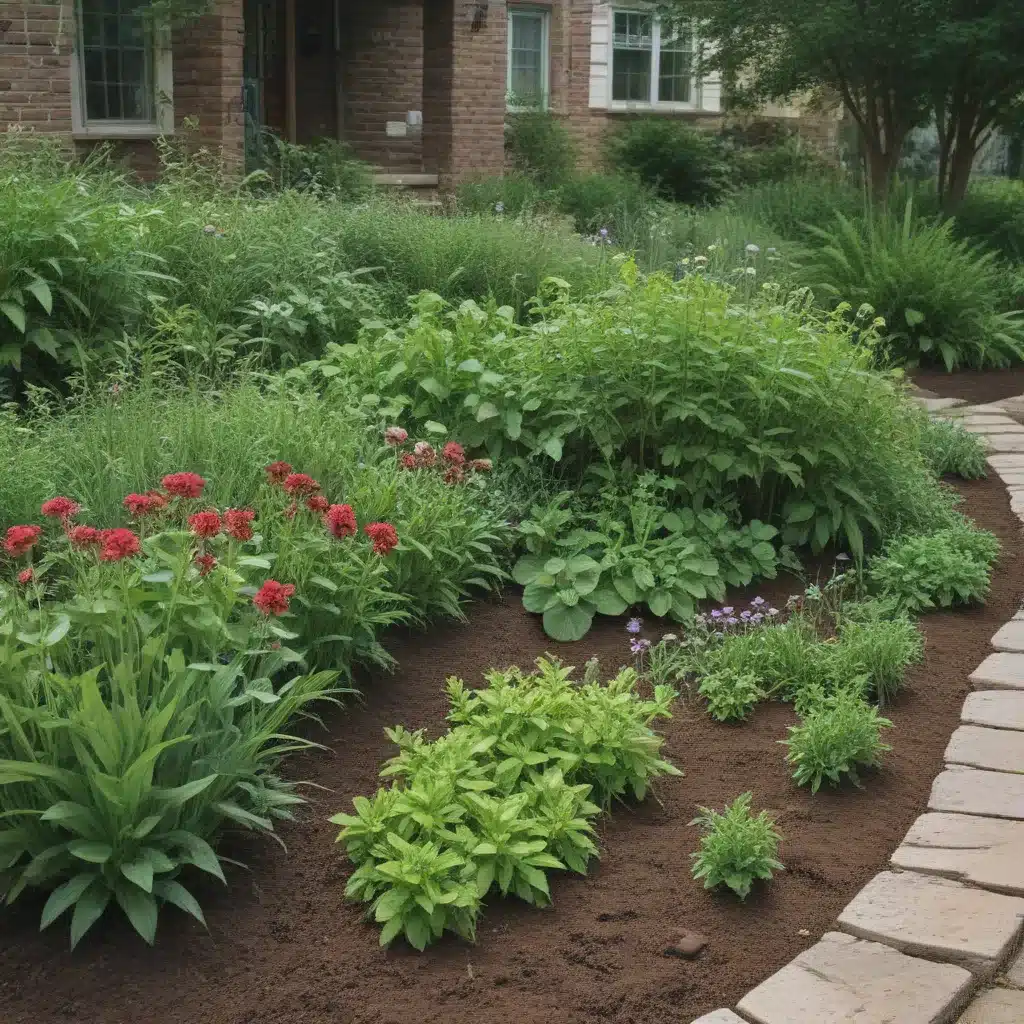
Tackling Stormwater Runoff, One Garden at a Time
As a homeowner in Aberdeen, I know all too well the frustration of dealing with heavy rainfall and the resulting flooding and erosion. It seems like every time a storm rolls in, my yard turns into a muddy mess, and I end up with puddles that linger for days. But I recently discovered a solution that has completely transformed my outdoor space – the magical world of rain gardens.
What is a Rain Garden?
Simply put, a rain garden is a shallow, bowl-shaped depression in your yard that’s designed to capture and infiltrate stormwater runoff. These nifty little gardens work just like nature intended, snatching up rainwater before it has a chance to turn into polluted runoff. And the best part? They’re not just functional – they can also be absolutely stunning, with a vibrant array of native plants that attract all sorts of pollinators and wildlife.
According to the National Resources Conservation Service, rain gardens are typically positioned to receive runoff from hard surfaces like roofs, driveways, and patios. They’re designed to hold water for a day or two, allowing it to slowly soak into the ground instead of rushing off into the stormwater system or nearby waterways.
The Benefits of Rain Gardens
But why should you care about rain gardens, you ask? Well, my friend, let me tell you – these little oases offer a whole host of benefits that go far beyond just keeping your yard from turning into a swamp.
For starters, they’re a game-changer when it comes to water quality. By trapping pollutants like motor oil, pet waste, and fertilizers, rain gardens help prevent these nasty substances from making their way into our precious local waterways. And that’s not just good for the environment – it’s also crucial for protecting the health of our communities.
But the benefits don’t stop there. Rain gardens also help recharge the groundwater supply, which is essential for maintaining a healthy local ecosystem. And let’s not forget about the aesthetic appeal – these gardens can transform a drab, lifeless yard into a vibrant, nature-inspired oasis that’s a joy to behold.
Designing Your Dream Rain Garden
Okay, so you’re convinced that a rain garden is the way to go. But where do you even start? Well, my fellow DIY enthusiasts, the process is actually quite straightforward.
First and foremost, you’ll want to identify the perfect spot for your rain garden. According to the University of Minnesota Extension, the ideal location is a low-lying area that’s a safe distance from your home’s foundation and any other structures. You’ll also want to make sure the soil is well-draining, as you don’t want your rain garden to turn into a permanent puddle.
Once you’ve got your location squared away, it’s time to start planning the design. The University of Minnesota Extension recommends going with a crescent or kidney shape, as these tend to be the most visually appealing. As for the size, they suggest aiming for 10-20% of the area of the hard surface you’re draining into the garden.
Now, the fun part – choosing your plants! When it comes to rain gardens, native species are the way to go. Not only do they thrive in the wet conditions, but they also provide vital habitat for local pollinators and wildlife. Think vibrant wildflowers, sturdy grasses, and maybe even a few shrubs for added visual interest.
Bringing It All Together
So, there you have it – the lowdown on rain gardens and how they can help tackle the pesky problem of stormwater runoff. And the best part? You can easily incorporate one into your own home renovation or landscaping project here in Aberdeen.
By creating a beautiful, nature-inspired rain garden, you’ll not only be doing your part to protect our local waterways, but you’ll also be transforming your outdoor space into a true oasis. And who knows – you might even spot a few new feathered or buzzing friends stopping by to enjoy the show.
So, what are you waiting for? Let’s get digging and start building a brighter, greener future for our community, one rain garden at a time!


