
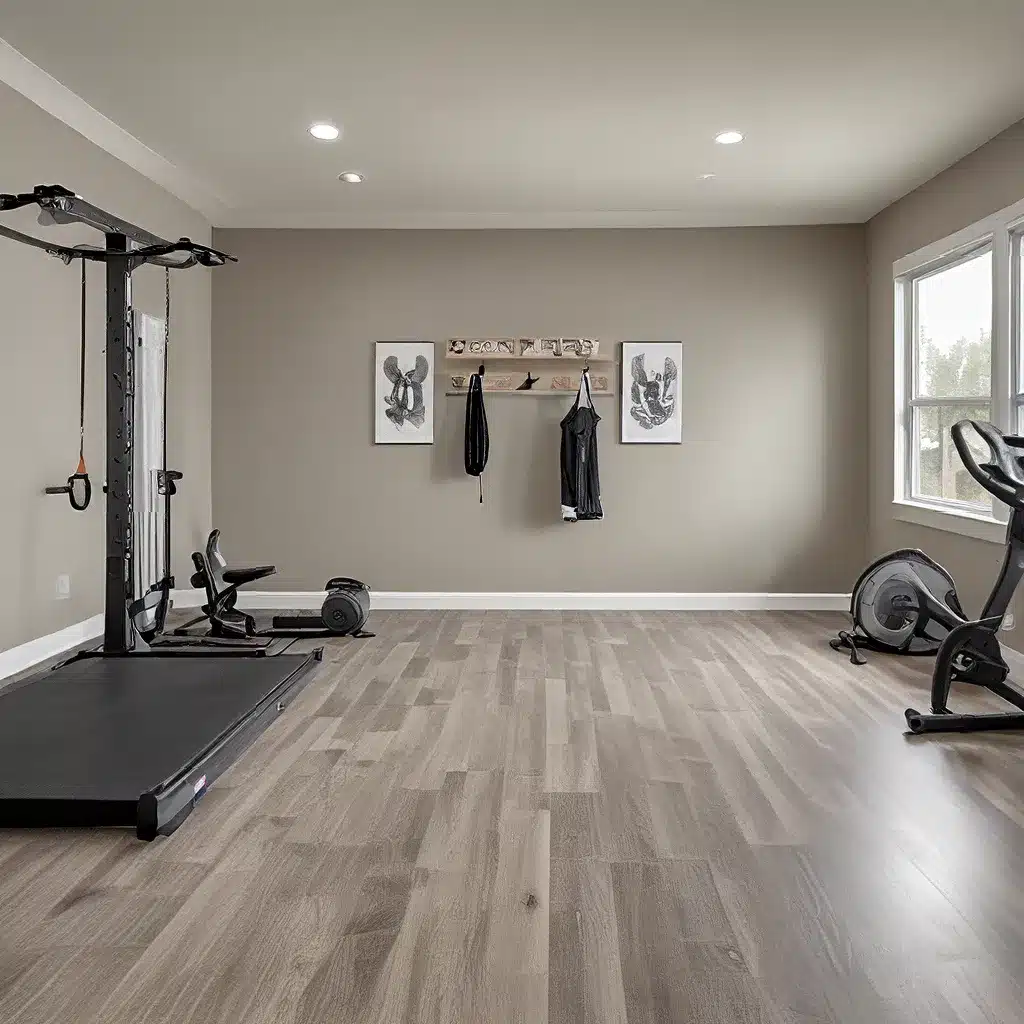
Redesigning the Home Gym: Room-by-Room Renovation Insights
Transforming Your Personal Fitness Space
Let me let you in on a little secret – building a home gym was one of the best personal investments my husband and I ever made. You see, we’re both busy professionals, with full-time jobs and two young kids at home. Finding the time to exercise regularly was a constant struggle. That is, until we decided to carve out a dedicated fitness space right in our own house.
Back in our first home, our gym setup was pretty basic – just an elliptical, a stationary bike, a weight bench, and some free weights. It got the job done, but it didn’t exactly scream “high-performance training facility.” When we moved into our second house, we knew we wanted to level up. We bumped out the back wall to create more floor space and added a pull-up bar. But it wasn’t until we designed our current home gym that we felt like we had truly nailed the perfect fitness oasis.
You see, my husband is a bit of a home gym aficionado. He spent countless hours researching the best equipment, layout, and design to create a space that could rival even the most hardcore commercial gyms. And let me tell you, he spared no expense. This room is the stuff of fitness fanatics’ dreams – floor-to-ceiling mirrors, a massive power rack, an assortment of free weights, and even gymnastic rings suspended from the ceiling. It’s a true sanctuary for anyone looking to get in shape.
Whether you’re starting from scratch or looking to revamp an existing home gym, the key is to approach the design thoughtfully and strategically. From carving out the perfect square footage to selecting the right equipment, there are so many factors to consider. That’s why I’m excited to share my room-by-room insights to help you create the ultimate home fitness oasis.
Defining Your Fitness Goals
Before you even start planning the physical layout of your home gym, it’s important to take a step back and think about your specific fitness goals. Are you training for a particular sport or event? Do you want to focus on building muscle, improving cardiovascular health, or achieving a balanced, full-body workout? Knowing the answer to these questions will be crucial in guiding the equipment and design choices you make.
For example, if your primary focus is on strength training, you’ll want to prioritize a solid power rack, a variety of free weights, and maybe even some specialty pieces like a glute-ham developer. On the other hand, if you’re more interested in high-intensity interval training (HIIT) or cardio-focused routines, you might want to allocate more square footage for plyometric exercises and include equipment like treadmills, rowers, or assault bikes.
Tip: Don’t be afraid to get specific with your goals. The more clearly you can define what you want to achieve, the easier it will be to design a home gym that truly serves your needs.
Maximizing Your Space
One of the biggest challenges in designing a home gym is working within the confines of your available square footage. After all, most of us don’t have the luxury of an entire unused room or even a spacious garage to dedicate to our fitness pursuits. But that doesn’t mean you can’t create an incredible workout space – it just takes a bit of strategic planning.
When it comes to maximizing your square footage, the key is to think vertically. Install wall-mounted storage racks for your dumbbells, kettlebells, and other accessories. Hang resistance bands, TRX straps, or gymnastic rings from the ceiling. And if you have the ceiling height, consider adding a pull-up bar or even a power rack with a built-in platform.
Another space-saving tip is to be thoughtful about the equipment you choose. Opt for multi-functional pieces that can serve multiple purposes, like an adjustable bench that can be used for presses, rows, and ab work. And don’t be afraid to get creative with your layout – arrange your cardio equipment, like treadmills or exercise bikes, in a way that maximizes the open floor space for strength training and plyometric exercises.
Tip: Measure your space carefully and create a detailed floor plan before making any purchases. This will help you avoid costly mistakes and ensure that every square inch of your home gym is optimized.
Selecting the Right Equipment
When it comes to equipping your home gym, the options can be overwhelming. From the latest high-tech cardio machines to a simple set of resistance bands, there’s no shortage of fitness gear to choose from. But with a little research and careful consideration, you can build a well-rounded, future-proof setup that will serve you well for years to come.
One brand that my husband and I have become particularly enamored with is Rogue Fitness. This company specializes in commercial-grade equipment designed for hardcore home and garage gyms. Their racks, barbells, and accessories are built to last a lifetime, and the quality is simply unparalleled. Plus, with a wide range of customization options, you can create a truly personalized fitness oasis.
But Rogue isn’t the only game in town. Brands like Titan, REP Fitness, and even some big-box retailers like Walmart and Target are offering impressive home gym setups at a variety of price points. The key is to do your research, read reviews, and select equipment that aligns with your specific fitness goals and space constraints.
Tip: Don’t be afraid to start small and build out your home gym over time. You don’t need to invest in every piece of equipment right away. Focus on the essentials first, and gradually add on as your needs and budget allow.
Designing for Form and Function
Once you’ve nailed down your fitness goals and selected your equipment, it’s time to start thinking about the overall design and layout of your home gym. And trust me, this is where the fun really begins.
One of the first decisions you’ll need to make is the flooring. Rubber tiles or mats are always a safe bet, as they provide a durable, non-slip surface that’s easy to clean and maintain. They also offer a bit of cushioning to protect your joints during high-impact exercises. If you’re feeling extra fancy, you could even consider specialized gym flooring with built-in shock absorption or customized designs.
Next up, think about the walls. Mirrors are an absolute must-have, as they not only make the space feel more expansive but also allow you to check your form during exercises. You can even go the extra mile and install full-length, floor-to-ceiling mirrors for a truly professional look. And don’t forget about the walls themselves – a fresh coat of paint in a bold, motivating color can do wonders for the overall ambiance.
Finally, don’t overlook the importance of lighting and ventilation. Bright, energy-efficient LED fixtures will help you stay focused and energized during your workouts, while strategically placed fans or even a mini-split air conditioning unit can keep you cool and comfortable, even during your most intense sessions.
Tip: Don’t be afraid to infuse your personal style into the design. After all, this is your own private fitness oasis – it should reflect your unique personality and aesthetic preferences.
Cultivating the Mindset
Of course, designing the perfect home gym is only half the battle. The other, perhaps more important, piece of the puzzle is cultivating the right mindset to actually use it. And trust me, I know from experience that this can sometimes be the trickiest part.
You see, when we first built our current home gym, I’ll admit that I was a bit intimidated by all the fancy equipment and the sheer size of the space. I worried that I wouldn’t be able to keep up with my husband’s intense training regimen, or that I’d feel self-conscious working out in such a grand, almost commercial-grade facility.
But slowly but surely, I’ve managed to overcome those initial reservations and embrace the gym as my own personal sanctuary. I’ve found that having a dedicated fitness space, free from the distractions of everyday life, has actually made it easier for me to prioritize my workouts and stick to a consistent routine.
And the best part? The more I use the gym, the more I’ve come to love it. I’ve discovered new exercises, pushed myself in ways I never thought possible, and even managed to rope the kids in for some family fitness sessions. It’s become a source of both physical and mental rejuvenation, a place where I can escape the stresses of the day and focus solely on my well-being.
Tip: Don’t be afraid to start small and gradually build up your confidence and fitness level. Remember, the most important thing is that you’re making the effort to prioritize your health and wellness.
Conclusion: Embrace the Journey
Redesigning your home gym can be a deeply personal and rewarding experience. It’s not just about creating a functional fitness space – it’s about crafting a sanctuary where you can push your boundaries, discover new passions, and ultimately, become the best version of yourself.
Sure, it may take some time, effort, and a fair bit of trial and error to get the perfect setup. But trust me, the payoff is more than worth it. Whether you’re starting from scratch or looking to revamp an existing gym, I encourage you to approach the process with an open mind, a willingness to experiment, and a deep respect for your unique fitness needs and goals.
After all, the beauty of a home gym lies not just in the equipment or the design, but in the journey of self-discovery that unfolds within its walls. So embrace the process, have fun with it, and get ready to unlock a whole new level of personal fitness and well-being.


