
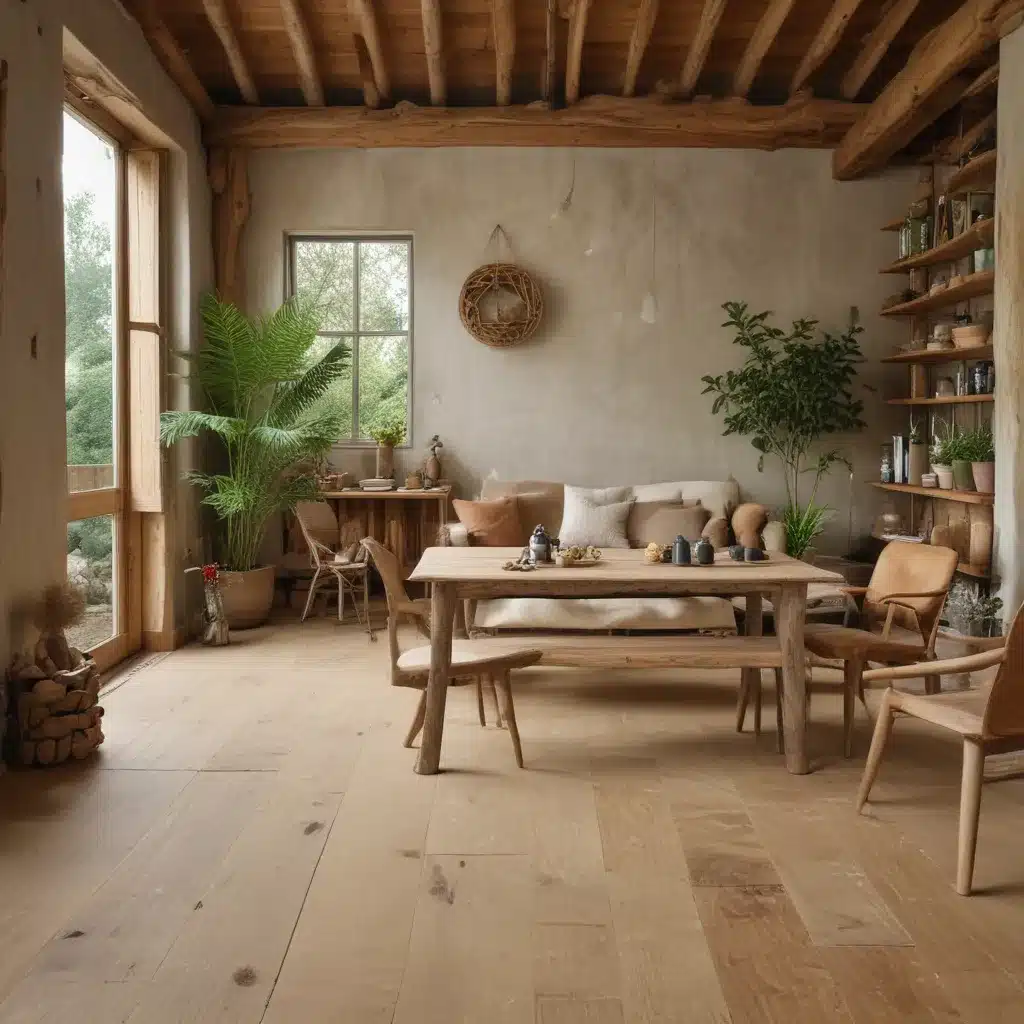
Rewild Your Space With Natural Materials
Bringing Nature Home
As I gaze out my kitchen window, I’m captivated by the vibrant tapestry of colors and textures unfolding right before my eyes. Wildflowers sway gently in the breeze, their petals dancing like nature’s confetti. Bees and butterflies flit from bloom to bloom, pollinating as they go. It’s a far cry from the prim and proper landscaping that used to dominate this space – and I wouldn’t have it any other way.
You see, a few years ago, I made the decision to “rewild” my garden. It wasn’t an easy choice at first. I’ll admit, I was a bit nervous about letting go of that manicured, magazine-worthy look. But once I saw the benefits unfurling all around me, I knew I’d made the right call. Not only has my outdoor space become a thriving oasis for local wildlife, but it’s also brought me a profound sense of joy and connection to the natural world.
If you’re feeling inspired to bring a little more wildness into your life, then you’ve come to the right place. In this article, I’m going to share my personal journey of rewilding, as well as practical tips and insights to help you reimagine your own space – whether it’s a sprawling suburban yard or a cozy urban balcony. So, let’s dive in and discover how you can rewild your space with natural materials!
The Beauty of Letting Go
When I first started this rewilding adventure, I’ll admit, it was a bit daunting. I had grown so accustomed to the “perfect” lawn and meticulously pruned shrubs that I couldn’t imagine my garden any other way. But then I stumbled upon an article that really shifted my perspective.
The piece highlighted the work of a nonprofit organization called Wild Seed Project, which is dedicated to repopulating the landscapes of Maine with native plants. The author eloquently described how our typical land use practices are often at odds with the natural processes that have evolved in our regions over millions of years. Those pristine, manicured lawns we covet? They actually provide very little biological value, while many non-native ornamentals we purchase from nurseries have been so heavily modified that they’re practically “sexually dysfunctional.”
In contrast, the native plants that have thrived here for generations have done so alongside a whole web of interdependent flora and fauna. By reintroducing these species, we’re not just creating a pretty picture – we’re providing the foundation for a vibrant, self-sustaining ecosystem. And the results can be truly breathtaking.
As one gardener described, the transformation of their suburban property was like a “far cry from the typical lawn and hedge arrangement.” Instead of a monoculture of grass, the backyard had blossomed into a veritable forest, teeming with life in all its forms. Pollinators, birds, and other critters had reclaimed their rightful place, while the soil beneath their feet flourished with decomposing leaves and woody debris.
That vision resonated with me on a deep level. I realized that by letting go of my need for “perfection,” I could actually create something far more beautiful and ecologically meaningful. And so, with a renewed sense of purpose, I set out to rewild my own little corner of the world.
Rewilding, Step by Step
The first step in my rewilding journey was to take a good, hard look at my existing landscape. I asked myself a series of questions to help me understand the current state of my outdoor space and identify opportunities for improvement:
- What plants and wildlife are already present in my garden?
- Where are the areas of open soil, and how can I encourage natural processes there?
- What invasive species have taken hold, and how can I remove them safely?
- Are there any paths or fences that create barriers for small creatures?
- How can I incorporate more diverse layers of vegetation, from groundcover to canopy?
As I contemplated these questions, a vision began to take shape in my mind. I could see my garden transforming into a lush, layered oasis – a haven for pollinators, birds, and all manner of beneficial critters. But I knew it would take time, patience, and a willingness to let go of control.
One of the first things I did was to stop mowing my lawn so religiously. Instead of a neatly cropped carpet of grass, I let the plants grow tall and wild, dotted with swaying wildflowers. It was a bit of an adjustment at first, but as I watched the diversity of insects and small mammals start to return, I knew I was on the right track.
Next, I turned my attention to the plant selection. I made a conscious effort to choose native species that would thrive in my local ecosystem – things like purple coneflowers, black-eyed Susans, and native grasses. I also incorporated some strategically placed piles of wood and leaf litter, which provide shelter and food for all kinds of creatures.
As the months and seasons passed, I continued to tweak and refine my approach. I removed invasive species like garlic mustard and Japanese knotweed, replacing them with hardy native alternatives. I also built a small water feature to attract amphibians and provide a reliable drinking source for the local wildlife.
The transformation has been nothing short of remarkable. Where there once was a generic, homogenized landscape, there is now a vibrant, living tapestry of colors, textures, and bustling activity. Bees, butterflies, and birds have reclaimed their rightful place, and I find myself endlessly fascinated by the ebb and flow of life unfolding before me.
The Ripple Effects of Rewilding
As I’ve dove deeper into the world of rewilding, I’ve come to realize that the benefits extend far beyond the boundaries of my own property. By creating a wildlife-friendly oasis in my backyard, I’m not just enhancing the local ecosystem – I’m also contributing to larger-scale conservation efforts.
Research has shown that reintroducing native plants can have a profound impact on biodiversity, supporting a whole web of interdependent species. From pollinators and birds to small mammals and decomposers, these elements work together in a delicate balance to maintain the health and resilience of our natural landscapes.
And it’s not just the flora and fauna that benefit. Rewilding can also have tangible impacts on human wellbeing, too. By immersing ourselves in these vibrant, nature-rich spaces, we can experience a deep sense of connection and wonder. It’s a reminder that we’re part of something greater, something that extends far beyond the confines of our manicured backyards.
Perhaps most importantly, though, rewilding is a powerful tool in the fight against climate change. As Sir David Attenborough has said, the best thing we can do is to rewild the planet. By restoring natural ecosystems and allowing them to thrive, we can capture and sequester carbon, mitigate the effects of extreme weather, and create more resilient, sustainable communities.
So, in a way, my little rewilding project is just a drop in the bucket. But I like to think that every single person who embraces this approach – whether it’s on a grand scale or a humble balcony – is contributing to a broader movement to heal our planet. And that’s a vision that truly inspires me.
A Lifetime of Discovery
As I reflect on my rewilding journey, I’m struck by how much I’ve learned along the way. What started as a simple desire to create a more natural, wildlife-friendly space has evolved into a deep fascination with the intricate workings of our ecosystems.
I’ve discovered the joy of observing the subtle changes that unfold with each passing season – the emergence of delicate spring ephemerals, the explosion of summer blooms, the vibrant fall foliage, and the quiet stillness of winter. I’ve marveled at the ingenious adaptations of native plants, and I’ve been humbled by the resilience and resourcefulness of the creatures that call my garden home.
And perhaps most importantly, I’ve come to understand that rewilding is not a one-time event, but rather a lifelong journey of discovery and growth. There’s always something new to learn, whether it’s identifying a previously unknown species or uncovering a fascinating ecological relationship.
So, if you’re feeling inspired to embark on your own rewilding adventure, I encourage you to embrace the process with an open mind and a sense of wonder. Trust that by letting go of control and allowing nature to take the lead, you’ll uncover a world of beauty, complexity, and endless delight. After all, as the saying goes, “what is beautiful is what is best for our ecosystems.”
So, what are you waiting for? It’s time to rewild your space with natural materials and unlock the hidden magic of the natural world, right in your own backyard.


