
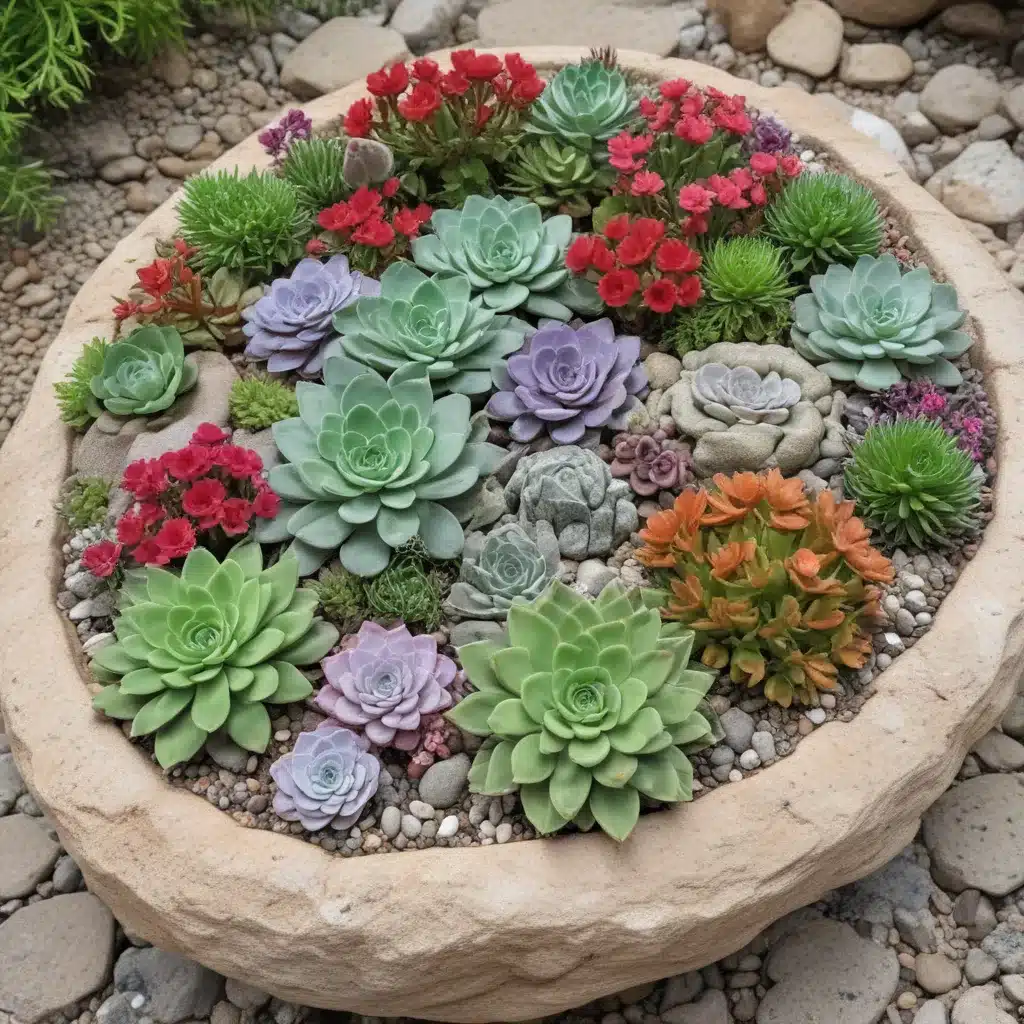
The Rocks Take Center Stage
I wasn’t always a rock garden enthusiast. In fact, I used to be a self-proclaimed “perennialista,” falling head-over-heels for the ever-changing, vibrant faces of those pretty perennials. But over time, I grew weary of the constant maintenance, the lack of year-round structure, and the long off-seasons that came with that passion. That’s when I found my true calling – the bold, low-maintenance allure of dwarf and miniature conifers.
These days, my garden is about 50% conifers, with the remaining space dedicated to interesting woody plants and large succulents. As part of my quest to reduce maintenance and create a landscape with visual appeal all year round, I began incorporating rocks into my plantings. It started with a large boulder here, a group of smaller rocks there, and before long, I was a full-fledged rock garden devotee.
Embracing the Rocks
Why the sudden love for rocks, you ask? Well, for starters, they require zero watering or fertilizing, and they’ll never outgrow their spaces or even worse, die on me. Plus, I found that strategically placing rocks could help create captivating vignettes using smaller plants that might otherwise get lost in my expansive garden. I had my first taste of rock gardening when we put in a small waterfall on our stone patio, and I was charmed by how the plants complemented the rocks, and vice versa.
As I dived deeper into this new-found passion, I realized that I needed to approach it a bit differently. Instead of simply adding rocks to an existing garden, I decided to create a dedicated rock garden from scratch, selecting a site on the edge of my property that faced south for optimal growing conditions. I wanted it to slope slightly for drainage and showcase a harmonious collection of rocks – in essence, a rock garden.
Choosing the Right Rocks
With the site selected, it was time to source the stars of the show – the rocks themselves. My husband and I took a trip to the landscape materials yard, and when he asked what I wanted as a birthday gift, I replied without hesitation: “Big rocks.” He gulped, but I assured him that we were headed not to Tiffany, but to the rock yard.
As I began researching rock gardens, I learned that most of them showcase alpine plants. This gave me pause, as many alpine species would not thrive in my Sonoma County, California, location. Alpines are adapted to harsh conditions with cold, dryness, and short growing seasons, and they typically grow in environments that don’t support trees. This meant I couldn’t simply look to typical rock garden photos for inspiration on what to plant or how to arrange the rocks.
Undeterred, I drew on my own experiences hiking in the mountains of California, and the impressive rock formations and conifers I’d encountered. I realized that while the term “alpine” often refers to high-altitude regions, “high” isn’t necessarily defined as above the tree line. Many conifers, after all, are native to mountainous regions, and they seemed to complement the rocks naturally.
Armed with this newfound knowledge, I worked with Dan, our landscape artisan, to select the right rocks for the job. We opted for Sonoma fieldstone, and eventually ended up with around 25 tons of the stuff. Dan, being an experienced hiker, helped arrange the rocks to resemble the high Sierra Nevada landscape, creating the bones of the garden.
Planting the Rock Garden
With the rock foundation in place, the fun part began – planting! I focused primarily on conifers, bromeliads, cacti, succulents, and Australian plants, as these thrive in my climate and offer a diverse range of forms, textures, and structures.
I loved placing the smaller conifers and their companions in the nooks and crannies, allowing some to occupy prominent positions atop mounds and tucking others into sheltered crevices. And to my delight, many of the succulents I selected mimicked the growth habits of alpines, spreading low and cascading over the rocks.
It’s been just over a year since I embarked on this rock gardening journey, and I’ve discovered another wonderful aspect to this addiction – the rocks themselves provide an instant sense of maturity and completeness to the garden. Unlike a new garden bed that can look sparse at first, my rock garden had a polished, finished appearance from the moment the rocks were in place. Sure, the initial planting was sparser than it will be in a few years, but the overall composition looked harmonious and inviting.
Discovering the Joys of Rock Gardening
As I’ve delved deeper into the world of rock gardening, I’ve been pleasantly surprised by the wealth of possibilities it offers. Not only have I been able to showcase a diverse array of plants that might have otherwise been lost in my expansive garden, but I’ve also found that the rocks themselves can be the true stars of the show.
Whether it’s the interesting crevices and hollows that provide the perfect planting pockets, the lichen-covered surfaces that add a touch of natural whimsy, or the sheer, angular forms that create a striking visual contrast, the rocks have become an integral part of my garden’s personality. And as I continue to add miniature conifers and other small, low-growing plants, I know that I have the perfect canvas to showcase them in all their glory.
Embracing the Rock Garden Mindset
Perhaps the most valuable lesson I’ve learned through this rock gardening journey is the importance of embracing a new mindset. Instead of simply adding rocks to an existing garden, I’ve learned to approach the process in reverse – putting the rocks in first and then carefully selecting the plants to complement them. This shift in perspective has not only resulted in a more cohesive and visually striking garden, but it’s also unlocked a world of possibilities when it comes to showcasing the true stars of the show – the rocks themselves.
As I continue to expand and refine my rock garden, I find myself constantly in awe of the natural beauty and enduring presence of these geological marvels. And with each new plant I tuck into a crevice or perch atop a mound, I can’t help but feel a sense of wonder and satisfaction at the unique and ever-evolving partnership between the rocks and the plants they support.
So, if you’re someone who’s been captivated by the allure of rock gardens, or if you’re simply looking to add a touch of natural elegance and low-maintenance appeal to your outdoor space, I encourage you to embrace the rocks and let them take center stage. Who knows, you might just discover a new-found passion for the geological wonders that have been there all along, waiting to be discovered.


