
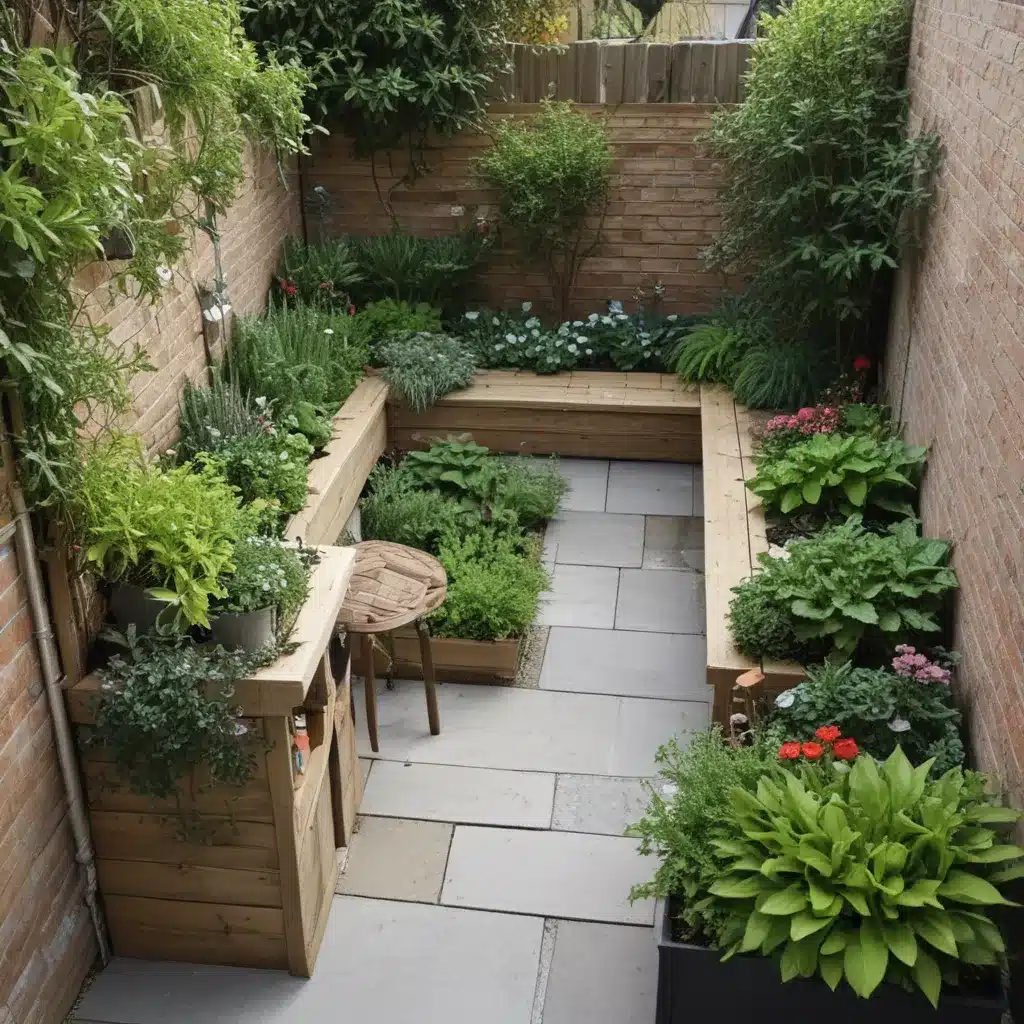
Turning a Postage Stamp Into a Veritable Oasis
As someone who has spent countless hours taming and tending to my own micro-garden, I can say with certainty that small spaces can pack a mighty punch. In fact, the challenge of maximizing every inch of available real estate has become something of a personal hobby. And I’m not alone – gardens, no matter how diminutive, have the power to enchant and delight.
Whether you’re working with a cramped city balcony or a modest suburban yard, the principles of small-space gardening can transform even the tiniest plot into a verdant, productive retreat. With a little creativity and the right know-how, you can bid farewell to thoughts of “if only I had more room” and hello to a bountiful, beautiful oasis that’s tailored to your unique needs and preferences.
So, gather your gardening gloves and let’s dive into a world of small space solutions that’ll have your humble haven bursting with life and flavor in no time. From vertical gardening to clever container ideas, we’re going to uncover the secrets to making the most of your little slice of green heaven.
Vertical Farming: Reaching New Heights
When space is at a premium, the obvious solution is to look up. Vertical gardening techniques allow you to maximize your square footage by cultivating crops skyward, rather than sprawling outward. And the benefits extend far beyond just saving space.
As the experts at Homes and Gardens explain, growing your veggies and herbs vertically can also help protect them from pests and make harvesting a breeze. Cucumbers, squash, beans, and even tomatoes thrive when trained up a trellis or sturdy cage, freeing up valuable ground space for other productive plants.
But it’s not just edibles that can reach for the heavens in a small garden. Flowering vines, such as sweet peas or morning glories, add a touch of whimsical charm when cascading down a pergola or arbor. And don’t forget about the humble yet hardworking herb – many varieties, like rosemary and thyme, take beautifully to being grown vertically in hanging baskets or wall-mounted planters.
The key, as the experts at GrowVeg.com suggest, is to choose your vertical structures and supports carefully, ensuring they’re sturdy enough to handle the weight of your thriving plants. With a little planning and ingenuity, you can transform even the tiniest nook into a lush, three-dimensional masterpiece.
Potent Pots: Containerized Wonders
While vertical gardening may be the solution for some, others may find that container-based growing is the way to go in a small space. Pots, planters, and window boxes offer unparalleled flexibility, allowing you to customise your garden’s layout and composition to suit your unique needs and aesthetic preferences.
Ideal Home magazine highlights the versatility of container gardening, noting that it’s the perfect way to incorporate edibles into even the most ornamental of spaces. Imagine a lush, blooming window box overflowing with a symphony of vibrant lettuces, fragrant herbs, and maybe even a cherry tomato or two – talk about maximizing your curb appeal!
But containers aren’t just for the balcony or patio; they can be used to great effect throughout the entire garden. Strategically placing potted plants around seating areas, pathways, and focal points can create the illusion of a much larger, more expansive space. And the best part? If you ever feel the need for a change, simply pick up and move your portable plantings to a new location.
Of course, successful container gardening requires a bit of finesse. Better Homes & Gardens advises choosing the right size and material for your plants’ needs, as well as ensuring proper drainage and nutrition. But with a little trial and error, you’ll be well on your way to creating a verdant, self-contained ecosystem that’s tailored to your small-space dreams.
Diminutive Dwellers: Compact Crops for Tiny Plots
While vertical and container-based growing can work wonders in a small garden, it’s also important to carefully select the right plants for your limited real estate. After all, there’s no point in cramming in too many space-hungry varieties, only to end up with a tangled, underperforming mess.
The Pioneer Woman suggests opting for compact, high-yielding crops that won’t overwhelm your petite plot. Think bite-sized tomatoes, dwarf beans, and baby carrots – veggies that pack a punch in a small package. And don’t forget about the versatile world of salad greens, herbs, and radishes, which can provide an endless supply of fresh, flavorful harvests without hogging precious square footage.
But it’s not just edibles that deserve consideration when space is limited. Diminutive fruit trees, such as dwarf apple or pear varieties, can be trained into espaliers or grown in large containers, offering the best of both worlds – delicious homegrown produce and an eye-catching architectural element. And don’t overlook the potential of berries, which thrive in both in-ground plantings and hanging baskets.
The key, as the experts at Homes and Gardens suggest, is to stagger your plantings, ensuring there’s always something new and exciting waiting in the wings. By carefully coordinating your crop rotation, you can keep your small garden humming with activity and diversity, no matter the season.
Embracing the Edible Aesthetic
In the past, vegetable gardens were often relegated to the back of the property, hidden away from the main living spaces. But these days, there’s a growing trend towards seamlessly integrating edibles into the overall landscape design – and for good reason.
Not only does this approach maximise your limited square footage, but it also allows you to enjoy the bounty of your labour from the comfort of your own backyard oasis. ABC Home, a leading building and renovation company in Aberdeen, UK, has embraced this philosophy, helping clients transform their small gardens into vibrant, productive sanctuaries.
“When it comes to small-space gardening, we encourage our clients to view their edibles as an integral part of the overall design,” says lead designer, Olivia. “By thoughtfully incorporating vegetables, herbs, and even compact fruit trees into the existing plantings, they can create a sense of lush abundance without sacrificing style or functionality.”
Olivia points to the use of ornamental kales, rainbow chard, and flowering herbs as particularly effective ways to blur the line between the decorative and the delicious. “These plants not only provide a steady supply of fresh, homegrown ingredients, but they also contribute stunning visual interest and texture to the garden,” she explains. “It’s a win-win for the space-conscious homeowner.”
And the benefits of this approach extend beyond the aesthetic. As Homes and Gardens note, interplanting edibles with ornamentals can also help to confuse and deter common garden pests, creating a natural, self-sustaining ecosystem that requires less maintenance.
So, whether you’re envisioning a quaint cottage-style plot or a sleek, modern oasis, don’t be afraid to let your edible plants take centre stage. With a little creative flair and a dash of horticultural know-how, you can transform even the tiniest of gardens into a verdant, bountiful retreat that feeds both your body and your soul.
Maximising the Micro: Tips for Small-Scale Success
As I reflect on my own journey in small-space gardening, a few key lessons stand out as essential for anyone looking to make the most of their diminutive domain.
First and foremost, embrace the spirit of experimentation. Small gardens are the perfect playground for trying out new techniques and plant varieties, as the stakes are relatively low compared to larger, more established landscapes. Don’t be afraid to get creative with your layout, mix and match different growing methods, and let your personal style shine through.
Secondly, keep a close eye on your microclimate. In a small garden, even the slightest variations in sunlight, wind exposure, and soil quality can have a significant impact on your plants’ performance. Pay attention to these nuances and adjust your plant selections and cultivation practices accordingly.
And finally, don’t underestimate the power of strategic planning. As the experts at Homes and Gardens suggest, staggering your plantings and opting for continually harvested crops can help ensure a steady supply of fresh produce throughout the growing season. By thinking ahead and maximizing every inch, you can transform even the tiniest of spaces into a veritable oasis of flavour and beauty.
So, whether you’re starting from scratch or revitalizing an existing small garden, remember to keep an open mind, pay attention to the details, and above all, have fun! With a little creativity and the right know-how, you can transform even the most modest of plots into a vibrant, productive retreat that’s tailored to your unique needs and desires.


