
Introduction: The Joys of Urban Gardening
As a lifelong gardener and recent transplant to the bustling city of Aberdeen, I’ve had to get a bit creative with my green thumb. You see, my new abode, while cozy and charming, comes with a wee little patch of outdoor space – just enough room for a few potted plants and not much else. But you know what they say, “Necessity is the mother of invention!” And so began my journey into the wonderful world of small-space vegetable gardening.
At first, I have to admit, I was a bit skeptical. Could I really grow enough food to supplement my kitchen in such a tiny area? Would my plants even thrive in the confines of a container? Well, let me tell you, my doubts were quickly squashed as I dove headfirst into this new horticultural adventure. Not only have I been able to harvest a bounty of fresh, flavorful produce, but tending to my little urban oasis has become a source of immense joy and relaxation in my busy city life.
Perhaps you find yourself in a similar situation – longing to reconnect with nature and put some homegrown goodness on your table, yet lacking the sprawling acreage of a traditional countryside garden. Fear not, my friends! In this comprehensive guide, I’ll share with you all the tips, tricks, and techniques I’ve learned along the way to creating a thriving small-space vegetable garden, no matter how limited your outdoor square footage may be. So grab your trowel, don your gardening gloves, and let’s dive in!
Choosing the Right Containers
The first and most critical step in setting up your small-space vegetable garden is selecting the appropriate containers. After all, these will be the vessels that house your precious edible plants, so you’ll want to choose wisely.
Now, I know what you’re thinking – “Containers? But I thought gardens were supposed to be planted in the ground!” Well, my friend, that’s where you’d be mistaken. Container gardening is a brilliant solution for those of us with little to no traditional garden space. By using a variety of pots, planters, and other receptacles, you can create a bountiful oasis almost anywhere – balconies, patios, rooftops, you name it!
When it comes to container selection, size is of the utmost importance. You see, different vegetables have varying root systems and space requirements, so it’s crucial to match the container to the crop. For example, shallow-rooted plants like lettuce, herbs, and radishes can thrive in smaller pots or window boxes, while heartier veggies like tomatoes, peppers, and eggplants will need deeper, wider containers to accommodate their more expansive root systems.
Another key consideration is the material of the container. Terracotta, plastic, and even repurposed items like old buckets or barrels can all make excellent small-space gardening vessels. Just be sure to select options with adequate drainage holes to prevent your plants from becoming waterlogged. And don’t forget to factor in the weight of a container once it’s filled with soil and plants – you’ll want something sturdy enough to withstand the elements without becoming too cumbersome to move around.
To give you a bit more guidance, here’s a handy table outlining some popular container options and the types of vegetables they’re well-suited for:
| Container Type | Recommended Vegetables |
|---|---|
| 5-gallon Bucket | Tomatoes, peppers, eggplants, zucchini |
| 12-inch Pot | Leafy greens, herbs, radishes, carrots |
| 18-inch Window Box | Strawberries, cherry tomatoes, dwarf bean plants |
| 24-inch Planter | Potatoes, bush beans, chard, kale |
| Hanging Basket | Trailing tomatoes, herbs, strawberries |
Remember, these are just general guidelines – your particular space constraints, climate, and gardening goals may call for a different container configuration. The key is to experiment and have fun finding the perfect vessels to cultivate your small-space oasis.
Selecting the Right Crops
Now that you’ve got your containers sorted, it’s time to decide what to actually grow in them. After all, the whole point of this urban gardening endeavor is to enjoy the fruits (and veggies!) of your labor, right?
When it comes to choosing the right crops for a small-space vegetable garden, there are a few crucial factors to consider. First and foremost, think about your family’s culinary preferences and the types of produce you tend to use most frequently in your cooking. There’s no sense in dedicating precious container real estate to veggies your household won’t eat, am I right?
Another important factor is the growth habit of the plants. As I mentioned earlier, some vegetables have more expansive root systems and canopies than others, so you’ll want to select compact, bush-type varieties that won’t quickly outgrow their container confines. Cherry tomatoes, dwarf beans, and miniature eggplants are all excellent choices for small-space gardens.
And let’s not forget about the all-important element of time. If you’re like me and lead a busy city life, you might not have hours upon hours to dedicate to intensive gardening. In that case, you’ll want to prioritize low-maintenance, fast-growing crops that can provide a quick return on your investment of time and effort. Leafy greens, radishes, and various herbs are perfect for the time-crunched urban gardener.
To give you a bit more inspiration, here’s a list of some of my personal favorite small-space vegetable varieties:
- Cherry Tomatoes (Determinate Varieties)
- Dwarf or Bush Beans
- Miniature Eggplants
- Lettuce (Loose-Leaf or Romaine Varieties)
- Radishes
- Carrots (Short, Stubby Types)
- Chard
- Kale
- Herbs (Basil, Parsley, Thyme, Rosemary)
- Strawberries (Everbearing Varieties)
Of course, your selection will ultimately depend on your unique growing conditions, personal preferences, and the size/layout of your available containers. But the key is to have fun experimenting and finding the perfect mix of edible plants to fill your small-space oasis.
Mastering the Art of Container Soil and Fertilizer
Now that you’ve got your containers picked out and your crop list finalized, it’s time to turn our attention to the lifeblood of any successful vegetable garden – the soil. After all, without a nutrient-rich, well-draining growing medium, even the heartiest of plants won’t be able to thrive.
In a traditional in-ground garden, you’d typically just dig into the existing soil, amend it with compost or other organic matter, and call it a day. But when it comes to container gardening, things get a bit more complicated. You see, the confined nature of pots and planters means the soil volume is much more limited, and the plants will quickly deplete any available nutrients.
This is where a high-quality potting mix comes into play. Unlike regular garden soil, potting mixes are specifically formulated to provide the ideal blend of drainage, aeration, and nutrient content for container-grown plants. They’re typically made from a combination of things like peat moss, vermiculite, perlite, and compost – all of which work together to create a light, fluffy growing medium that’s perfect for small-space veggie cultivation.
But the soil preparation doesn’t stop there. To keep your plants fed and happy throughout the growing season, you’ll also need to supplement your potting mix with a balanced, slow-release fertilizer. This will ensure a steady supply of essential nutrients like nitrogen, phosphorus, and potassium, which your veggies will gobble up as they work to produce abundant harvests.
Now, I know what you’re thinking – “But won’t all those chemicals and additives be bad for my plants?” Fear not, my friends! There are plenty of all-natural, organic fertilizer options available that will give your container crops the nourishment they need without any of the harsh synthetic stuff. Look for products made from things like bone meal, blood meal, or seaweed extracts – they’ll provide a gentle, steady supply of nutrients that your plants can easily absorb.
And don’t forget, as your plants grow and use up the available nutrients, you’ll need to replenish the soil by topping it up with fresh potting mix and re-fertilizing every few weeks. It’s a bit of extra work compared to an in-ground garden, but trust me, the bountiful harvests you’ll reap will make it all worthwhile.
Watering and Sun Exposure: Keys to Healthy Container Plants
Alright, now that we’ve tackled the soil situation, let’s talk about two of the other essential elements for healthy, productive container vegetables: water and sunlight.
You see, unlike their in-ground counterparts, plants growing in containers have a much more limited access to both of these vital resources. Their roots are confined to the small space of the pot, which means they can’t draw up moisture and nutrients as efficiently. And since containers are typically above ground, they’re also more exposed to the drying effects of wind and direct sun.
So, how do we ensure our small-space veggies get all the H2O and photons they need to thrive? It’s all about striking the delicate balance.
First up, watering. As a general rule, container-grown plants will need to be watered much more frequently than those planted directly in the soil. We’re talking daily, or even multiple times per day during the hottest, driest spells. The key is to check the soil regularly and water whenever the top inch or so starts to feel dry to the touch.
But be careful not to overdo it, either! Soggy soil can be just as detrimental to plant health as drought conditions. Look for signs of stress like wilting leaves or stems, and adjust your watering schedule accordingly. And don’t forget to use that handy drainage I mentioned earlier – excess moisture needs to be able to escape the bottom of the container to prevent root rot and other nasty issues.
Now, let’s talk about sunlight. Most vegetables are what we call “full sun” plants, meaning they require at least 6 hours of direct sunlight per day to truly thrive. So when choosing a spot for your small-space garden, be sure to pick a location that gets plenty of unobstructed rays – a south-facing balcony or patio is ideal.
But here’s the thing – not all veggies are sun worshippers. Leafy greens like lettuce and spinach, as well as cool-weather crops like broccoli and cauliflower, actually prefer a bit of afternoon shade to prevent wilting and bolting. So be mindful of your container placement and make adjustments as needed to ensure each of your plants is getting its optimal light exposure.
And if Mother Nature isn’t cooperating with your gardening plans? No problem! You can always supplement natural sunlight with strategically placed grow lights, especially during the shorter daylight hours of spring and fall. Just be sure to position them correctly and provide the recommended number of hours of illumination for best results.
Vertical Gardening: Maximizing Limited Space
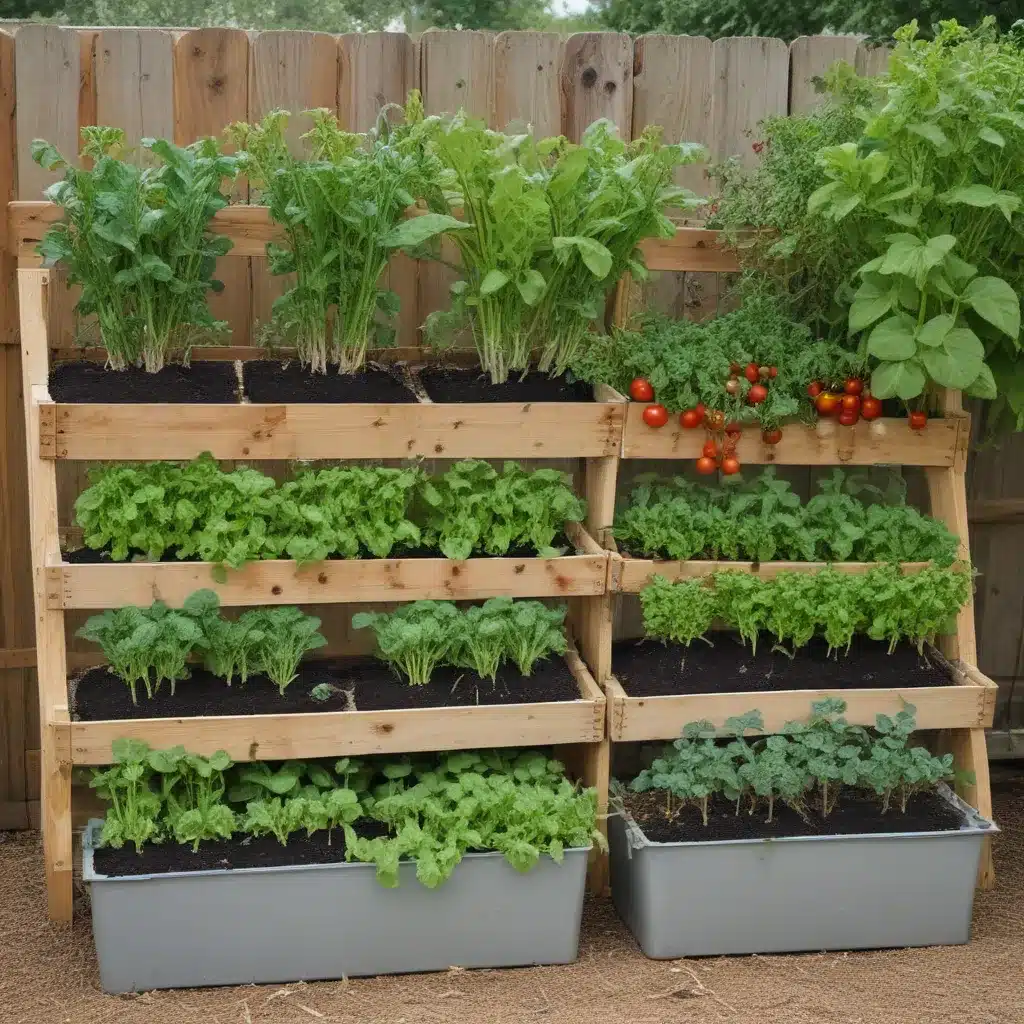
Alright, let’s talk about one of my favorite small-space gardening hacks – vertical gardening! You see, when your growing area is limited, going up instead of out is the name of the game.
Picture this: you’ve got a tiny balcony or patio, just big enough for a couple of potted plants. But then you discover the magic of trellises, cages, and other vertical support structures, and suddenly your edible oasis expands exponentially. Suddenly, you can grow all sorts of vining crops like tomatoes, cucumbers, and pole beans, without sacrificing precious square footage on the ground.
The beauty of vertical gardening is that it allows you to maximize your limited space while also creating a visually stunning and space-efficient layout. Instead of sprawling plants hogging up precious real estate, you can train them to climb up, up, and away, freeing up valuable floor space for additional containers or even a cozy seating area.
And the benefits don’t stop there! By elevating your plants, you’re also helping to improve air circulation and sun exposure, which can lead to healthier, more productive crops. Plus, it makes tasks like watering, weeding, and harvesting a whole lot easier on your back.
Now, the key to successful vertical gardening is choosing the right support structures for your specific plant varieties. Tomatoes and pole beans, for example, will do best with sturdy cages or trellises, while trailing vines like cucumbers and squash might prefer a hanging basket or trellis system.
And don’t be afraid to get creative with your vertical elements! Repurposed items like old ladders, wire fencing, or even PVC pipe can make fantastic DIY support structures. The sky’s the limit when it comes to turning your small-space garden into a thriving, space-efficient oasis.
So if you’re feeling a bit confined in your urban gardening adventures, remember – look up, not out! With a bit of vertical flair, you can transform even the tiniest of balconies or patios into a bountiful, high-yielding vegetable wonderland.
Pest and Disease Management: Keeping Your Crops Healthy
Ah, the joys of urban gardening – the fresh air, the peaceful solitude, the…pesky pests and persistent diseases? Unfortunately, even the most lovingly tended container garden isn’t immune to the occasional horticultural headache.
But fear not, my fellow small-space growers! With a little bit of vigilance and some tried-and-true organic pest and disease management techniques, you can keep your precious veggies happy, healthy, and thriving all season long.
Let’s start with the creepy-crawly culprits. Aphids, spider mites, and various caterpillars are just a few of the common insect pests that may try to make a feast of your container crops. The key is to stay on top of regular plant inspections and catch any infestations early before they spiral out of control.
One of my go-to organic solutions is a simple homemade insecticidal soap spray. Just mix a bit of mild liquid soap with water, and voila – an effective, gentle way to knock back those pesky bugs without resorting to harsh chemicals. You can also introduce beneficial insects like ladybugs or lacewings, which will naturally feast on the plant-munching pests.
And let’s not forget about those sneaky diseases, like powdery mildew, blight, or bacterial wilt. These fungal and bacterial infections can quickly ravage your container crops if left unchecked. The key here is to maintain good air circulation around your plants, water at the soil level (not from overhead), and promptly remove any infected leaves or stems.
If you do spot the telltale signs of disease, don’t panic – there are plenty of all-natural, organic fungicides and bactericides you can use to nip the problem in the bud. Look for products containing ingredients like copper, sulfur, or essential oils, and be sure to follow the application instructions carefully.
Remember, prevention is always the best medicine when it comes to keeping your small-space veggies healthy and thriving. Stay vigilant, act quickly at the first signs of trouble, and you’ll be well on your way to a bountiful, pest-and-disease-free harvest.
Succession Planting and Crop Rotation: Maximizing Your Yields
Alright, let’s talk about two more essential small-space gardening techniques that can help you maximize your precious container real estate – succession planting and crop rotation.
Succession planting is all about making the most of your growing season by continuously sowing and harvesting crops in waves. The idea is to plant a new round of fast-maturing veggies (like lettuces, radishes, or bush beans) as soon as the previous crop has been harvested. This way, you’re always keeping your containers productive and brimming with fresh, homegrown goodness.
Now, I know what you’re thinking – “But won’t that get confusing, with all these different plants coming and going?” Fear not, my friends! With a bit of planning and a handy calendar, you can easily map out your succession planting schedule to ensure a steady, continuous supply of produce.
Start by making a list of all the crops you want to grow, along with their estimated days-to-maturity. Then, sketch out a simple planting calendar that accounts for each veggie’s specific growing timeline. This will help you coordinate your succession plantings so that as soon as one crop is finished, you can immediately sow the next.
And speaking of planning, that brings us to the next small-space gardening superpower: crop rotation. Now, I know this might sound like a technique reserved for sprawling farmland, but trust me, it can be just as beneficial for container gardens.
The basic idea is to avoid planting the same crop in the same container year after year. This helps prevent the buildup of soil-borne pests and diseases, as well as the depletion of key nutrients. Instead, you’ll want to rotate your vegetables around, making sure to follow heavy feeders (like tomatoes or peppers) with lighter, restorative crops (like leafy greens or root veggies).
Not only does this crop rotation strategy keep your soil healthy and productive, but it also helps you make the most efficient use of your limited container space. By continuously shifting your plants around, you can ensure that each pot or planter is being put to its best possible use.
So there you have it, my fellow urban gardening enthusiasts – two more tools in your small-space growing toolbox. With a little bit of forethought and planning, you can create a veritable vegetable wonderland, no matter how cramped your outdoor oasis may be.


