
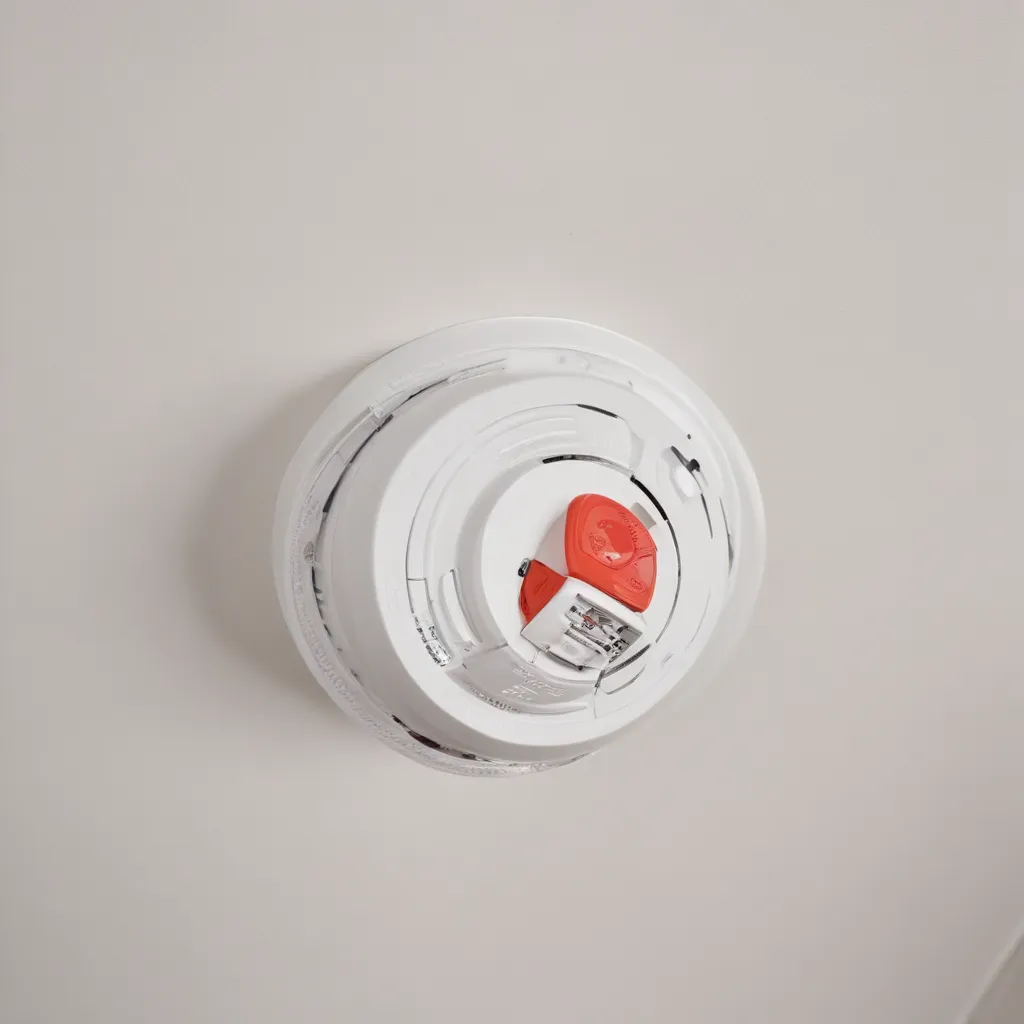
The Smoking Hot Truth About Smoke Alarms
As the owner of a building and renovation company here in Aberdeen, UK, I’ve seen my fair share of smoke alarm disasters. Just the other day, one of our clients called in a panic because their smoke alarm had started…well, smoking. Turns out the poor thing was older than my grandad and had decided to go out with a bang (or should I say, a puff of smoke?).
Smoke alarms are one of those essential home safety features that often get taken for granted. We just assume they’ll keep chugging along forever, beeping away to let us know the toast is burning. But the reality is, these little life-saving devices need a bit of TLC to keep them in tip-top shape. And trust me, you do not want to find out the hard way that your smoke alarm is on the fritz.
That’s why I’m here today to share my smoke alarm expertise with you, dear reader. From the ideal placement of these vital gadgets to the nitty-gritty of maintenance, we’re going to cover it all. By the time you’re done reading, you’ll be a smoke alarm aficionado, impressing your friends and neighbors with your newfound knowledge. So grab a cuppa, sit back, and get ready to have your mind blown by the exciting world of…smoke alarms. I know, I know, it doesn’t exactly scream “thrilling,” but stick with me here. This is going to be fun, I promise!
Smoke Alarm Placement: Where’s Waldo, But For Your Safety
Let’s start with the basics – where should you actually put your smoke alarms? It’s not as simple as just slapping them up wherever you have a free outlet. Oh no, my friends. There’s a whole science to smoke alarm placement, and if you don’t get it right, you could be putting your home and loved ones at risk.
The first rule of smoke alarm placement is to ensure you have one on every level of your home. That means ground floor, first floor, attic, basement – the whole shebang. Smoke has a nasty habit of rising, so you want to make sure those alarms are strategically placed to detect any potential fires as quickly as possible.
But it doesn’t stop there. You also need to think about the specific locations within each level. Experts recommend placing smoke alarms in the following areas:
– Outside each sleeping area
– Inside each bedroom
– On the ceiling, at least 30 centimeters (12 inches) away from any walls
– At the top of open stairwells
– In the center of ceilings (if the room is larger than 5.4 meters or 18 feet in diameter)
Now, I know what you’re thinking – that’s a lot of smoke alarms! Do I really need to clutter up my lovely home with all of those beeping boxes? I feel you, I really do. But trust me, it’s better to be safe than sorry. According to the National Fire Protection Association, having working smoke alarms in your home can cut your risk of dying in a fire by half. Half! That’s a statistic I can’t ignore.
The good news is that modern smoke alarms are much sleeker and more discreet than the clunky models of yore. You can even get ones that seamlessly blend into your decor. So there’s really no excuse not to have the proper coverage.
Oh, and one more tip on placement – avoid putting smoke alarms too close to windows, doors, or HVAC vents. You don’t want any air currents interfering with the alarm’s ability to detect smoke. Tuck them away in those nice, still spots for maximum efficiency.
Okay, now that we’ve got the where covered, let’s dive into the what. What type of smoke alarm should you be using, anyway?
Smoke Alarm Types: Ionization vs. Photoelectric vs. Dual Sensor
As I mentioned, smoke alarms have come a long way in recent years. Gone are the days of the one-size-fits-all, beige box that would screech at you for changing the batteries. Today, you’ve got options, my friends. And the type of smoke alarm you choose can make a big difference in how effectively it protects your home.
The three main smoke alarm technologies are:
| Type | How it Works | Pros | Cons |
| — | — | — | — |
| Ionization | Detects smoke by measuring changes in electrical current | – Responds quickly to flaming fires
– Relatively inexpensive | – May be slower to detect smoldering fires
– Can be more prone to false alarms from cooking/steam |
| Photoelectric | Detects smoke by measuring light beam interruption | – More effective at detecting smoldering fires
– Less prone to false alarms | – May be slower to respond to flaming fires
– Slightly more expensive |
| Dual Sensor | Combines both ionization and photoelectric technologies | – Offers the best of both worlds
– Responds quickly to all types of fires | – Slightly more expensive than single-sensor alarms |
So which one should you go for? Ideally, you want a mix of both ionization and photoelectric alarms throughout your home. That way, you’ve got all your bases covered. The dual sensor alarms are a great all-in-one option, but they do tend to cost a bit more.
If budget is a concern, I’d recommend focusing on photoelectric alarms for the main living areas and sleeping spaces, where you’re more likely to have a slow-burning, smoldering fire. Then use the ionization alarms in places like the kitchen, where you might have more false triggers from cooking smoke.
And of course, don’t forget to check the expiration date on those smoke alarms! Most have a lifespan of around 10 years, after which they start to lose their effectiveness. Set a calendar reminder to replace them every decade, and you’ll be good to go.
Speaking of maintenance, let’s talk about that next. Because if there’s one thing that can really make or break your smoke alarm game, it’s keeping those little buggers in tip-top shape.
Smoke Alarm Maintenance: Beep Beep, Your Alarm’s Dying
Okay, I’ll admit it – I’m one of those people who sometimes forgets to change the batteries in my smoke alarms. I know, I know, it’s a cardinal sin! But in my defense, those low-battery chirps can be easy to ignore, especially if they’re happening in the middle of the night.
Well, let me tell you, that’s a mistake I won’t be making again anytime soon. A few years back, we had a small kitchen fire at my place, and let me tell you, those smoke alarms saved my bacon (and the rest of my house). But when the firefighters arrived, they quickly discovered that the alarms weren’t working properly because the batteries were dead.
Cue the embarrassment and the stern lecture about the importance of smoke alarm maintenance. Since then, I’ve made it a priority to keep all my alarms in tip-top shape, and I’m here to pass on that hard-won wisdom to you.
First and foremost, you should be testing your smoke alarms monthly. Most models have a handy little test button that will simulate smoke and trigger the alarm. Give it a press, and make sure you can hear the warning loud and clear. If not, it might be time for a battery change.
Speaking of batteries, you should be swapping those out at least once a year. I like to do it on daylight saving time – that way, I remember to do it twice a year, and I don’t have to worry about forgetting. Plus, it’s a nice little routine that helps me stay on top of it.
But batteries aren’t the only thing you need to be mindful of. Smoke alarms can also get dirty and clogged over time, which can affect their sensitivity and performance. So give them a gentle vacuum or wipe-down every few months to keep them running at their best.
And don’t forget about the big 1-0! Every 10 years or so, you’ll need to replace the entire smoke alarm unit, regardless of how well you’ve been maintaining it. Those internal components just can’t last forever, no matter how much we wish they could.
So there you have it – your comprehensive guide to smoke alarm essentials. From placement to types to maintenance, I’ve covered it all. Now it’s time to put this knowledge into action and make sure your home is as safe as can be.
Oh, and one last thing – if you’re ever in the market for a building or renovation service here in Aberdeen, UK, be sure to check out ABC Home. We take smoke alarm installation and safety just as seriously as I do. Happy alarming, my friends!


