
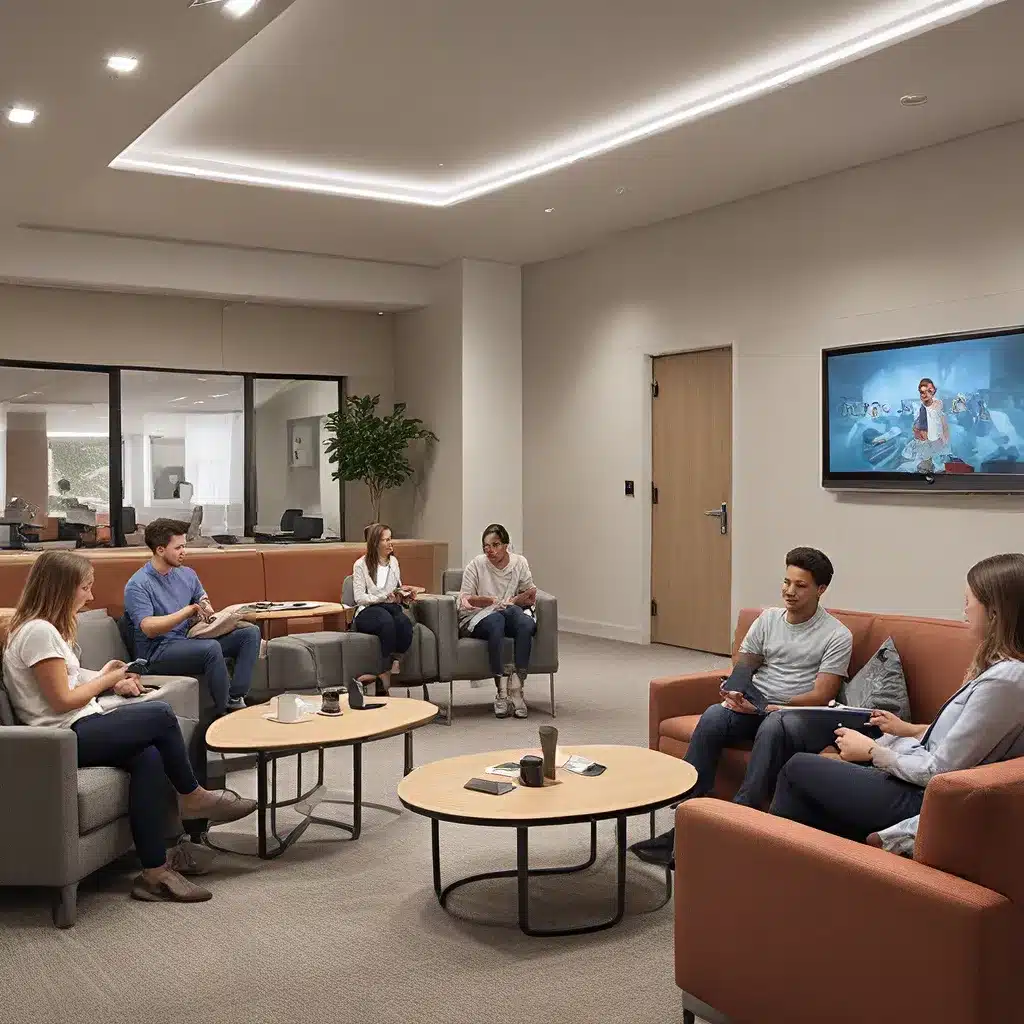
Connecting the Dots: Crafting Spaces for Togetherness
As someone who has always been drawn to the power of design to shape our living experiences, I find myself constantly fascinated by the ways in which the layout and flow of our homes can influence our relationships and social interactions. It’s a topic that has long captivated me, and one that I’ve explored through my own personal experiences as well as through the insights shared by experts in the field.
You see, I believe that the spaces we inhabit have a profound impact on our well-being, our sense of community, and our ability to connect with one another. And in a world that can sometimes feel increasingly disconnected, the need to create homes that foster social engagement and a sense of togetherness has never been more pressing.
That’s why I’m excited to dive into the topic of “Sociable Spaces: Enhancing Room Connectivity.” Over the course of this in-depth exploration, we’ll unpack the latest research and design principles that are shaping the way we think about the role of our living environments in cultivating stronger social bonds. We’ll look at the science behind why certain spatial configurations and design elements can either facilitate or hinder social interaction, and explore practical tips and strategies for reimagining our homes to better support our desire for connection.
Unlocking the Secrets of Sociable Spaces
So, what exactly makes a space “sociable”? According to the experts, it’s all about fostering a sense of openness, accessibility, and flow – qualities that can encourage people to engage with one another and feel a greater sense of belonging within their surroundings.
Studies have shown that when spaces are designed with social interaction in mind, they can have a significant impact on our mental and emotional well-being. Spaces that are open, well-lit, and facilitate easy movement and conversation tend to be associated with higher levels of social cohesion, reduced feelings of isolation, and even improved physical health.
Interestingly, the concept of “sociable spaces” isn’t limited to just our homes – it’s a principle that can be applied to a wide range of environments, from public parks and community centers to even digital spaces like video games. Research has shown that online gaming communities, for example, can serve as powerful platforms for social connection, allowing people to forge meaningful relationships and engage in collaborative experiences.
But for the purposes of this article, let’s focus our attention on the home – that most intimate and personal of spaces. How can we reimagine the way we design and configure our living environments to better foster a sense of togetherness and social belonging?
Rethinking the Room: Strategies for Enhancing Connectivity
One of the key principles that emerged from my research is the importance of open floor plans and flexible, multi-purpose spaces. Rather than compartmentalizing our homes into rigidly defined rooms, the experts suggest that we should strive to create fluid, interconnected environments that encourage free-flowing movement and interaction.
This might mean knocking down walls to create large, open-concept living areas, or designing rooms that can easily transition between different functions – like a living room that can also serve as a coworking space or a dining room that can double as a game night hangout.
According to research, these types of open, adaptable spaces not only make it easier for people to move freely and engage with one another, but they also foster a greater sense of community and shared experience within the home.
But it’s not just about the overall layout – the specific design elements we incorporate can also play a crucial role in shaping the social dynamics of a space. For example, strategically placing comfortable seating in a way that encourages face-to-face interaction, or incorporating focal points like fireplaces or large windows that draw the eye and invite conversation.
And let’s not forget about the power of natural light and greenery – both of which have been shown to have a positive impact on our mood, energy levels, and overall sense of wellbeing. By filling our homes with these mood-boosting elements, we can create environments that feel inviting, rejuvenating, and conducive to social connection.
Beyond the Walls: Embracing the Outdoors
Of course, when it comes to cultivating sociable spaces, our focus shouldn’t be limited to the indoors. Outdoor living areas – whether it’s a cozy patio, a lush garden, or a sprawling backyard – can also play a vital role in bringing people together and fostering a sense of community.
By creating seamless transitions between our indoor and outdoor spaces, we can effectively extend the boundaries of our living environments and provide even more opportunities for social interaction and shared experiences. Imagine a beautifully designed patio with comfortable seating, a fire pit, and perhaps even a built-in kitchen – a space that invites family and friends to gather, converse, and enjoy each other’s company.
And it’s not just about the physical design – the activities and amenities we incorporate into these outdoor spaces can also make a big difference. Things like communal tables, game areas, and water features can all help to create a sense of playfulness and encourage people to linger, mingle, and engage with one another in meaningful ways.
Embracing the Unexpected: Fostering Spontaneity and Serendipity
As I delved deeper into the topic of sociable spaces, one theme that kept emerging was the importance of embracing the unexpected and cultivating an element of spontaneity within our living environments.
You see, sometimes the most memorable and meaningful social interactions can arise from the most serendipitous of moments – a chance encounter in a hallway, a spontaneous game night that materializes out of nowhere, or an impromptu dance party that erupts in the living room. And by designing our homes in a way that encourages these types of unplanned, joyful moments, we can create spaces that feel truly alive and vibrant.
One way to achieve this might be through the strategic placement of music speakers or interactive art installations that can inspire people to engage with their surroundings in unexpected ways. Or perhaps incorporating flexible, modular furniture that can be easily rearranged to accommodate impromptu gatherings and activities.
The key is to resist the urge to over-plan and micromanage every aspect of our living spaces, and instead leave room for the unscripted, the unexpected, and the downright delightful. Because it’s often in those moments of spontaneity and surprise that we find ourselves truly connecting with one another – and creating memories that will last a lifetime.
Embracing the Future of Sociable Spaces
As we look to the future, it’s clear that the concept of “sociable spaces” is only going to become more and more important. With the ongoing shifts in our social and work dynamics, driven in part by the COVID-19 pandemic, the need for living environments that can support and nurture our connections has never been more pressing.
And while the specific design trends and technological innovations that will shape the future of sociable spaces are still unfolding, one thing is certain: the experts believe that flexibility, adaptability, and a focus on human-centric design will be key.
So as we move forward, let’s embrace the opportunity to reimagine our living environments in ways that bring us closer together, foster a greater sense of community, and unlock the full potential of our homes as hubs for social connection and shared experiences. After all, isn’t that what a truly sociable space is all about?


