
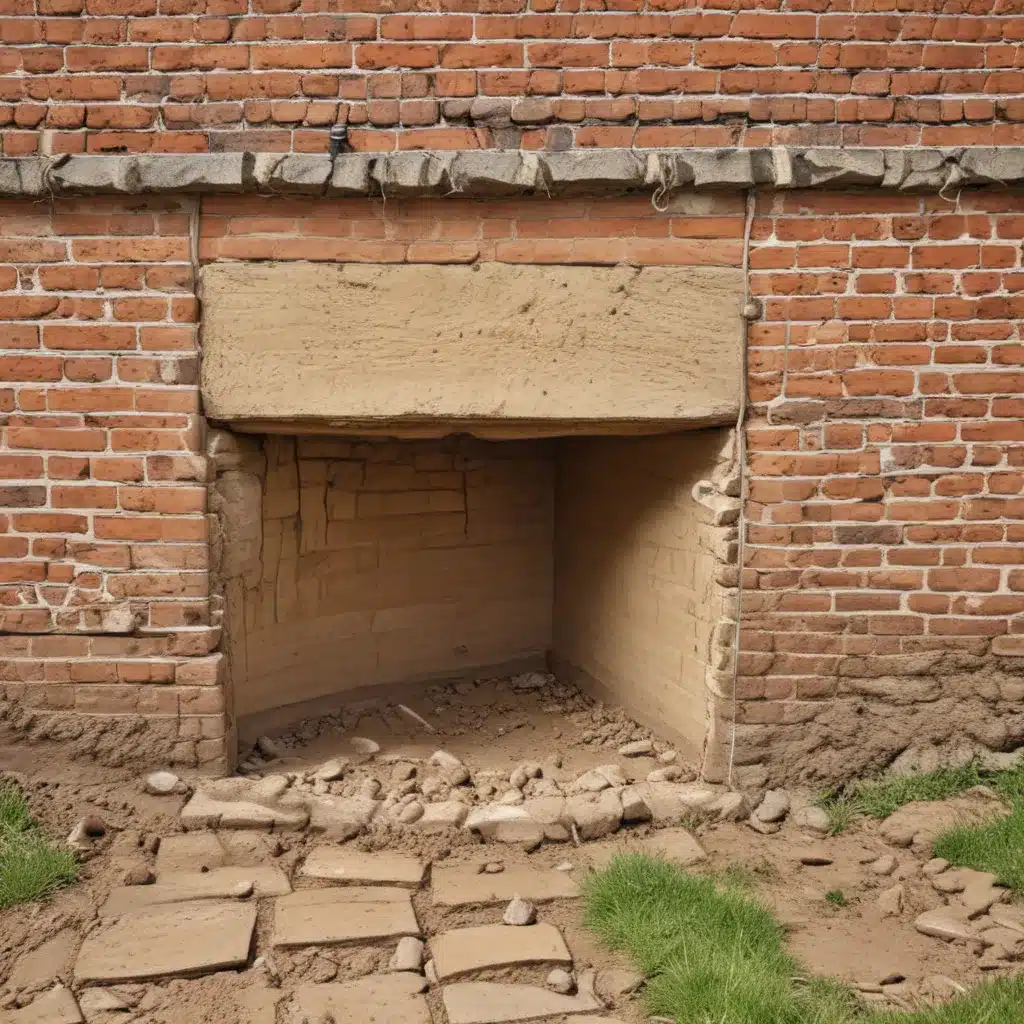
Avoiding the Sinking Feeling: How Proper Foundations Can Save Your Home
It was a sunny day in Aberdeen when I first got the call from my good friends, the Wilsons. They had just moved into their dream home, complete with a beautiful backyard and a sparkling new swimming pool. “You have to come see it!” they exclaimed, their excitement palpable even through the phone. Little did they know, their dream home was about to become a nightmare.
Just a few short weeks later, the Wilsons called again, this time with a very different tone in their voice. “Our house is sinking!” they cried. “The ground is opening up and the pool is falling in!” I rushed over to their place, only to find a heartbreaking scene. Their once-pristine backyard had become a muddy, watery mess, and their brand-new home was tilting at a worrying angle.
Turns out, the Wilsons had built their house on top of an old coal mine, and the underground workings were finally catching up to them. Their solid-looking foundation had turned into a sinkhole, swallowing up their hard-earned investment. It was a sobering reminder that when it comes to construction, you can’t just focus on the pretty finishes – the foundation is everything.
The Importance of Solid Foundations
As the old saying goes, “A house is only as strong as its foundation.” And nowhere is that truer than in the world of construction and home renovations. Whether you’re building a brand-new property or upgrading an existing one, the foundation is the critical starting point that will determine the long-term stability and safety of your investment.
Foundations come in all shapes and sizes, from the classic strip foundation to the more modern raft design. But they all serve the same essential purpose: to transfer the weight of the structure above into the ground below, creating a solid and stable base. When that base starts to shift or sink, it can lead to a whole host of problems, from cracked walls and uneven floors to the kind of catastrophic collapse that befell the Wilsons.
Subsidence – the gradual sinking of a building’s foundation – is one of the most common and costly issues that homeowners can face. It’s estimated that in the UK alone, subsidence claims cost insurers around £400 million each year. And it’s not just a problem for older properties; even brand-new homes can fall victim to sinking foundations if the site isn’t properly prepared or the construction isn’t up to par.
So, what’s the solution? How can you ensure that your home or renovation project has a foundation that will stand the test of time? The key lies in understanding the different types of foundations and the unique challenges they present.
Shallow Foundations: The Backbone of Residential Construction
The majority of houses and light domestic buildings, including the Wilsons’ ill-fated home, are built using shallow foundations. These are foundations where the depth is equal to or less than the width of the foundation – think classic strip footings or rectangular pads.
Shallow foundations are a popular choice for residential projects because they’re relatively straightforward and cost-effective to install. They’re designed to work with the existing soil conditions, spreading the weight of the structure over a larger area to prevent excessive sinking or settlement.
However, that doesn’t mean they’re immune to subsidence issues. In fact, strip foundations, which are a common type of shallow foundation, are particularly prone to problems. “When strip foundations fail, it’s often because subsidence has caused the strip to sink in one corner or down the length of the wall,” explains the team at Geobear. “This can be a consequence of either shrinkage of clay soil or excess water such as leaking drains.”
Pad foundations, another variety of shallow foundation, can also succumb to subsidence issues. “Settlement occurs when the load from the building is greater than the pad and subsoil can withstand,” the Geobear experts note. “The compaction of the soil can cause failure of the pad. Subsidence can also occur due to erosion from excess water.”
So, what’s the solution for homeowners and renovators dealing with shallow foundation woes? Geobear has found that their innovative geopolymer injection technology can be a game-changer. By strategically injecting a specialized geopolymer material beneath the affected area, they can create a solid, stable base that prevents further movement and subsidence.
“At Geobear, the most frequent use of our geopolymer solutions is treating houses affected by subsidence,” the team shares. “We identify the affected area through soil investigations and design a solution that sees bulbs of geopolymer material injected at intervals beneath the strip foundation. The material expands and forms a solid base beneath the existing strip, preventing any further movement (subsidence).”
The best part? This process is far less disruptive than traditional underpinning methods, allowing homeowners to stay in their property throughout the repairs. No heavy machinery, no excavation, and no lengthy construction projects – just a few small holes and a quick injection process that can have your home back on solid footing in no time.
Deeper Foundations for Heavier Loads
While shallow foundations are the norm for residential construction, there are times when a deeper approach is necessary. Deep foundations, such as piles or caissons, are used when the soil conditions are not strong enough to support a shallow foundation or when the structure requires a higher load-bearing capacity.
These types of foundations are often employed for larger commercial buildings, high-rise apartments, or in areas with poor soil quality. By extending the foundation down into more stable, load-bearing strata, deep foundations can provide the necessary support to prevent sinking or settlement.
However, even deep foundations aren’t immune to subsidence issues. Factors like erosion, soil compaction, and water damage can still compromise the stability of these more robust foundation types. And when deep foundation failure occurs, the consequences can be even more severe, given the size and scale of the structures involved.
That’s where specialized repair techniques like Geobear’s geopolymer injection can come in handy. By targeting the weak spots and reinforcing the ground beneath deep foundations, these innovative solutions can help prevent further movement and restore structural integrity.
Raft Foundations: Spreading the Load
For properties built on challenging soil conditions, such as poor-draining or highly expansive clays, raft foundations can be a practical solution. These reinforced concrete slabs cover the entire footprint of the building, distributing the weight more evenly and reducing the risk of uneven settlement.
Raft foundations are designed to be more tolerant of some degree of subsidence, but that doesn’t make them immune to the problem. Excess water ingress or poor compaction of the fill material beneath the slab can still lead to unacceptable levels of downward movement.
When raft foundation subsidence does occur, the Geobear team has a specialized approach to address it. “We will design a solution in which geopolymer material is injected just beneath the slab in a grid pattern across the affected area,” they explain. “The material will expand to fill voids and compact the existing fill. In some cases, we can use our material to lift the slab back to previous levels.”
This versatile technique not only stabilizes the foundation but can also be used to strengthen the ground for increased load-bearing capacity – perfect for homeowners who are looking to add an extension or a second story to their property.
Choosing the Right Foundation for Your Home
As you can see, there’s a lot more to foundations than meets the eye. The type of foundation you choose (or inherit) for your home or renovation project can have a significant impact on its long-term stability and resilience against subsidence.
To help you make the best decision, here’s a quick comparison of the different foundation types and their relative susceptibility to subsidence issues:
| Foundation Type | Subsidence Risks | Potential Solutions |
|---|---|---|
| Strip Foundations | High risk of sinking due to soil shrinkage or water damage | Geopolymer injection to create a solid base beneath the strip |
| Pad Foundations | Moderate risk of settlement from soil compaction or erosion | Geopolymer injection to strengthen the ground and increase bearing capacity |
| Raft Foundations | Moderate risk of downward movement from fill issues or water ingress | Geopolymer injection to fill voids, compact soil, and potentially lift the slab |
| Deep Foundations (Piles, Caissons) | Lower risk, but still vulnerable to erosion and soil damage | Geopolymer injection to reinforce and stabilize the ground beneath deep foundations |
No matter which foundation type your home or renovation project is built on, the key is to be proactive in addressing any signs of subsidence or settlement. Regular inspections, prompt repairs, and the use of innovative solutions like Geobear’s geopolymer technology can go a long way in preventing the kind of catastrophic foundation failure that befell the Wilsons.
After all, as the old saying goes, “An ounce of prevention is worth a pound of cure.” And when it comes to the foundations of your home, that couldn’t be more true. By investing in a solid, stable base, you can ensure that your property remains standing strong for years to come, no matter what challenges the ground beneath it may throw your way.
So, if you’re planning a new build or a major renovation here in Aberdeen, be sure to consult with the experts and get the foundation right from the start. Your home – and your peace of mind – will thank you for it. And who knows, you might just avoid the kind of sinking feeling that the Wilsons experienced.
To learn more about Geobear’s foundation stabilization solutions and how they can help protect your home, be sure to visit their website at abc-home.co.uk. Their team of experts would be more than happy to assess your property and provide a customized plan to keep your foundations solid and secure.


