
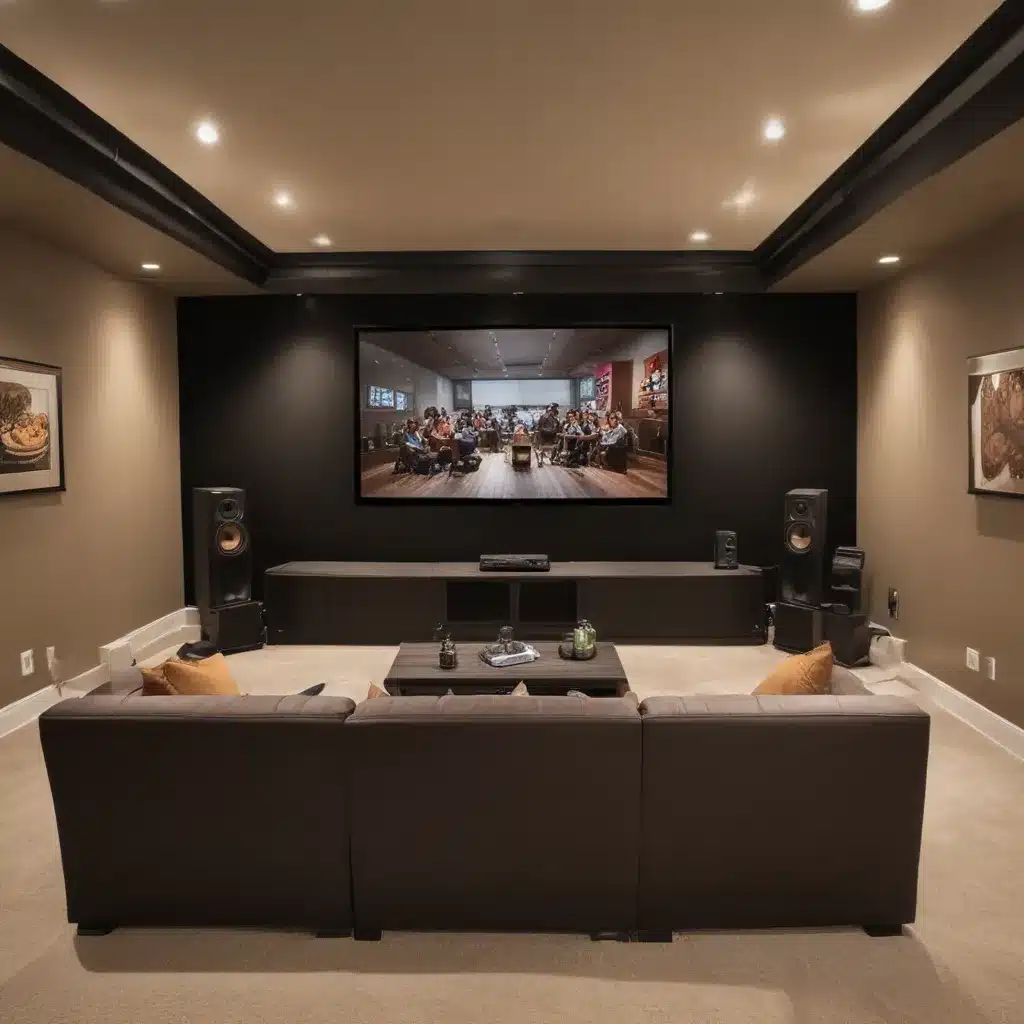
The Challenges of Soundproofing a Home Entertainment Space
Ah, the joys of owning a home music or media room – the perfect sanctuary for escaping the stresses of everyday life and immersing yourself in the world of sound. But, as any audiophile or cinephile knows, achieving the ultimate sonic experience requires more than just high-end equipment and carefully curated playlists. The true key to unlocking the full potential of your home entertainment space lies in proper soundproofing.
Navigating the ins and outs of soundproofing, however, can be a daunting task, fraught with technical jargon and conflicting advice. What materials work best? How do you minimize sound transmission? And how can you ensure your music or movie nights don’t disturb the rest of the household? These are the questions that often keep homeowners up at night, wondering if they’ll ever achieve the audio nirvana they crave.
Fear not, fellow sound enthusiasts! In this comprehensive guide, I’ll be your personal soundproofing sherpa, guiding you through the process of transforming your home entertainment space into a veritable oasis of sonic bliss. So, grab your noise-cancelling headphones and get ready to dive deep into the world of acoustic perfection.
Understanding the Science of Soundproofing
Before we can dive into the practical aspects of soundproofing your home music or media room, it’s essential to have a firm grasp of the underlying principles at play. Sound, as we all know, is a form of energy that travels in the form of waves, and these waves can be affected by various materials and surfaces.
The primary goal of soundproofing is to prevent sound waves from entering or exiting a designated space, thus maintaining the acoustic integrity of the room. This can be achieved through a combination of sound absorption, sound isolation, and sound masking.
Sound absorption refers to the process of absorbing sound waves, preventing them from bouncing back and creating echoes or standing waves. This is usually accomplished through the use of materials like acoustic panels, curtains, and foam.
Sound isolation, on the other hand, focuses on physically separating the room from the surrounding environment, preventing sound transmission through walls, floors, and ceilings. This involves the strategic use of materials like mass-loaded vinyl, resilient channels, and decoupled wall assemblies.
Finally, sound masking involves introducing a low-level background noise, such as white noise or pink noise, to cover up or “mask” any unwanted sounds. This can be particularly useful for minimizing the impact of external noise on your home entertainment experience.
By understanding these core principles, we can start to devise a comprehensive soundproofing strategy that addresses the unique challenges of your home music or media room.
Assessing Your Soundproofing Needs
The first step in your soundproofing journey is to assess the specific needs of your home entertainment space. After all, not all rooms are created equal, and the soundproofing solution that works for one space may not be the best fit for another.
When evaluating your soundproofing requirements, consider the following key factors:
-
Room size and layout: The dimensions of your room, as well as its shape and any architectural features, can significantly impact the soundproofing approach. Larger rooms, for example, may require more extensive measures, while irregularly shaped spaces might necessitate more creative solutions.
-
Noise sources: What type of sound are you trying to contain or minimize? Is it the thunderous bass of your home theater system, the crystal-clear vocals of your studio equipment, or the incessant chatter of your family members in the next room? Identifying the primary noise sources will help you tailor your soundproofing strategy.
-
Noise sensitivity: How sensitive are you to external noise? If you’re a light sleeper or have a low tolerance for disruptions, your soundproofing needs may be more stringent than someone who can easily tune out ambient sounds.
-
Existing construction: The materials and construction methods used in your home can also play a role in determining the best soundproofing approach. Older homes, for instance, may have different wall and ceiling structures that require specialized treatment.
By thoroughly assessing these factors, you can develop a tailored soundproofing plan that addresses the unique challenges of your home music or media room. This will not only ensure maximum acoustic performance but also help you avoid costly and time-consuming mistakes down the line.
Choosing the Right Soundproofing Materials
With a clear understanding of your soundproofing needs, it’s time to explore the various materials and techniques that can help you achieve your desired level of acoustic isolation. From mass-loaded vinyl to acoustic foam, the options can be overwhelming, but fear not – I’ve got you covered.
One of the most effective soundproofing materials is mass-loaded vinyl (MLV). This dense, flexible material acts as a barrier, blocking sound transmission through walls, floors, and ceilings. MLV is often used in conjunction with other sound-absorbing materials, such as fiberglass insulation or acoustic panels, to create a comprehensive soundproofing system.
Another popular choice is resilient channels, which are essentially metal or plastic furring strips that are installed perpendicular to the wall studs or ceiling joists. These channels create a physical separation between the drywall and the structural framing, reducing the amount of sound that can be transmitted through the wall or ceiling assembly.
For sound absorption, acoustic panels are a must-have. These specialized panels, often made from materials like foam or fiberglass, are designed to absorb sound waves and minimize echoes and reverberation within the room. Strategically placing these panels on the walls and ceiling can dramatically improve the acoustics of your home entertainment space.
But what about doors and windows, you ask? These openings can be significant sources of sound leakage, so it’s crucial to address them as well. Soundproofing door kits, which often include weatherstripping and dense core materials, can help create an acoustic seal, while specialized window inserts or secondary glazing can reduce sound transmission through glass.
Of course, these are just a few of the many soundproofing materials and techniques available. The specific combination you choose will depend on the unique characteristics of your home music or media room, as well as your budget and aesthetic preferences. But with a little research and some expert guidance, you’ll be on your way to creating the ultimate sonic oasis.
Designing Your Soundproofing Solution
Now that you’ve familiarized yourself with the various soundproofing materials and their respective capabilities, it’s time to put all the pieces together and create a comprehensive soundproofing solution for your home entertainment space.
The key to an effective soundproofing design lies in layering different materials and techniques to create a multifaceted approach. This might involve combining mass-loaded vinyl, resilient channels, and acoustic panels to address both sound isolation and sound absorption.
For example, let’s say you have a dedicated media room in your home. To soundproof this space, you might start by installing resilient channels on the walls and ceiling, creating a physical separation between the drywall and the structural framing. Next, you’d add a layer of mass-loaded vinyl, which would act as a barrier to prevent sound transmission.
But your work doesn’t stop there. To address sound absorption, you’d strategically place acoustic panels on the walls and possibly even the ceiling, ensuring that any remaining sound waves are effectively dampened. And don’t forget about the door and windows – you might need to install specialized soundproofing kits or secondary glazing to prevent sound leakage.
By taking a layered approach and addressing both sound isolation and sound absorption, you can create a truly comprehensive soundproofing solution that not only enhances the audio quality of your home entertainment experience but also minimizes the impact on the rest of your household.
Of course, the specific design of your soundproofing system will depend on the unique characteristics of your space, as well as your personal preferences and budget. But with a little creativity and a willingness to experiment, you can transform your home music or media room into a sonic oasis that will be the envy of all your friends and neighbors.
Practical Installation Tips
Now that you’ve got the plan in place, it’s time to roll up your sleeves and get to work. Proper installation is crucial to the success of your soundproofing project, so let’s dive into some practical tips to ensure a smooth and effective process.
First and foremost, always prioritize safety. Soundproofing materials can be heavy and cumbersome, so be sure to use the appropriate personal protective equipment (PPE) and follow all safety guidelines. Invest in sturdy ladders or scaffolding, and enlist the help of a trusted friend or family member to make the job a little easier.
When it comes to the actual installation, attention to detail is key. Measure twice, cut once, and take the time to ensure a tight, seamless fit. For materials like mass-loaded vinyl and acoustic panels, proper sealing and overlapping are essential to prevent sound leaks.
Speaking of sealing, don’t forget about the importance of caulk and sealants. These versatile materials can help fill in any gaps or cracks that might allow sound to sneak through, so be sure to apply them liberally around the perimeter of your walls, floors, and ceilings.
And let’s not forget about the doors and windows. Ensure a proper seal by installing weatherstripping and using specialized soundproofing kits designed for these openings. A little extra effort here can make a world of difference in your overall soundproofing performance.
Finally, don’t be afraid to get creative with your installation. Every home is unique, and sometimes, the perfect soundproofing solution may require a bit of outside-the-box thinking. Don’t be afraid to experiment with different configurations or even custom-built solutions to address any tricky spots in your home entertainment space.
By following these practical tips and approaching your soundproofing project with a meticulous, safety-first mindset, you’ll be well on your way to creating the ultimate sonic oasis in your home.
Optimizing Acoustics for Maximum Performance
With the physical soundproofing elements in place, it’s time to turn our attention to the acoustic performance of your home music or media room. After all, what’s the point of all that soundproofing if the room itself doesn’t sound amazing?
One of the key factors in achieving optimal acoustics is the proper placement and treatment of surfaces within the space. Acoustic panels, as we discussed earlier, are essential for controlling sound absorption and minimizing echoes or reverberation. But the specific placement of these panels can make a big difference in the overall sound quality.
As a general rule, you’ll want to prioritize covering the most reflective surfaces in the room, such as the walls and ceiling. But don’t stop there – consider adding panels to strategic locations on the floor as well, particularly in areas where sound waves might bounce and create unwanted reflections.
Another important consideration is the shape and geometry of the room. Irregular or asymmetrical spaces can be more challenging when it comes to optimizing acoustics, as sound waves may not behave as predictably. In these cases, you may need to experiment with different panel placements or even consider adding acoustic diffusers to help scatter and disperse the sound.
And let’s not forget about the often-overlooked element of room furnishings. The type and placement of furniture, curtains, and other décor can have a significant impact on the acoustic performance of your space. Heavy, upholstered pieces can help absorb sound, while hard surfaces like glass and wood can contribute to unwanted reflections.
By carefully considering the acoustic properties of your home entertainment space and making strategic adjustments, you can create a truly immersive and enjoyable audio experience. And who knows – you might even discover a previously untapped talent for audio engineering!
Maintaining and Troubleshooting Your Soundproofing System
Congratulations! You’ve successfully transformed your home music or media room into a veritable sonic oasis, complete with top-notch soundproofing and optimized acoustics. But your work doesn’t end there – maintaining and troubleshooting your soundproofing system is crucial to ensuring its long-term performance.
Think of your soundproofing setup as a delicate ecosystem – each component plays a vital role, and any disruptions can throw the whole system out of balance. That’s why it’s essential to establish a regular maintenance routine, checking for any signs of wear, tear, or damage that could compromise the acoustic integrity of your space.
Take a close look at your acoustic panels, for instance. Over time, these specialized materials can accumulate dust and debris, which can diminish their sound-absorbing capabilities. A simple, periodic cleaning with a soft-bristled brush or a gentle vacuum can keep them in top shape.
And what about those resilient channels and mass-loaded vinyl barriers? While these materials are built to last, it’s important to inspect them for any cracks, gaps, or loosening that could allow sound to sneak through. A quick visual inspection and a few strategic touch-ups with caulk or sealant can go a long way in preserving your soundproofing system.
But what happens if, despite your best efforts, you start to notice a decline in the acoustic performance of your home entertainment space? Don’t panic – there are a few troubleshooting steps you can take to identify and address the issue.
Start by conducting a thorough assessment of the room, noting any changes in the environment, such as the addition of new furniture or the removal of acoustic panels. Subtle shifts like these can have a significant impact on the overall acoustics, so it’s important to identify the root cause before attempting any fixes.
If the problem persists, it may be time to enlist the help of a professional. An experienced acoustician or soundproofing specialist can conduct a comprehensive evaluation of your space and recommend targeted solutions to get your sonic oasis back on track.
Remember, maintaining and troubleshooting your soundproofing system is an ongoing process, but the effort is well worth it. After all, what’s the point of creating the ultimate home entertainment experience if you can’t enjoy it to the fullest?
Conclusion: Embrace the Soundproofing Journey
As we come to the end of our soundproofing odyssey, I want to leave you with one final thought: embrace the journey. Transforming your home music or media room into a true sonic oasis is not just a practical endeavor – it’s an exercise in creativity, problem-solving, and a deep appreciation for the art of audio perfection.
Sure, there may be challenges and setbacks along the way, but each obstacle you overcome, each innovative solution you devise, is a testament to your dedication and passion for the craft. And trust me, the joy and satisfaction you’ll feel when you finally crank up the volume and bask in the crystal-clear, distortion-free audio quality will make every moment of the process worth it.
Remember, this is not just about soundproofing – it’s about crafting a sanctuary, a personal haven where you can escape the noise and chaos of the outside world and immerse yourself in the pure, unadulterated power of sound. And as you continue to refine and optimize your setup, taking pride in your work and the ever-evolving nature of your sonic oasis, you’ll find that the journey itself becomes just as rewarding as the destination.
So, my fellow sound enthusiasts, embrace the challenge, unleash your creativity, and get ready to embark on the ultimate soundproofing adventure. Who knows, you might just discover a hidden talent for acoustical engineering along the way. And when you’re done, sit back, relax, and let the music (or the movies) take you on a journey like never before.
Happy soundproofing, my friends!
If you’re ready to take the next step in transforming your home entertainment space, be sure to check out the soundproofing and renovation services offered by ABC Home. Their team of experts is dedicated to helping you create the ultimate sonic oasis, tailored to your specific needs and preferences.


