
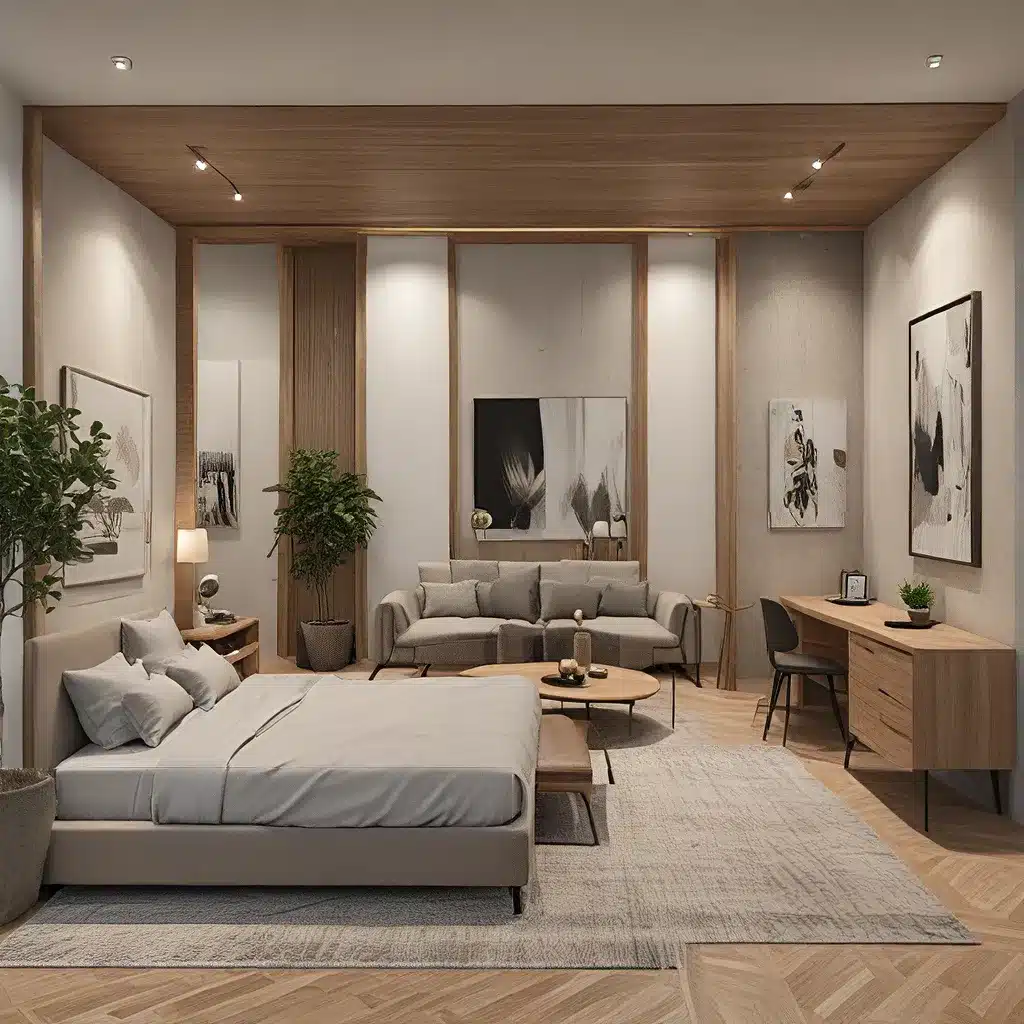
Spatial Solutions: Maximizing Room Layouts
As a designer, I’m often asked to work my magic on challenging floor plans – the ones that just don’t seem to flow or function quite right. But you know what they say, there’s always a solution, even for the trickiest of spaces.
Today, I want to share with you a real-life example of how thoughtful spatial planning can transform a dysfunctional floor plan into a beautifully practical and livable space. It’s all about understanding the principles of good design and applying them strategically.
Let’s dive in, shall we?
Uncovering Design Challenges
A few months back, I was asked to review a floor plan for a client’s custom home project. Now, this plan had clearly been created with care, but there were some definite areas that needed some TLC. As I went through it, I couldn’t help but notice a few design challenges that were just begging to be solved.
One of the key issues was the odd-shaped rooms. You know the ones – those weirdly angled walls that just make furniture placement a headache. And let’s not forget the tricky door placements that were causing major traffic jams. Oof, talk about spatial frustration!
But as any seasoned designer will tell you, these aren’t just problems to complain about – they’re opportunities to get creative. So I rolled up my sleeves, grabbed a pen and paper, and got to work.
Maximizing Functionality Through Strategic Design
Now, when it comes to optimizing a floor plan, it’s all about striking the perfect balance between form and function. It’s not just about making things look pretty (though that’s certainly important!), it’s about ensuring every inch of space is working hard for the homeowner.
One of the first things I tackled was the furniture layout. By thoughtfully arranging the rooms and spaces, I was able to create a flow that made sense for how the homeowners would actually use the home. No more awkward dead zones or obstacles to navigate.
But it wasn’t just about the furniture – I also had to consider the overall utility of the space. That meant finding ways to maximize functionality while still maintaining a visually appealing aesthetic. Think built-in storage, strategically placed architectural details, and a seamless integration of form and function.
And of course, no floor plan overhaul would be complete without addressing those tricky door placements. By carefully positioning the doors, I was able to create a smooth, uninterrupted flow throughout the home, ensuring easy access and eliminating any potential traffic jams.
Achieving Balance and Harmony
But the real magic happens when you step back and look at the bigger picture. That’s when you start to see the importance of order, balance, and alignment in a well-designed floor plan. It’s about creating a sense of harmony and cohesion that simply makes the space feel…right.
And that’s exactly what I set out to do with this floor plan overhaul. By carefully considering each of the design elements and how they work together, I was able to transform a cluttered, confusing layout into a beautifully functional and visually pleasing space.
Bringing it All Together
Now, I know what you might be thinking – “That’s all well and good, Tami, but how does this translate to my own home renovation project?” Well, my friends, that’s where the real magic happens.
Whether you’re planning a full-scale remodel or just looking to optimize your existing floor plan, the principles of good design can make all the difference. It’s about understanding the intricacies of spatial planning, identifying problem areas, and then crafting strategic solutions that elevate the functionality and aesthetics of your home.
And you know what they say – the devil is in the details. That’s why it’s so important to work with a seasoned designer who can help you navigate the complexities of floor plan optimization. Trust me, the investment will pay off tenfold in the long run.
So, are you ready to unlock the full potential of your living space? Let’s get to work and create the home of your dreams!


