
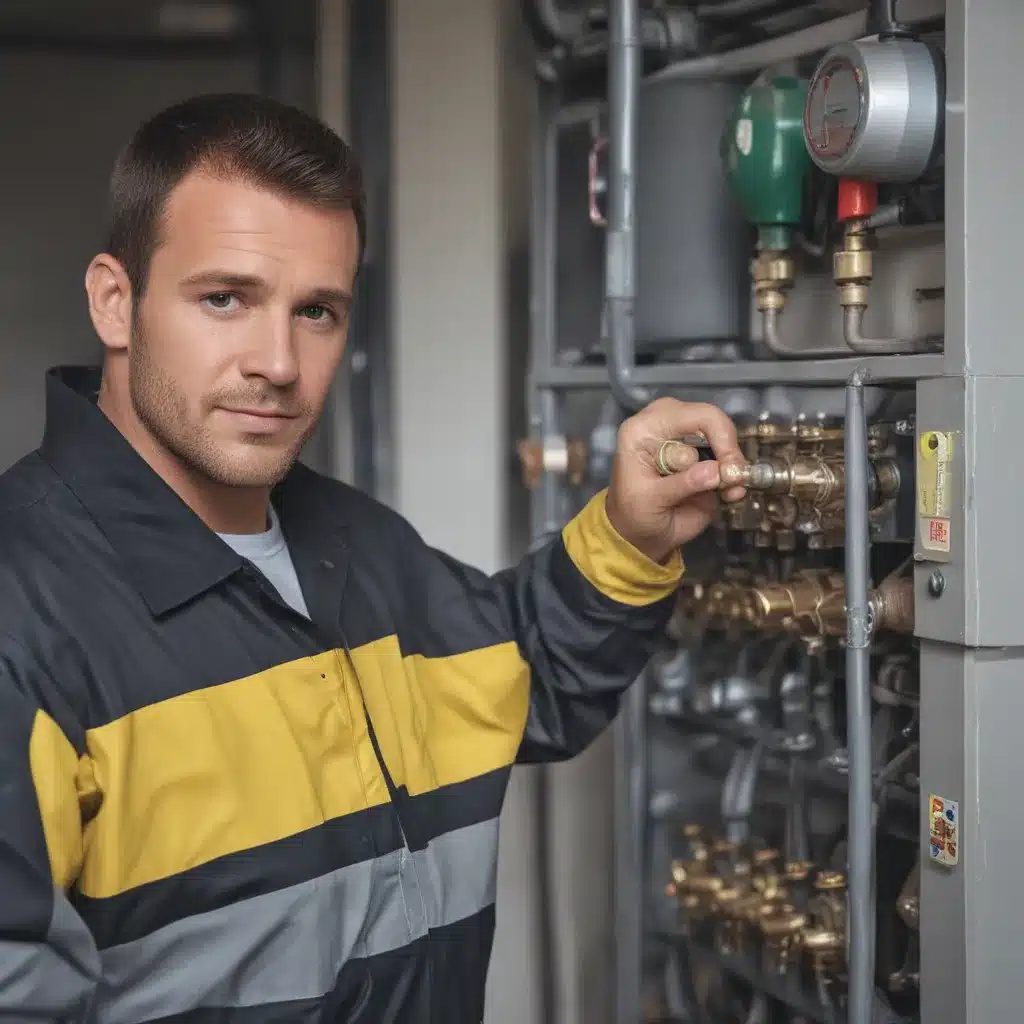
The Importance of Gas Safety in Every Home
It’s a crisp autumn morning, and I’m sipping my coffee, watching the sun slowly rise over the rooftops of Aberdeen. As I gaze out the window, I can’t help but appreciate the cozy warmth enveloping my home – all thanks to the trusty gas boiler humming away in the corner.
You see, gas has become an integral part of our daily lives, whether it’s powering our heating, hot water, or cooking appliances. In fact, I’d wager there’s hardly a household in the UK that doesn’t rely on gas in some capacity. And while it’s generally a safe and economical energy source, we can’t ignore the inherent risks involved – from explosions and fires to potential carbon monoxide leaks.
That’s why it’s so crucial that we, as homeowners and landlords, take the necessary precautions to ensure the safety of our properties and our loved ones. And at the heart of this effort lies the humble gas safety certificate – a document that not only protects us but also fulfills our legal obligations.
Understanding the Gas Safety (Installation and Use) Regulations
The Gas Safety (Installation and Use) Regulations 1998 are the cornerstone of gas safety legislation in the UK. These regulations, as amended over the years, outline the key requirements for the safe installation, maintenance, and use of gas appliances and fittings in both domestic and commercial settings.
As per the regulations, every landlord or homeowner is legally obligated to have their property’s gas appliances and installations inspected and certified by a qualified, Gas Safe-registered engineer once a year. This annual gas safety check ensures that everything is functioning correctly and poses no risks to the occupants.
But it’s not just about ticking a box on a checklist – the gas safety certificate serves as a vital document that provides a detailed record of the inspection and any necessary remedial actions. In the event of an incident, this certificate can be the difference between a smooth resolution and a costly legal battle.
The Gas Safe Register: Ensuring Compliance and Safety
At the heart of the gas safety regime in the UK is the Gas Safe Register, an official organization responsible for maintaining a comprehensive record of qualified and licensed gas engineers. These engineers are the only ones authorized to conduct the annual gas safety inspections and issue the all-important certificates.
The Gas Safe Register works closely with the Health and Safety Executive (HSE) to ensure that the gas safety standards set by law are being upheld. Together, they’re responsible for monitoring compliance, investigating incidents, and issuing warnings or notices when necessary.
In fact, a recent survey by the Gas Safe Register revealed that a staggering 68,000 homes could have avoided a gas-related accident simply by adhering to the established safety protocols. On the other hand, the same survey found that more than half of the engineers encountered at least one faulty gas appliance during their inspections.
This highlights the vital role the Gas Safe Register plays in keeping our homes and communities safe. By maintaining a robust system of registration, oversight, and enforcement, they’re helping to mitigate the very real risks associated with gas usage.
The GIUSP: Addressing Unsafe Gas Situations
When a Gas Safe engineer conducts an annual gas safety check, they follow a specific protocol known as the “Gas Industry Unsafe Situations Procedure” (GIUSP). This comprehensive set of guidelines outlines the steps to be taken when an unsafe gas situation is identified.
The GIUSP categorizes any potentially dangerous gas appliances or installations into two main groups: “Immediately Dangerous” and “At Risk”. Appliances labeled as “Immediately Dangerous” pose an immediate threat and must be shut off and disconnected immediately. On the other hand, “At Risk” appliances require prompt attention and repair to mitigate the risks.
In addition to these two categories, the engineer may also identify appliances that are “Not to the Current Standard”. While these may not pose an immediate danger, it’s highly recommended that they be replaced with newer models that comply with the latest safety standards.
The GIUSP protocol ensures that gas safety issues are addressed swiftly and effectively, minimizing the potential for harm to the occupants of the property. By taking decisive action, the Gas Safe engineer is upholding their responsibility to protect the safety and well-being of the public.
Gas Safety Alerts: Staying Informed and Vigilant
But the gas safety journey doesn’t end with the annual inspection. Manufacturers and other industry stakeholders also play a crucial role in keeping us informed about potential safety concerns related to specific gas appliances and fittings.
The Gas Safe Register regularly issues safety alerts and notices on behalf of these stakeholders, informing homeowners and landlords of any significant faults or defects that could pose a threat. These alerts are based on reports received from the Health and Safety Executive (HSE) and are designed to help us take immediate action to address the issues.
For example, the Gas Safe Register has previously issued alerts regarding faulty controls on certain gas cookers, as well as concerns about the performance of some boiler models. By heeding these warnings and taking the necessary steps, we can help prevent potentially devastating incidents and ensure the continued safety of our homes and families.
Compliance is Key: The Consequences of Neglecting Gas Safety
As a homeowner or landlord, it’s essential to understand the legal and practical implications of neglecting gas safety. Failing to obtain a valid gas safety certificate or address any issues identified during the annual inspection can result in hefty fines, legal action, and even the possibility of imprisonment.
But the consequences go beyond just the legal ramifications. Neglecting gas safety could also lead to devastating consequences, such as gas leaks, fires, or carbon monoxide poisoning – all of which can have tragic impacts on both life and property.
Imagine coming home to find your beloved family gathered around the dinner table, only to be greeted by the overwhelming smell of gas. Or waking up in the middle of the night, disoriented and struggling to breathe, as a silent killer slowly seeps into your home. These scenarios are not mere hypotheticals – they’re very real, and the effects can be catastrophic.
That’s why it’s so important to take gas safety seriously, not just for the sake of compliance, but for the well-being of those we hold dear. By staying vigilant, following the regulations, and heeding the warnings, we can ensure that our homes remain safe havens for us and our loved ones.
Prioritizing Gas Safety: A Shared Responsibility
At the end of the day, gas safety is a shared responsibility. It’s not just the job of the Gas Safe Register, the HSE, or the government – it’s up to all of us, as homeowners and landlords, to do our part in keeping our properties and communities safe.
By working closely with reputable building and renovation companies like ABC Home, we can ensure that our gas installations and appliances are installed and maintained to the highest standards. And by staying informed, heeding safety alerts, and obtaining the necessary gas safety certificates, we can take an active role in protecting ourselves and our families.
It may seem like a daunting task, but the peace of mind that comes with knowing your home is a safe haven is truly priceless. So, let’s roll up our sleeves, stay vigilant, and do our part to keep the gas flowing safely in every corner of the UK.


