
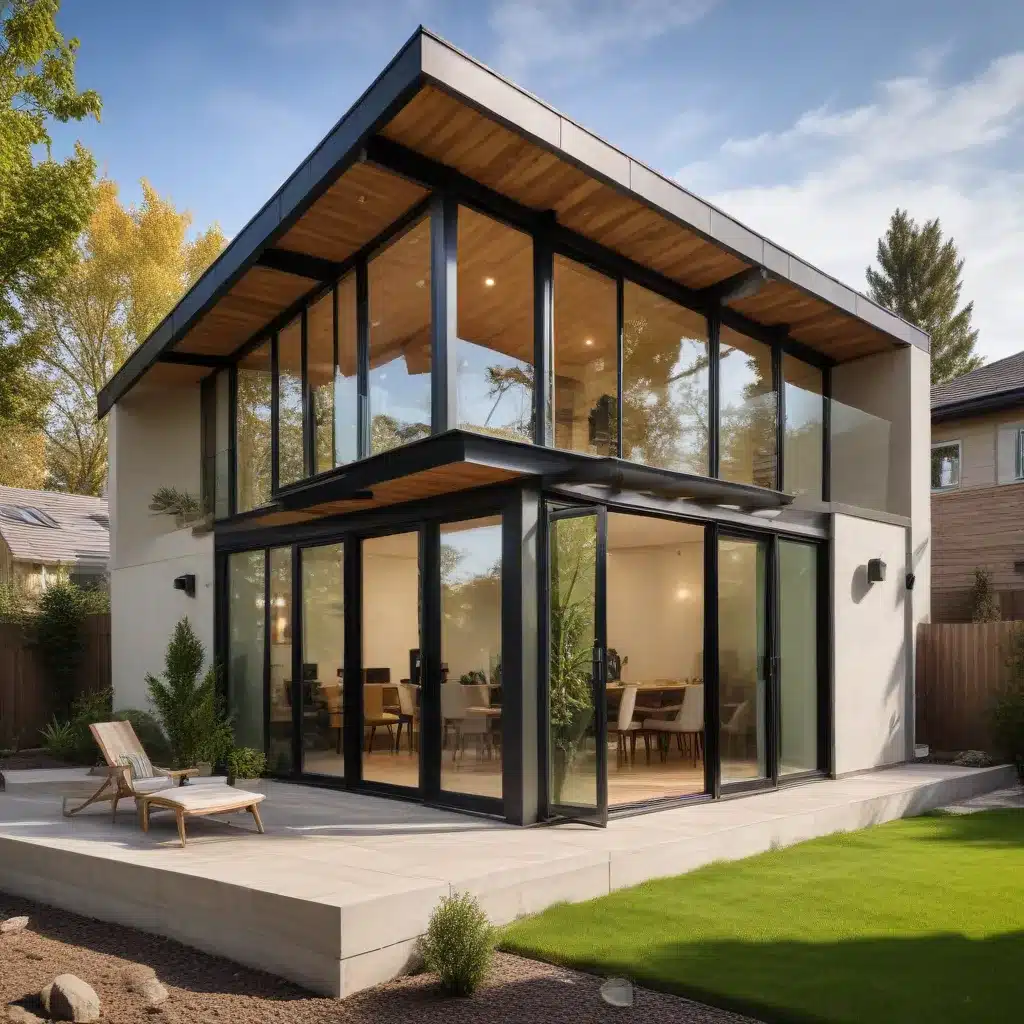
Sustainable Home Extensions: Embracing Sustainable Building Modularization
As an experienced home extension consultant, I’m thrilled to explore the exciting realm of sustainable home extensions. In today’s climate-conscious world, homeowners are increasingly seeking ways to enhance their living spaces while minimizing their environmental impact. One innovative approach that’s gaining traction is the integration of sustainable building principles with the power of modular design.
Sustainable Building Principles
At the heart of sustainable home extensions lies a fundamental commitment to three core principles: energy efficiency, resource conservation, and the use of renewable materials.
Energy Efficiency
By prioritizing energy-efficient design and technologies, homeowners can dramatically reduce their carbon footprint and energy bills. From strategic window placement to high-performance insulation, sustainable home extensions are engineered to harness natural light and maintain comfortable indoor temperatures with minimal reliance on heating and cooling systems.
Resource Conservation
Sustainable home extensions are designed with a keen eye on resource conservation. This encompasses everything from minimizing construction waste and optimizing material usage to incorporating water-saving features and promoting the circular economy through reuse and repurposing.
Renewable Materials
The choice of building materials is crucial in sustainable home extensions. Embracing renewable resources, such as timber, bamboo, and other eco-friendly alternatives, not only reduces the carbon footprint but also contributes to the long-term resilience of the structure.
Modular Design Approach
At the heart of sustainable home extensions lies the power of modular design. This innovative approach offers a wealth of benefits that align perfectly with the principles of sustainability.
Flexibility and Adaptability
Modular home extensions are inherently flexible, allowing homeowners to easily reconfigure or expand their living spaces as their needs evolve. This adaptability reduces the need for extensive renovations or even the complete reconstruction of a home, thereby minimizing waste and environmental impact.
Prefabrication and Offsite Construction
A key advantage of modular design is the ability to prefabricate components in a controlled, offsite environment. This not only streamlines the construction process but also enables greater precision, quality control, and waste reduction compared to traditional on-site building methods.
Scalability and Expandability
Modular home extensions are designed with scalability in mind, making it easy to add or remove modules as required. This scalability allows homeowners to start small and gradually expand their living spaces, responding to changing needs and family dynamics without the need for extensive remodeling.
Sustainable Building Techniques
Sustainable home extensions leverage a range of innovative building techniques to enhance energy efficiency, conserve resources, and promote environmental responsibility.
Passive Solar Design
By strategically positioning windows, optimizing insulation, and incorporating thermal mass, passive solar design harnesses the power of the sun to regulate indoor temperatures, reducing the reliance on energy-intensive heating and cooling systems.
Renewable Energy Integration
Homeowners can further amplify the sustainability of their home extensions by integrating renewable energy sources, such as solar panels, wind turbines, or geothermal systems, to generate clean, renewable power.
Water Conservation Strategies
Sustainable home extensions often feature water-saving technologies, including low-flow fixtures, greywater recycling systems, and rainwater harvesting, to minimize the strain on local water resources.
Sustainable Home Extension Benefits
The adoption of sustainable building principles and modular design in home extensions delivers a wealth of benefits, both for homeowners and the environment.
Environmental Impact Reduction
Sustainable home extensions significantly reduce the carbon footprint and environmental impact associated with traditional construction methods. From lower energy consumption to reduced waste generation, these eco-friendly solutions contribute to a greener future.
Cost-Effectiveness
Contrary to popular belief, sustainable home extensions can often be more cost-effective than traditional construction. The efficiency of modular design, coupled with the long-term savings on energy and maintenance, make these extensions a financially prudent choice for homeowners.
Improved Livability
Sustainable home extensions are designed to enhance the overall living experience. From the abundance of natural light and improved indoor air quality to the versatility of modular spaces, these extensions prioritize the well-being and comfort of the occupants.
Challenges and Considerations
While the benefits of sustainable home extensions are compelling, there are some challenges and considerations that homeowners and builders must navigate.
Regulatory Compliance
Navigating the regulatory landscape, including building codes and zoning requirements, can sometimes pose a hurdle for sustainable home extensions. Staying up-to-date with evolving regulations and working closely with local authorities is crucial to ensure a smooth and compliant project.
Site-Specific Adaptations
Each home and its surrounding environment are unique, requiring tailored solutions to address the specific needs and constraints of the site. Careful planning and a collaborative approach between homeowners, designers, and builders are essential to ensure a seamless integration of the sustainable home extension.
Integration with Existing Structures
Seamlessly integrating a sustainable home extension with an existing structure can be a delicate balance. Careful consideration of structural integrity, aesthetic continuity, and the preservation of the original character of the home are all essential factors to address.
Sustainable Home Extension Case Studies
To illustrate the potential of sustainable home extensions, let’s explore a few real-world examples that showcase the marriage of modular design and eco-friendly principles.
Residential Projects
In the heart of Edinburgh, a family decided to transform their traditional townhouse into a sustainable oasis. By incorporating a modular home extension, they were able to add an expansive living space that boasts an abundance of natural light, energy-efficient features, and a stunning connection to the home’s lush garden. The use of renewable timber materials and passive solar design has resulted in a 30% reduction in the home’s energy consumption.
Commercial Applications
Sustainable home extensions are not limited to residential projects. A thriving local business in Glasgow recognized the need for additional office space that aligned with their commitment to sustainability. They opted for a modular home extension constructed with recycled steel and CLT (cross-laminated timber) panels. The result is a light-filled workspace that generates a portion of its own energy through rooftop solar panels, setting a new standard for eco-friendly commercial developments.
Community Developments
In the bustling city of Dundee, a forward-thinking community initiative is spearheading the construction of a mixed-use sustainable home extension project. Designed with modular principles, this development features a mix of residential units, shared community spaces, and urban gardens. By leveraging prefabricated components and renewable materials, the project aims to not only address the local housing shortage but also foster a thriving, environmentally conscious neighborhood.
The Future of Sustainable Home Extensions
As we look towards the future, the prospects for sustainable home extensions are truly exciting. Emerging technologies and evolving policy landscapes are paving the way for even more innovative and impactful solutions.
Emerging Technologies
Advancements in areas such as 3D printing, smart home automation, and advanced materials are transforming the realm of sustainable home extensions. These cutting-edge technologies hold the potential to further enhance energy efficiency, material optimization, and the overall adaptability of modular designs.
Policy and Incentive Developments
Governments and policymakers are increasingly recognizing the importance of sustainable construction practices. From the introduction of tax incentives and subsidies to the implementation of stricter building regulations, the legislative landscape is shifting to support and encourage the adoption of sustainable home extensions.
Community Engagement
Sustainable home extensions are not just about individual homeowners; they’re about fostering a more environmentally conscious and resilient community. As homeowners, builders, and policymakers work together to champion these innovative solutions, we can expect to see a growing sense of pride and engagement within local communities, further driving the momentum towards a greener future.
In conclusion, the integration of sustainable building principles and modular design in home extensions is a powerful combination that holds the key to a more environmentally responsible and livable future. By embracing the benefits of energy efficiency, resource conservation, and renewable materials, homeowners can transform their living spaces into true sanctuaries that not only enhance their quality of life but also contribute to a more sustainable world. As an experienced home extension consultant, I’m excited to guide homeowners through this transformative journey, helping them create the home of their dreams while leaving a positive impact on the environment. To learn more about our sustainable home extension services, please visit https://abc-home.co.uk/home-extension/.


