
Sustainable Building Principles
Constructing a sustainable home extension is no small feat, but with the right strategies and principles in place, it can be an immensely rewarding project. At the heart of sustainable home extensions lies a commitment to minimizing environmental impact, maximizing energy efficiency, and creating healthy, comfortable living spaces.
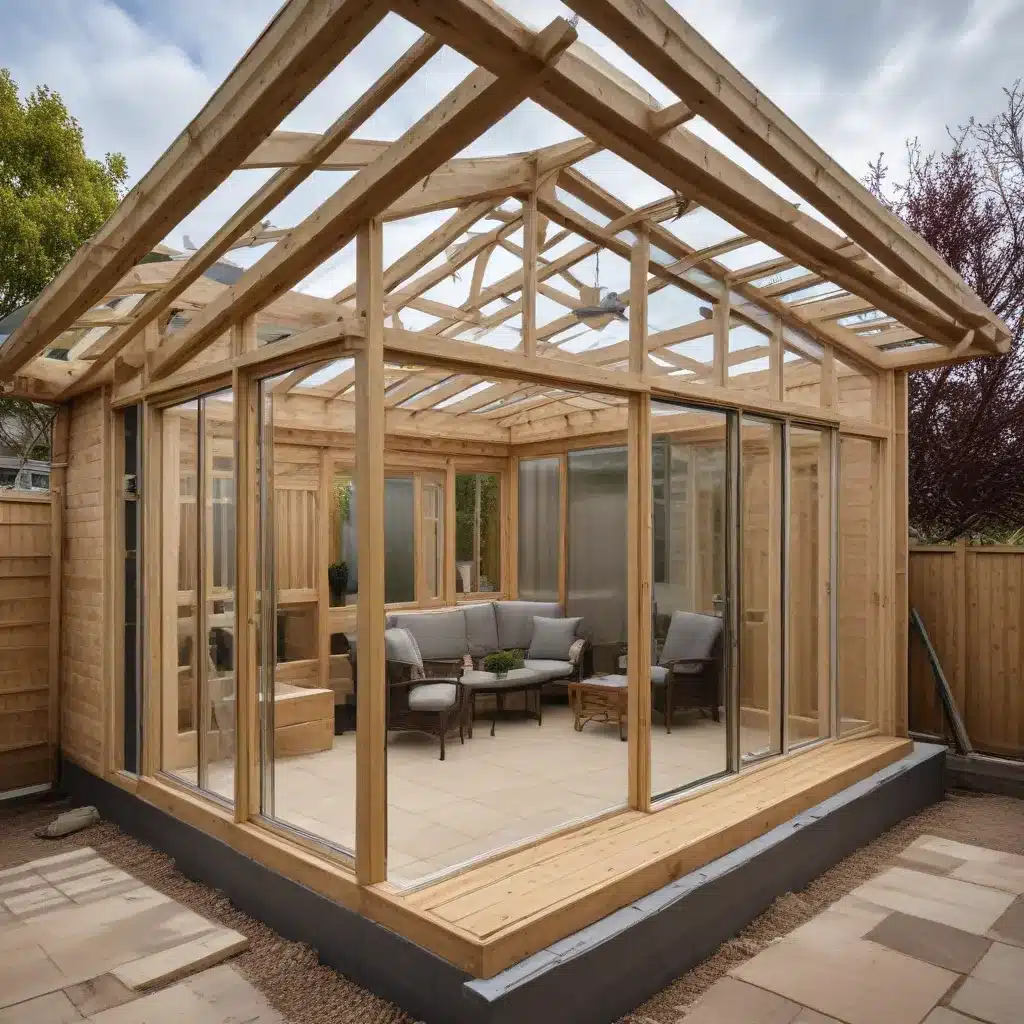
One of the key sustainable design strategies is to embrace passive solar design. By carefully orienting the extension to capture natural sunlight, you can reduce reliance on artificial lighting and heating, resulting in significant energy savings. Incorporating features like large windows, strategic shading, and thermal mass can help regulate indoor temperatures and improve overall comfort.
Complementing passive solar design, the integration of renewable energy technologies can further enhance the sustainability of your home extension. Solar photovoltaic panels, for instance, can generate clean, renewable electricity, while ground-source heat pumps or air-source heat pumps can provide efficient heating and cooling. These innovative solutions not only reduce your carbon footprint but also insulate you from fluctuating energy prices.
Sustainable Building Materials
The materials used in your home extension play a crucial role in its environmental impact. Prioritizing environmentally-friendly materials is a must, and this can include options like timber from sustainably managed forests, natural insulation materials, and low-embodied carbon concrete.
Recycled and reclaimed materials are also excellent choices, as they reduce waste and conserve natural resources. From upcycled windows and doors to reclaimed timber beams, the possibilities for incorporating these materials are endless. By doing so, you not only contribute to a circular economy but also add unique character to your home extension.
Sustainable Building Practices
Sustainable building practices extend beyond the materials used; they encompass the entire construction process. Implementing sustainable construction techniques, such as prefabrication, modular design, and on-site waste management, can significantly enhance the efficiency and environmental friendliness of your home extension project.
Careful consideration of the site-specific conditions is also crucial. Adapting the design to the local climate, topography, and existing landscape features can minimize the impact on the surrounding environment and optimize the extension’s performance.
Sustainable Building Education
Achieving widespread adoption of sustainable home extensions requires a concerted effort to educate and train the next generation of builders, designers, and homeowners. Integrating sustainable building curricula into vocational and higher education programs is a crucial step in this direction.
By exposing students to the principles, technologies, and best practices of sustainable construction, we can cultivate a new generation of professionals equipped to deliver high-performing, eco-friendly home extensions. Hands-on training programs that provide practical experience in sustainable building techniques further solidify this knowledge and prepare students for the real-world challenges they will face.
Sustainable Building Training
Alongside formal education, vocational training programs and continuing education courses play a vital role in upskilling the existing workforce. From in-depth workshops on sustainable material selection to comprehensive certification programs in energy-efficient design, these training opportunities ensure that professionals stay abreast of the latest advancements in the field.
The interdisciplinary collaboration fostered by these educational and training initiatives is particularly valuable. By bringing together architects, engineers, construction workers, and even homeowners, we can cultivate a shared understanding of sustainable building principles and foster a culture of innovation.
Enhancing Sustainable Building Knowledge
Sustainable home extensions are not just about implementing the latest technologies; they are a product of continuous learning, research, and knowledge dissemination. Interdisciplinary collaboration between academia, industry, and policymakers is crucial in driving the sustainable building agenda forward.
Research and innovation in areas like advanced building materials, energy-efficient systems, and sustainable construction methods are essential for pushing the boundaries of what’s possible. By sharing these insights through publications, conferences, and online resources, we can empower the entire industry to adopt more sustainable practices.
Sustainable Home Extension Case Studies
Examining real-world examples of successful sustainable home extensions can provide valuable insights and inspiration. These case studies showcase the integration of sustainable design strategies, the use of innovative materials, and the implementation of best practices in construction.
One such example is the TU Delft extension project, where educators from vocational institutions are collaborating with TU Delft to develop adaptable and open teaching resources for sustainable building with timber. By equipping teachers with the necessary knowledge and tools, this initiative aims to shape the future workforce and contribute to a more sustainable built environment.
Another inspiring project is the University of Nevada, Reno Extension program, where Andrew Waaswa will provide tailored educational programs to help local farmers in Churchill, Mineral, and Pershing counties boost productivity, meet financial goals, and adopt sustainable practices. This holistic approach to sustainable agriculture serves as a model for integrating sustainable principles into various domains.
Barriers to Sustainable Home Extensions
While the benefits of sustainable home extensions are clear, there are still some barriers that need to be addressed. Policy and regulatory challenges can sometimes hinder the adoption of innovative sustainable technologies or materials. Navigating the maze of building codes, planning permissions, and energy efficiency standards can be a daunting task for homeowners and contractors alike.
Financial considerations also play a significant role. Although the long-term cost savings associated with sustainable home extensions can be substantial, the upfront investment can be a deterrent for some homeowners. Targeted incentives, financing schemes, and educational campaigns are necessary to make sustainable home extensions more accessible and appealing.
Lastly, skills and workforce gaps can pose a challenge. Ensuring that there are enough trained professionals, from architects and engineers to skilled tradespeople, is crucial for the widespread adoption of sustainable home extension practices. Investing in comprehensive training programs and fostering collaboration between educational institutions and the industry can help address this issue.
As we navigate the path towards a more sustainable future, the importance of sustainable home extensions cannot be overstated. By embracing the principles of sustainable design, material selection, and construction practices, we can create living spaces that are not only environmentally-friendly but also enhance the overall quality of life for homeowners. And by enhancing sustainable building education and training, we can empower the next generation of professionals to lead the charge in transforming the built environment.


