
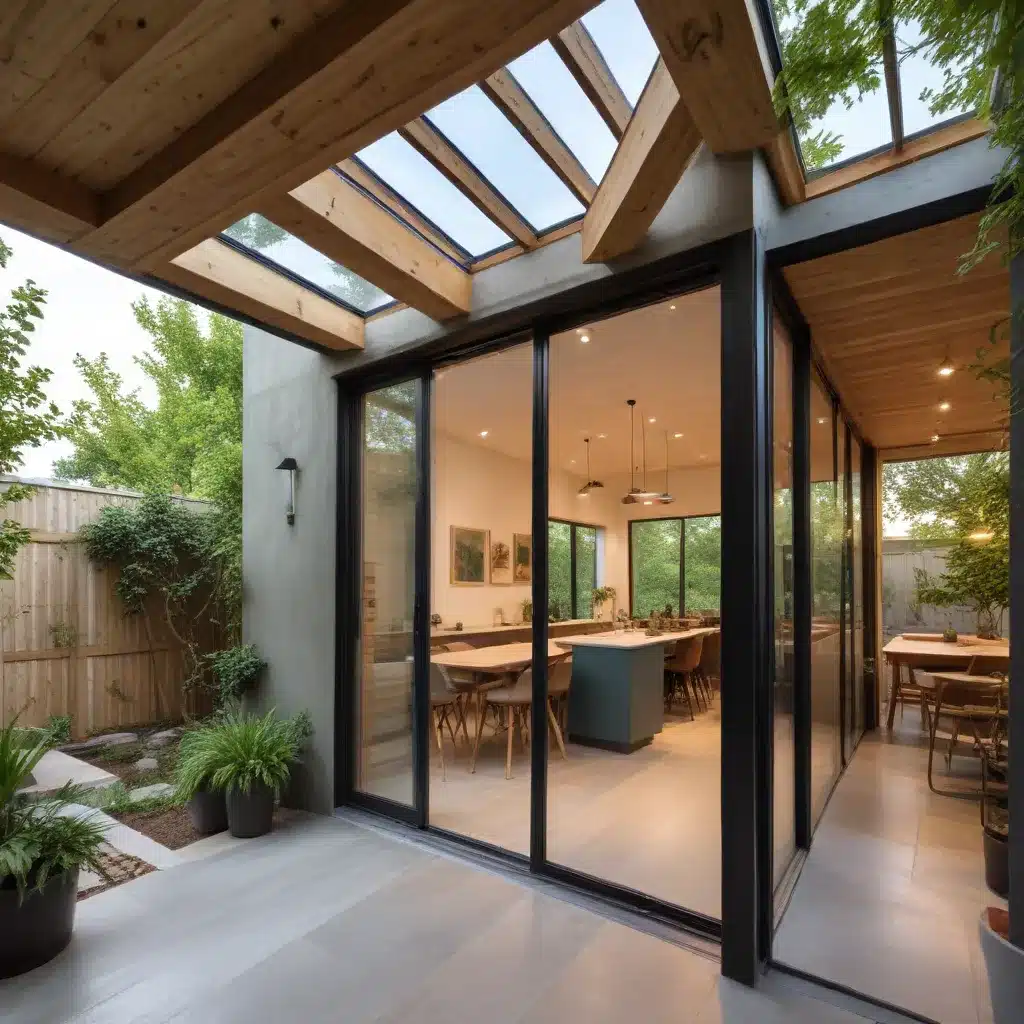
Sustainable Home Extensions: Integrating Sustainable Building Repurposing
In the ever-evolving world of home improvement, sustainability has emerged as a driving force, transforming the way we approach home extensions. As the demand for greener, more efficient living spaces continues to rise, savvy homeowners and contractors are exploring innovative ways to marry functionality with environmental responsibility.
Sustainable Building Practices
Sustainable home extensions go beyond the surface-level “green” aesthetics. At their core, they prioritize the integration of renewable energy sources, the strategic repurposing of materials, and the implementation of energy-efficient design principles. By embracing these practices, homeowners can not only reduce their carbon footprint but also enjoy long-term cost savings and enhanced comfort.
Renewable Energy Integration
One of the hallmarks of a sustainable home extension is the incorporation of renewable energy sources. Solar panels, wind turbines, and geothermal systems are becoming increasingly popular as homeowners seek to harness the power of nature to meet their energy needs. These technologies not only reduce reliance on fossil fuels but also provide a reliable, self-sustaining source of power for the home. When coupled with battery storage solutions, renewable energy systems can even offer backup power during grid outages, ensuring uninterrupted comfort and convenience.
Recycled and Repurposed Materials
Sustainable home extensions also prioritize the use of recycled and repurposed materials. Instead of relying solely on new construction materials, savvy homeowners and contractors are scouring salvage yards, demolition sites, and local reclamation centers for high-quality, eco-friendly alternatives. From reclaimed timber and vintage windows to upcycled metal and repurposed shipping containers, these materials not only reduce waste but also lend a unique character and charm to the overall design.
Energy-Efficient Design
Alongside renewable energy and recycled materials, energy-efficient design principles are a cornerstone of sustainable home extensions. This includes optimizing insulation, strategically positioning windows for passive solar gain, and incorporating energy-efficient appliances and lighting. By reducing the overall energy demands of the home, homeowners can significantly lower their utility bills while minimizing their environmental impact.
Integrating Sustainable Principles
Sustainable home extensions go beyond the physical structure, embracing a holistic approach that encompasses water conservation, waste management, and even the well-being of the home’s occupants.
Passive Solar Design
One of the key sustainable principles in home extension design is passive solar. By carefully orienting the structure, incorporating large windows on the south-facing side, and strategically placing thermal mass materials, homeowners can harness the sun’s energy to heat and cool their living spaces naturally. This not only reduces the need for energy-intensive HVAC systems but also creates a more comfortable, naturally-lit environment.
Water Conservation Strategies
Sustainability in home extensions also extends to water management. Homeowners are increasingly incorporating rainwater harvesting systems, greywater recycling, and drought-tolerant landscaping to reduce their reliance on municipal water sources. These strategies not only conserve a precious natural resource but also help to alleviate the strain on local water infrastructure.
Waste Management Solutions
Sustainable home extensions also address the issue of waste management. From the construction phase to the ongoing operation of the home, homeowners and contractors are exploring innovative ways to divert waste from landfills. This includes implementing robust recycling programs, composting food waste, and carefully selecting building materials that can be easily disassembled and repurposed at the end of the home’s life cycle.
Repurposing Existing Structures
One of the most exciting and sustainable approaches to home extensions is the repurposing of existing structures. By embracing the principles of adaptive reuse, homeowners can breathe new life into historic buildings, commercial spaces, or even industrial structures, transforming them into modern, energy-efficient living spaces.
Adaptive Reuse Techniques
Adaptive reuse involves the creative reimagining of a building’s existing structure and materials, repurposing them for a new function. This might involve converting a former warehouse into a light-filled loft, or transforming a neglected commercial building into a vibrant, mixed-use development. By retaining the core elements of the structure, adaptive reuse not only preserves the building’s historical and architectural significance but also reduces the environmental impact of new construction.
Historic Building Preservation
For homeowners with a passion for history, sustainable home extensions can also involve the preservation and restoration of historic buildings. By carefully maintaining the original features, incorporating energy-efficient upgrades, and adapting the space to modern living requirements, homeowners can honor the past while embracing a sustainable future. This approach not only conserves the cultural heritage of a community but also reduces the need for new construction materials and energy-intensive demolition.
Modular Construction Approaches
Another innovative sustainable home extension technique is the use of modular construction. This approach involves the prefabrication of building components off-site, which are then assembled on-site, minimizing waste and construction time. Modular systems are often designed with energy efficiency and adaptability in mind, making them a compelling option for homeowners seeking a sustainable, flexible, and cost-effective solution.
Holistic Design Considerations
Sustainable home extensions go beyond just the physical structure, encompassing a holistic approach that considers the environmental impact, occupant well-being, and the life cycle of the materials used.
Environmental Impact Assessments
Before embarking on a sustainable home extension project, it’s crucial to conduct a comprehensive environmental impact assessment. This process involves evaluating the potential environmental consequences of the proposed design, construction, and operation of the home. By understanding the project’s carbon footprint, water usage, and waste generation, homeowners and contractors can make informed decisions to minimize the overall impact on the environment.
Occupant Comfort and Wellbeing
Sustainable home extensions also prioritize the comfort and well-being of the occupants. Through the incorporation of features like ample natural lighting, superior indoor air quality, and ergonomic design, homeowners can create living spaces that not only reduce environmental impact but also enhance the physical and mental health of the people who inhabit them.
Life Cycle Analysis of Materials
Finally, sustainable home extensions take a long-term view of the materials used, conducting a thorough life cycle analysis. This involves evaluating the environmental impact of a material from its extraction, manufacturing, and transportation to its eventual disposal or recycling. By selecting materials with a lower carbon footprint and higher recyclability, homeowners can ensure that their home extensions have a lasting positive impact on the environment.
As homeowners and contractors continue to embrace the principles of sustainability, the landscape of home extensions is undergoing a remarkable transformation. By integrating renewable energy, repurposing existing structures, and adopting a holistic approach to design, we can create living spaces that not only meet our modern needs but also safeguard the environment for generations to come.
If you’re considering a home extension project and want to explore sustainable options, visit our home extensions service page to learn more about how we can help. Our team of experienced professionals is dedicated to guiding you through the process, ensuring that your home extension is not only beautiful but also environmentally responsible.


