
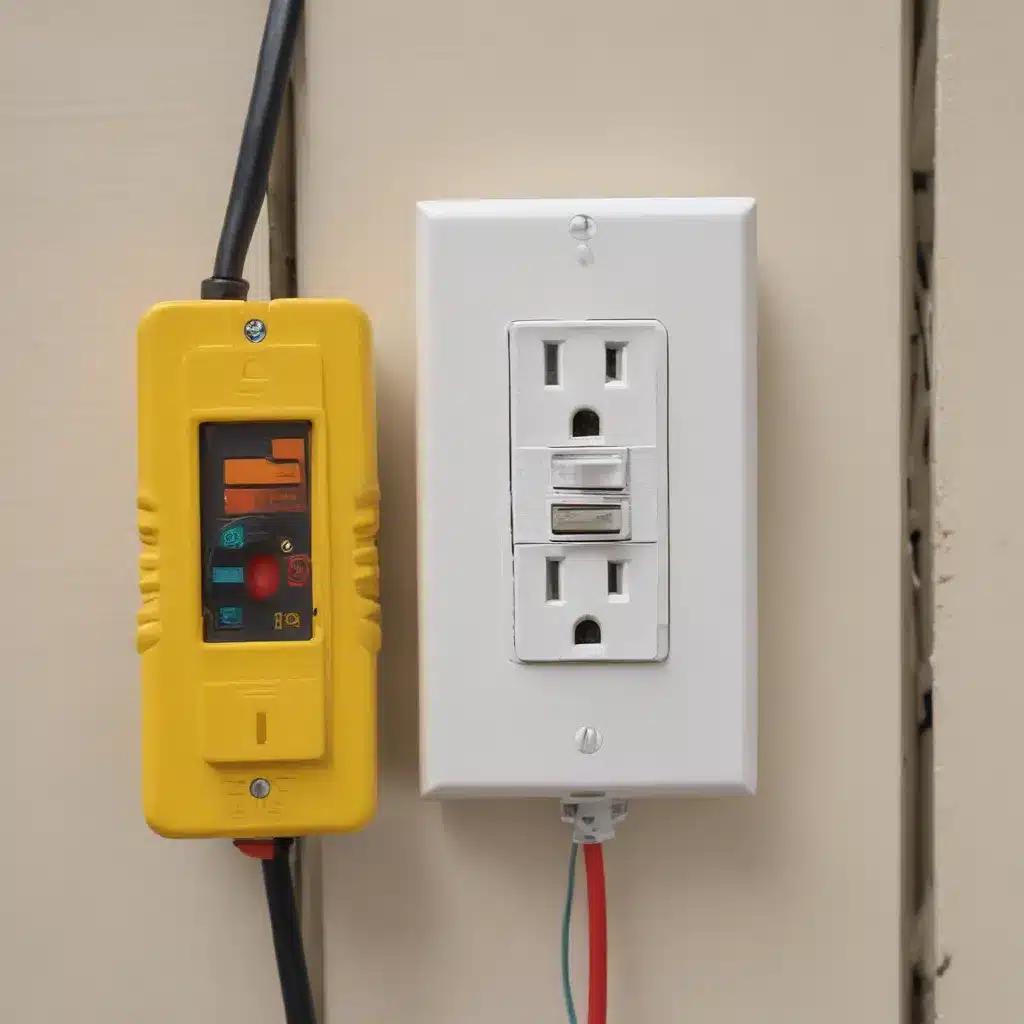
Ensuring a Shock-Free Home: The Importance of GFCI Outlets
You know, when I first started working for this building and renovation company in Aberdeen, UK, I’ll admit I was a bit of a GFCI newbie. I mean, I knew they were important for safety, but I didn’t really understand the nitty-gritty of how they work or why they’re so crucial. But let me tell you, after seeing the aftermath of a few nasty electrical shocks, I quickly became a GFCI evangelist.
These little devices are like the bouncers of your home’s electrical system – they’re constantly on the lookout, ready to cut the power the moment they detect even the slightest electrical fault. And trust me, you want them on your side, especially in damp or wet areas like bathrooms, kitchens, and basements. That’s where GFCI outlets really shine, protecting you and your family from potentially deadly shocks.
But here’s the thing – GFCI outlets aren’t just important, they’re also kind of finicky. You can’t just install them and forget about them. Nope, these guys need a little TLC to keep them in tip-top shape. That’s why testing and resetting them is such a crucial part of maintaining electrical safety in your home. And that’s exactly what we’re going to dive into today.
Understanding GFCI Outlets: How They Work and Why They Matter
Alright, let’s start with the basics. GFCI stands for “ground fault circuit interrupter,” and these outlets are designed to do one thing – detect even the tiniest electrical imbalance and shut off the power in a split second. See, when electricity is flowing properly, the current coming in should match the current going out. But if there’s even the slightest difference, that’s a sign of a ground fault, and that’s when the GFCI swoops in to save the day.
Now, you might be wondering, “What exactly is a ground fault?” Well, it’s a situation where the electrical current takes an unintended path to the ground, often through your body. Imagine sticking a fork in an outlet – that’s a classic ground fault, and it can happen all too easily, especially in damp areas. The GFCI is there to cut the power before you even have time to say “ouch!”
But GFCI outlets don’t just protect against shocks – they also guard against more serious electrical hazards, like fires and electrocution. And that’s why they’re required by code in certain high-risk areas of the home. Heck, I even recommend installing them in any area where water and electricity might mix, just to be on the safe side.
Putting GFCI Outlets to the Test: A Step-by-Step Guide
Alright, now that we’ve got the background out of the way, let’s talk about the nitty-gritty of testing and resetting GFCI outlets. It’s a simple process, but it’s one that you should be doing on a regular basis. After all, these outlets are your first line of defense against electrical mishaps, and you want to make sure they’re always ready to spring into action.
The first step is to locate all the GFCI outlets in your home. They’re usually easy to spot – they’ve got that distinctive “test” and “reset” button right on the face of the outlet. Once you’ve found them all, it’s time to put them to the test.
Here’s how it works: Grab a GFCI tester (you can pick one up at any hardware store) and plug it into the outlet. If the GFCI is working properly, the tester will indicate that the outlet is protected. If not, you’ll get a warning light or sound. Easy peasy, right?
But the real magic happens when you press that “test” button. That simulates a ground fault, and if the GFCI is in good working order, it should immediately cut the power. If it doesn’t, well, that’s a problem. Time to hit the “reset” button and call in the professionals.
Now, I know what you’re thinking – “But what if the GFCI outlet fails the test?” Don’t worry, that’s not the end of the world. In fact, it’s a good thing you caught it in time. All you have to do is replace the faulty outlet, and you’ll be back in business. And trust me, it’s a whole lot better to deal with a malfunctioning GFCI than to, say, get a nasty shock while you’re fixing a leaky faucet.
Maintaining GFCI Outlets: Tips for a Shock-Free Home
Now, I know what you’re thinking – “Okay, I get it, GFCI outlets are important, and I should test them regularly. But what else do I need to know?” Well, my friends, let me tell you, there’s a whole lot more to keeping your GFCI outlets in tip-top shape.
For starters, you’ve got to make sure they’re installed properly. That means making sure the wiring is up to code and that the outlets are placed in the right spots. Trust me, you don’t want to find out the hard way that your GFCI is in the wrong place. And speaking of placement, you also need to make sure they’re accessible. After all, what good is a GFCI outlet if you can’t reach the “test” and “reset” buttons?
But it’s not just about the physical installation – you’ve also got to keep an eye on those outlets over time. See, GFCI outlets can wear down, just like anything else. The internal components can get a little wonky, and the buttons can get stuck or worn down. That’s why it’s so important to test them regularly, at least once a month.
And if you notice that a GFCI outlet is acting up, don’t wait to replace it. That’s the kind of thing that can sneak up on you, and before you know it, you’ve got a serious electrical hazard on your hands. Trust me, it’s better to be proactive and nip the problem in the bud.
Now, I know what you’re thinking – “Geez, this all sounds like a lot of work!” And you know what, you’re not wrong. Maintaining GFCI outlets is kind of a pain in the neck. But here’s the thing – when it comes to electrical safety, you can’t afford to cut corners. These little devices are literally the difference between a harmless tingle and a trip to the emergency room. And honestly, taking a few minutes every month to test and reset them is a small price to pay for peace of mind.
Real-Life GFCI Outlet Stories: Lessons Learned the Hard Way
You know, as a building and renovation professional, I’ve seen my fair share of GFCI-related mishaps over the years. And let me tell you, they’re not pretty. In fact, some of them are downright terrifying.
Take the time we were called to a house in Aberdeen where the homeowner had been getting little shocks every time they used the kitchen sink. Turns out the GFCI outlet under the sink had failed, and water was seeping into the wiring. It was a disaster waiting to happen, and we were lucky we caught it before something really bad went down.
Or how about the time we were doing a bathroom renovation and found that the GFCI outlet had been installed behind the vanity cabinet? The homeowner had no idea it was even there, let alone that it needed regular testing. Needless to say, we had to do a complete overhaul of the electrical system to make sure everything was up to par.
And then there was the case of the malfunctioning GFCI outlet in the basement laundry room. The homeowner had noticed that the outlet was tripping a lot, but they just kept resetting it without really investigating. Well, one day, they went down to do a load of wash and got the shock of their life – literally. Turns out there was a serious ground fault that the GFCI just couldn’t handle anymore.
The moral of the story? Don’t be that person. Don’t wait until it’s too late to take care of your GFCI outlets. Trust me, it’s not worth the risk. A little bit of diligence and a few minutes of testing every month can go a long way in keeping your home and your family safe.
Wrapping Up: A Shock-Free Future Starts with GFCI Outlets
Alright, folks, we’ve covered a lot of ground here, but I think we can all agree on one thing – GFCI outlets are the unsung heroes of home electrical safety. They may not be the sexiest components in your electrical system, but they’re undoubtedly the most important.
Think about it – these little outlets are the first line of defense against potentially deadly shocks, fires, and electrocution. They’re constantly on the lookout, ready to spring into action the moment they detect even the slightest electrical imbalance. And let me tell you, when they do their job, it’s a beautiful thing.
But here’s the catch – GFCI outlets can’t do their job if you don’t take care of them. That’s why testing and resetting them on a regular basis is so crucial. It’s like going to the gym – you can’t just show up once and expect to be in shape forever. Nope, you’ve got to put in the work, day in and day out.
So, my fellow Aberdonians, let’s make a pact. Let’s commit to being GFCI superstars. Let’s test those outlets every month, replace the faulty ones, and make sure they’re installed in all the right places. Because you know what they say – an ounce of prevention is worth a pound of cure. And when it comes to electrical safety, that couldn’t be more true.
Now, I know what you’re thinking – “But Jenna, where do I even start?” Well, fear not, my friends. ABC Home is here to help. Our team of expert electricians is well-versed in the intricacies of GFCI outlets, and we’d be more than happy to come take a look at your home and make sure everything is up to par. So don’t wait – give us a call, and let’s work together to keep your family safe and shock-free.


