
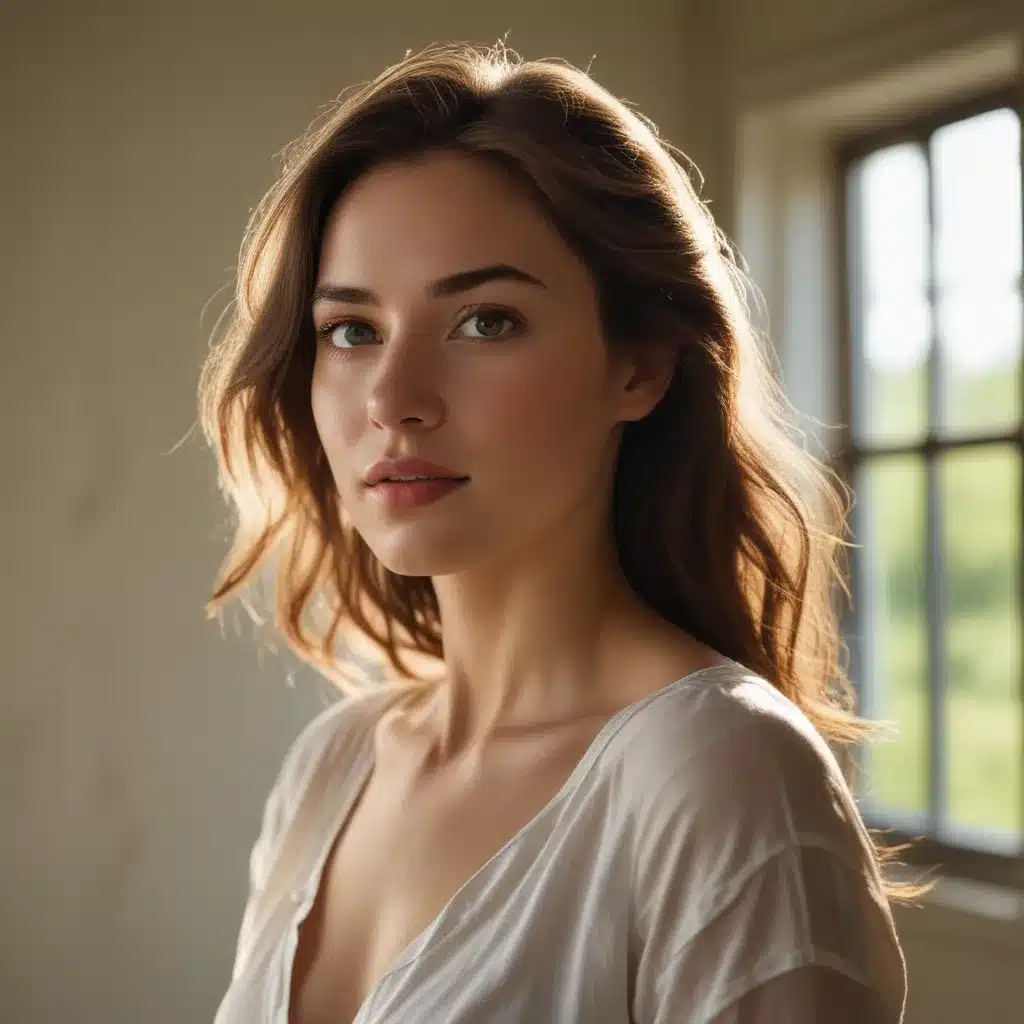
Lighting Woes and the Quest for the Perfect Studio
As an artist, I’ve struggled with the ever-changing nature of lighting in my studio for years. One moment, the natural light from my north-facing window would be casting the perfect soft glow on my canvas, and the next, a cloud would drift by, and the whole scene would be thrown into shadow. It’s enough to make a person want to throw their palette across the room in frustration!
But, you know, I’ve come to realize that this quest for the “perfect” lighting isn’t just a personal quirk of mine. It’s a challenge that artists have been grappling with for centuries. Just think of the Old Masters, toiling away in their dimly lit studios, trying to capture the elusive interplay of light and shadow. Michelangelo, Rembrandt, Caravaggio – they all had to contend with the fickle nature of natural illumination.
And let me tell you, I’ve been down that rabbit hole, trying to understand all the technical mumbo-jumbo about color temperature, Kelvin scales, and CRI ratings. It’s enough to make your head spin! But through my own trial and error, and a bit of research, I’ve come to realize that the secret to mastering natural lighting isn’t about finding the “perfect” solution. It’s about learning to work with the unique challenges and opportunities that each lighting situation presents.
The Myth of the North-Facing Window
So, let’s start with the holy grail of artist’s studios: the north-facing window. The idea is that this orientation provides a constant, soft light that’s perfect for painting. But as I’ve discovered, it’s not quite that simple.
As Marc D’Alessio explains, north light only truly works if your studio is in the Northern Hemisphere. Otherwise, you’re just going to be dealing with direct sunlight streaming in, which can be a real pain to work around.
And even if you do have that coveted north-facing window, the light is still going to be changing throughout the day, and even with the seasons. One minute, you’re basking in a soft, even glow, and the next, the sun is peeking out from behind a cloud, and you’ve got harsh shadows to contend with.
But you know what? That’s not necessarily a bad thing. As Jules Sharman points out, those dramatic changes in lighting can actually add an element of surprise and spontaneity to your painting process. It’s like Mother Nature is your own personal lighting director, constantly keeping you on your toes.
Mastering the Art of Reflected Light
Of course, the tricky part is learning how to work with those changes in lighting, rather than against them. And that’s where the concept of “reflected light” comes into play.
As Marc D’Alessio explains, if you have a low-slung north-facing window, you’ve got to be mindful of the way the light bounces off the ceiling and walls of your studio. That reflected light can actually end up diminishing the strong directional effect you’re going for, and if you’ve got any color in your studio, it can start to tint your paint colors in unexpected ways.
The solution? Well, you can try adding a “hood” or barn door-like structure over the window to control the direction of the light, but that’s not always the most practical or aesthetically pleasing option. Instead, I’ve found that it’s all about being aware of how the light is moving through your space and adjusting your palette and painting technique accordingly.
For example, if I know I’m dealing with a lot of reflected light, I might opt for a more impressionistic, looser brushwork to capture the overall atmosphere, rather than trying to nail down every detail. Or I might adjust my color mixing to account for the way the reflected light is shifting the hues on my canvas.
It’s all about learning to work with the unique challenges of your studio space, rather than trying to fight against them. And you know what? Once you get the hang of it, it can actually be kind of exhilarating, like you’re engaged in this constant dance with the ever-changing light.
The Beauty of Artificial Lighting
Of course, even with all my mastery of natural lighting, there are times when I just need a bit of extra illumination to get the job done. And that’s where artificial lighting comes in.
Now, I know what you’re thinking – “But wait, aren’t we supposed to be all about the natural light here?” And you’re absolutely right. But the reality is, even the most well-designed studio with the perfect north-facing window is going to have its limitations. Maybe you’re working late into the night, or maybe the weather just isn’t cooperating, and you need a little extra help.
That’s where the right artificial lighting can really make a difference. As Jules Sharman points out, the type of bulb you choose can have a huge impact on your ability to accurately judge colors and skin tones. And let’s not forget about the mood and atmosphere you’re trying to create – the right lighting can make all the difference.
Now, I’ve certainly had my fair share of lighting meltdowns, trying to figure out all the technical jargon around Kelvin scales and CRI ratings. But through a bit of trial and error, I’ve found that the key is to find a balance between natural and artificial lighting that works for your specific needs and painting style.
Maybe that means supplementing your north-facing window with a few strategically placed lamps or pendants, or maybe it means investing in a custom lighting solution that’s tailored to your studio space. The important thing is to be willing to experiment and find what works best for you.
And you know, once you’ve got that perfect lighting setup dialed in, it’s like magic. The colors on your canvas just pop, and the whole creative process feels so much more effortless. It’s like you’re finally working in harmony with the light, rather than constantly battling against it.
The Final Piece of the Puzzle
Of course, all of this talk about lighting is well and good, but at the end of the day, the true test of your mastery comes when your work leaves the studio and heads out into the world.
As one Redditor points out, the lighting conditions where your painting will ultimately be displayed can be drastically different from the conditions in your studio. That gorgeous grey tone that looked so subtle and sophisticated on your easel might end up getting lost in a dimly lit hallway, or that vibrant color palette might end up looking garish under the harsh fluorescent lights of a gallery.
It’s enough to make a person want to throw in the towel, right? But you know what? I’ve learned that the secret is to embrace the unpredictability of it all. Instead of trying to fight against the lighting conditions, I’ve learned to use them to my advantage.
Maybe that means adjusting my painting technique to account for the final display lighting, or perhaps it’s as simple as including a note to the gallery or client about the ideal viewing conditions for the piece. The point is, I’ve learned to see the ever-changing nature of light not as a limitation, but as an opportunity to create work that truly shines, no matter where it ends up.
And you know, as I look around my newly renovated studio, with its perfect blend of natural and artificial lighting, I can’t help but feel a sense of pride. Sure, it’s been a long, sometimes frustrating journey, but I’ve emerged on the other side with a deeper appreciation for the art of natural lighting. And who knows – maybe one day, I’ll be the one inspiring the next generation of artists to embrace the magic of the ever-changing light.
In the meantime, I think I’ll just keep on painting, letting the light guide my brush, and maybe throwing in a few playful experiments along the way. After all, that’s half the fun, isn’t it? ABC Home may be in the business of building and renovating, but I like to think they’re also in the business of nurturing the creative spirit. And what better way to do that than by mastering the art of natural lighting?


