
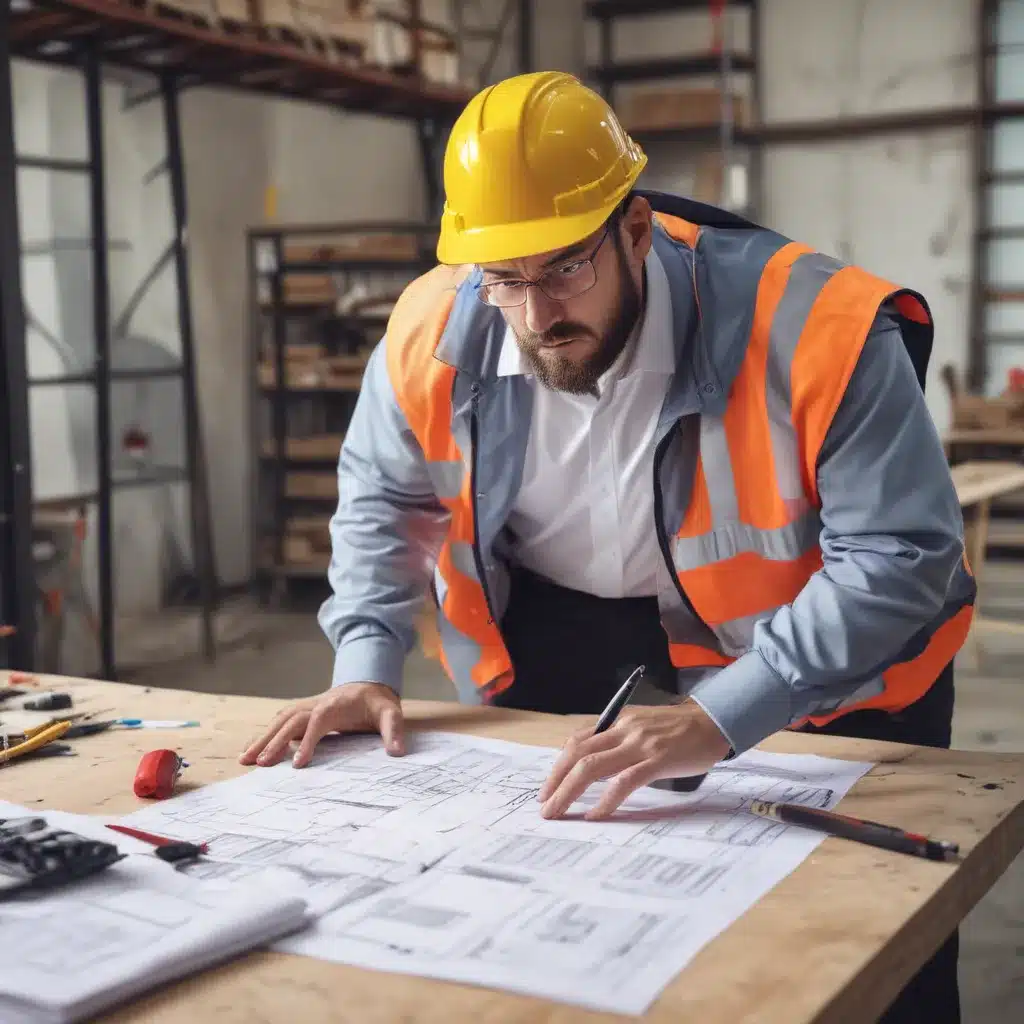
The Perils of Shoddy Construction: Why Project Management Matters
As the owner of ABC Home, a building and renovation company in Aberdeen, UK, I’ve seen my fair share of construction projects gone wrong. It’s a sobering reality that many homeowners and businesses fail to appreciate the critical role of project management in ensuring the safety and success of any building endeavor.
Allow me to regale you with a cautionary tale from my early days in the industry. Back then, I was just a young pup, eager to make my mark and prove my mettle. I remember this one job – a shiny new office block in the heart of the city. The client was a high-powered executive, the kind who expected perfection and wouldn’t settle for anything less. “Son,” he said to me, “I want this place to make jaws drop. Spare no expense.”
Well, you can imagine how that went. We brought in the cheapest subcontractors we could find, skimped on quality materials, and basically winged the whole project. “She’ll be right, mate,” we told ourselves, employing the classic Australian mantra of ‘she’ll be right.’ Fast forward a few months, and what do you know – the entire building was a veritable house of cards, ready to come crashing down at the slightest provocation.
The client, understandably, was livid. “This is an outrage!” he bellowed, his face turning an unflattering shade of puce. “You’ve put the lives of my employees at risk! I’ll have your heads for this!” Needless to say, we didn’t get paid, and I spent the next few weeks frantically trying to patch up the mess we’d created. It was a humbling experience, to say the least.
From that day on, I vowed to never cut corners when it came to project management. I realized that the success – nay, the very safety – of any construction endeavor hinged on meticulous planning, rigorous oversight, and an unwavering commitment to quality. And I’m here to tell you, dear reader, that this lesson is one that every aspiring builder and renovator must learn, lest they find themselves in a world of trouble.
The Anatomy of Effective Project Management
So, what does it take to ensure a construction project is managed to perfection? Well, my friends, it’s a multifaceted endeavor that requires a delicate balance of technical expertise, strategic thinking, and good old-fashioned people skills.
Let’s start with the foundation – the project plan. This is the cornerstone of any successful construction project, a comprehensive roadmap that outlines every step of the process, from the initial design to the final clean-up. It should cover everything from budgeting and timeline management to resource allocation and risk mitigation. And let me tell you, a well-crafted project plan is worth its weight in gold. It’s the difference between a smooth, seamless operation and a chaotic, disaster-in-the-making.
Next up, we have the project team. These are the unsung heroes of the construction world, the individuals who breathe life into the project plan and ensure that every task is executed with precision and care. From the project manager, who oversees the entire operation, to the tradespeople who bring their specialized skills to the table, each member of the team plays a vital role in ensuring the project’s success.
And speaking of the project manager, this is a role that requires a unique blend of technical expertise and leadership prowess. They’re the maestros of the construction symphony, orchestrating the movements of their team with the deft touch of a virtuoso. They must be adept at risk assessment, problem-solving, and effective communication – qualities that are essential for navigating the often-treacherous waters of construction.
But the responsibilities of the project manager don’t end there. They must also be vigilant in their pursuit of safety, ensuring that every aspect of the project adheres to the strictest health and safety standards. After all, construction sites are inherently dangerous places, and a single lapse in judgment can have devastating consequences.
Safety First: The Bedrock of Successful Construction
Safety, my friends, is the cornerstone of any well-managed construction project. It’s not just a box to be ticked, but a living, breathing ethos that must permeate every facet of the work. And the project manager is the custodian of this sacred duty, tasked with instilling a culture of safety throughout the team.
One of the ways they do this is by implementing rigorous safety protocols and procedures. These might include mandatory safety training for all workers, the use of personal protective equipment (PPE), and the establishment of clear emergency response plans. It’s all about creating an environment where safety is the top priority, no ifs, ands, or buts.
But it’s not just about the tangible measures – it’s also about fostering a mindset of safety-consciousness among the team. The project manager must lead by example, demonstrating a steadfast commitment to safety at every turn. They must empower their team to speak up if they ever feel that a task is unsafe, and they must be ready to pause the project at a moment’s notice if they suspect a potential hazard.
And let me tell you, this attention to safety pays dividends. Not only does it protect the wellbeing of the workers, but it also helps to prevent costly delays, legal issues, and reputational damage. After all, nothing can derail a construction project faster than an on-site accident or a safety violation.
Case Study: The High-Rise Debacle
Now, I know what you’re thinking – all of this talk about project management and safety is well and good, but how does it play out in the real world? Well, let me share with you a real-life case study that drives home the importance of these principles.
It was a few years back, and I had taken on a contract to oversee the construction of a high-rise residential tower in the heart of the city. The client, a wealthy developer, had come to me with grand visions – a sleek, modern building that would redefine the city’s skyline. “Spare no expense,” he told me, echoing the words of that fateful office project all those years ago.
This time, though, I was wiser, more experienced. I assembled a crack team of seasoned professionals, each with a proven track record in their respective fields. We developed a meticulously detailed project plan, leaving no stone unturned. Safety was our mantra, and we insisted on the highest standards of personal protective equipment, training, and on-site protocols.
For the first few months, everything was running like a well-oiled machine. The foundation was laid, the framing was up, and the team was humming along with military precision. The client was thrilled, gushing about the progress and the quality of our work. “You’re a miracle worker!” he would exclaim, patting me on the back.
But then, disaster struck. One afternoon, as the workers were busy on the upper floors, a sudden gust of wind swept through the site, causing a section of the scaffolding to collapse. In a matter of seconds, the chaos unfolded – tools and debris raining down, workers scrambling for cover, and the sickening sound of shattering glass.
Thankfully, due to the rigorous safety measures we had put in place, there were no serious injuries. The workers, shaken but unharmed, were quickly evacuated, and the site was secured. But the financial and reputational implications were staggering. The client, understandably, was furious, and we found ourselves embroiled in a lengthy and costly legal battle.
But you know what? Despite the setback, we emerged from the ordeal stronger and more resolute than ever. We had proven the value of our approach, and the client, once skeptical, became a staunch advocate for our meticulous project management and safety-first ethos. The high-rise was eventually completed, and it now stands as a testament to the power of doing things the right way.
Lessons Learned: The Rewards of Responsible Construction
So, what can we take away from this cautionary tale? Well, my friends, the lessons are as clear as day. Effective project management and an unwavering commitment to safety are the cornerstones of any successful construction endeavor. They are the pillars that support the entire structure, ensuring that the end result is not just a thing of beauty, but a testament to the power of responsible, diligent work.
And let me tell you, the rewards of this approach are manifold. Not only do you protect the wellbeing of your workers and the integrity of your projects, but you also safeguard your reputation and your bottom line. After all, what good is a beautifully constructed building if it’s marred by safety issues and costly delays?
So, whether you’re a seasoned builder or a budding renovator, I urge you to take heed of these lessons. Invest in robust project management and safety protocols, and reap the benefits of a job well done. Because at the end of the day, the true mark of a master builder is not the grandeur of their projects, but the care and diligence they pour into every aspect of their work.
And who knows, maybe one day, you’ll be the one regaling others with tales of your construction triumphs, just like I’m doing now. So, what are you waiting for? Let’s get to work, and let’s do it right.


