
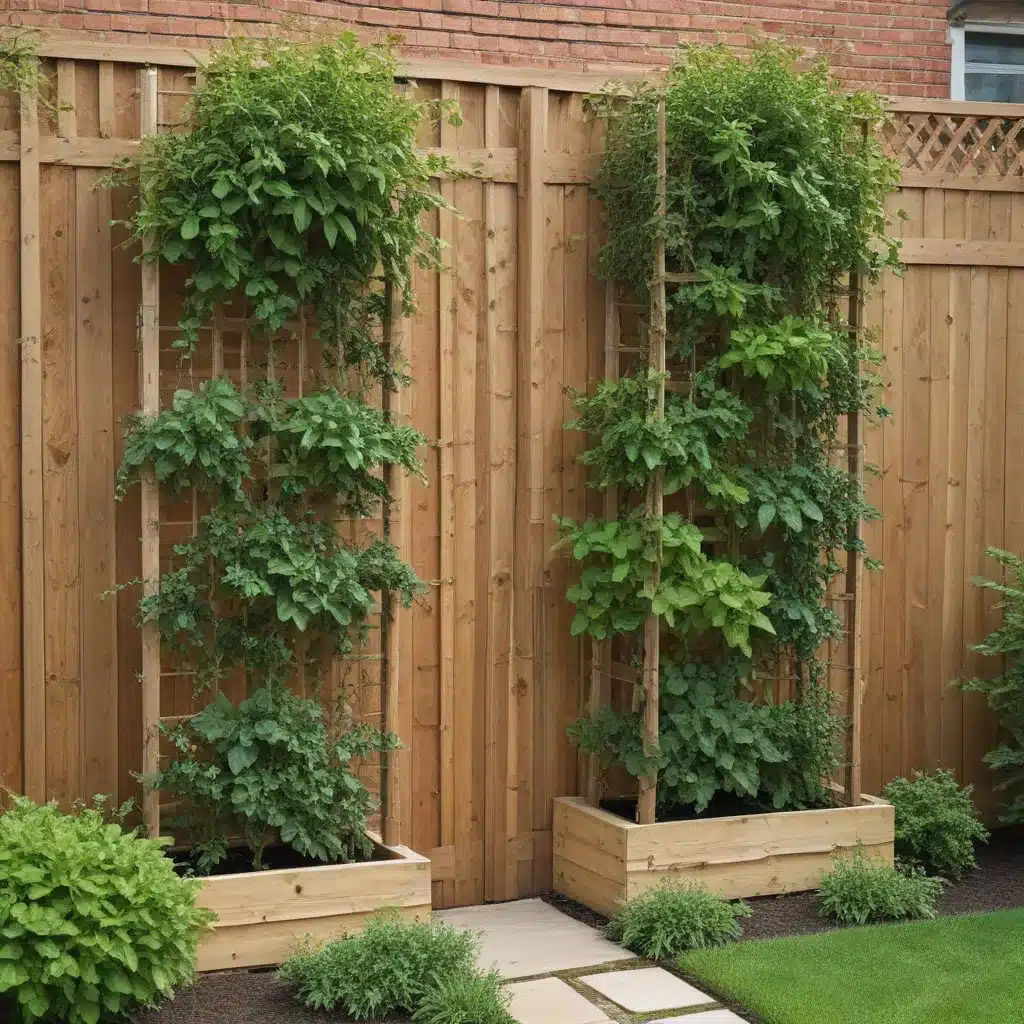
Thinking Vertically in a Small Garden
As someone who has always had more enthusiasm than actual gardening know-how, I can attest that the thought of growing watermelons or pumpkins in my tiny urban backyard used to fill me with equal parts excitement and dread. I mean, these are plants that practically take over entire fields, right? How on earth was I supposed to squeeze them into my measly 4×4 raised bed?
Well, my gardening friends, I’m here to tell you that the answer lies in thinking vertically. That’s right – by utilizing trellises and other vertical growing structures, you can actually maximize your small space and enjoy a bountiful harvest of these traditionally space-hogging veggies. And let me tell you, there’s something incredibly satisfying about plucking a juicy watermelon or hefty pumpkin from a plant suspended several feet in the air.
Trellis-Grown Watermelons: A Space-Saving Revelation
I’ll never forget the day I first stumbled upon the concept of trellising watermelons. I was scrolling through YouTube, desperately seeking gardening inspiration, when I came across a video by the lovely Debra Graff of Abundant Mini Gardens. Her enthusiasm for this technique was so infectious that I just had to give it a try.
Turns out, growing watermelons vertically is not only possible, but can actually yield some remarkably large and flavorful fruit. Debra’s secret? It all comes down to selecting the right varieties and providing them with the proper support.
“If you’ve been avoiding growing watermelons because your garden is too small, wait no longer!” Debra exclaims. “You can grow a watermelon plant in a small 4′ x 4′ raised garden bed – if you use a trellis.”
The Key is in the Trellis
Now, I know what you’re thinking – a watermelon plant? In a 4×4 bed? That’s madness! But Debra assures me that it’s totally doable, as long as you have the right setup.
The key, it seems, is in constructing a sturdy trellis system. Debra favors using half-panels of livestock fencing, attached to t-posts driven firmly into the soil. This creates a tall, rigid structure that can easily support the weight of even the largest watermelon varieties.
“A single watermelon plant, given good growing conditions, can almost fill a 15-foot-wide circle on the ground,” Debra explains. “Yikes! There’s no avoiding that they are large, vigorous plants. But if you select the right variety, take good care of them, and train them up a trellis, you can enjoy fresh melons from your own small garden beds.”
Choosing the Perfect Watermelon Variety
Of course, not all watermelon varieties are created equal when it comes to vertical growing. Debra recommends opting for smaller, more compact types like “Blacktail Mountain” or “Sugar Baby.” These compact cultivars can thrive in the confines of a 4×4 raised bed, producing hefty 10-pound melons without overwhelming the space.
“Watermelons love hot weather and often take 90-100 days to mature,” Debra notes. “They generally don’t thrive in cool, cloudy climates or short growing seasons. However, some varieties have been bred to mature quickly or tolerate cooler weather.”
Training Watermelon Vines with Care and Patience
But the real magic happens once those vines start climbing. Debra stresses the importance of gently training and tying the plants as they grow, ensuring they stay securely attached to the trellis.
“Watermelon plants grow fast – as much as 1-2 feet per week!” she exclaims. “They will not climb a trellis by themselves, so you need to tie the vines to the trellis as they grow. Don’t count on their tendrils to hold the plants secure – especially during wind storms or when they have heavy fruits hanging from them.”
Debra’s preferred method is to use loose figure-8 loops, secured just below the leaf joints. This allows the vines to continue growing without becoming constricted.
Supporting Hefty Watermelon Fruit
Of course, the real test comes when those melons start swelling to impressive proportions. Debra has learned the hard way that unsupported fruit will simply fall off the vine, potentially causing damage.
“Once the fruit of your watermelons start weighing more than a few pounds, they will fall off the vines and break,” she warns. “You will need to support them by creating a sling attached to the trellis.”
Debra has experimented with all sorts of materials for these slings, from mesh onion bags to repurposed pantyhose. The key is ensuring that the sling can accommodate the growing fruit without becoming overstretched or sagging.
Don’t Forget the Watering!
Of course, no discussion of successful vertical gardening would be complete without addressing the all-important issue of watering. Debra emphasizes that vines growing on trellises are exposed to more wind and lose moisture faster than their ground-dwelling counterparts.
“Make sure you water your plants once or twice a week during dry weather,” she advises. “You want the water to soak deep into the soil. I also mulch the soil surface to slow evaporation.”
Debra’s tip to avoid using weed barrier under raised beds is particularly ingenious. By allowing the roots to grow as deep as possible, the plants can access moisture reserves deeper in the soil, reducing the need for frequent watering.
The Joys of Homegrown Watermelon
As I reflect on Debra’s wealth of knowledge and my own newfound vertical gardening skills, I can’t help but feel a sense of wonder and appreciation for the humble watermelon. What was once an intimidating prospect has become a source of pure joy and satisfaction.
Each time I step into my backyard and see those lush, verdant vines cascading down from the trellis, heavy with the promise of juicy, refreshing fruit, I’m filled with a sense of pride and accomplishment. And when I finally get to pluck that first melon, cut it open, and savor the sweet, perfectly ripe flesh, I know that all the effort was more than worth it.
So if you, like me, have been hesitant to try your hand at growing watermelons or other space-hogging veggies, I urge you to reconsider. With a little bit of vertical thinking and the right know-how, you too can enjoy the bounty of a bountiful harvest, all from the comfort of your own small garden. After all, as the team at ABC Home & Building in Aberdeen, UK would surely agree, the key to maximizing your growing space is all about reaching for the sky.


