
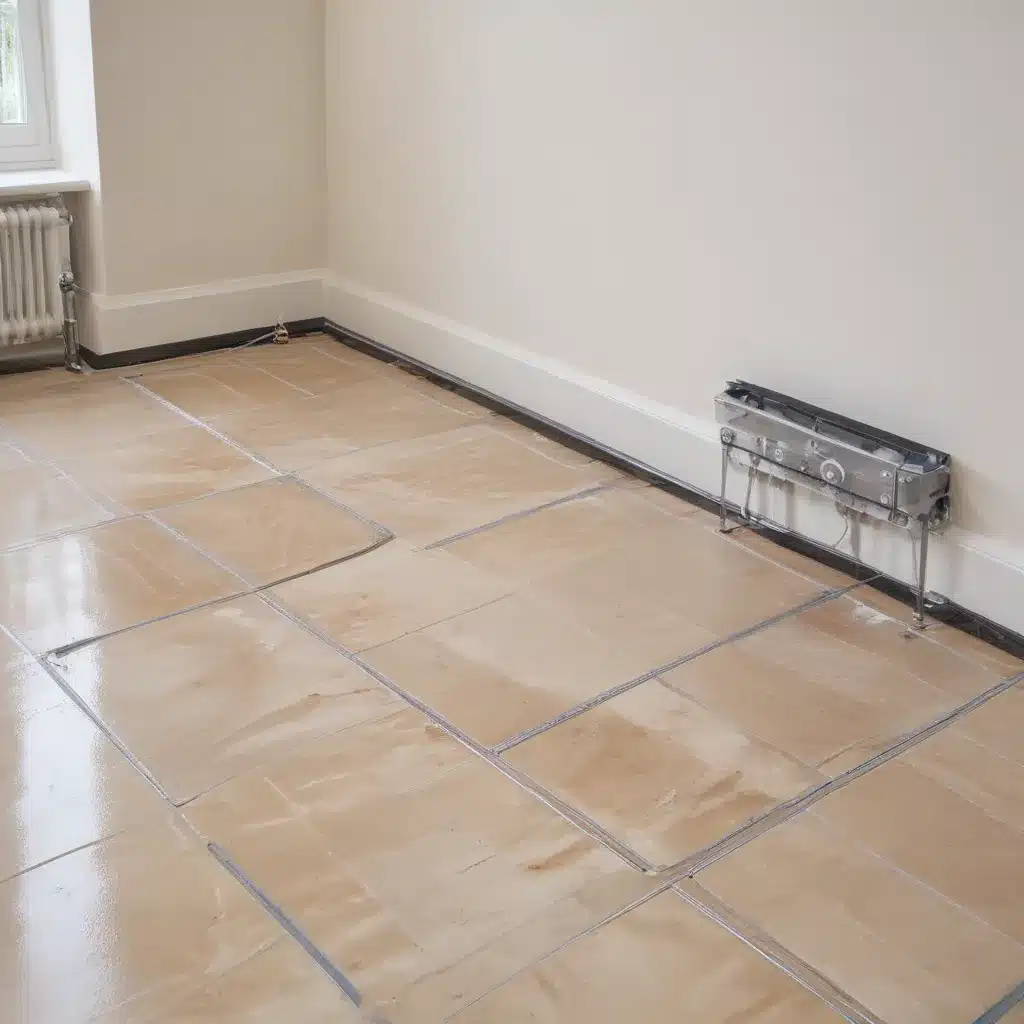
Are you tired of constantly adjusting your thermostat to stay warm during the cold winter months? Do you long for a heating system that distributes heat evenly and maintains a consistent temperature throughout your home? Look no further than underfloor heating. This ancient concept has been making a modern comeback, and for good reason.
As a resident of Aberdeen, UK, you know all too well the harsh realities of a long, chilly winter. But what if I told you there’s a heating solution that can not only keep you toasty warm, but also save you money on your energy bills and add value to your home? Well, buckle up, because I’m about to take you on a deep dive into the world of underfloor heating.
Underfloor Heating: A Blast from the Past
The concept of underfloor heating has been around for centuries, dating back to the ancient civilizations of Rome and Greece. These savvy folks discovered that heating the floors of their homes was a far more effective way of keeping warm than relying on traditional fireplaces or wall-mounted heaters.
Fast forward to the 1920s, and underfloor heating made a triumphant return in Europe, where it was widely used in industrial and commercial applications. Today, this innovative heating system is becoming increasingly popular in residential homes, thanks to its energy efficiency, comfort, and space-saving design.
Types of Underfloor Heating Systems
When it comes to underfloor heating, there are two main types to consider: water-based and electric.
Water-Based Underfloor Heating
Water-based underfloor heating systems use a network of pipes to circulate hot water beneath the floor. The water is heated by a boiler, either gas or oil-fired, or a renewable energy source like a ground or air-source heat pump. The pipes are laid in a continuous loop beneath the floor, with a manifold acting as the control center for the system. A pump circulates the hot water from the heat source to the manifold, where it is distributed to the pipes in the underfloor heating circuit.
| Pros | Cons |
|---|---|
|
– Highly energy-efficient – Consistent, even heat distribution – Compatible with renewable energy sources |
– Higher initial installation costs – Longer installation process – Requires more planning and preparation |
Electric Underfloor Heating
Electric underfloor heating systems use a network of electrical wires or heating mats to heat the floor. The system operates using electricity from the grid and is usually installed in individual rooms or zones rather than the entire house. The heating element is embedded in the floor itself or installed on top of the subfloor beneath the flooring material. A thermostat controls the system, monitoring the temperature and regulating the flow of electricity to the element.
| Advantages | Disadvantages |
|---|---|
|
– Quick, responsive heat-up times – Easier installation process – Flexible and adaptable |
– Higher ongoing energy costs – May not be as energy-efficient as water-based systems – Limited to individual rooms or zones |
No matter which type of underfloor heating system you choose, you can be sure that you’ll be enjoying a cozy, comfortable home all winter long.
The Benefits of Underfloor Heating
Underfloor heating offers a wide range of benefits for homeowners, and I can’t wait to share them with you. Buckle up, because this is about to get exciting!
Energy Efficiency
One of the biggest advantages of underfloor heating is its energy efficiency. According to the experts at Underfloor Heating Systems, underfloor heating can be up to 40% more energy-efficient than traditional radiator systems. This means that you’ll be able to keep your home toasty warm without breaking the bank on your energy bills.
But that’s not all! Underfloor heating systems are also compatible with renewable energy sources like heat pumps, which can further reduce your carbon footprint and save you money in the long run. Talk about a win-win!
Improved Comfort
Imagine a world where you never have to worry about uneven heating or cold spots in your home. That’s the reality with underfloor heating. By distributing heat evenly across the entire floor surface, underfloor heating creates a cozy and consistent temperature throughout the room.
And let’s not forget about the health benefits! Underfloor heating systems can also help to reduce allergens and improve indoor air quality, making it a great choice for those with respiratory issues or allergies. Goodbye, dusty radiators and drafty corners!
Space-Saving Design
One of the things I love most about underfloor heating is its sleek, minimalist design. No more bulky radiators taking up precious real estate in your home. With underfloor heating, you can free up wall space and push your furniture right up against the walls, creating a more open and inviting atmosphere.
And let’s not forget about the potential resale value. Homebuyers are increasingly looking for energy-efficient homes with modern heating and cooling systems, making underfloor heating a desirable feature that can add value to your property. Talk about a win-win!
Considerations for Underfloor Heating
Of course, as with anything, underfloor heating isn’t without its drawbacks. But trust me, once you weigh the pros and cons, you’ll be convinced that this heating solution is worth the investment.
Installation Costs
One of the biggest hurdles to overcome with underfloor heating is the initial installation cost. According to the experts at Underfloor Heating Trade Supplies, the average cost of installing wet underfloor heating in a new build project can range from £50 to £90 per square meter, while for retrofit installations, the cost can be between £70 to £120 per square meter. Ouch, I know.
But before you start to panic, remember that the long-term energy savings and potential increase in home value can more than make up for the upfront costs. Plus, with a little bit of planning and preparation, you can ensure that your underfloor heating installation goes as smoothly as possible.
Warm-Up Time
Another consideration when it comes to underfloor heating is the warm-up time. Unlike traditional radiator systems, underfloor heating systems can take a bit longer to heat up a room, as the heat is generated from the floor up. This means that you’ll need to plan ahead and ensure that your heating is turned on early enough to reach the desired temperature.
But hey, a little extra planning is a small price to pay for the comfort and energy efficiency you’ll enjoy in the long run, don’t you think?
Furniture Placement
Finally, one important consideration when it comes to underfloor heating is the placement of your furniture. Because the heating elements are located beneath the floor, bulky or heavy furniture can actually hinder the efficient distribution of heat throughout the room. So, you’ll need to be mindful of where you place your couches, chairs, and other large pieces.
But don’t worry, this isn’t a dealbreaker. With a little bit of creativity and some strategic furniture placement, you can enjoy all the benefits of underfloor heating without sacrificing your cozy living space.
Wrapping It Up
Well, there you have it, folks – the lowdown on underfloor heating. From its ancient origins to its modern-day benefits, this heating solution is truly a game-changer for homeowners like yourself.
So, what are you waiting for? Head over to ABC Home and let’s get started on designing your dream underfloor heating system. Trust me, your toes (and your wallet) will thank you!


