
The Importance of Accessibility in Building Design
As a building and renovation company based in Aberdeen, UK, we understand the vital importance of accessibility in our work. After all, what good is a beautifully designed building if it’s not accessible to everyone who needs to use it? That’s why we make accessibility a top priority in all of our projects, from residential homes to commercial spaces and everything in between.
You see, accessibility isn’t just about checking a few boxes on a list of legal requirements. It’s about ensuring that our buildings truly cater to the needs of all people, regardless of their physical abilities. It’s about creating spaces that are welcoming, inclusive, and empowering for individuals with disabilities. And let me tell you, getting this right can make all the difference in the world.
I’ll never forget the time we renovated a local community hall in Aberdeen. This place had been around for decades, but it was starting to show its age – and its accessibility issues. The entrance was a real beast, with a set of steep, narrow stairs that would have been a nightmare for anyone using a wheelchair or mobility aid. And once you finally made it inside, the bathroom situation was just as bad, with cramped stalls and sinks that were way too high.
But we weren’t about to let this community gem wither away. No way! We rolled up our sleeves and got to work, determined to transform this space into a truly accessible haven. And let me tell you, the changes we made were nothing short of revolutionary.
Designing Accessible Halls and Entrances
First and foremost, we tackled that pesky entrance. Out went the treacherous stairs, and in came a brand new, gently sloping ramp that made wheeling in a breeze. We also widened the doorway, making it easy for folks using mobility aids to glide through without a hitch.
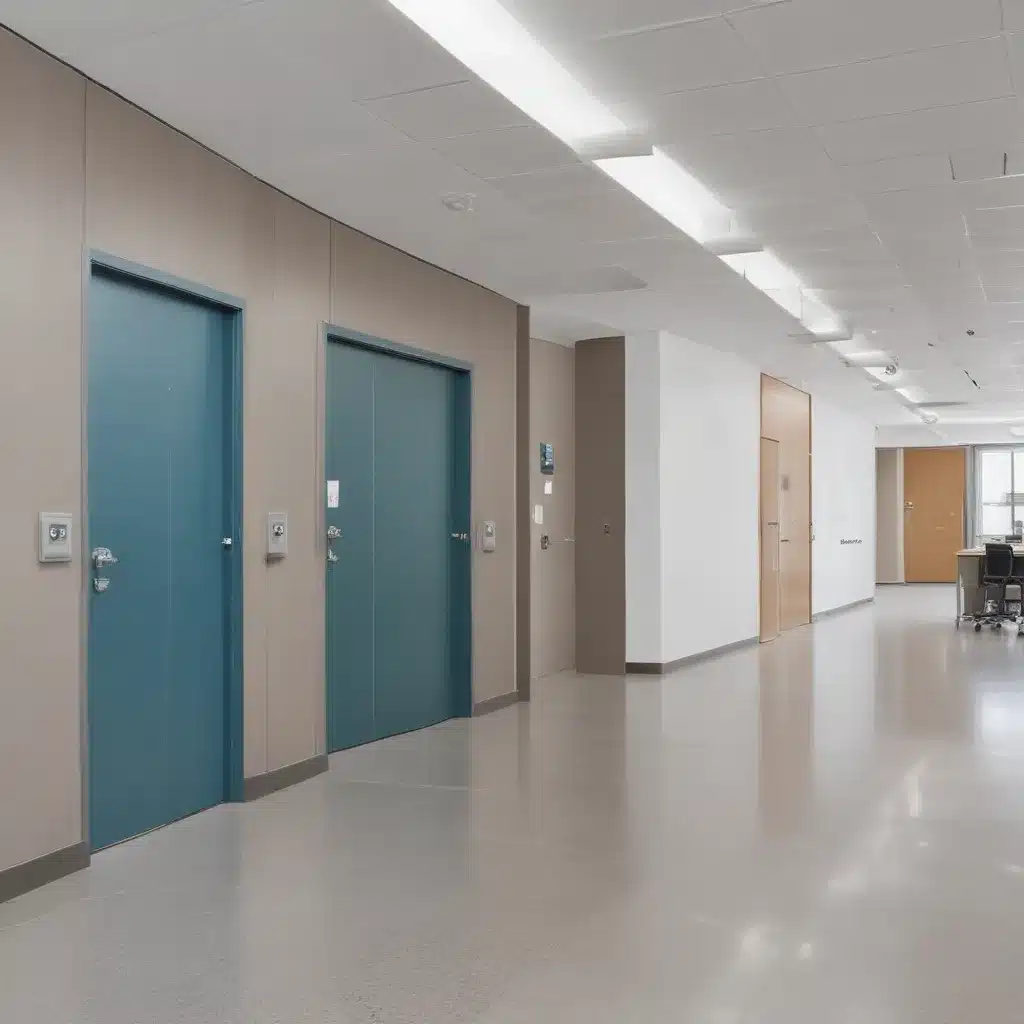
But accessibility isn’t just about the big, obvious stuff, you know? It’s also in the little details that often get overlooked. That’s why we paid extra attention to things like the door hardware – swapping out heavy, difficult-to-grasp handles for sleek, easy-to-use levers. And let’s not forget about the flooring, which we made sure was slip-resistant and free of tripping hazards.
“Accessibility isn’t just about checking a few boxes on a list of legal requirements. It’s about ensuring that our buildings truly cater to the needs of all people, regardless of their physical abilities.”
Of course, accessibility isn’t just about making it easy to get in and out of a building. It’s also crucial that the interior spaces are designed with inclusivity in mind. In the case of our community hall, that meant rethinking the layout of the main event space.
Gone were the rows of rigid, fixed seating, replaced by a more flexible arrangement of movable chairs and tables. This allowed us to easily accommodate wheelchair users, as well as create designated “quiet zones” for folks who might need a little more personal space or sensory relief.
And let’s not forget about the stage area, which we made sure was fully accessible too. We installed a new, low-profile platform with a built-in ramp, ensuring that anyone – performers and attendees alike – could easily get up and participate.
Optimizing Accessibility in Doors and Circulation
Now, as any seasoned building professional will tell you, accessibility isn’t just about the big, splashy features. It’s also in the small, seemingly insignificant details that can make all the difference in the world.
Take doors, for example. You might not think much about them, but the truth is, they can be a real accessibility minefield if you’re not careful. That’s why we put so much thought and care into selecting the right doors for our community hall renovation.
For starters, we made sure all the interior doors were wide enough to accommodate wheelchairs and mobility aids. But it wasn’t just about the width – we also paid close attention to the door hardware, opting for easy-to-grip levers over traditional knobs.
And when it came to the main entrance, we knew we had to go the extra mile. That’s why we installed an automatic door opener, complete with motion sensors that could detect approaching visitors and gently usher them in. No more struggling with heavy, unwieldy doors!
But accessibility isn’t just about the doors themselves – it’s also about the circulation and flow within a building. And let me tell you, getting that right is key to creating a truly inclusive space.
In our community hall, we carefully mapped out the foot traffic patterns, ensuring that there were clear, unobstructed pathways between the different areas. We also made sure to incorporate plenty of turning spaces, so that folks using wheelchairs or other mobility aids could easily navigate the space without feeling cramped or confined.
And let’s not forget about signage and wayfinding – another critical component of accessibility. We worked with a graphic designer to create clear, easy-to-read signs that would help guide visitors, no matter their abilities. From tactile maps to high-contrast graphics, we left no stone unturned in our quest to make this space as navigable as possible.
The Impact of Accessible Design
As you can probably tell, accessibility isn’t just some dry, box-checking exercise for us. It’s a passion, a driving force that shapes every aspect of our work. And let me tell you, the results speak for themselves.
Since we completed the renovation of that community hall, the place has been absolutely buzzing with activity. People of all abilities have been flocking to the space, eager to attend events, participate in classes, and simply soak up the welcoming, inclusive atmosphere.
And the feedback we’ve received has been nothing short of incredible. Time and time again, we’ve heard from grateful visitors who are overjoyed to finally have a space that caters to their needs. One woman in a wheelchair even told us that she felt “like a queen” when she rolled up the ramp and glided through the entrance, no longer having to worry about accessibility barriers.
“Since we completed the renovation of that community hall, the place has been absolutely buzzing with activity. People of all abilities have been flocking to the space, eager to attend events, participate in classes, and simply soak up the welcoming, inclusive atmosphere.”
But you know what really gets me? It’s the way this project has brought the community together. By creating a space that’s accessible to everyone, we’ve fostered a true sense of unity and belonging. People from all walks of life are coming together, breaking down barriers and celebrating their shared humanity.
And that, my friends, is the true power of accessible design. It’s not just about ticking boxes or meeting legal requirements – it’s about creating spaces that empower, inspire, and bring people together. It’s about making the world a little bit better, one building at a time.
So if you’re a building or renovation company looking to make a real difference, I encourage you to embrace accessibility with open arms. Trust me, the rewards will be greater than you could ever imagine. And who knows? Maybe one day, we’ll cross paths and I can show you the magic of an accessible community hall firsthand. Until then, keep up the great work – and remember, accessibility is the key to unlocking a more inclusive future for all.


