
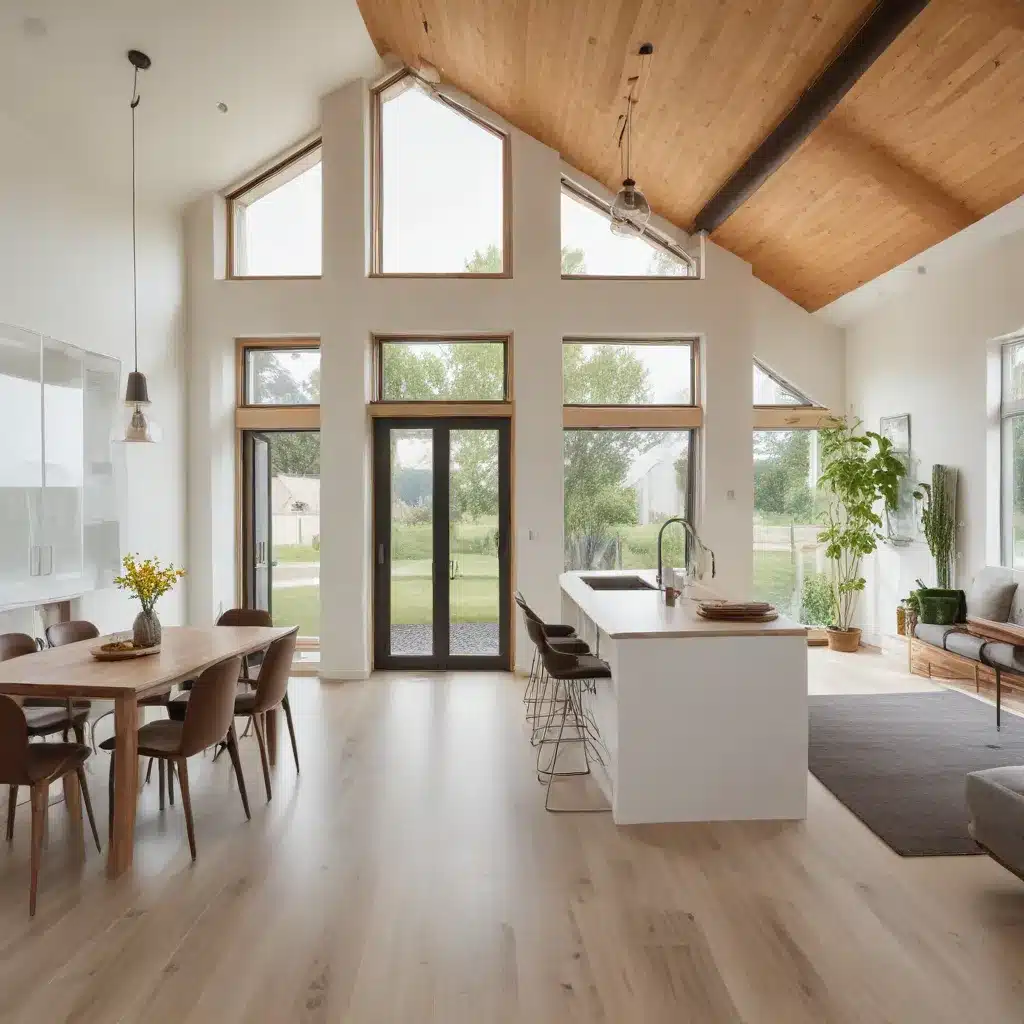
Navigating the Path to Sustainable Housing in Aberdeen
In the bustling city of Aberdeen, where the vibrant energy of construction projects and home renovations is ever-present, there is a growing focus on enhancing the energy efficiency of residential buildings. As the UK continues to drive towards a more sustainable future, the adoption of Passive House standards has become a topic of increasing interest among homeowners, builders, and local authorities.
Understanding the Passive House Approach
The Passive House standard, a set of rigorous design principles developed in Germany, has gained significant traction in the UK as a means of achieving highly energy-efficient homes. At its core, the Passive House approach aims to minimise a building’s energy consumption through a combination of measures, including:
-
Continuous Insulation: Ensuring the entire building envelope is wrapped in a continuous layer of high-performance insulation, eliminating thermal bridges and maximising energy retention.
-
Air-Tight Construction: Employing meticulous sealing techniques to create an airtight building, preventing unwanted air infiltration and optimising the performance of the building’s ventilation system.
-
High-Efficiency Windows and Doors: Incorporating triple-glazed windows and doors with exceptional thermal performance, further enhancing the building’s thermal envelope.
-
Balanced Mechanical Ventilation: Installing a mechanical ventilation system with heat recovery (MVHR), which captures the heat from outgoing stale air and uses it to warm the incoming fresh air, reducing the overall energy demand for heating and cooling.
-
Renewable Energy Integration: Integrating on-site renewable energy sources, such as solar photovoltaic panels, to offset the building’s energy consumption and potentially achieve net-zero energy status.
By adhering to these principles, Passive House-certified homes are designed to significantly reduce their energy use for heating and cooling, often achieving a 60-80% reduction compared to standard UK building regulations.
Regulatory Compliance and Incentives
In the UK, the pursuit of Passive House standards must be navigated within the framework of the country’s evolving building regulations and incentive schemes. The recent introduction of the Future Homes Standard, set to come into effect in 2025, has raised the bar for energy efficiency, requiring new homes to produce 75-80% fewer carbon emissions than those built to current regulations.
To support the transition towards more energy-efficient buildings, the UK government has implemented various incentive programs and funding opportunities. These include:
-
Homes Upgrade Grant: This scheme provides financial assistance to homeowners and landlords for upgrading the energy efficiency of their properties, including the installation of insulation, heat pumps, and other energy-saving measures.
-
Green Homes Grant: Launched in 2020, this initiative offered vouchers to cover up to two-thirds of the cost of eligible energy-efficiency improvements, up to a maximum of £5,000 per household.
-
Clean Heat Grant: Introduced in 2022, this program offers homeowners grants of up to £5,000 towards the installation of heat pumps, biomass boilers, or other low-carbon heating systems.
These incentives, combined with the evolving regulatory landscape, have created a favourable environment for homeowners and builders in Aberdeen to explore the benefits of upgrading to Passive House standards.
Costs and Financial Considerations
Transitioning to Passive House standards can involve additional upfront costs, but these investments can often be recouped through long-term energy savings and increased property value. According to industry estimates, the cost premium for designing and constructing a new Passive House-certified home in the UK ranges from 5-15% above standard building practices.
However, it’s important to note that the actual cost differential can vary significantly depending on the specific project, location, and the builder’s level of experience with Passive House construction. Factors such as the complexity of the building design, the availability of skilled tradespeople, and the cost of materials in the Aberdeen region can all influence the final price tag.
To provide a general idea of the potential costs, consider the following comparison:
| Building Element | Standard UK Construction | Passive House Construction |
|---|---|---|
| Wall Insulation | £30-£50 per m² | £50-£80 per m² |
| Triple-Glazed Windows | £400-£600 per m² | £600-£900 per m² |
| Mechanical Ventilation with Heat Recovery | £3,000-£5,000 per system | £6,000-£10,000 per system |
It’s important to note that these figures are just estimates and may vary based on market conditions, supplier availability, and the specific requirements of each project.
Achieving Passive House Certification in Aberdeen
The process of achieving Passive House certification for a residential project in Aberdeen involves several key steps:
-
Design Consultation: Engage with a qualified Passive House designer or consultant to ensure the project’s design, materials, and construction methods align with the Passive House standard.
-
Thermal Modelling: Utilize specialized software to simulate the building’s energy performance, allowing for the optimization of the design and the identification of potential areas for improvement.
-
Construction Quality Assurance: Implement rigorous construction quality control measures, such as on-site testing and inspections, to verify the building’s air-tightness, insulation integrity, and overall thermal performance.
-
Commissioning and Certification: Upon completion, the building must undergo a comprehensive performance evaluation by a certified Passive House verifier to ensure it meets the stringent criteria for certification.
By working closely with experienced Passive House professionals, homeowners and builders in Aberdeen can navigate the process and maximize the energy-saving benefits of this advanced building approach.
Sustainable Building Practices Beyond Passive House
While the Passive House standard provides a clear framework for achieving exceptional energy efficiency, there are additional sustainable building practices that can be incorporated into residential projects in Aberdeen. These include:
-
Embodied Carbon Reduction: Selecting building materials with a lower carbon footprint, such as timber-frame construction, recycled materials, or low-emission concrete, can significantly reduce the embodied carbon of the building.
-
Water Conservation: Incorporating water-efficient fixtures, greywater recycling systems, and rainwater harvesting can minimize the building’s water consumption and reduce the strain on local resources.
-
Renewable Energy Integration: Integrating on-site renewable energy generation, such as solar photovoltaic panels or small-scale wind turbines, can help offset the building’s energy demands and contribute to a more sustainable energy mix.
-
Biophilic Design: Incorporating natural elements, such as greenery, natural lighting, and views of the outdoors, can enhance the well-being of occupants and promote a connection to the local environment.
By embracing a holistic approach to sustainability, homeowners and builders in Aberdeen can create residential projects that not only excel in energy efficiency but also minimize their environmental impact and contribute to the overall well-being of the community.
Conclusion
As the UK continues its drive towards a more sustainable future, the adoption of Passive House standards in Aberdeen has emerged as a crucial strategy for achieving highly energy-efficient homes. By leveraging the Passive House principles of continuous insulation, air-tight construction, and advanced ventilation systems, homeowners and builders in the region can significantly reduce their buildings’ energy consumption and carbon footprint.
The regulatory landscape in the UK, with the introduction of the Future Homes Standard and various incentive programs, has created a favourable environment for the uptake of Passive House practices. While the initial cost premium for Passive House construction may be higher, the long-term energy savings and increased property value can often offset these investments, making the transition a financially viable option for many homeowners.
By working closely with experienced Passive House professionals, the residents of Aberdeen can navigate the certification process and unlock the benefits of this advanced building approach. Moreover, by incorporating additional sustainable practices, such as embodied carbon reduction, water conservation, and renewable energy integration, homeowners can further enhance the environmental performance of their properties and contribute to a more resilient and livable community.
As the demand for energy-efficient and sustainable homes continues to grow, the upgrade to Passive House standards in Aberdeen represents a crucial step towards a greener, more prosperous future for the region. By embracing these innovative building practices, the city can position itself as a leader in the pursuit of a sustainable built environment, setting an example for communities across the UK.


