
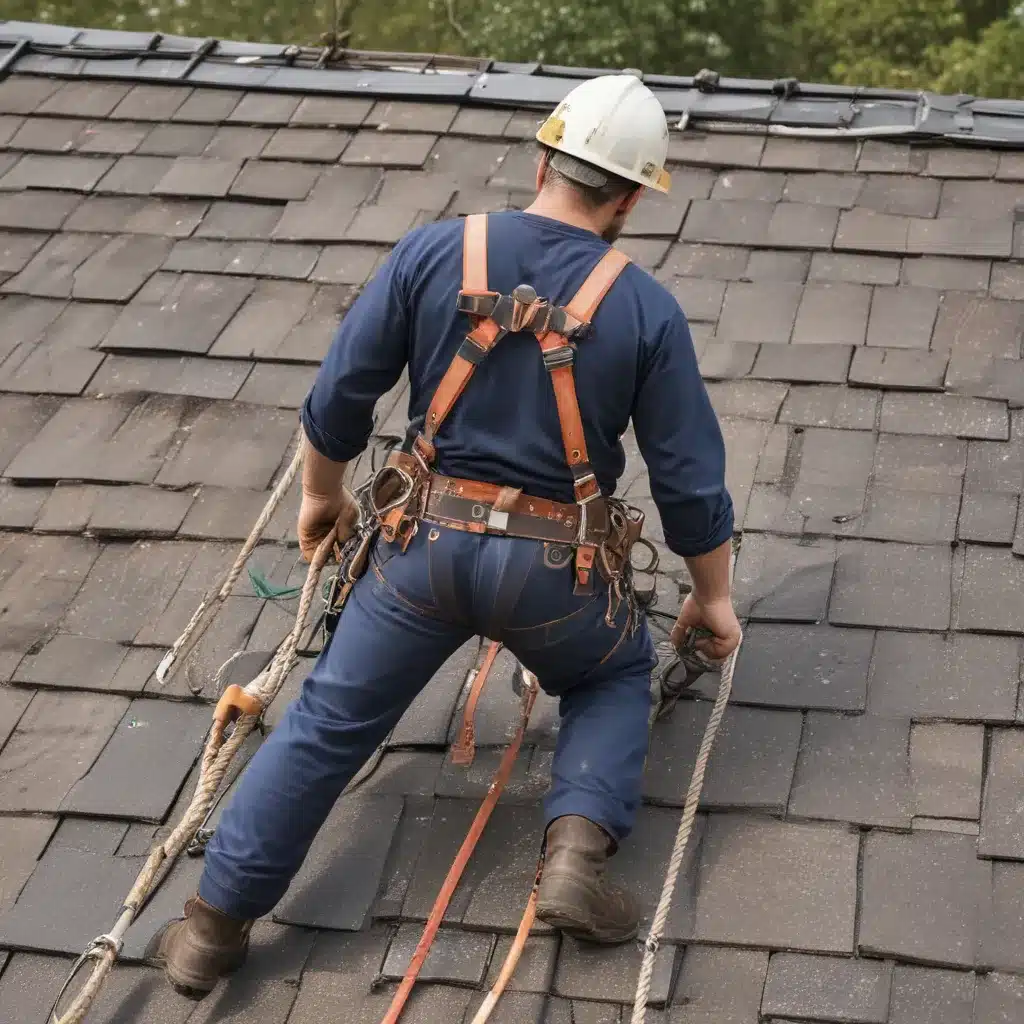
The Importance of Proper Safety Equipment
As the owner of a building and renovation company in Aberdeen, UK, I’ve seen my fair share of roof work projects over the years. And let me tell you, when it comes to working at heights, safety is of the utmost importance. That’s why I’m a firm believer in the use of harnesses and ropes for any roof-related tasks.
I still remember this one time, back when I was just starting out in the industry. It was a bright and sunny day, perfect for getting some work done on a client’s roof. The team and I had been up there for a few hours, making good progress on the repairs, when suddenly one of the guys slipped and started to tumble towards the edge. Now, I’ll admit, my heart nearly stopped right then and there. But luckily, his harness and safety line kicked in, and he was able to regain his footing without a scratch.
That incident really drove home the importance of proper safety equipment for me. I’ve seen what can happen when workers don’t have the right gear, and let me tell you, it ain’t pretty. That’s why I make sure all of my crew members are outfitted with top-of-the-line harnesses, ropes, and other fall-protection gear before they even set foot on a roof.
Understanding the Basics of Harnesses and Ropes
Now, I know what you’re thinking – “Harnesses and ropes, sounds like a lot of complicated stuff.” But trust me, it’s really not as daunting as it might seem. At the end of the day, it all comes down to understanding the basics.
Let’s start with harnesses. These babies are designed to distribute the force of a fall across your body, rather than just your waist or shoulders. They come in a variety of styles, from full-body harnesses to more specialized options like rescue harnesses. The key is to make sure you’ve got the right one for the job at hand.
As for ropes, well, those are the lifelines that keep you securely anchored to the building. There are different types of ropes, like static ropes and dynamic ropes, each with their own unique properties and applications. Static ropes are great for providing a stable, secure connection, while dynamic ropes are better at absorbing the shock of a fall.
And let’s not forget about the other essential components, like carabiners, lanyards, and anchor points. These all work together to create a comprehensive fall-protection system that can literally be the difference between life and death.
Proper Inspection and Maintenance
Of course, simply having the right equipment isn’t enough. You’ve also got to make sure it’s in tip-top shape before you even think about scaling a roof. That’s where regular inspection and maintenance come in.
I can’t tell you how many times I’ve seen workers just grab a harness or rope off the shelf and assume it’s good to go. But the truth is, these pieces of equipment can be subject to all sorts of wear and tear, from UV damage to fraying to chemical exposure. And if you’re not careful, a small flaw can turn into a catastrophic failure when you need it most.
That’s why I have a strict protocol in place for my crew. Before each and every job, they’ve got to thoroughly inspect their gear, checking for any signs of damage or deterioration. And if anything looks even remotely suspect, it gets replaced immediately. No exceptions.
And it’s not just a one-and-done thing, either. Harnesses and ropes need to be regularly cleaned, stored properly, and replaced on a schedule, even if they haven’t shown any visible signs of wear. It’s all part of keeping my team safe and sound, no matter what curveballs the job might throw their way.
Training and Education
But you know, all the fancy equipment in the world doesn’t mean a thing if the people using it don’t know what they’re doing. That’s why I place a huge emphasis on training and education when it comes to my crew.
I make sure each and every one of my workers is certified in the proper use and care of harnesses, ropes, and other fall-protection gear. They’ve got to know how to inspect the equipment, how to don the harnesses correctly, and how to properly secure themselves to the anchor points. It’s not just a one-time thing, either – we do regular refresher courses to keep their skills sharp.
And it’s not just the practical stuff, either. I also make sure my team understands the underlying theory and principles of fall protection. Why are certain types of ropes better suited for specific applications? How do harnesses and lanyards work to dissipate the force of a fall? The more they know, the better equipped they’ll be to make smart, safe decisions on the job.
Real-World Case Studies
Of course, all this talk about harnesses and ropes can start to feel a bit abstract after a while. That’s why I like to bring in real-world case studies to illustrate just how important this stuff can be.
Take the case of one of our recent roofing projects, for example. We were tasked with replacing the shingles on a particularly steep-pitched roof, and let me tell you, it was no easy feat. The crew had to navigate some tricky angles and tight spaces, all while working at dizzying heights.
But thanks to their thorough training and the top-notch safety gear we provided, they were able to get the job done without a hitch. Whenever one of the guys needed to move around or access a particularly precarious area, they’d simply clip into their harnesses and ropes, giving them the confidence and security they needed to work safely and efficiently.
And then there was the time we had to tackle a roof repair on an old, dilapidated building downtown. The structure was in rough shape, and the roof was practically falling apart. But with the right fall-protection equipment in place, my crew was able to navigate the hazardous conditions and get the job done without so much as a close call.
Conclusion
At the end of the day, using harnesses and ropes for roof work isn’t just a good idea – it’s an absolute necessity. As the owner of a building and renovation company in Aberdeen, UK, I’ve seen firsthand just how critical this safety equipment can be.
From preventing catastrophic falls to allowing my crew to work with confidence and efficiency, the right harnesses and ropes have been a game-changer for our business. And I’m not just talking about the obvious benefits, either. This gear has also helped us to win over clients who are looking for a reliable, safety-conscious partner.
So if you’re in the market for a building or renovation company that takes safety seriously, I’d strongly encourage you to check out ABC Home. We’re not just a bunch of skilled tradespeople – we’re a team of safety-conscious professionals who will stop at nothing to get the job done right. So why take the risk of working with anyone else?


