
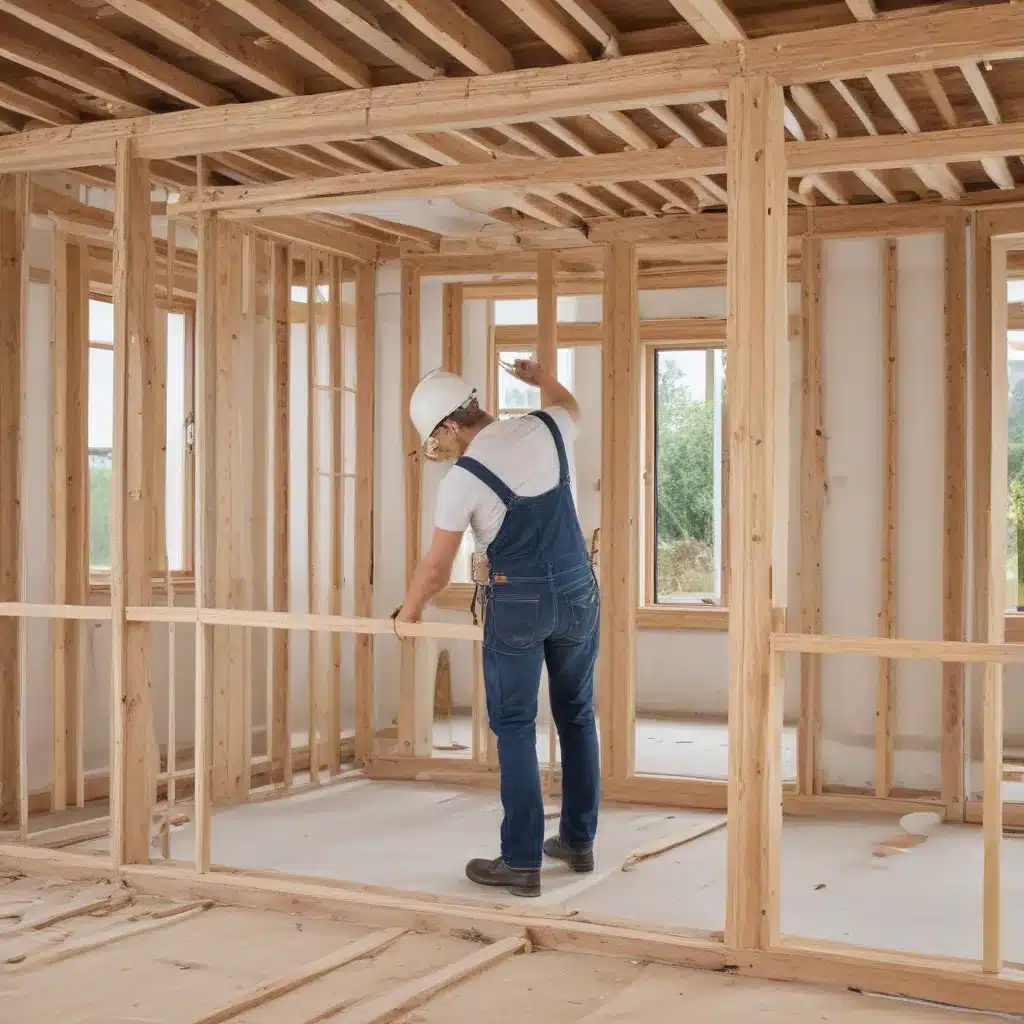
The Perils of DIY: When Permits Are a Must
Ah, the allure of a good old-fashioned DIY project, am I right? There’s nothing quite like the thrill of tackling a home improvement task with your own two hands. The sweat, the triumph, the sense of accomplishment when you stand back and admire your handiwork – it’s the stuff that home renovation dreams are made of.
But hold up, my fellow DIY enthusiasts. Before you go hacking away at that wall or ripping out that kitchen sink, there’s something you need to know: not all home improvements are created equal when it comes to building regulations. In fact, some projects require a pesky little thing called a building warrant, and if you don’t have one, well, let’s just say the housing authorities don’t take kindly to that.
Now, I know what you’re thinking – “A building warrant? Pffft, who needs it? I’m a regular Bob the Builder over here!” But trust me, my friends, it’s not worth the risk. Ignoring those regulations can land you in a world of trouble, from hefty fines to having to undo all your hard work.
So, what exactly is a building warrant, and which home improvements require one? Let’s dive in and find out, shall we?
Understanding Building Warrants: The Basics
A building warrant, my dear friends, is essentially a legal document that gives you the green light to carry out certain types of home improvements or renovations. It’s like a construction permit, but with a fancy Scottish twist.
Think of it this way – the local authorities want to make sure that any changes you make to your home are safe, up to code, and won’t bring the whole neighborhood crashing down around you. So, they have a set of rules and regulations that you need to follow, and the building warrant is your proof that you’re playing by the rules.
Now, the tricky part is figuring out which projects actually require a building warrant. It’s not as straightforward as you might think. The rules can vary depending on where you live, the type of work you’re doing, and the size and scope of the project.
In general, though, you’ll need a building warrant for any major structural changes, like adding an extension, converting a loft, or knocking down walls. Anything that could potentially impact the safety or structural integrity of your home is going to require a permit.
But it’s not just the big stuff. Even seemingly minor changes, like rewiring an electrical system or installing a new heating system, might need a building warrant. It’s a bit of a minefield, really.
When to Bite the Bullet and Get a Warrant
Okay, so you’re convinced that building warrants are a necessary evil. But how do you know when you actually need one? Well, my friends, let me break it down for you.
First and foremost, if you’re planning on making any changes to the structure of your home, you’re going to need a building warrant. This includes things like:
- Adding an extension or conservatory
- Converting a loft or attic space
- Knocking down or building a new wall
- Changing the roof structure
These are the big-ticket items that are going to require a formal approval process. The local authorities want to make sure that your plans are up to snuff and won’t put the safety of your home (or your neighbors’) at risk.
But it’s not just structural changes that require a building warrant. You’ll also need one for any major electrical or plumbing work, such as:
- Rewiring your entire home
- Installing a new central heating system
- Replacing your boiler or hot water tank
These systems are critical to the safety and functionality of your home, so the authorities want to make sure they’re being installed properly.
And it’s not just the big stuff, either. Even some smaller home improvements might require a building warrant, like:
- Installing a new window or door
- Building a porch or canopy
- Putting up a detached garage or shed
The key is to think about anything that could potentially impact the structure, safety, or energy efficiency of your home. If it’s a project that’s going to require the skills of a professional tradesperson, there’s a good chance you’ll need a building warrant.
The Consequences of Cutting Corners
Now, I know what you’re thinking – “But a building warrant is just another hoop to jump through! It’s gonna cost me time and money, and who’s got the patience for that?”
I hear you, my friends, I really do. But trust me, the consequences of skipping the building warrant process can be far more costly in the long run.
First and foremost, there’s the legal aspect to consider. If you get caught doing major home improvements without the proper permits, you could be facing some hefty fines from the local authorities. We’re talking hundreds, if not thousands, of pounds in penalties.
But the financial headache doesn’t stop there. Let’s say you decide to sell your home down the line, and the new owners discover that you’ve got some unpermitted work lurking behind the walls. Well, guess what? They might demand that you undo all that work, or worse, they could even sue you for the cost of bringing the property up to code.
And then there’s the safety factor to consider. When you skip the building warrant process, you’re essentially winging it when it comes to things like electrical work or structural changes. That means you could be putting your home, and your family, at risk. Imagine if that DIY wiring job you did causes a fire, or if that added-on extension collapses while your kids are playing in the next room. Yikes, talk about a nightmare scenario.
So, while it might seem like a hassle in the moment, getting that building warrant is an absolute must if you want to stay on the right side of the law and keep your home (and your loved ones) safe. Trust me, it’s worth the effort.
Navigating the Building Warrant Process
Alright, so you’ve accepted the fact that a building warrant is a necessary evil. Now what? Well, my friends, let me walk you through the process of actually getting one.
First things first, you’ll need to figure out exactly what type of work you’re planning on doing and whether it requires a building warrant. As we’ve discussed, the rules can be a bit tricky, so it’s always a good idea to reach out to your local building standards department for some guidance.
Once you’ve determined that you do, in fact, need a building warrant, it’s time to start the application process. This typically involves submitting a detailed set of plans and specifications for your project, along with a fee (which can range anywhere from a few hundred to a few thousand pounds, depending on the scope of the work).
The local authority will then review your application and, hopefully, give you the green light to proceed. But be warned, this process can take some time – we’re talking weeks, or even months, depending on the complexity of your project and the backlog of applications they’re dealing with.
And here’s the kicker – even after you’ve got your building warrant, the work isn’t done. You’ll need to make sure that all the work is carried out in accordance with the approved plans and that you have it properly inspected along the way. Fail to do this, and you could find yourself in hot water with the authorities.
But hey, don’t let all the red tape and bureaucracy get you down. Remember, the building warrant process is there to protect you, your home, and your community. And with a little bit of patience and persistence, you can navigate it like a pro.
Real-Life Examples: When Building Warrants Saved the Day
Now, I know what you’re thinking – all this talk of building warrants and bureaucratic hoops to jump through sounds like a real drag. But let me tell you, there are some real-life examples out there that just might change your tune.
Take the case of our good friend, Jenny, for instance. She decided to embark on a little DIY project, converting her attic into a cozy little bedroom for her growing family. Sounds harmless enough, right? Well, not so fast.
You see, Jenny decided to forgo the whole building warrant thing, thinking she could just wing it and save herself a few quid. Big mistake. When the local authorities caught wind of her illegal renovation, they came down on her like a ton of bricks. Not only did she have to pay a hefty fine, but she was also ordered to undo all of the work she’d done, which ended up costing her an arm and a leg.
And then there’s the story of our pal, Bob. Bob was feeling pretty handy, so he decided to tackle a little electrical work in his home, swapping out some old wiring and installing a new light fixture. Piece of cake, right? Wrong. Because Bob didn’t bother getting a building warrant, the work he did was completely substandard and, more importantly, unsafe. It wasn’t long before his home was hit with a major power surge, and Bob found himself dealing with a full-blown electrical fire. Talk about a wake-up call!
But it’s not all doom and gloom, my friends. Building warrants can actually save the day, too. Take the case of our friend, Sarah, for instance. She decided to embark on a full-scale kitchen renovation, knocking down a few walls and completely overhauling the layout. Now, Sarah knew that a building warrant was a must, so she dutifully went through the process. And boy, was she glad she did! The building inspectors caught a few potential issues with her plans, and were able to work with her to make some crucial safety tweaks before the work even began. Thanks to that building warrant, Sarah’s kitchen reno was a total success, and she was able to rest easy knowing that her home was in tip-top shape.
So, you see, building warrants aren’t just a hassle – they can actually be a godsend, protecting you, your home, and your loved ones. Sure, the process might be a bit of a pain, but trust me, it’s a whole lot better than dealing with the consequences of DIY disasters down the line.
Conclusion: Embrace the Building Warrant, My Friends
Well, there you have it, folks – the lowdown on building warrants and which home improvements require them. It’s a bit of a minefield, I know, but trust me, it’s worth navigating if you want to keep your home (and your sanity) intact.
So, the next time you’re itching to tackle a big home renovation project, don’t just grab your toolbox and dive in. Take a step back, do your research, and make sure you’ve got that all-important building warrant in hand. Trust me, your future self will thank you.
And who knows, maybe you’ll even come to see the building warrant process as a blessing in disguise. After all, it’s there to protect you and your home, and with a little patience and persistence, you can make it work in your favor.
So, what are you waiting for, my friends? It’s time to embrace the building warrant and let your DIY dreams soar to new heights. Just remember to dot your i’s, cross your t’s, and always, always, always get that permit. Your home (and your bank account) will be better for it, I promise.
Now, if you’ll excuse me, I’ve got a few home improvement projects of my own to tackle. Wish me luck, and happy renovating, everyone!


