The Importance of Accessible Bathrooms
You know, when it comes to bathroom design, accessibility is often an afterthought. Most people just think about aesthetics and functionality, without really considering the needs of those with disabilities or mobility issues. But let me tell you, designing an accessible bathroom is so incredibly important. It’s not just about ticking a box – it’s about empowering people, giving them the dignity and independence they deserve.
I’ll never forget the time I worked with a client who had recently suffered a spinal cord injury. The poor guy was struggling just to get around his own home, and the bathroom was a constant source of frustration and humiliation. Can you imagine having to rely on someone else to help you with the most basic of tasks? It’s heartbreaking.
But you know what? After we revamped his bathroom, prioritizing accessibility and inclusive design, the transformation was nothing short of life-changing. He could maneuver around freely, bathe himself, and even use the toilet without assistance. The relief and joy on his face – it’s an image I’ll cherish forever. That’s the power of accessible design, folks. It’s about so much more than just taps and grab bars.
Key Principles of Accessible Bathroom Design
So, what exactly goes into creating an accessible bathroom? Well, let me break it down for you. At the heart of it all are a few key principles that should guide your every decision:
-
Mobility & Maneuvering
The bathroom needs to allow for easy, unobstructed movement. That means wide doorways, spacious floor plans, and strategic placement of fixtures and fittings. You don’t want anyone feeling like they’re navigating an obstacle course just to get to the sink, you know? -
Reachability & Usability
Everything needs to be within comfortable reach – the taps, the soap dispenser, the toilet paper holder. And the controls should be simple and intuitive to operate, even for those with limited dexterity or strength. -
Safety & Stability
Slips, trips, and falls are the bane of any bathroom, but they can be especially dangerous for those with mobility challenges. Textured flooring, grab bars, and slip-resistant surfaces are a must. -
Sensory Accommodations
Don’t forget about the needs of those with visual, auditory, or cognitive impairments. Contrast-rich color schemes, tactile cues, and intuitive layouts can make a world of difference.
Now, I know what you’re thinking – “Wow, that’s a lot to consider!” But trust me, it’s worth it. When you get these fundamentals right, you end up with a bathroom that’s not just functional, but truly empowering. It’s a space where everyone can feel confident, comfortable, and in control.
Designing the Accessible Bathroom Layout
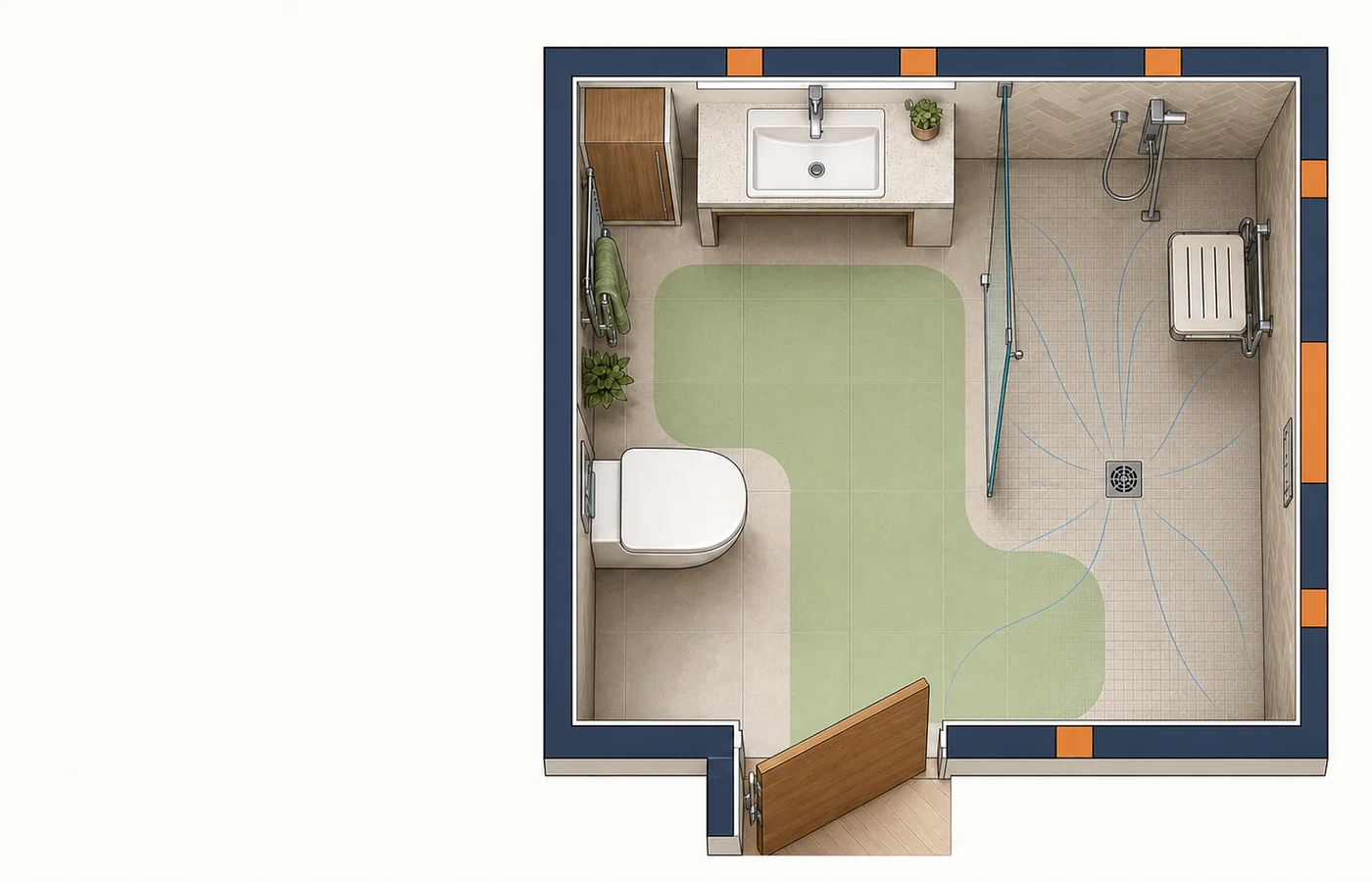
Alright, let’s dive into the nitty-gritty of layout and design, shall we? The first and most crucial step is to determine the available space and plan accordingly. You need to ensure there’s ample room for maneuvering, as well as strategic placement of key fixtures.
Now, let’s talk about the all-important toilet. Ideally, you want to position it with enough clearance on both sides – at least 60cm, if not more. This allows for easy transfer from a wheelchair or mobility aid. And don’t forget about the height – a raised, comfort-height toilet can make a world of difference for those with limited mobility.
The sink is another crucial element. You’ll want to choose a model with enough knee and toe clearance underneath, so users in wheelchairs can comfortably roll up to it. And don’t forget about the faucet – lever-style handles are far easier to operate than knobs.
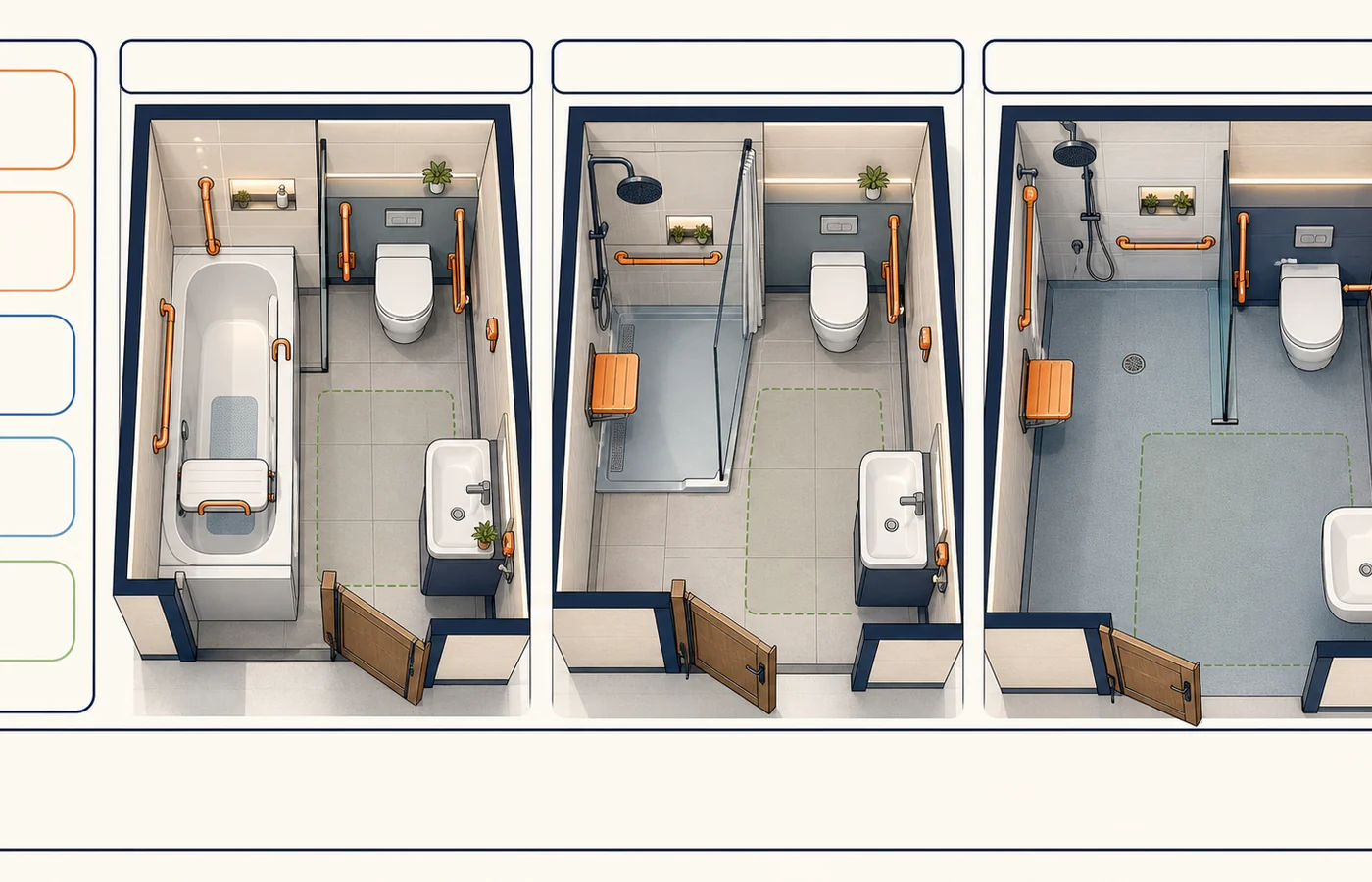
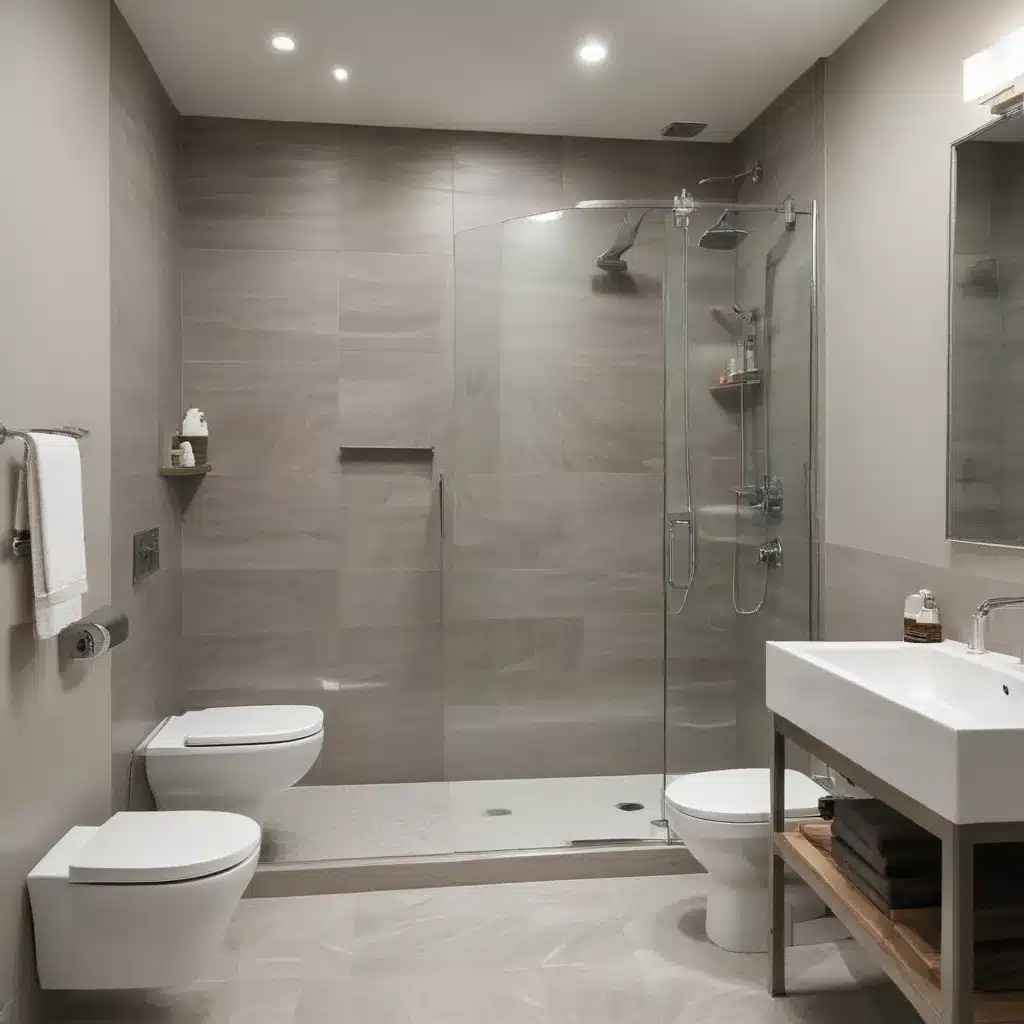
When it comes to the shower or tub, you have a few options. A walk-in shower with a low threshold or even a curbless design is a great choice, as it eliminates the need to step over anything. And if you’re going with a tub, consider installing a built-in seat or adding a transfer bench for safe, easy access.
Oh, and let’s not forget about storage! Make sure all the essentials – towels, toiletries, and the like – are within easy reach. Shelves, cabinets, and even a vanity with pull-out drawers can be lifesavers.
Selecting Accessible Fixtures & Finishes
Now that we’ve got the layout sorted, it’s time to start thinking about the nitty-gritty of fixtures and finishes. And let me tell you, this is where the real magic happens. Because it’s not just about making things functional – it’s about creating a space that’s truly beautiful and empowering.
Let’s start with the floor. Textured, slip-resistant tiles or vinyl planks are a must. Not only do they provide much-needed traction, but they can also add a touch of style to the space. And when it comes to the walls, consider using high-contrast colors or patterns to help those with visual impairments navigate the room.
Now, let’s talk about the all-important grab bars. These aren’t just practical – they can actually be a design feature too! You can find them in all sorts of sleek, contemporary styles that’ll complement your overall aesthetic. And don’t forget about the towel bars – they can double as grab bars in a pinch.
And speaking of style, let’s not forget about the lighting. Ambient overhead fixtures are a given, but don’t overlook task lighting for the vanity or shower area. Dimmable options can be a game-changer, allowing users to adjust the brightness to their needs.
Oh, and let’s not forget about the accessories! Things like adjustable shower heads, hand-held sprayers, and fold-down seats can make a world of difference. And don’t be afraid to have a little fun with it – there are so many chic, contemporary options out there these days.
Real-Life Examples of Accessible Bathrooms
You know, as much as I love talking theory, there’s nothing quite like seeing accessible bathroom design in action. Let me share a few real-life examples that I think really showcase the power of inclusive design.
Take, for instance, the bathroom we renovated for our client, Sarah. She had been using a wheelchair for years, and the cramped, outdated layout of her old bathroom was making her life a living hell. But after we got our hands on it, the transformation was nothing short of remarkable.
We started with a spacious, open-concept layout that allowed Sarah to maneuver freely. We installed a curbless, zero-entry shower with a built-in bench, making it a breeze for her to get in and out. And the vanity? It had enough knee clearance for her to roll right up to the sink.
But the real showstopper was the custom-made, height-adjustable vanity. With the touch of a button, Sarah could raise or lower the counter to suit her needs. Talk about empowering! And the best part? It all came together in a sleek, modern design that felt like a true oasis, not just a medical facility.
Then there’s the case of our client, Mike. He had recently suffered a stroke, and the cramped, outdated bathroom in his home was making his recovery feel like an uphill battle. But after we got to work, it was like a whole new world opened up for him.
We outfitted the space with strategically placed grab bars, a roll-in shower with a built-in seat, and a comfort-height toilet that made it a breeze for him to get up and down. And the attention to detail? Unreal. We used high-contrast tiles and fixtures to help Mike navigate the space with ease, and incorporated tactile cues like braille labels on the controls.
The end result? A bathroom that not only met Mike’s needs, but made him feel empowered, independent, and, dare I say, a little bit spoiled. Because that’s what accessible design is all about, folks – giving people the freedom to live their best lives.
Conclusion: Embrace Inclusive Design
At the end of the day, designing an accessible bathroom isn’t just about ticking a box or meeting some arbitrary standard. It’s about creating a space that empowers people, that gives them the dignity and independence they deserve.
And you know what? It’s not as hard as it might seem. By focusing on those key principles of mobility, reachability, safety, and sensory accommodation, you can transform a bathroom from a frustrating obstacle course to a true oasis of comfort and confidence.
So, what are you waiting for? Embrace the power of inclusive design and let’s get to work creating bathrooms that are not just beautiful, but truly life-changing. Because trust me, when you see the look on someone’s face as they regain their independence, it’ll make every extra effort worth it.
Alright, enough of my rambling – let’s get started! If you’re ready to take your bathroom design to the next level, head on over to https://abc-home.co.uk/bathroom-fitting/ and let’s chat. I can’t wait to hear all about your vision and help turn it into a reality.