
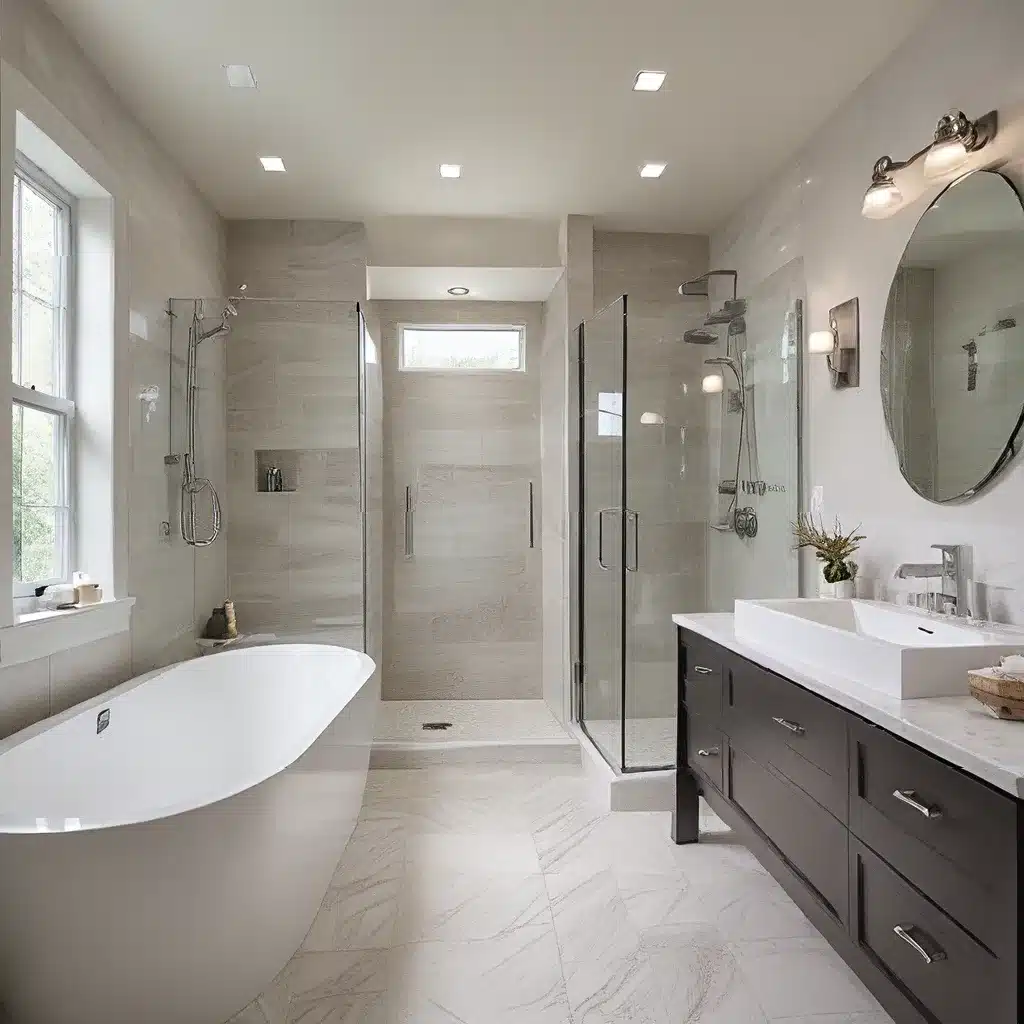
Achieving the Bathroom Trifecta: Practicality, Aesthetics, and Spatial Harmony
As a self-proclaimed home design enthusiast, I’ve always been fascinated by the art of crafting the perfect bathroom layout. It’s not just about picking the right fixtures and finishes – it’s about orchestrating a harmonious symphony of function, form, and spatial flow. And trust me, I’ve seen my fair share of bathroom designs that hit sour notes.
Remember that disastrous half-bath renovation my friend Stacey did a few years back? Goodness, where do I even begin? The toilet was crammed into a corner, forcing you to do a strange sideways shuffle just to access it. And don’t even get me started on the vanity – it was so massive, it practically swallowed the entire room. Poor Stacey, she was so proud of her “spa-inspired” vision, but the end result was anything but relaxing.
That’s why I’m on a mission to help you avoid such bathroom design pitfalls. By the time you’re done reading this, you’ll be a bathroom layout pro, capable of creating a space that’s not only aesthetically pleasing but also incredibly functional and efficient. So, let’s dive in and uncover the secrets to Functional Fusion: Optimizing Your Bathroom Layout for Maximum Efficiency.
The Cornerstone of Bathroom Design: Spatial Order and Balance
When it comes to bathroom layouts, spatial order and balance are the cornerstones of good design. As designer Tami Faulkner explains, these fundamental principles are essential for organizing spaces in a logical, harmonious way. It’s all about creating a smooth flow of circulation and ensuring each element serves its purpose without disrupting the overall harmony of the room.
Think of it like a well-choreographed dance routine – every movement and position of the bathroom fixtures and features should complement one another, creating a seamless and intentional visual experience. When spatial order is achieved, the bathroom feels purposeful, balanced, and a true pleasure to occupy.
Uncovering Hidden Bathroom Design Traps (and How to Avoid Them)
Now, let’s take a look at some common spatial design problems that can plague bathroom layouts, and explore how to overcome them.
Problematic Doorway Placements: One of the most frequent issues I see is the awkward placement of bathroom doors. Imagine a door that swings a full 180 degrees or, even worse, crashes against a window. This not only creates an unsightly obstruction but can also disrupt the flow of movement in the space.
Crowded Vanity Zones: Another common problem is when the vanity and sink area is too tightly packed, leaving little room for nightstands or causing unwanted noise transfer from the plumbing. It’s crucial to strike the right balance between functionality and visual harmony in this high-traffic zone.
Disjointed Toilet Placement: The location of the toilet itself can also make or break a bathroom layout. If it’s positioned in an odd, front-facing spot or hidden away in a separate, disconnected room, the overall sense of spatial flow and intention can feel disjointed and unintentional.
Uncentered Vanity Cabinets: Something as seemingly minor as the vanity cabinets not being centered between the doorways can create a feeling of visual disarray and haphazardness. Even the smallest details can have a big impact on the overall cohesion of the space.
Isolated Tub Placement: Finally, the placement of the bathtub is critical. If it’s positioned in an isolated, off-to-the-side location, it can feel disconnected from the rest of the bathroom, failing to establish a visual connection with the other fixtures.
Harmonious Solutions: Optimizing Your Bathroom Layout
Now that we’ve identified some of the common spatial pitfalls, let’s explore how to create a truly functional and visually harmonious bathroom layout. I’ve got a few tricks up my sleeve that will have your bathroom singing in perfect harmony.
Strategically Extend the Hallway: By extending the hallway leading to the bathroom, you can create a proper placement for the bedroom door, allowing it to rest without conflicting with windows or other obstacles. This simple adjustment can have a rippling effect, solving multiple design challenges at once.
Relocate the Toilet Room: Shifting the location of the toilet room can work wonders for the overall spatial flow and intention of the bathroom. By repositioning it in a more central and prominent position, you can establish a stronger sense of visual harmony and coherence.
Center the Vanity Cabinets: Making minor adjustments to the placement of the doorways can help you center the vanity cabinets on the wall, creating a visually balanced and intentional focal point.
Prioritize the Tub Placement: When it comes to the bathtub, resist the temptation to relegate it to an isolated corner. Instead, position it in a central, prominent location, aligning it with the sink wall to foster a sense of order, equilibrium, and visual prominence.
Streamline the Plumbing: By thoughtfully arranging the plumbing fixtures and doorways, you can create a more organized, noise-dampening layout that keeps the bed wall unencumbered and peaceful.
Fusing Function and Aesthetics: The Art of Bathroom Design
Achieving the perfect bathroom layout is about more than just ticking boxes on a checklist. It’s an art form that requires balancing function, form, and spatial harmony. As the experts at Karran note, the key is to prioritize both the practical aspects and the aesthetic appeal of the space, creating a seamless fusion of efficiency and beauty.
By incorporating strategic design principles like spatial order, visual balance, and intentional placement of fixtures, you can transform your bathroom into a true oasis of form and function. It’s about more than just picking the right vanity or tub – it’s about crafting a cohesive, harmonious environment that serves your needs while delighting the senses.
Bringing Your Bathroom Vision to Life: A Step-by-Step Approach
So, where do you begin when tackling a bathroom renovation or new construction project? The secret lies in a methodical, well-planned approach that prioritizes the overall spatial design before diving into the details.
First and foremost, work with a skilled designer who specializes in spatial planning and interior architecture. As the experts at Ixion suggest, it’s essential to ensure that your floor plans are optimized for functionality, practicality, and visual harmony before you even break ground.
Once the foundational layout is established, you can start exploring the nitty-gritty of fixture selections, finishes, and accessories. By taking this proactive, integrated approach, you can avoid costly mistakes, unnecessary tear-outs, and, most importantly, future regrets.
Elevating Your Bathroom Experience: The Power of Intentional Design
At the end of the day, the true power of a well-designed bathroom lies in the way it elevates your daily experience. When the spatial flow is optimized, the fixtures are thoughtfully positioned, and the overall aesthetic is harmonious, the result is a bathroom that feels like a personal oasis – a sanctuary where you can unwind, refresh, and rejuvenate.
So, as you embark on your next bathroom renovation or new construction project, remember the magic that lies in Functional Fusion. By prioritizing spatial order, visual balance, and intentional design, you can transform your bathroom into a seamless symphony of practicality and beauty. Who knows, you might even inspire your friend Stacey to rethink her next bathroom project!
And if you’re ready to take the next step in your bathroom journey, be sure to explore our comprehensive bathroom fitting services. We’re here to help you achieve the bathroom of your dreams, one thoughtful design decision at a time.


