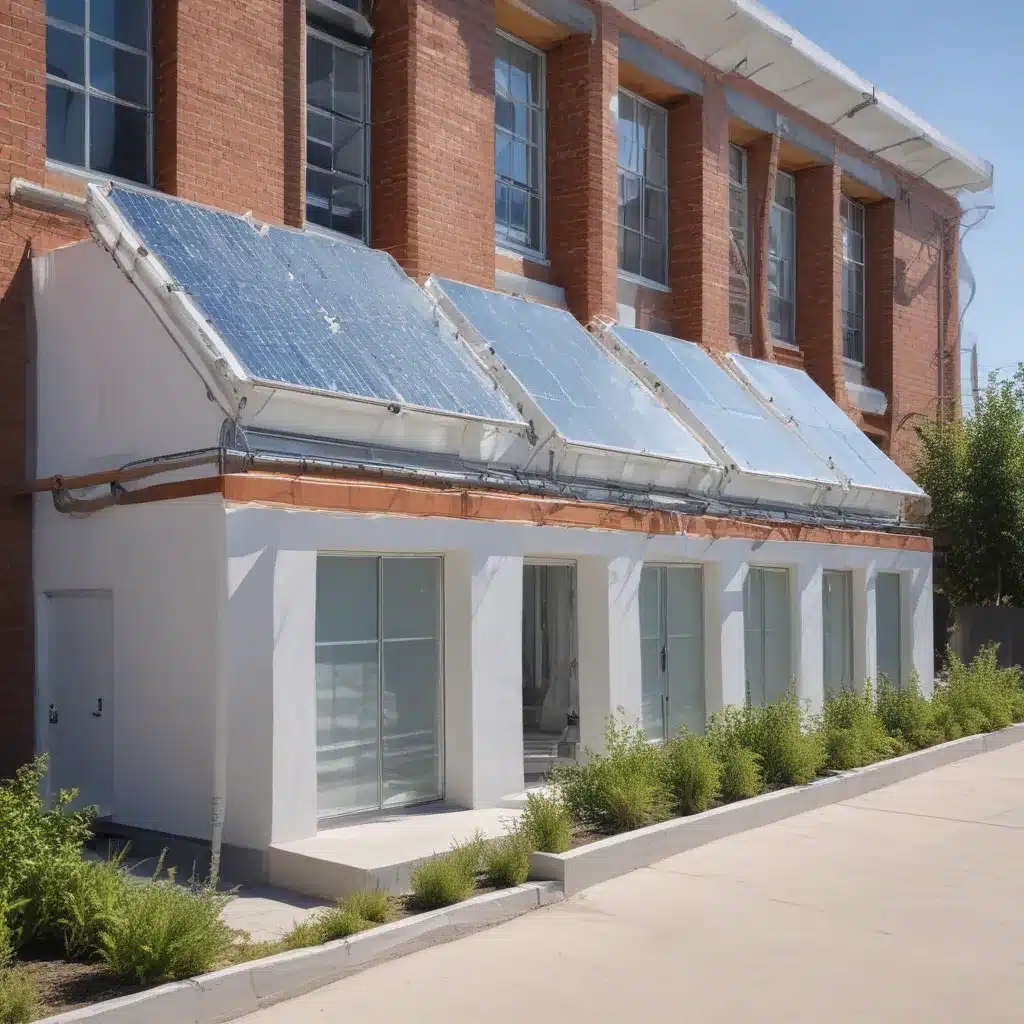
The Looming Threat of Climate Change: Adapting Our Homes for a Warmer Future
As a passionate advocate for sustainable living, I’ve been closely monitoring the dire predictions of climate scientists. The alarming reports of rising temperatures, extreme weather events, and the urgent need to reduce our carbon footprint have been keeping me up at night. But rather than succumb to the doom and gloom, I’ve been on a mission to find practical solutions that can help my fellow Aberdonians prepare for the challenges ahead.
You see, our beloved city of Aberdeen is no stranger to the unpredictable whims of Mother Nature. Just last year, we were hit with a record-breaking heatwave that had us all questioning the resilience of our homes. As the mercury soared, many of us found ourselves trapped in stifling, stuffy interiors, desperate for a respite from the relentless sun. It was a wake-up call that the way we design and construct our buildings needs to evolve if we’re going to survive the climate crisis.
That’s why I’ve been diving deep into the world of passive cooling – an approach to building design that harnesses natural elements to regulate indoor temperatures without the energy-intensive demands of traditional air conditioning. And let me tell you, the more I learn, the more excited I am about the transformative potential of this game-changing technology.
Embracing Passive Cooling: A Sustainable Approach to Climate-Resilient Homes
Passive cooling may sound like a lofty, technical concept, but at its core, it’s all about working in harmony with the environment. Instead of relying on power-hungry mechanical systems to artificially cool our homes, passive cooling utilizes smart design principles and natural ventilation to keep our living spaces comfortable, no matter how high the mercury rises.
Imagine a future where your home is effortlessly cool, even on the hottest summer days, without the need for constant air conditioning. That’s the promise of passive cooling, and it’s a vision that’s firmly within our grasp. By incorporating design elements like strategic window placement, thermal mass, and natural shading, we can create buildings that are inherently temperature-regulating, reducing our reliance on energy-guzzling cooling systems.
But the benefits of passive cooling extend far beyond just keeping us comfortable. It’s a holistic approach to sustainable living that can slash our carbon footprint, lower energy bills, and futureproof our homes against the ever-intensifying effects of climate change. And as someone who cares deeply about the environment and the well-being of our community, I couldn’t be more excited to share this transformative technology with you.
Harnessing the Power of Nature: The Science Behind Passive Cooling
Before we dive into the practical applications of passive cooling, I think it’s important to understand the underlying science behind this ingenious approach. At its core, passive cooling is all about leveraging the natural principles of heat transfer to create a comfortable indoor environment.
You see, heat has a natural tendency to flow from warmer areas to cooler ones, and passive cooling systems are designed to take advantage of this simple physical phenomenon. By strategically placing windows, vents, and other architectural elements, we can facilitate the natural flow of air, allowing hot air to be expelled and cooler air to circulate throughout the space.
But it’s not just about moving air – passive cooling also harnesses the power of thermal mass to regulate temperatures. Materials like concrete, stone, and even water can absorb and store heat, acting as a natural thermal buffer to prevent indoor spaces from becoming uncomfortably hot. Imagine a home with thick, insulated walls that can soak up the sun’s rays during the day and release the stored heat at night, keeping the interior consistently cool.
And let’s not forget about the importance of shading. By incorporating clever design features like overhanging roofs, strategically placed trees, or even movable screens, we can shield our homes from the direct onslaught of the sun’s rays, effectively reducing the amount of heat that enters the building in the first place.
The best part? All of these passive cooling strategies can be tailored to the unique climate and environment of our local region. What works in the desert might not be as effective in the temperate, rainy climate of Aberdeen, and that’s where the true magic of passive cooling shines. It’s all about understanding the specific conditions of our area and crafting customized solutions that harness the power of nature to keep our homes comfortable and energy-efficient.
Practical Applications of Passive Cooling: Transforming Homes in Aberdeen
Now that we’ve got a solid understanding of the science behind passive cooling, let’s dive into the practical applications and explore how this revolutionary approach can be implemented in our own homes and businesses here in Aberdeen.
One of the key strategies is to focus on the building’s orientation and layout. By carefully positioning our structures to take advantage of the prevailing wind patterns and sun exposure, we can create natural ventilation pathways and minimize the direct impact of solar radiation. Imagine a home with strategically placed windows and vents that allow cool breezes to flow through the interior, effectively flushing out the hot air and maintaining a comfortable temperature.
But it’s not just about the overall building orientation – the materials we choose for our walls, roofs, and floors can also play a critical role in passive cooling. Heavy, high-thermal-mass materials like stone, brick, or even rammed earth can act as natural heat sinks, absorbing and storing excess heat during the day and slowly releasing it at night when temperatures drop. And don’t forget about the importance of insulation – by ensuring our homes are well-insulated, we can minimize heat transfer and keep the interior nicely cool.
And let’s not forget about the power of shading. By incorporating features like overhanging eaves, retractable awnings, or strategically placed trees and bushes, we can shield our homes from the direct rays of the sun, effectively reducing the amount of heat that enters the building in the first place. It’s a simple yet highly effective way to keep our living spaces comfortable without relying on energy-hungry cooling systems.
But passive cooling isn’t just about the building itself – it’s also about harnessing the natural elements of our environment. In Aberdeen, we’re blessed with a temperate climate and prevailing winds that can be leveraged to our advantage. By incorporating design elements like wind towers, strategically placed vents, and even natural ventilation pathways, we can create a harmonious exchange of air that keeps our homes cool and comfortable.
And let’s not forget about the power of water. In our rainy city, we have a plentiful supply of this precious resource, and passive cooling systems can be designed to take advantage of it. Imagine a home with a cooling pond or a system of water channels that absorb and dissipate heat, providing a natural, energy-efficient way to regulate indoor temperatures.
Embracing the Future: Passive Cooling and Climate Resilience
As we look ahead to the challenges posed by climate change, the importance of passive cooling cannot be overstated. By designing and constructing homes and buildings that are inherently climate-resilient, we can not only ensure the comfort and well-being of our community, but also play a vital role in reducing our collective carbon footprint.
Imagine a future where our city is filled with homes and businesses that effortlessly adapt to the changing climate, without the need for constant air conditioning or energy-intensive cooling systems. That’s the promise of passive cooling – a sustainable, forward-thinking approach that can help us future-proof our built environment and create a more resilient Aberdeen.
And the best part? Passive cooling isn’t just a theoretical concept – it’s a proven, practical solution that is already being implemented in homes and buildings around the world. By learning from the successes and best practices of other communities, we can tailor these strategies to the unique needs and conditions of our own city, creating a blueprint for a greener, more comfortable future.
So, what are we waiting for? It’s time to embrace the power of passive cooling and take a giant leap towards a more climate-resilient Aberdeen. Whether you’re building a new home, renovating an existing structure, or simply looking to make your living space more comfortable and energy-efficient, the principles of passive cooling can provide the solutions you’re seeking.
Conclusion: The Path to a Greener, More Comfortable Future
As I reflect on the journey that has led me to this point, I can’t help but feel a sense of excitement and optimism about the future. The challenges posed by climate change may seem daunting, but by harnessing the power of passive cooling, we have the opportunity to create a built environment that is not only comfortable and energy-efficient, but also resilient in the face of a changing climate.
Through strategic design, careful material selection, and a deep understanding of our local environment, we can transform the way we live and work in Aberdeen. Imagine a city where our homes and businesses effortlessly regulate their own temperatures, keeping us cool and comfortable without the need for constant air conditioning or energy-guzzling cooling systems.
It’s a future that is within our reach, but it will take a collective effort to make it a reality. By sharing our knowledge, collaborating with experts, and embracing the principles of passive cooling, we can lead the way in creating a more sustainable, climate-resilient community.
So, let’s roll up our sleeves and get to work. Together, we can build a brighter, greener future for ourselves and generations to come. Who’s with me?