A dormer can be a good way to use roof space, but the sensible decision depends on the connection between the new room and the existing house. A dormer can look simple from the street and still be awkward because the stair is wrong, the usable headroom is poor, or the roof structure needs more work than expected.

Dormer feasibility checklist
| Check | Why it matters | What can go wrong |
|---|---|---|
| Roof face | Rear, side and front roof slopes are treated differently for planning risk. | A front or visible side dormer can need a much stricter planning route. |
| Headroom | The new room needs usable standing area across the plan, not a single high point near the ridge. | The dormer creates storage space rather than a comfortable room. |
| Stair route | A safe stair and landing can take space from the floor below. | The best bedroom area disappears into circulation and fire route planning. |
| Floor structure | Ceiling joists are not automatically designed as a room floor. | Extra structural work changes cost, floor height and ceiling finishes below. |
| Roof structure | Rafters, purlins, binders, chimney lines and old alterations shape the opening. | The dormer size has to change after the roof is opened. |
| Services | Heating, electrics, smoke detection, drainage and ventilation all need routes. | A nice layout becomes boxed in by late service runs. |
Dormer extension feasibility checker
Use this as an early feasibility check before a roof survey. It does not replace planning or structural advice.
What to decide before drawings go too far
- Confirm whether the dormer is rear, side or front-facing and whether the property has conservation or local planning limits.
- Measure real headroom across the planned room instead of relying on the highest ridge point.
- Sketch the stair, landing, smoke detection and escape route before placing the bed, desk or bathroom.
- Check whether the existing ceiling joists can become a floor or whether new structure is needed.
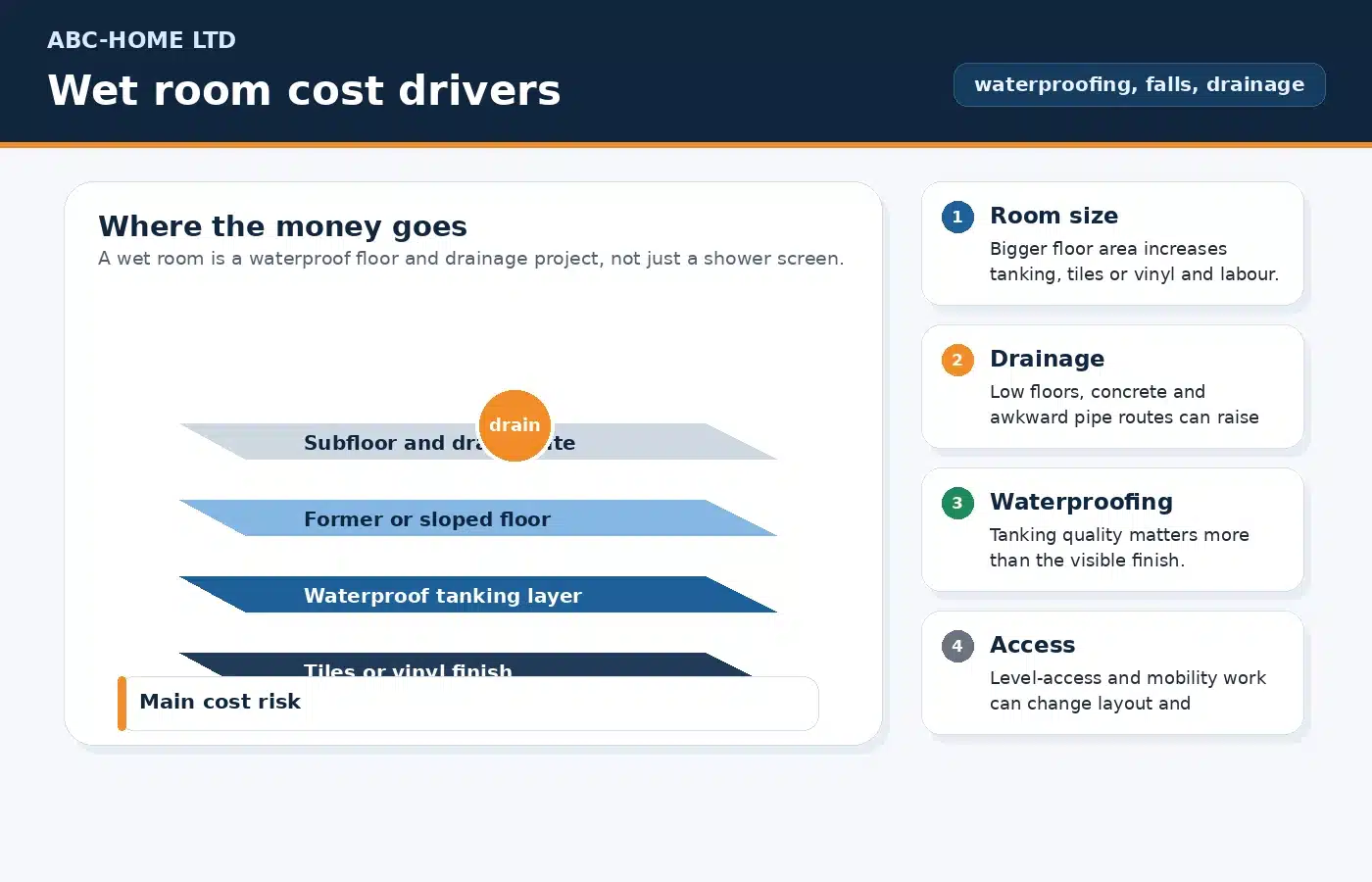
- Decide whether the room needs plumbing. A bathroom in the roof can be useful, but drainage and ventilation can drive the design.
Common dormer choices
| Choice | When it helps | What to check |
|---|---|---|
| Rear flat-roof dormer | Often gives the most usable room area. | Planning limits, overlooking, waterproofing and roof drainage. |
| Smaller dormer pair | Can suit older houses where one large box looks heavy. | Window position, structure between openings and whether enough usable space is gained. |
| Dormer with bathroom | Useful for a new bedroom suite. | Drainage fall, ventilation, waterproofing and service access. |
| Rooflights instead | Sometimes enough when headroom is already good. | Light, heat gain, cleaning access and whether extra space is still needed. |
Sources and practical checks
- mygov.scot roof additions and alterations: the Scottish homeowner route for checking whether a roof addition may need planning permission.
- Scottish Government domestic technical handbook: the reference route for domestic building standards such as structure, fire, ventilation and energy.
- Institution of Structural Engineers find an engineer: a practical starting point when the roof or floor structure needs professional input.
Dormer planning and warrant checks
A dormer can affect roof structure, fire escape, insulation, drainage and external appearance, so do not treat it as only a window choice. The Planning Portal is useful UK background, but an Aberdeen project should also check whether a Scottish building warrant is needed and use NHBC standards as a quality reference for domestic construction detailing.
- Planning Portal loft conversion guidance: UK planning background for roof-space projects.
- Scottish Government Building Standards: building warrant and Scottish compliance route context.
- NHBC Standards: domestic construction quality and warranty reference.
FAQ
Do dormer window extensions need planning permission in Scotland?
Some roof additions can be permitted development and some need planning permission. The answer depends on the roof face, position, size, conservation status and local limits, so check the property before assuming.
What is the first thing to check before a dormer design?
Check whether the roof space can create usable headroom and a safe route from the existing stair. A dormer that looks large outside can still produce an awkward room if the stair and floor structure are wrong.
Is a dormer cheaper than a normal extension?
It can be cheaper than building out at ground level, but structure, stairs, insulation, fire route, electrics, heating and finishes can change the cost quickly.