Structural stability is not an abstract engineering phrase. It shows up when a doorway is widened, a kitchen is opened into a living space, a dormer changes roof loads, or an old wall starts cracking after damp has weakened the area.

Structural stability checks before renovation work
| Change being planned | Main stability question | Who should check it |
|---|---|---|
| Removing or opening a wall | Is the wall carrying floor, roof, chimney, bracing or previous alteration loads? | Builder plus structural engineer where load bearing is possible. |
| Adding a wide door, bifold or kitchen opening | What beam, padstone, bearing and temporary support sequence is needed? | Structural engineer and competent installer. |
| Loft, dormer or roof alteration | How do roof loads, wind load and ceiling/floor structure change? | Engineer, building standards route and experienced contractor. |
| Heavy kitchen island, stone worktop or bathroom upgrade | Can the floor and supporting structure carry the extra dead load and use load? | Survey first, engineer if loads or spans are uncertain. |
| Cracks, sloping floors or damp damaged areas | Is this cosmetic, historic movement or an active structural issue? | Builder, surveyor or engineer depending on severity. |
Renovation stability risk checker
Use this as an early planning check. It does not replace a structural survey or engineer calculation.
What a good load path check looks like
A load path check follows the weight from the top of the building to the ground. Roof loads may pass into rafters, purlins, walls, beams and foundations. Floor joists may sit on a wall that looks like a simple partition from below. A chimney breast, old lintel or previous opening can change what is safe now.
- Look above and below the proposed change, not only at the room being refitted.
- Find joist direction where possible before assuming a wall is non load bearing.
- Check whether old openings, patch repairs or boxed steelwork already exist.
- Photograph cracks, damp patches and floor slopes before strip out.
- Plan temporary support before permanent support is fitted.
- Keep engineer drawings and building control or Scottish building standards paperwork with the project file.
Movement signs that should not be ignored
| Sign | Could be harmless when | Needs more attention when |
|---|---|---|
| Hairline plaster cracks | They follow old plaster joints and do not change. | They widen, step through masonry or reappear after repair. |
| Sloping floor | It is old and consistent across a known older property. | It is local, recent, near damp timber or under a planned heavy load. |
| Cracks near openings | Small and stable around old settlement. | Diagonal cracks form from corners after a wall or window change. |
| Damp or rot | It is surface condensation with no timber damage. | Joists, lintels or wall plates may be weakened. |
How this affects kitchen, bathroom and extension work
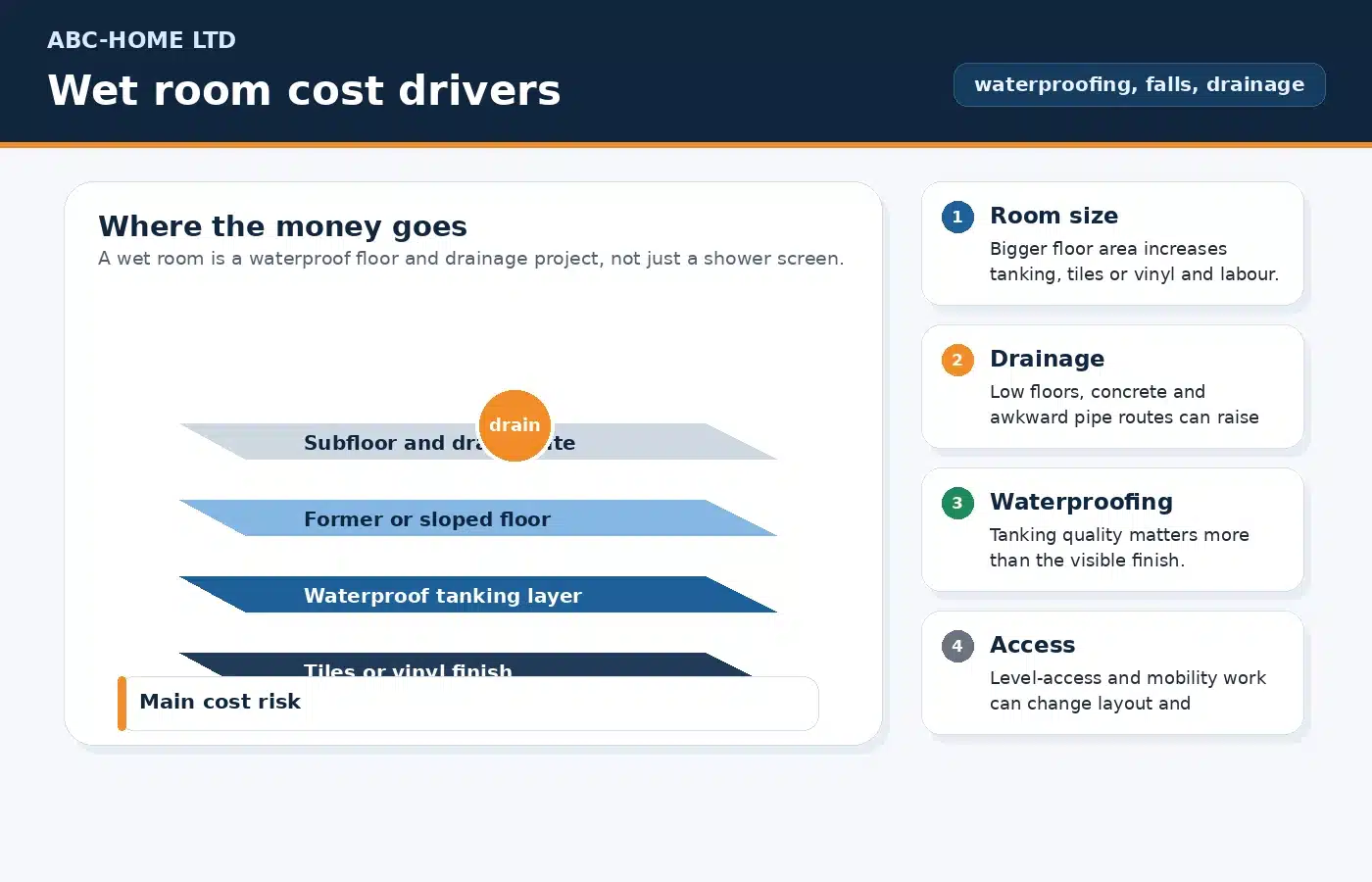
Open plan kitchen work often asks the structure to do something different. Bathroom refits can add weight through tiles, tanking, wet room floors and fittings. Extensions add new loads, new foundations and new junctions with the existing house. The safest order is survey, structural decision, service route, then finishes.
Sources and checks used
- Scottish Government domestic technical handbook: Scottish building standards context for domestic building work.
- Planning Portal: structural support for internal walls: plain English guidance on structural safety and building regulations.
- HSE construction structural stability: safety context for temporary and permanent structural stability during work.
FAQ
What does structural stability mean in a home renovation?
It means the building can safely carry loads through walls, floors, beams and foundations after the planned work. In a renovation, the risk often appears when a wall, chimney, roof line or opening is changed.
Can I remove a wall if it does not look load bearing?
No. A wall can carry joists, roof loads, bracing, services or previous alterations even when it looks lightweight. Check the structure before cutting.
When should I involve a structural engineer?
Use an engineer when removing load bearing walls, widening openings, changing roof structure, adding heavy loads, or when cracks and movement make the existing structure uncertain.