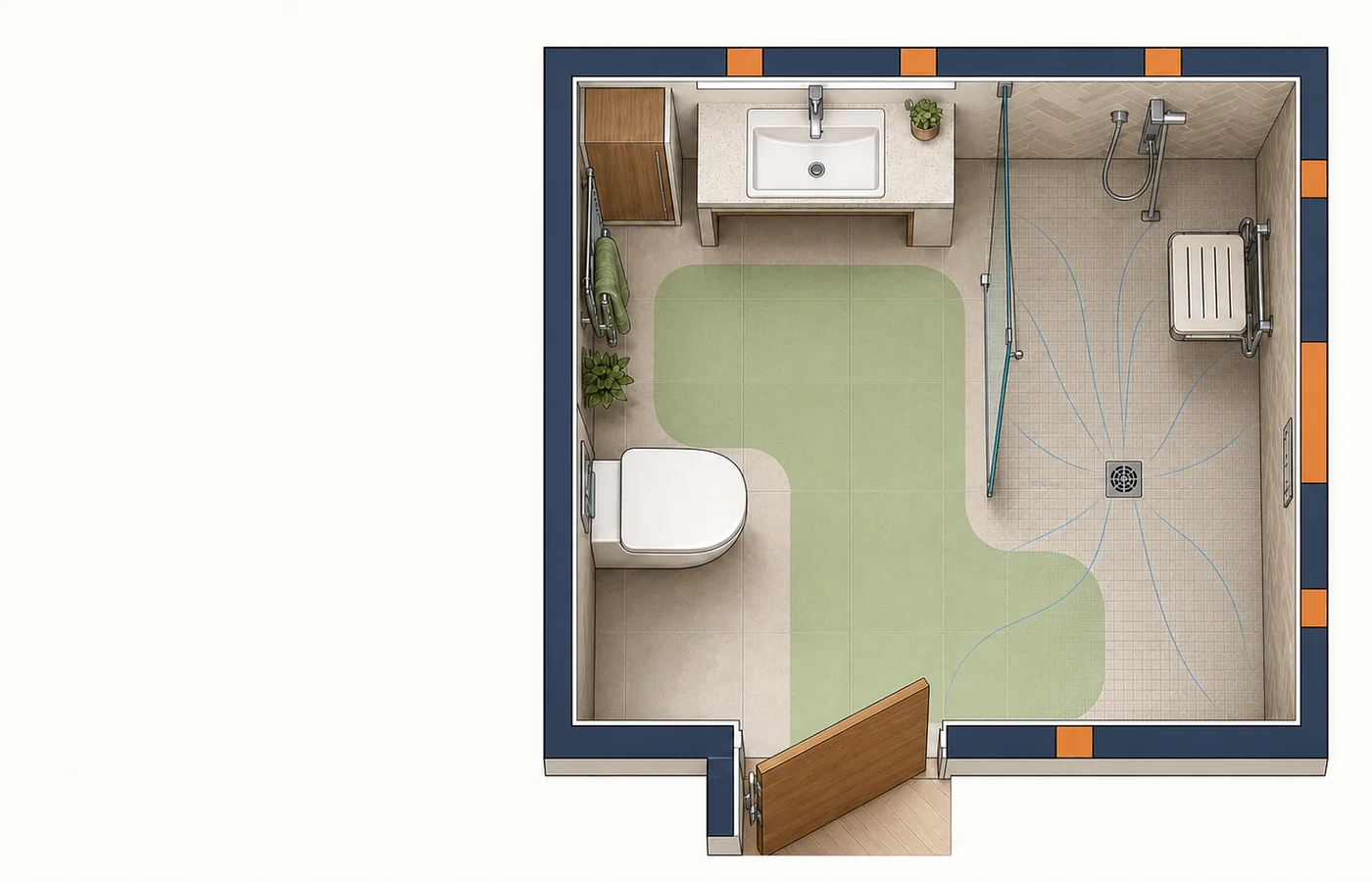
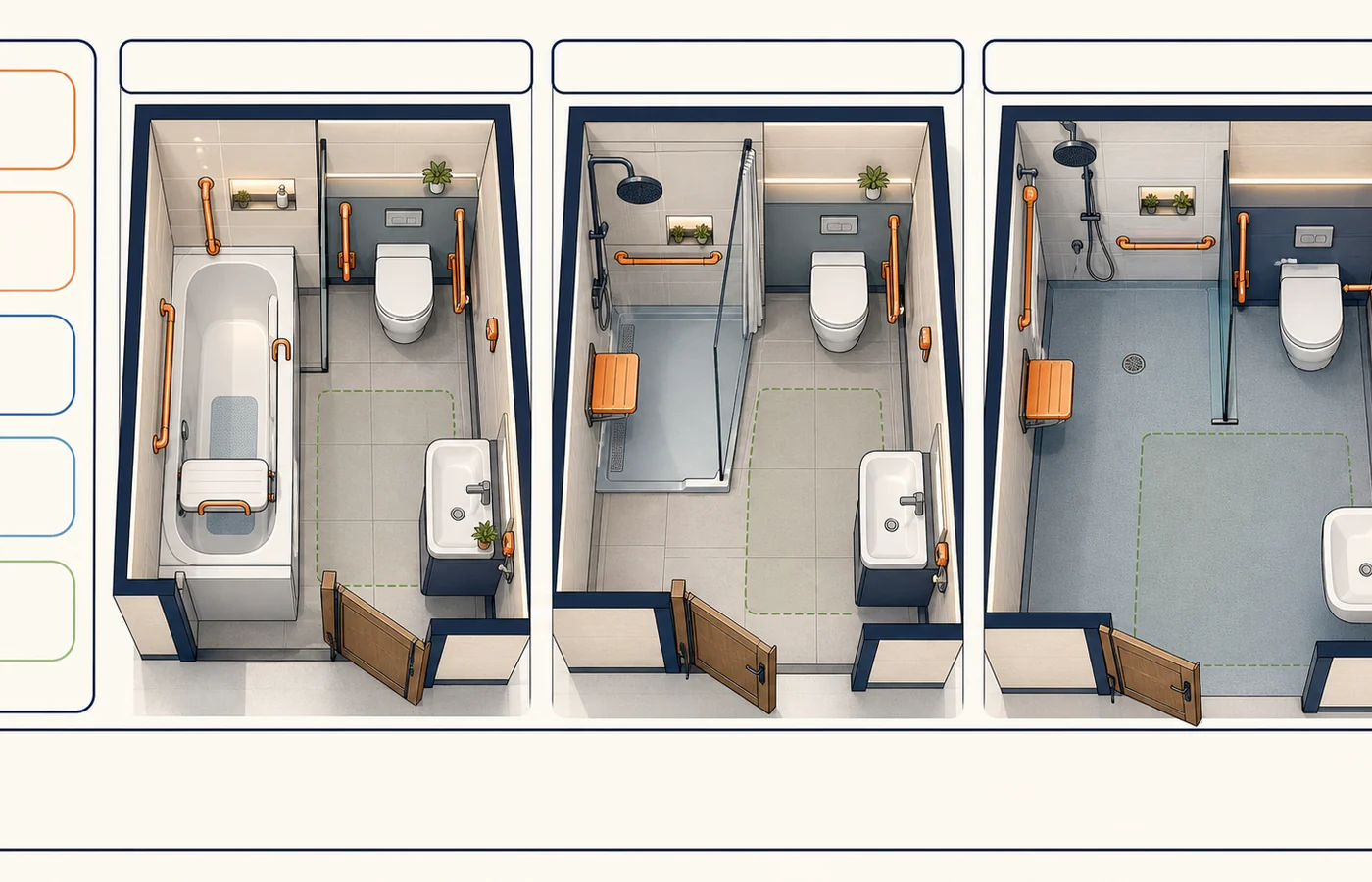
Accessible bathroom projects usually split into two needs. Some people need a safer shower now. Others are planning ahead for parents, reduced mobility or a house they want to keep using for longer. In both cases, the expensive mistakes happen before tiling: a doorway that is too tight, a drain in the wrong place, a floor that cannot take the former, or walls that were not strengthened for grab rails.

Accessible wet room design checklist for Aberdeen homes
| Check | Why it matters | Practical Aberdeen fitting note |
|---|---|---|
| Route into the room | The user may approach with a frame, wheelchair, chair or helper | Measure hallway turns, landing space and the real clear door opening, not only the bathroom size. |
| Step-free shower area | A lip or raised tray can defeat the point of the wet room | Check floor build-up, former depth, waste run and threshold before choosing tiles. |
| Drainage fall | Water must move to the drain without flooding the doorway | Long narrow rooms and older floors often need extra care around the fall and drain position. |
| Support fixings | Rails, folding seats and controls need proper backing | Add support zones before boarding and tanking. Do not rely on tile adhesive or plasterboard. |
| Slip resistance | Wet floors, soap and bare feet increase fall risk | Pick flooring with the installer and think about cleaning, grout and future maintenance. |
| Future care | Needs can change after the room is built | Leave options for extra rails, a shower chair, handheld shower and carer access. |
Aberdeen accessible wet room planner
Use this to spot early layout risk before a bathroom visit. It does not replace an occupational therapist assessment.
Optional build checks
What makes a local wet room project different?
Older property floors
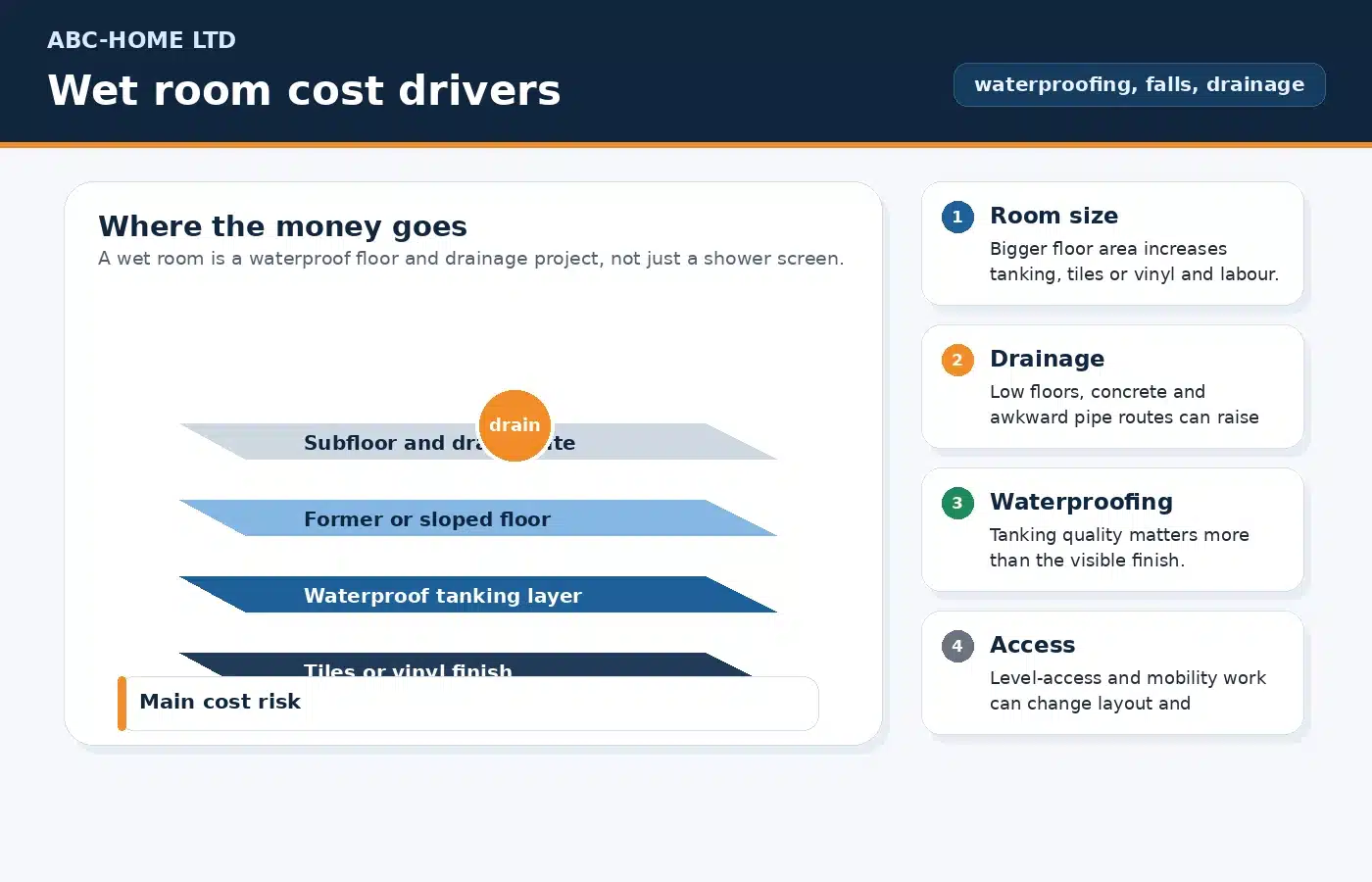
Aberdeen homes can have mixed ages, floor build-ups and tight service routes. The former, waste depth and falls have to be checked before promising a level finish.
Cold and ventilation
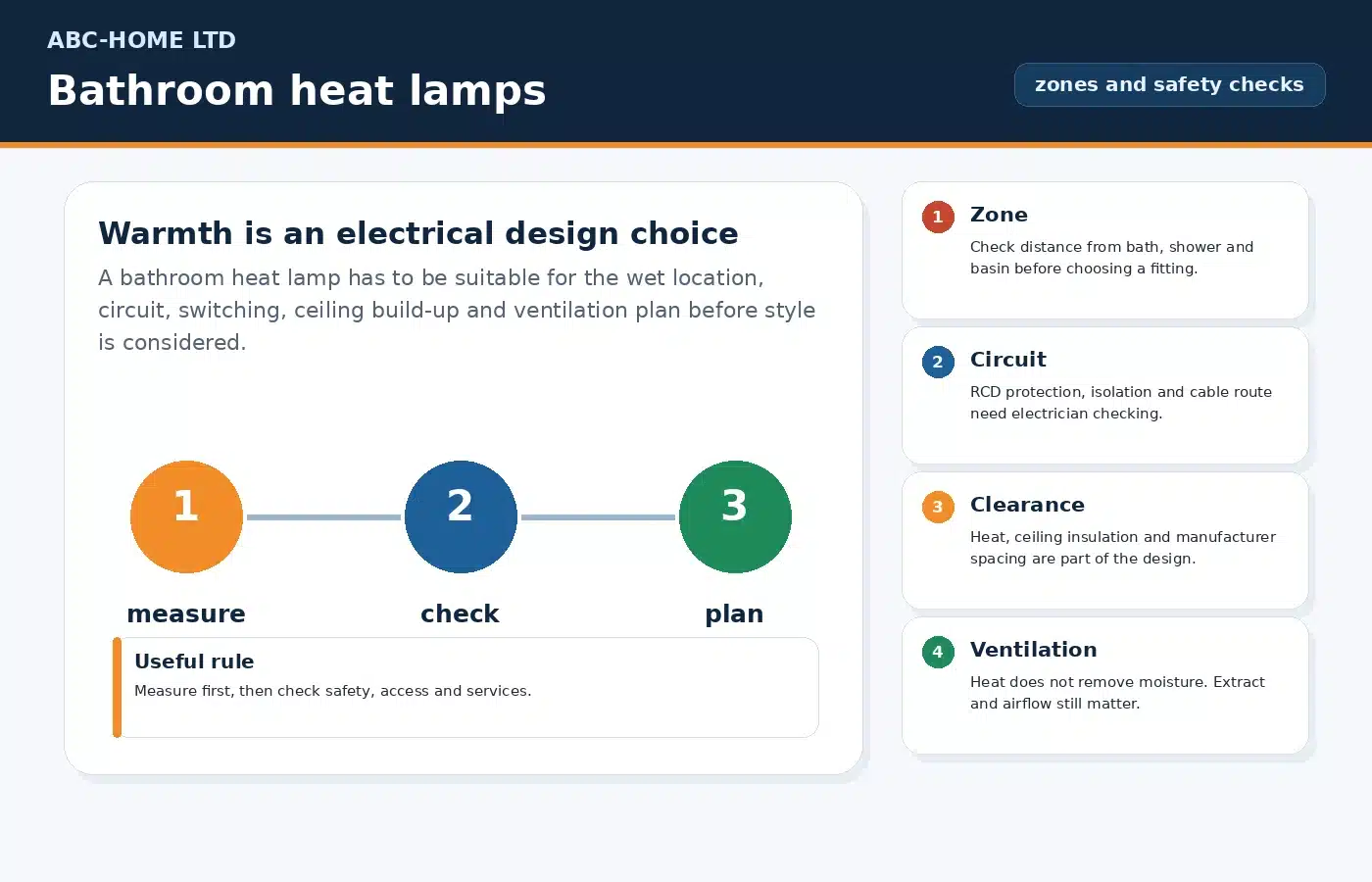
A wet room that stays damp becomes a mould and slip risk. Heating, extract, door undercuts and drying time matter as much as tile choice.
Named user needs
A wheelchair user, someone with poor balance and someone planning for later life do not need the same bathroom. The layout should follow the person.
Paperwork route
Some adaptations are simple private refits. Others may involve building warrant, landlord, council, insurer or occupational therapy routes. Check before stripping out.
Layout for different user needs
The same wet room shell can be laid out very differently depending on who uses it. This matrix shows what changes when the main need changes.
| User need | Layout priorities | Worth agreeing before fitting |
|---|---|---|
| Walking with balance concerns | Level threshold, a clear route with no trip edges, rail zones beside the shower and WC, an option for a seat and a handheld shower. | Where rails will sit for this person, and which finishes stay grippy when wet and soapy. |
| Wheelchair or shower chair | Turning space inside the room, an open approach to the shower, basin and WC, and controls reachable from a seated position. | The actual chair being used, whether it is self-propelled or pushed by a helper, and how it approaches each fitting. |
| Side transfer | Clear open space on the transfer side of the WC or shower seat, fold-away rails rather than fixed obstructions, and firm backing behind every rail position. | Which side the person transfers from, and keeping that side free of radiators, storage and pipework. |
| Carer or helper space | Room for two people at the shower without either standing in the spray path, a handheld shower, and a door that cannot trap the helper or the user. | How the helper works today, whether care needs may increase, and how the door opens in an emergency. |
| Future change | Reinforced walls fitted now even if rails come later, a drainage and floor layout that can accept a seat or chair, and fittings that can be swapped without re-tanking. | What the room should still cope with in the years ahead, so the waterproofing is not disturbed later. |
Design choices that are worth deciding early
- Outward opening, sliding or pocket door where emergency access matters.
- Thermostatic shower controls reachable from a seated or standing position.
- Handheld shower rail that works with a seat and with standing use.
- Strong wall backing for future rails even if they are not fitted on day one.
- Contrasting floor and wall finishes where sight or depth perception is a concern.
- Storage that does not block a turning circle or helper route.
- Extractor and heating plan so the floor dries properly after use.
- Access panel positions for maintenance without damaging waterproofing.
Questions to ask your installer
A good installer should be able to answer these before any strip-out starts. Vague answers here are an early warning.
- Floor build-up, falls and drainage: how will the floor be built up, which way will the fall run, where does the waste route go, and what happens if the existing floor is not as expected once opened?
- Splash control: how will water be kept away from the doorway, WC and towel areas without adding a step or a lip that defeats the level access?
- Support-wall reinforcement: which walls will be reinforced for rails, a seat and future fixings, and how will those zones be recorded before boarding and tanking cover them?
- Door and route: will the clear door opening and the approach route work for the chair, frame or helper involved, and how does the door open if someone falls behind it?
- Ventilation: how will the room be ventilated and heated so the floor and walls actually dry between uses?
- Maintenance and aftercare: how are the drain, trap and seals accessed for cleaning, and what aftercare is offered if a seal, fall or fitting fails after handover?
- Evidence of comparable work: can they show accessible wet rooms they have completed in similar properties, and put you in touch with those customers?
Drainage, waterproofing and handover checks
Ask the installer to explain the proposed drain position, the direction of the floor falls and how the waste route fits the existing floor. A linear or point drain should be chosen as part of the room design, not because one type is automatically more accessible. Check the intended shower-chair route and the finished threshold with the proposed layout.
Ask for one compatible waterproofing specification covering the floor, wall junctions, corners, service penetrations and drain connection. Confirm how future rail or seat fixings will be sealed. Keep product information and photographs of concealed work with the handover record.
At handover, ask the installer to demonstrate drainage and show how to clean the trap, use the ventilation and inspect seals and support fixings. Follow the exact products’ care instructions rather than a generic replacement timetable.
When a wet room is not the best first option
A full wet room is not always the cheapest or safest answer. If the floor build-up is difficult, the budget is tight, or the user mainly needs safer access rather than wheelchair use, a low-level tray, better door, grab rails, a seat and improved lighting may be a better first stage. The right answer depends on the room and the person, not the trend. For the wider picture on planning a bathroom that keeps working as needs change, see our guide to bathroom adaptations for elderly and disabled people.
Sources and checks used
- Scottish Government domestic technical handbook — April 2026: guidance for warrant applications submitted on or after 6 April 2026 and relevant work that does not require a warrant but starts from that date. The applicable requirements still depend on the project.
- GOV.UK Approved Document M as a useful access reference for England, not the Scottish rule book.
- Aberdeen City Council Scheme of Assistance: the local route for advice and possible support with adaptations to a private home for a disabled occupant. Eligibility and the assessment route should be confirmed with the council before work starts.
- Care Information Scotland: help making changes to your home: Scotland-specific information on council housing adaptation grants, occupational therapy assessment and Care and Repair services.
FAQ
What is the difference between a wet room and an accessible shower?
A wet room usually has a waterproofed floor and level shower area. An accessible shower might use a low-level tray or adapted enclosure. The better choice depends on floor build-up, drainage and the user’s needs.
Can an accessible wet room be fitted in an upstairs bathroom?
Often it can, but the floor structure, waste route, waterproofing and falls need checking. Upstairs timber floors can need more design work than a simple ground floor room.
Should I speak to an occupational therapist before fitting a wet room?
If the room is for a named disability, wheelchair use, carer support or funded adaptation, OT input is sensible. It helps avoid a room that looks accessible but does not fit the user.
Does an Aberdeen wet room follow Approved Document M?
Approved Document M is for England. It can be a useful access reference, but Scottish projects should be checked against Scottish building standards and any local project requirements.