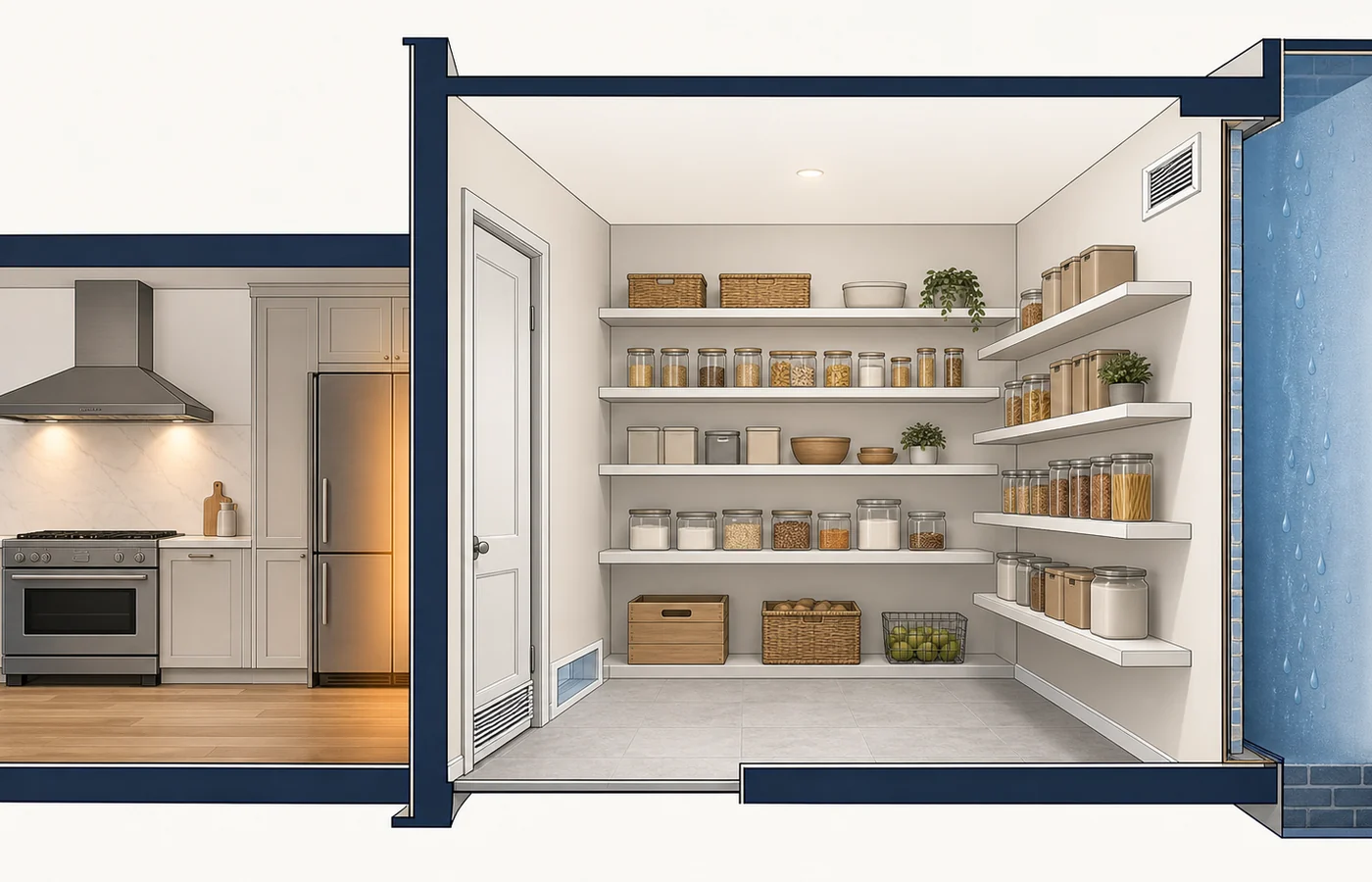
Bathroom ventilation is one of those details that gets noticed only after the room is finished. The tiles are new, the paint is fresh, and then the mirror stays wet, corners grow mould or the fan sounds busy but does not clear steam. The fix is to design the air path, not just to buy a fan.

Bathroom ventilation rates and checks
| Room or check | Approved Document F guide | Practical fitting note |
|---|---|---|
| Bathroom with bath or shower | 15 litres per second for intermittent extract | Use a fan and duct route that can still deliver the flow after bends and grilles. |
| Sanitary accommodation | 6 litres per second for intermittent extract | A separate WC has a lower extract figure, but odour and duct route still matter. |
| Kitchen | 30 litres per second with cooker hood extracting outside, or 60 litres per second without that outside hood | A recirculating hood on its own is not outside extract ventilation. |
| Wet room addition | Extend whole dwelling ventilation and provide extract, with a 5000mm2 equivalent background ventilator if using intermittent extract | Wet rooms need planned air replacement as well as a stronger moisture strategy. |
| Refurbished bathroom | Retain or replace existing working fans. If no fan exists, new ventilation can still be needed if the work makes the dwelling less compliant | Replacing windows, insulating and sealing gaps can change the ventilation balance. |
Bathroom fan flow checker
Use this to spot obvious under-specification before choosing the fan and duct route.
Why a fan can still fail
A fan can be rated above 15 litres per second in free air and still underperform once it is connected to a long flexible duct, a crushed bend, a restrictive grille or a roof route with too much resistance. The installed flow should be checked, especially on new work where commissioning is part of doing the job properly.
Route to outside
The extract needs to discharge outside. Do not rely on a fan that dumps moist air into a loft void, ceiling space or closed cavity.
Replacement air
A bathroom fan cannot remove air that cannot be replaced. A suitable gap under the door and background ventilation help air move through the room.
Timer or humidistat
A timer helps after showers. A humidistat can help in damp rooms, but it must be set correctly and kept clean.
Electrical zones
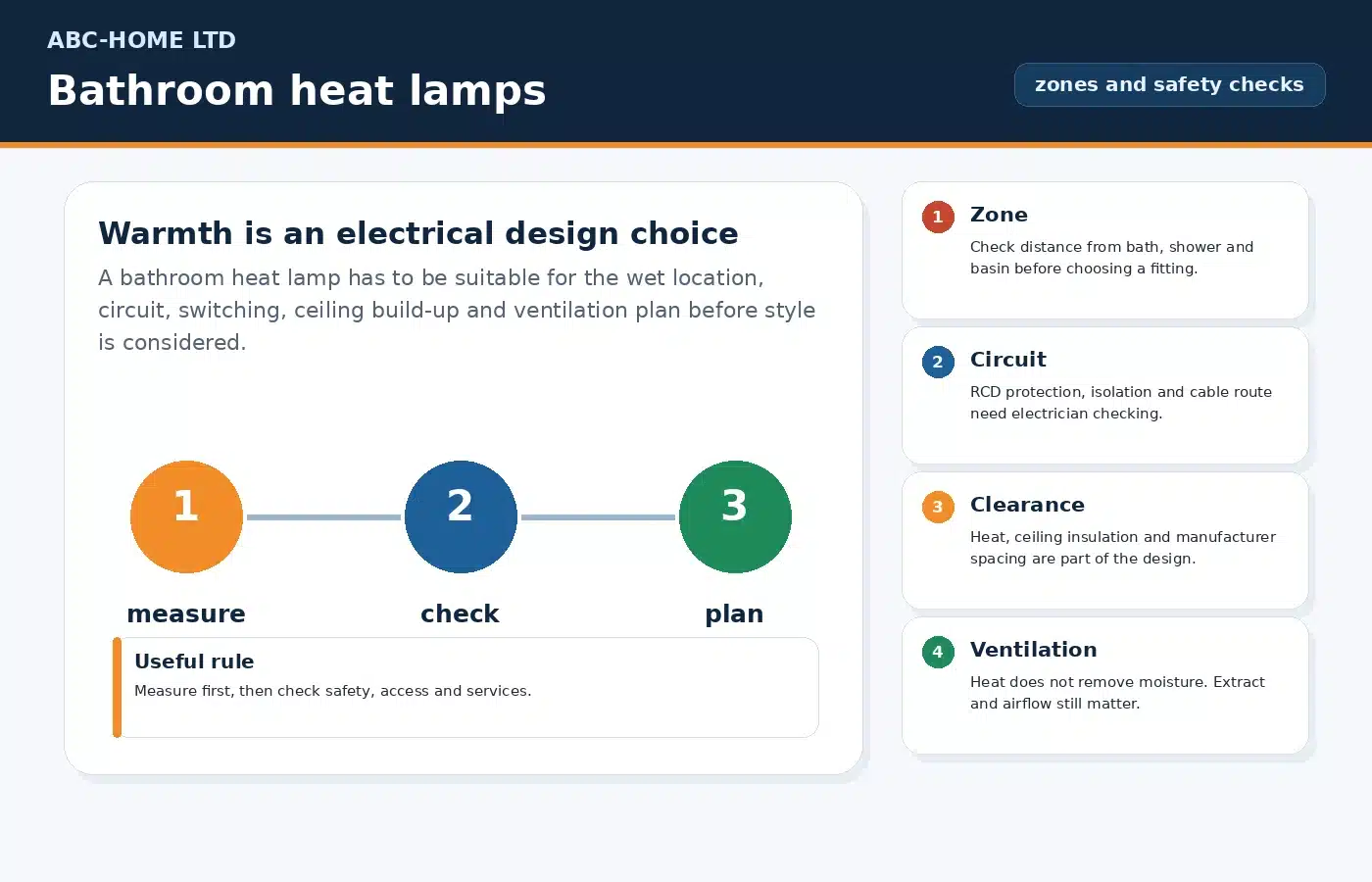
Fans, isolators and lights in bathrooms must also respect bathroom electrical zones and manufacturer instructions.
Good bathroom ventilation specification
- Choose the fan after the duct route is known, not before.
- Keep ducting short, smooth and supported where possible.
- Use a backdraft shutter or suitable terminal where needed, without choking the flow.
- Check the door undercut or transfer route so air can enter the room.
- Commission and record air flow on notifiable or controlled ventilation work.
- Explain cleaning and timer settings to the homeowner.
Scottish ventilation checks before the fan is chosen
Bathroom ventilation advice online often quotes England Approved Document F. That is useful background, but an Aberdeen bathroom should also be checked against the Scottish Government domestic technical handbook and the current Building Standards route. The practical point is simple: duct route, extract rate, replacement air and safe electrical positioning all have to work together.
- Scottish Building Standards Technical Handbook: the Scottish domestic reference point for ventilation, moisture and safety checks.
- Scottish Government Building Standards: policy and compliance context for domestic work in Scotland.
- Electrical Safety First bathroom safety: reminder that fans, lights and controls must be planned around bathroom electrical risk.
FAQ
What is the minimum bathroom extractor fan rate?
Approved Document F Volume 1 gives 15 litres per second for intermittent extract in a bathroom.
Does an openable bathroom window replace an extractor fan?
For modern work, do not assume that a window alone solves compliance. Extract ventilation to outside is the key bathroom provision in Approved Document F guidance.
Why does my bathroom fan not clear steam?
The common causes are low installed air flow, long or crushed ducting, too many bends, no replacement air under the door, or a fan that switches off too soon.
Does adding a wet room change ventilation?
Yes. Approved Document F guidance for adding a wet room to an existing dwelling includes extending whole dwelling ventilation and providing extract ventilation.