Bathroom fan noise is not just a product label. In real bathrooms, noise and performance depend on the installation: wall or ceiling position, duct length, bends, grille, backdraught shutter, run-on timer, humidity control and whether the bathroom sits near bedrooms.

Bathroom fan type and noise checker
This is a practical first filter, not a product specification. A qualified installer should check the real route, electrics and bathroom zones.
Bathroom fan types explained
| Fan type | Best for | Noise/performance notes |
|---|---|---|
| Axial fan | Short, direct wall or ceiling routes where the air does not travel far. | Can be quiet and simple, but performance drops on long or bend-heavy ducts. |
| Centrifugal fan | Routes needing more pressure than a basic axial fan can provide. | Often better for duct resistance, but compare noise and installation detail. |
| Mixed-flow fan | Medium routes where a balance of airflow and pressure is needed. | Can be a good middle option when a simple fan is not enough. |
| Inline fan | Loft or ceiling duct routes, especially where the motor can sit away from the bathroom. | Can reduce room noise if installed well, but needs correct access, ducting and isolation. |
| Humidity/timer fan | Bathrooms where steam remains after showers or users forget to run the fan. | Controls help, but they do not compensate for a badly chosen fan or poor duct route. |
Noise depends on the whole installation
Product dB ratings are useful, but the fitted result depends on ducting and mounting. Crushed flexible duct, too many bends, a rattling grille, poor fixing or a fan trying to push through too much resistance can make the bathroom louder and less effective. That is why a quiet-looking spec sheet is not the whole decision.
A simple fan can work well when the duct run is short and straight. Still check backdraught, weather grille and safe electrical position.
Long ducts and bends need pressure. Consider centrifugal, mixed-flow or inline options rather than buying only by faceplate style.
Look for low dB ratings, good mounting and an installation that avoids vibration. Inline layouts can help where practical.
A family bathroom may need stronger extraction and a run-on timer or humidity control to clear steam after use.
Scotland ventilation baseline
The Scottish domestic technical handbook guidance lists a bathroom or shower room as needing either mechanical extraction capable of at least 15 l/sec intermittent operation, or a passive stack ventilation system, with trickle ventilation guidance alongside it. Treat that as the baseline, not as a promise that any 15 l/sec product will work in every duct route.
What to check before buying a bathroom fan
- Measure the room and note whether it is a bathroom, shower room, ensuite or WC.
- Trace the duct route: straight through wall, ceiling to roof, ceiling to soffit or loft run.
- Count bends and avoid crushed ducting.
- Check whether a timer, humidistat, pull cord or light-linked control is suitable.
- Compare dB ratings only after the fan type fits the duct route.
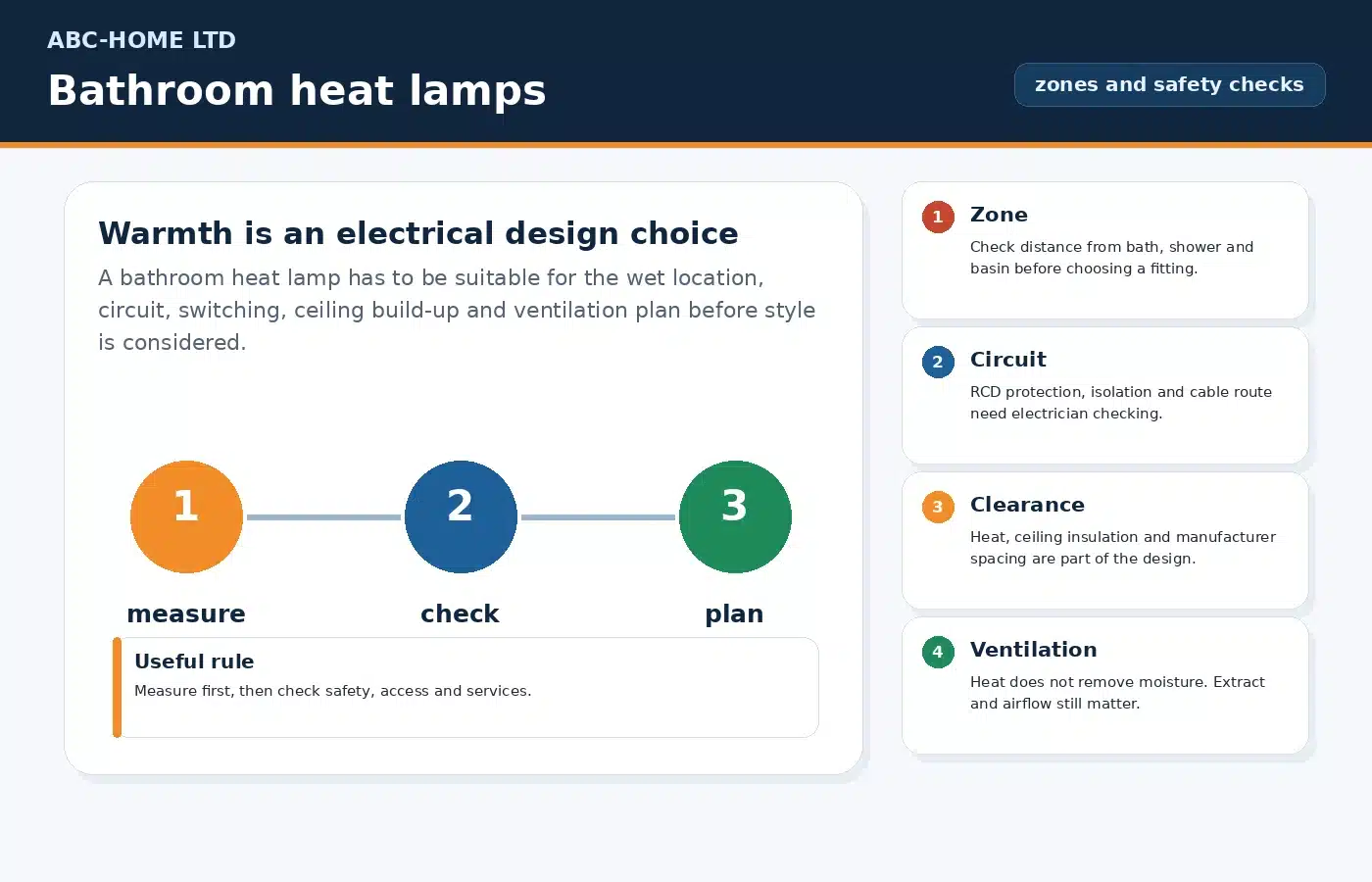
- Check bathroom zones, IP rating, isolation and wiring route with a qualified person.
Where ABC Home fits
ABC Home can look at the fan as part of the bathroom, not as a small plastic product: where the steam is produced, where the duct can run, how the fan is controlled, how electrics are kept safe and whether the wider bathroom needs better heating, sealing or ventilation planning.
Sources and practical checks
- Scottish Government technical handbook 2022: ventilation: lists bathroom or shower room mechanical extraction guidance including at least 15 l/sec intermittent operation.
- Scottish Government technical handbook January 2025: domestic: current domestic building standards reference for Scottish work submitted from January 2025.
- Centre for Sustainable Energy: condensation, damp and mould: background on condensation and why moisture control matters in homes.
FAQ
What bathroom fan type is best?
For a short, direct wall route, a good axial fan may be enough. For longer duct runs, bends, roof routes or quieter remote placement, centrifugal, mixed-flow or inline fans are often a better starting point.
What extract rate does a bathroom need in Scotland?
Scottish technical handbook guidance lists mechanical extraction capable of at least 15 l/sec intermittent operation for a bathroom or shower room, or a passive stack system. Real product choice can still need more capacity depending on duct route and use.
How do I choose a quieter bathroom fan?
Compare product dB ratings, choose the right fan type for the duct route, avoid crushed ducting and unnecessary bends, and consider an inline fan where the layout allows the motor to sit away from the room.