A kitchen door is not only an interior design detail. If you are thinking about removing it, opening the space, changing a doorway or making a tight kitchen work around appliances, check the layout and fire-safety context before the frame comes out.
Those are different jobs. A door that hits the dishwasher is annoying. A door that protects or affects an escape route is a different level of risk. Treat them separately before ordering units or ripping out the frame.

Kitchen door decision table
| Situation | What to check first | Practical risk |
|---|---|---|
| Keeping the door but changing units | Swing arc, appliance-door clashes, handles, island position and walking route. | Mainly a layout issue, but it can still make the kitchen hard to use. |
| Moving the door opening | Wall type, services, lintel/support, swing direction and how the route changes. | Joinery, wall work and possibly building-control checks depending on scope. |
| Removing the kitchen door | Whether the kitchen sits on an escape route, property type and existing fire-door role. | Can affect fire safety, especially in flats, loft conversions and some open-plan layouts. |
| Creating open-plan kitchen living | Fire strategy, smoke alarms, protected route, stair position and wall removal. | The door question becomes part of a wider open-plan safety decision. |
| Changing to sliding or pocket door | Wall depth, track access, handles, seal, privacy, fire rating if required. | Good for tight layouts only if it still fits the safety and construction requirement. |
Kitchen door and escape route checker
Use this before removing a kitchen door, changing its swing or committing to open plan.
The escape route matters more than the door style
The most important question is not whether a shaker-style door, glass door or pocket door looks better. It is whether removing or moving the door changes how people escape if there is a kitchen fire. Kitchens contain cooking appliances, power, heat, smoke and sometimes gas. That is why open-plan changes deserve more care than a normal decoration choice.
LABC guidance on kitchen fire regulations and open-plan kitchens points homeowners back to fire safety, building-control judgement and the layout of the home. GOV.UK fire-safety guidance also shows why the answer depends on the dwelling and route, not a one-line internet rule.
If the route out from bedrooms depends on passing the kitchen, do not remove the door based on design preference alone.
An existing fire-rated or self-closing door is a clue that the door may have been part of the original safety arrangement.
Flats can have different compartment and protected-route expectations. Copying advice for a simple house can be risky.
Taking out a door often sits alongside removing a wall, which can raise structure, fire and smoke-alarm questions together.
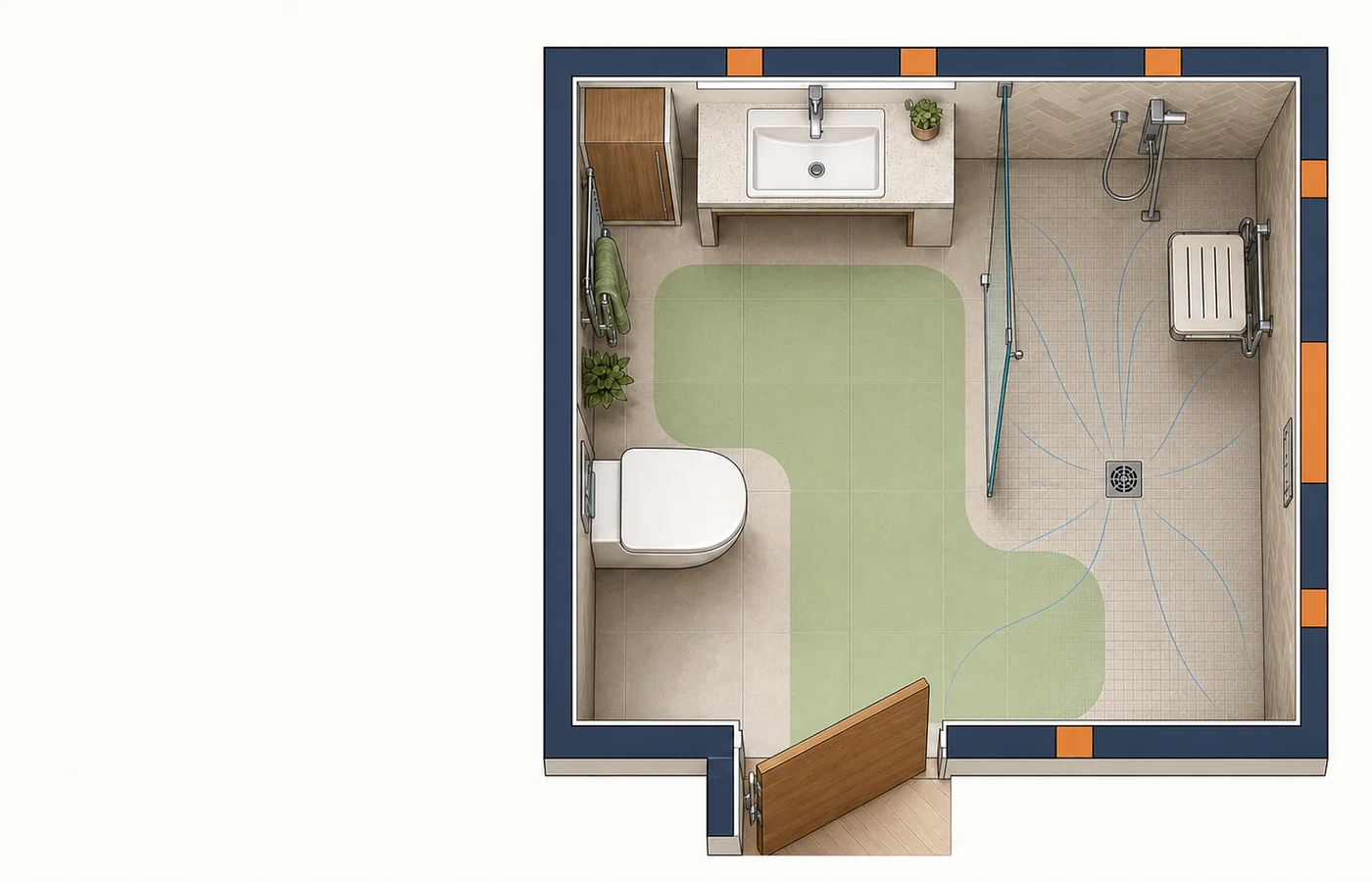
Door swing checks before ordering units
- Mark the real door arc on the floor or plan, including handle and frame clearance.
- Open the fridge, oven, dishwasher and key drawers on the plan, not only the empty door.
- Check whether the door blocks the main route when someone is cooking or carrying hot food.
- Try the reverse swing, outward swing, sliding door or pocket door option before moving services.
- If removal is planned, check fire and building-control logic before treating it as a carpentry-only job.
When a kitchen door can be a bad fit
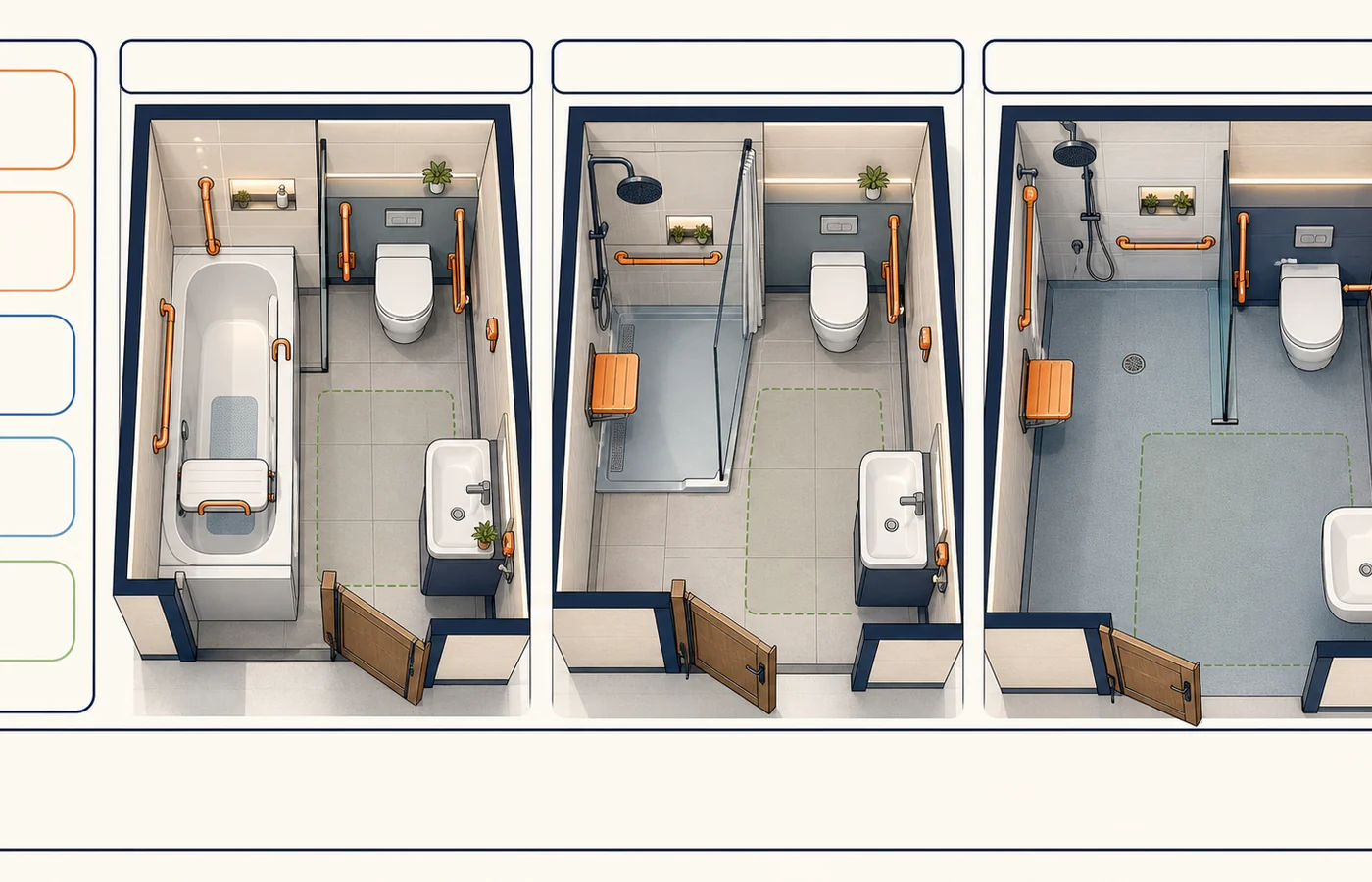
A standard hinged door is not always the best answer. In small kitchens it can clash with a fridge, trap someone by the oven, block a narrow route or make accessible movement harder. But the alternative must solve the right problem. A sliding door can improve swing clearance and still be wrong if the wall cannot take the cassette, the handle is awkward, or the door needed a fire rating.
Best when the door supports the escape route and only minor swing issues need solving.
Useful where the door clashes with appliances but the frame and route still work.
Useful in tight kitchens if wall construction, track access and safety needs are suitable.
Only after open-plan and fire-safety implications have been checked.
Door fitting in Aberdeen
Home renovation in Aberdeen
Loft conversion guidance
If a kitchen door change is part of a layout refit, ABC Home can look at swing, appliance access and practical sequence as part of a kitchen fitting project in Aberdeen.
Sources and practical checks
- LABC kitchen fire regulations: point that kitchen layout changes can have fire-safety implications.
- LABC open-plan kitchen considerations: open-plan kitchen and building-control context.
- GOV.UK Approved Document B FAQ: broader fire-safety guidance background.
- Approved Document B Volume 1 PDF: dwelling fire-safety reference where England-focused sources are being compared.
Scottish fire-route and building-standards check
Kitchen door advice is often written around England Approved Document B. In Aberdeen, the safer brief is to ask what the door does for escape, compartmentation and day-to-day access, then check that against the Scottish Government Building Standards route where the layout is being altered. This matters most in flats, loft conversions, open-plan work and homes where the kitchen affects the route from bedrooms to an exit.
- Scottish Government Building Standards: the Scottish route to check when layout or fire-route assumptions change.
- Scottish Building Standards Technical Handbook: domestic reference point for access and safety checks.
- LABC open-plan kitchen considerations: useful wider UK context before removing or replacing a kitchen door.
FAQ
Does a kitchen legally need a door in the UK?
There is no single rule that every kitchen in every UK home must have a door. The real question is whether the kitchen affects the fire escape route, property type, open-plan layout or an existing fire-door arrangement.
Can I remove my kitchen door for open-plan living?
Maybe, but check fire safety and building-control implications first, especially in flats, loft conversions, multi-storey homes or layouts where escape from bedrooms passes through the kitchen.
How much space should a kitchen door have to swing?
Enough for the door to open safely without blocking appliance doors, cabinet runs, islands or the route through the kitchen. Door swing should be checked in the real kitchen layout, not only from the door leaf size.
Is a sliding or pocket door acceptable in a kitchen?
It can be a practical layout answer, but it still needs to suit the fire-safety requirement, wall construction, handle access, appliance clearance and maintenance route.