Most bathrooms do not need new furniture to work better. They need fewer things on the surfaces, a clear home for what is used every day, and a decision about what should not be kept in the bathroom at all. Empty one area, sort it, then use removable organisers that fit the space you already have.
Empty one zone and sort it
Pick a single area, such as the basin cupboard, a drawer or the shelf by the bath, and take everything out. Sort it into groups:
- daily: toothbrushes, toothpaste, face wash, deodorant, razor
- regular but not daily: hair treatments, nail kit, spare contact lens solution
- backup stock: toilet rolls, unopened toiletries, soap refills
- cleaning products
- medicines and first aid
- things that belong in another room
Throw out empty bottles, dried-up products and duplicates you will never finish, and take anything that has drifted in from elsewhere back where it belongs. Everything left should have a reason to be in the bathroom, and the daily group gets the easiest spot to reach.
Medicines: check the label before choosing a place
The bathroom cabinet is a traditional home for medicines, but often not a good one. Guidance from United Lincolnshire Hospitals NHS Trust says to store medicines as indicated on the packaging or label, keep them in their original packaging, and keep them in a childproof place out of reach of children and pets. It advises avoiding storage near sources of heat or humidity, naming bathrooms, sinks and radiators among them, and keeping medicines in a cool, dry place away from direct sunlight. Some medicines need to be refrigerated or kept out of the light, and the label will say so (ULH NHS, storing medicines at home).
So while sorting, consider moving medicines to a cool, dry cupboard elsewhere in the home that children cannot reach, following each product’s label. A lidded box keeps the packets together without taking anything out of its original packaging.
This is also a good moment to look at expiry dates and the condition of packs. Do not throw a medicine away simply because it has not been used for a while; some are kept for occasional or emergency use, and decisions about prescribed medicines belong with you and your pharmacist or prescriber, not with a tidying rule. For anything expired, damaged or no longer needed, the same NHS guidance says to take it back to a pharmacy for safe disposal, and not to put it in household waste or flush it down the toilet.
Cleaning products: original bottles, out of reach
The Child Accident Prevention Trust highlights the cupboard under the sink and the space next to the toilet as common places for cleaning products, and recommends moving them to a high or lockable cupboard, putting them away straight after use and not relying on safety caps, which slow children down but are not childproof (CAPT, poisoning prevention). It also warns against decanting cleaners into prettier dispensers or jars: the original containers carry first aid and ingredient information, and decanted products are easier to mistake for a drink or sweets.
Matching jars are fine for cotton pads, cotton buds and hair ties if you like the look. Keep bleach, toilet cleaner and other chemicals in the bottles they came in.
Make existing drawers and cupboards work harder
Drawers
Drawer dividers or small trays stop little items collapsing into one tangle. Group by task rather than by product type: a shaving tray, a hair tray, a dental tray. Labelling each compartment helps everyone in the household put things back in the same place. Keep daily items at the front.
Under the basin
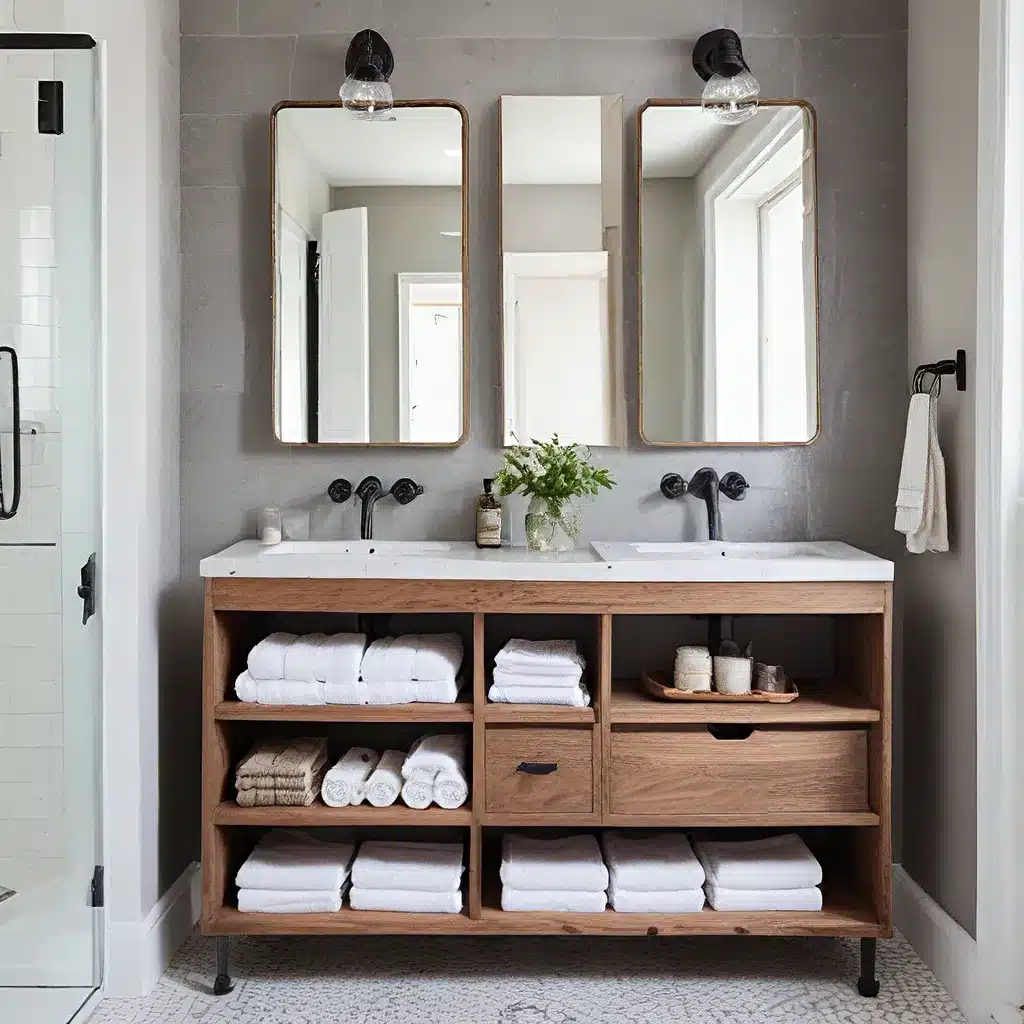
The space under a basin is often the most chaotic in the room because the pipes break it up. Measure around the trap and pipework before buying anything; IKEA’s bathroom buying guide advises taking detailed measurements and noting the space needed for piping that could affect your storage (IKEA ENHET bathroom buying guide). Freestanding baskets, stacking boxes, a turntable or a freestanding pull-out organiser that sits around the pipes will usually hold more, more tidily, than a heap of bottles.
Keep the area around the trap clear enough to reach, and choose organisers that lift out easily so the pipes can be checked or worked on without emptying the whole cupboard. Do not cut, move or adjust pipework to make an organiser fit. If you notice damp, drips or a swollen cupboard base, get it looked at rather than storing things around it.
Inside cupboard doors
Small racks or hooks inside a cupboard door suit light items such as hair ties, tweezers or a nail file. Check the door still closes against the shelves behind it, and keep within what the product says it will hold.
Walls and the back of the door
Wall space is valuable in a small bathroom, but anything fixed is only as good as its fixing.
- Over-door hooks and organisers need no drilling. Check the door still closes properly and keep heavy items off them.
- Hooks and rails for towels and robes free a lot of space; in a shared bathroom, a hook for each person is often easier than one crowded rail.
- Shower caddies that hang from the shower riser or stick on with suction or adhesive vary in what they hold and on which surfaces. Use them within the manufacturer’s stated limits and check them from time to time.
- Wall cabinets and shelves need fixings that suit both the product and the wall.
For fixed units, the manufacturer’s instructions come first. IKEA’s guide for its ENHET range, for example, says that furniture must be fixed to the wall with the enclosed wall fastener, that different wall materials need different fixings, and that the wall must be able to support a wall-hung wash-stand, with legs used if it cannot. Other products will have their own requirements, so check yours. Suction cups, adhesive pads and storage boxes do not replace a wall fixing that a tall or wall-hung unit is designed to have. If you are unsure what your wall is made of or what runs behind it, ask someone competent to fit it.
Freestanding pieces that can move
A slim trolley can hold towels and backup stock and roll out of the way for cleaning. Freestanding units that straddle the toilet, narrow towers and ladder shelves add storage without drilling, but many are tall and narrow, so read their instructions for any requirement to secure them and keep them clear of the door’s swing. Make sure the toilet, cistern and any access panels can still be reached. A laundry bag or basket with its own fixed spot stops towels and clothes gathering on the floor.
On the counter
Keep only what is used daily on the surface, and contain it. A tray beside the basin makes wiping down quicker because everything lifts off at once. A bath rack or tray can hold the few things used at bath time so they are not scattered along the edge.
What goes beyond a reorganisation
Illuminated mirror cabinets, new shaver points, heated towel rails, built-in niches and replacement vanity units are refit work. IKEA’s guide notes that some of its bathroom cabinet lighting has to be connected to the fixed electrical installation, and that in some countries that work may only be carried out by an authorised electrical contractor. Anything involving electrics or plumbing belongs with qualified trades, not a weekend sort-out.
Keeping it working
- Store things where they are used: daily items at the basin, shower products in the shower, backup stock out of the way.
- Spend a few minutes each week resetting surfaces and drawers and spotting empties.
- Agree simple household habits, such as everyone’s things going back to their own tray or hook.
- Revisit the arrangement when life changes; if young children start living with or visiting you, check again where cleaners and medicines are kept.