Kitchen sink waste pipe height: UK rough-in dimensions

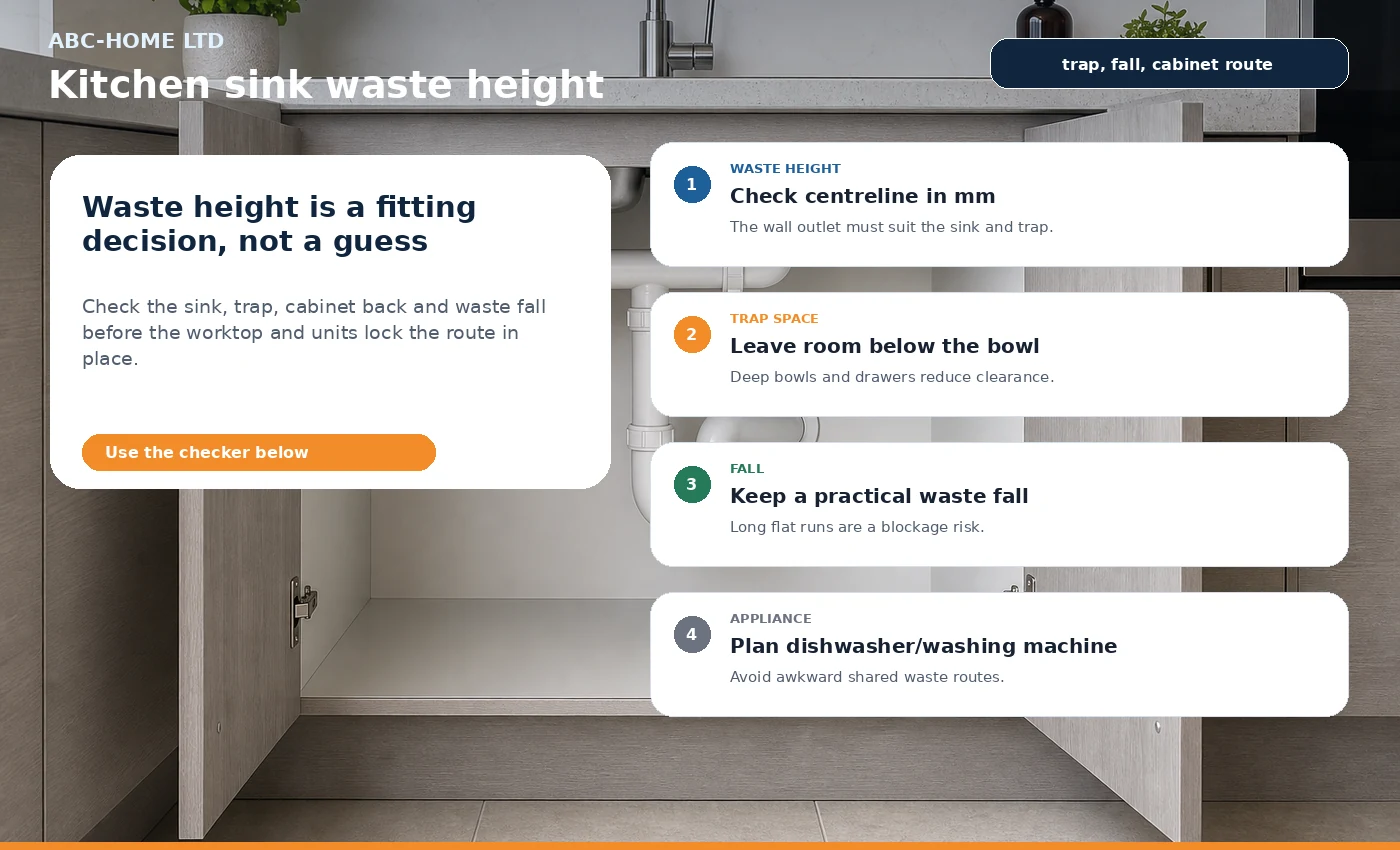
For a normal UK kitchen sink, do not set the waste from a random old hole in the wall. Set it from the finished floor, the cabinet, the actual sink bowl and the trap kit you are fitting.

As a practical starting point, the centre of the wall waste outlet is often around 400 to 500mm above the finished floor. That is not a fixed Building Regulations number. It is a working zone that usually keeps the outlet low enough for the trap to drain and high enough to stay accessible inside the sink base.

The key checks are simple:

  • most UK kitchen sink wastes use 40mm pipework;
  • the trap must fit inside the base unit and still be reachable;
  • the wall outlet must sit below the trap outlet, so the waste can fall away;
  • deep bowls, drawer units and bottle traps can change the height;
  • check the real sink, waste kit and appliance manuals before cutting pipework.

If the old wall waste is too high for a deeper sink, changing the trap is not always the fix. The cleaner answer is often to lower or reroute the waste before the units are fitted.

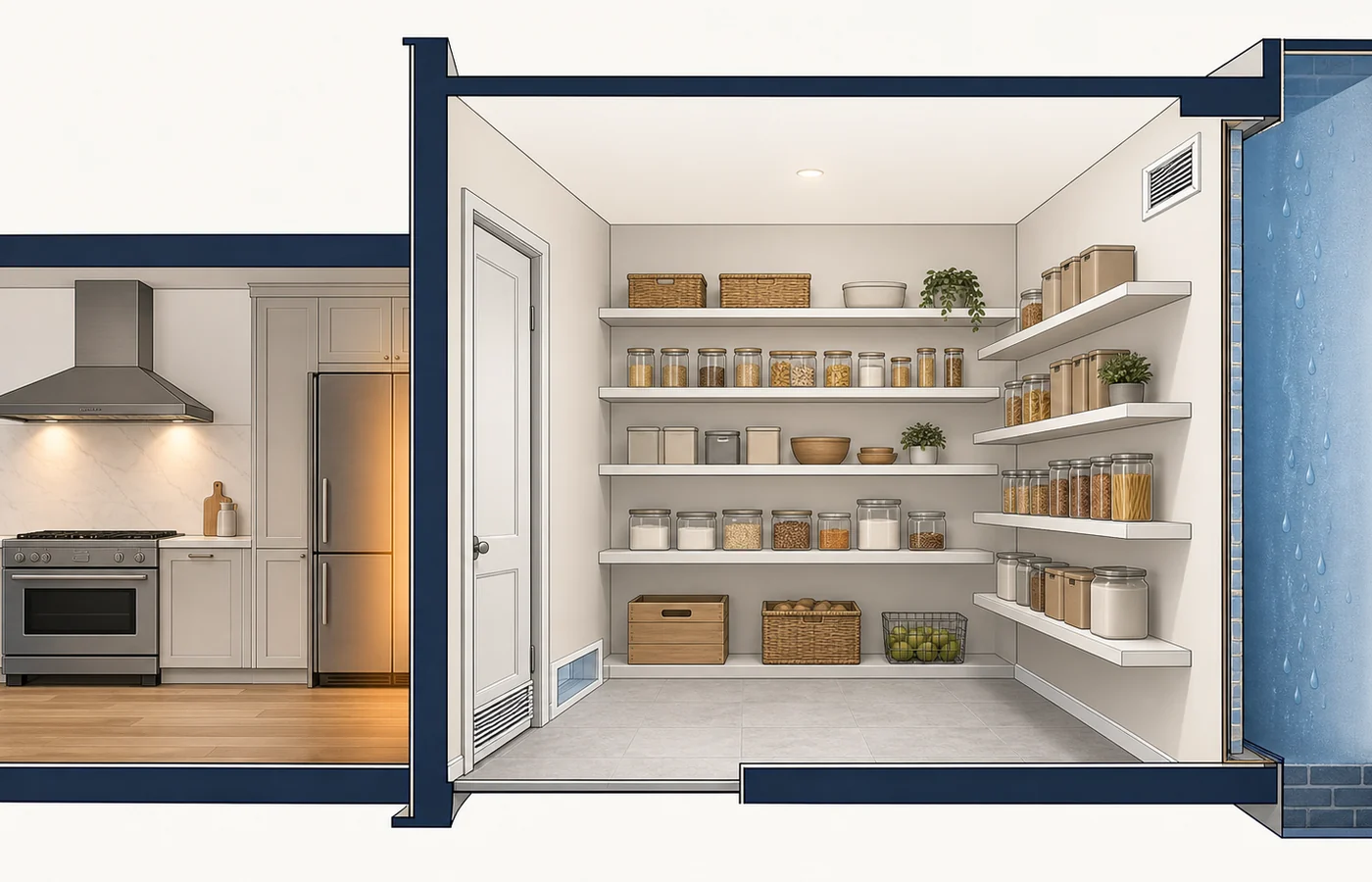
Kitchen sink waste height UK rough-in diagram showing 40mm trap, finished floor and a 400 to 500mm wall outlet target zone
A practical starting point for kitchen sink waste height. Measure the actual sink, trap and cabinet before drilling.

Quick rough-in dimensions

Item Practical starting point Why it matters
Kitchen sink waste pipe 40mm Common UK kitchen sink waste size. GOV.UK Approved Document H lists 40mm sink trap diameter.
Trap water seal 75mm Approved Document H Table 1 lists 75mm water seal for sinks.
Wall waste outlet centre About 400 to 500mm above finished floor Keeps the outlet below the trap in many base units. Confirm against the actual sink and cabinet.
Very low wall or floor exit Around 100 to 150mm in some layouts Can work for low exits or underfloor routes, but access and fall still matter.
Hot and cold supply stubs Often around 500 to 550mm above finished floor Keeps isolation valves reachable inside the sink base. Confirm with tap and unit layout.
Dishwasher or washing-machine waste Plan beside the sink base before units go in Avoids long hoses, awkward high loops and connections hidden behind cabinets.

Use the table as a starting point, not as permission to drill blind. Finished floor level matters. Cabinet legs, plinth height, sink bowl depth and the trap all change the final position.

Check your waste height before cutting

Before cutting the wall outlet, do a dry fit if you can. Put the sink, waste kit and trap roughly where they will sit, then check whether the pipe can fall from the trap to the wall.

Kitchen sink waste height checker

Use this before cutting a wall outlet. Fill in the real sink and cabinet measurements if you have them. If not, start with the defaults and check again during dry fit.


Optional fall assumptions

Enter your measurements and press the button. If you are not sure, keep the outlet lower and accessible rather than forcing the trap uphill.

This is a planning check, not a Building Regulations certificate. For a kitchen sink, GOV.UK Approved Document H lists a 40mm trap diameter and 75mm seal depth. The outlet height still depends on the fitted sink and trap.

Planning a kitchen refit in Aberdeen? ABC Home can set out the cabinets, plumbing and appliances before the walls and units are closed up.


How to work out the height on site

A kitchen waste outlet needs fall. If the outlet in the wall is higher than the trap outlet, the pipe can run uphill and hold water. That is when people end up with slow draining, smells or awkward trap bodges.

  1. Measure from the finished floor, not the subfloor.
  2. Measure the worktop height.
  3. Subtract the sink bowl depth.
  4. Subtract the trap and waste kit drop.
  5. Allow some fall between the trap and the wall outlet.
  6. Keep the final connection accessible inside the cabinet.

Example: 900mm worktop height, 200mm bowl depth and 160mm trap drop gives an estimated trap outlet height of 540mm. With a short run allowance, a wall outlet around 450mm can be sensible. A 600mm outlet may be too high for the same sink.

What if the existing waste outlet is too high?

If the new sink outlet is lower than the wall outlet, do not assume a different trap will magically fix it. The waste still needs to fall away.

  • lower the wall outlet before the kitchen is fitted;
  • reroute the waste through a different wall or floor exit;
  • change the sink or trap only if the new setup still gives proper fall;
  • check the cabinet layout before committing, especially with drawer units.

Is kitchen sink waste 32mm or 40mm?

For a UK kitchen sink, plan around 40mm waste pipework. Smaller 32mm waste is normally associated with basins, not kitchen sinks.

Approved Document H is useful here because it lists minimum trap sizes and seal depths. For a sink, the table gives a 40mm trap diameter and 75mm seal depth.

Hot and cold supply rough-in height

Hot and cold supplies are often set around 500 to 550mm above finished floor in the sink base area, but this should still be checked against the unit and tap.

  • hot and cold valves inside the sink base;
  • waste outlet low enough for the trap;
  • dishwasher or washing-machine connections close to the appliance;
  • enough room to remove and clean the trap later.

Dishwasher and washing-machine waste planning

Dishwashers and washing machines are often connected near the sink base. The mistake is leaving this until the cabinets are in, then trying to make hoses reach across awkward gaps.

  • which side of the sink the appliance will sit;
  • where the hose will pass through the cabinet;
  • whether the waste connection has a proper high loop or standpipe arrangement;
  • whether isolation valves can still be reached;
  • whether the appliance can be pulled out without ripping the hose.

Island sinks and floor exits

Island sinks are different because the waste may need to run through the floor. That can work, but it needs more planning than a simple wall outlet.

  • long horizontal runs with poor fall;
  • joists or structural obstructions;
  • traps hidden where nobody can reach them;
  • pipe routes that clash with drawers or bins;
  • ventilation and drainage rules for the wider waste system.

Common rough-in mistakes

  • measuring from subfloor instead of finished floor;
  • setting the waste too high for a deep bowl;
  • forgetting the trap needs space below the sink;
  • putting valves behind drawers or appliances;
  • leaving dishwasher waste planning until the end;
  • using old pipe positions even though the new sink is different;
  • hiding joints where they cannot be inspected or cleaned.

Approved Document H source note

GOV.UK Approved Document H covers drainage and waste disposal. Its trap table is useful because it confirms the kitchen sink trap size and seal depth:

  • sink trap diameter: 40mm;
  • trap seal depth: 75mm.

Use that as the official anchor for trap sizing. Do not treat it as a single fixed wall outlet height. The outlet height is still a practical site measurement.

Source: Drainage and waste disposal: Approved Document H

Need the kitchen set out properly?

If you are planning a kitchen refit in Aberdeen, set out the plumbing, electrics, cabinets and appliances together before closing walls or fixing units.

ABC Home can help with kitchen fitting, plumbing layout and the awkward details that are expensive to fix after the worktop goes on.

Kitchen fitting in Aberdeen

FAQ

What height should a kitchen sink waste pipe be from the floor?

A common practical starting point is around 400 to 500mm from the finished floor to the centre of the wall waste outlet. Check this against the real sink bowl, trap kit, cabinet and pipe run before cutting.

Should the wall waste outlet be higher or lower than the trap?

It should sit lower than the trap outlet, allowing the waste pipe to fall away. If the wall outlet is higher than the trap outlet, the pipe can run uphill and hold water.

Is kitchen sink waste pipe 32mm or 40mm?

Kitchen sink waste is normally 40mm. Approved Document H lists a 40mm trap diameter for sinks. 32mm is more typical for basins.

Can I use the old waste hole for a new deeper sink?

Sometimes, but check it before fitting the cabinet. A deeper sink can put the trap outlet lower than before. If the old wall outlet is now too high, it may need lowering or rerouting.

What height should kitchen sink hot and cold supply pipes be?

They are often around 500 to 550mm above finished floor, but the right position depends on the cabinet, tap, isolation valves and appliance layout. Keep valves accessible inside the sink base.

Do dishwasher and washing-machine wastes need separate planning?

Yes. Plan the hose route, waste connection, high loop or standpipe, and isolation access before the cabinets go in. It is much harder to make neat changes after the kitchen is fitted.

Facebook
Twitter
LinkedIn
Pinterest
Reddit

Leave a Reply

Your email address will not be published. Required fields are marked *