There is no single best underfloor heating brand or system for every home. A bathroom floor that runs for one hour after a shower is a different problem from heating an open-plan extension all winter. The right answer starts with the room size and the floor layers.

Electric vs wet underfloor heating table
| Project type | Best starting point | Why |
|---|---|---|
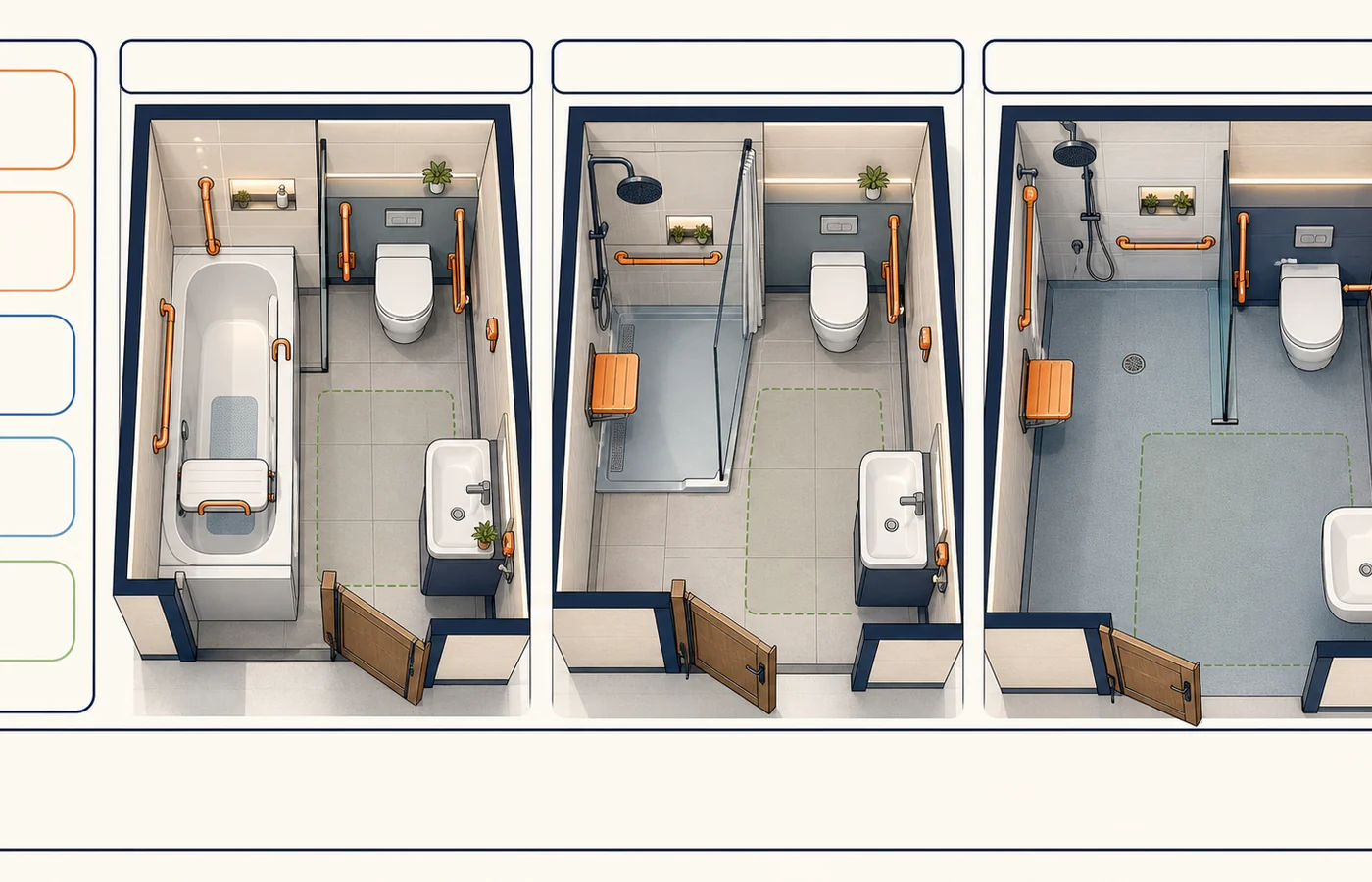
| Small bathroom or ensuite retrofit | Electric mat or loose cable system | Lower install disruption, quick warm-up and good tile comfort for short use periods. |
| Large kitchen or open-plan extension | Wet underfloor heating | Better suited to larger floor areas and lower water temperatures when designed properly. |
| Whole ground floor renovation | Wet system with proper zoning | More design work, but more sensible for regular heating across big areas. |
| Low floor build-up retrofit | Low-profile wet system or electric depending on use | Door thresholds, stairs, kitchen plinths and finished floor height can decide the job. |
| Occasional comfort heating | Electric system with timer thermostat | Useful where the goal is warm tiles, not full-room heating all day. |
Electric underfloor heating running cost calculator
Use this for a quick electric underfloor heating running estimate. It does not model heat loss, insulation or thermostat cycling.
What matters more than the brand
Insulation below
Insulation boards under electric systems and proper floor insulation under wet systems reduce downward heat loss and improve warm-up.
Floor finish
Tile and stone transfer heat well. Carpet, thick underlay and some wood floors need closer product checks and temperature limits.
Build-up height
Underfloor heating can affect doors, thresholds, toilet pans, kitchen plinths and stair transitions. Check finished floor level early.
Controls
A thermostat, floor sensor and schedule are what stop a comfortable floor becoming an expensive one.
When electric is the better choice
Electric underfloor heating works well when the heated area is small, the floor is being tiled anyway and the system is used for comfort at specific times. A small bathroom, cloakroom or ensuite can be a good fit. It is usually less attractive for heating a large room for many hours because electricity costs more per unit than gas, and because direct electric floor heating does not gain the same efficiency benefit as a heat pump.
When wet underfloor heating is the better choice
Wet underfloor heating suits larger areas, new screeds, extensions and low-temperature systems. It takes more design work and more floor build-up, but it can run at lower water temperatures than radiators when the floor area and insulation are right. That makes it a strong option for heat pump planning and whole-room comfort.
Pre-installation checklist
- Confirm whether the goal is warm tiles, room heating or whole-home heating.
- Measure the actual heated area after excluding baths, fixed units and shower trays where required.
- Check floor height against doors, thresholds, stairs and kitchen units.
- Ask how the system is insulated below and controlled above.
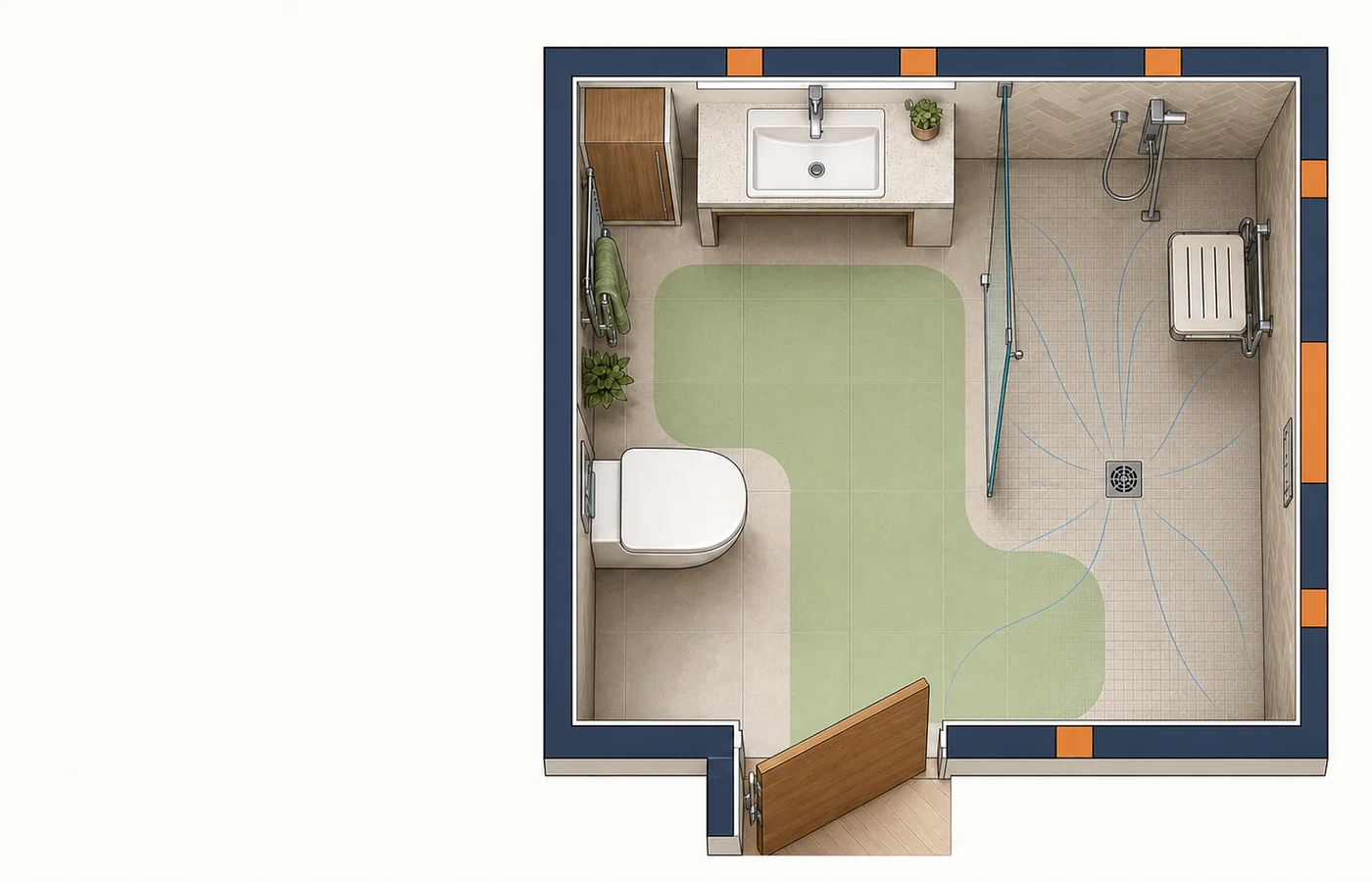
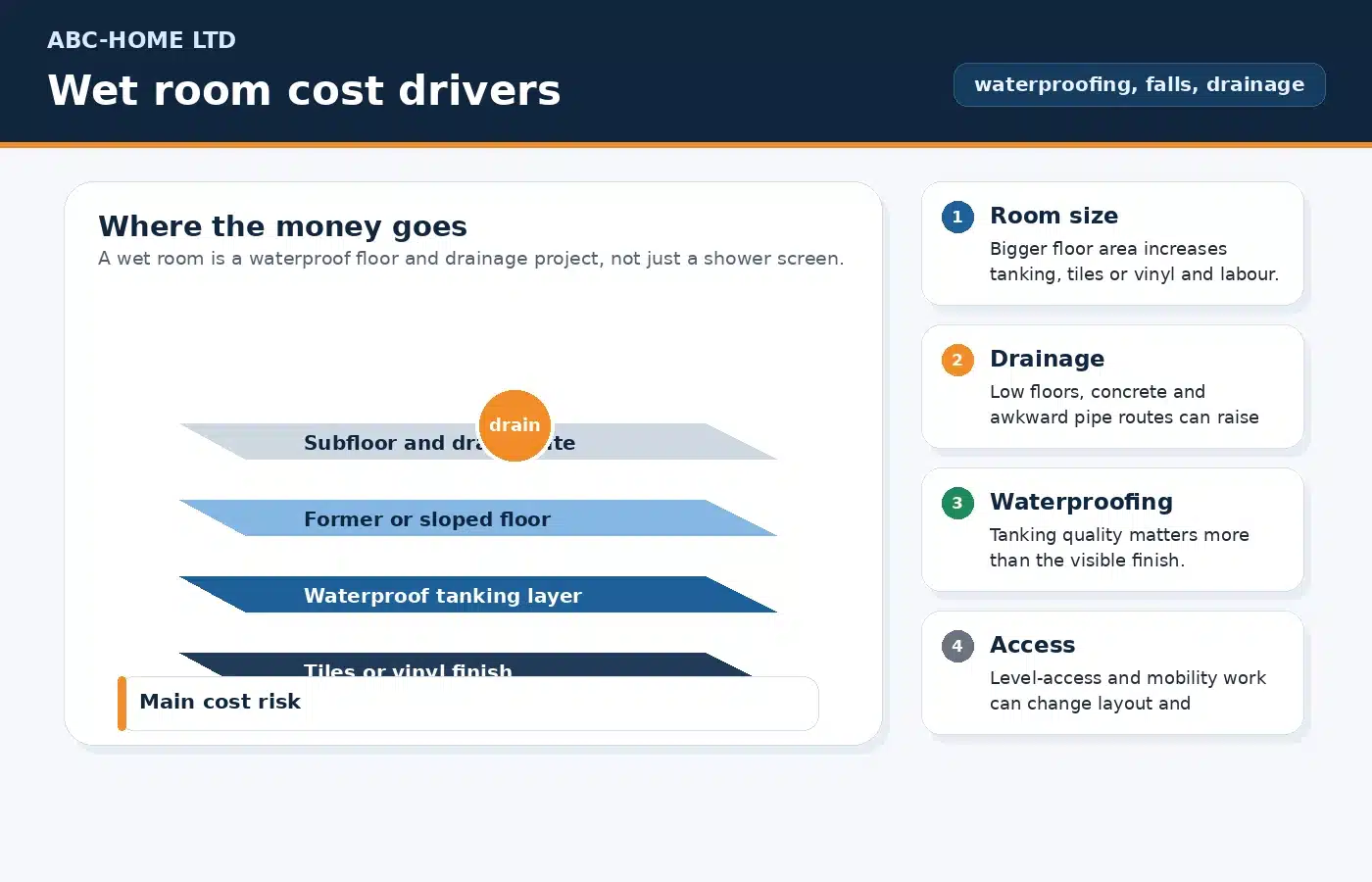
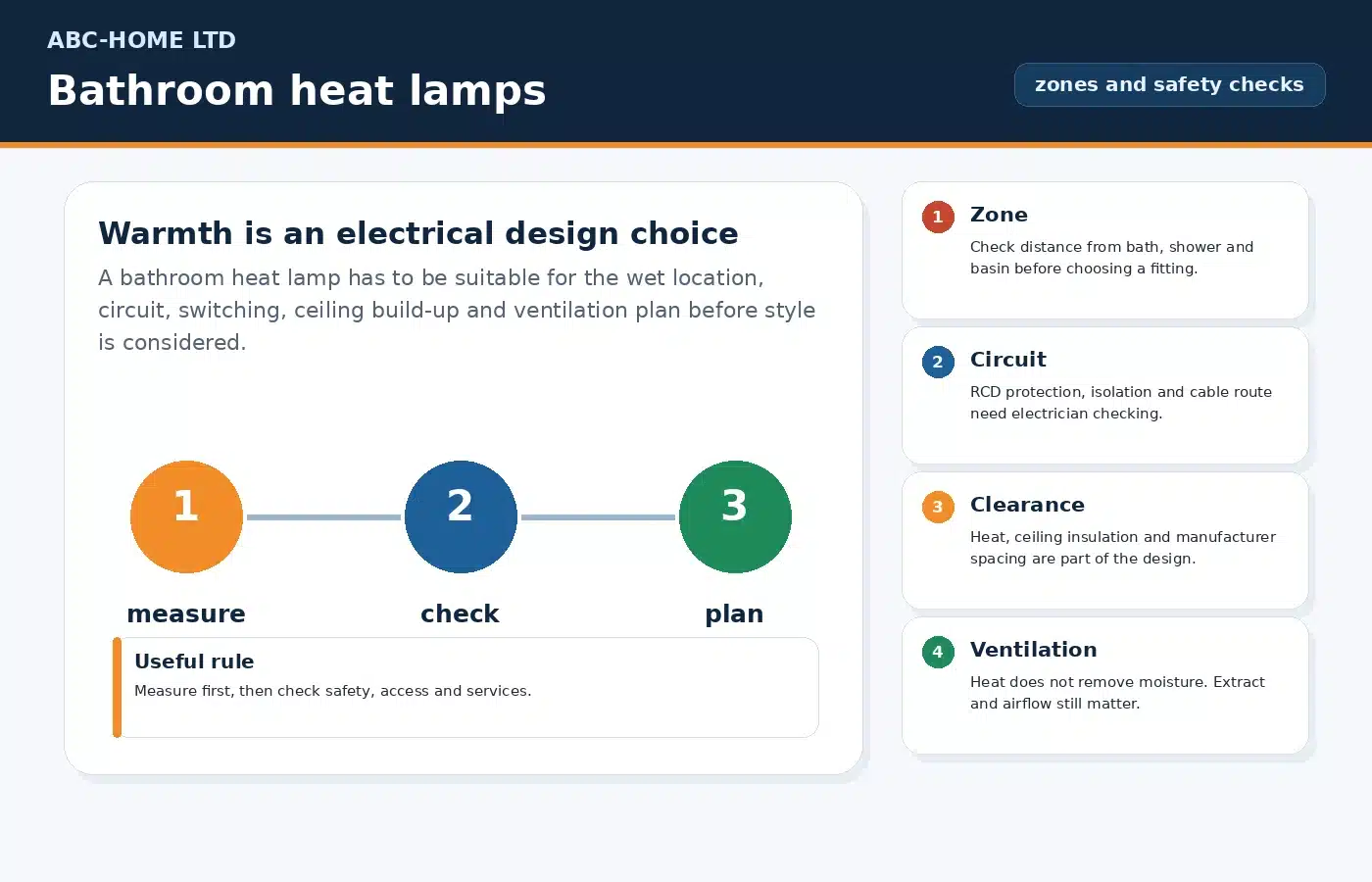
- For bathrooms, coordinate underfloor heating with electrical zones, RCD protection and the floor waterproofing plan.
- For wet systems, confirm manifold position, pipe routes, mixing controls and access for maintenance.
Underfloor heating references worth checking
The best underfloor heating system depends on heat loss, floor build-up and controls, not the brochure alone. Energy Saving Trust guidance helps frame running-cost decisions, BEAMA is useful background for heating controls, and Electrical Safety First matters where electric mats, thermostats and bathroom zones are involved. For tiled floors, The Tile Association also gives useful context on preparation and heat movement through the floor.
- Energy Saving Trust underfloor heating advice: cost, insulation and system-choice context.
- BEAMA: industry body for electrical infrastructure and heating-control context.
- Electrical Safety First bathroom safety: relevant for electric heating in bathrooms and other wet areas.
- The Tile Association underfloor heating guide: tiling and floor-preparation context.
FAQ
Is electric underfloor heating expensive to run?
It can be if it covers a large area or runs for many hours. For small bathrooms used on a timer, the cost can be manageable. Use the watts, area, hours and tariff to estimate it.
Is wet underfloor heating better than electric?
Wet systems are usually better for larger rooms and whole-floor heating. Electric systems are often simpler for small retrofit comfort heating.
Do I need insulation boards under electric underfloor heating?
They are strongly worth considering because they reduce heat loss into the subfloor and help the surface warm up faster.
Can underfloor heating go in a bathroom?
Yes, but it must be planned with the bathroom floor build-up, waterproofing, electrical zones and RCD protection.